





What is the Red Cherry Project behind Yirgacheffe natural beans?
The Red Cherry Project, also called Operation Cherrie Red, was started by the Dutch trader Trabocca to push Ethiopian smallholder farms toward picking only fully ripe cherries. Pickers, mostly women, select 100 percent ripe red cherries, and farms produce small batches of roughly 1,500 to 3,000 kilograms, or 25 to 50 bags, for the program before the harvest season.
The name refers to color and shape, not flavor: ripe coffee cherries look like cherries, so the label does not promise a cherry taste. Roast level shifts the coffee description words for Front Street Yirgacheffe Natural Red Cherry beans, from peach, cocoa, honey and lemon in a light roast to fermented fruit and citrus sweetness as a medium-roast SOE.
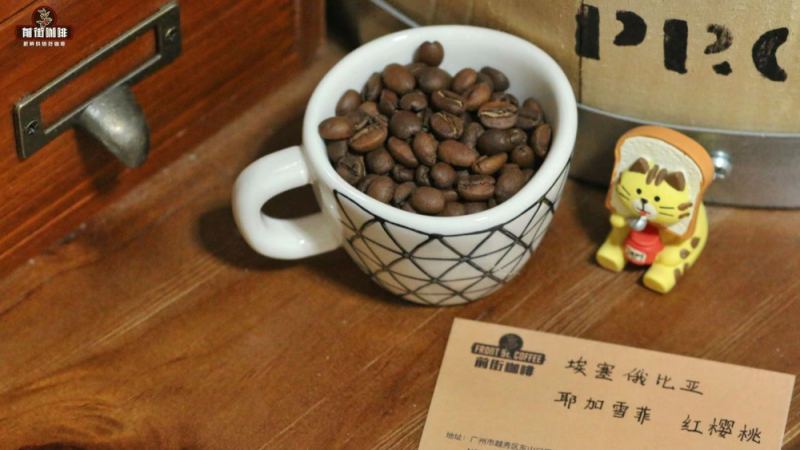
In the specialty coffee world, "Red Cherry" has become synonymous with high-quality Ethiopian beans. The name comes from the appearance of ripe coffee cherries, which closely resemble cherries, and behind it is Operation Cherrie Red, initiated by the Dutch company Trabocca, aimed at encouraging smallholder farmers to pick only fully ripe cherries to enhance flavor. This article will guide you through the origins, operational mechanisms, and covered regions of the Red Cherry Plan, and focus on the flavor performance of Front Street Yirgacheffe Natural Red Cherry coffee beans—from the light roast's peach, cocoa, honey, and lemon notes, to the medium roast SOE's fermented fruit aromas and citrus sweetness, along with pour-over extraction parameters and brewing technique suggestions. [Image 1]
What is the Red Cherry Plan?
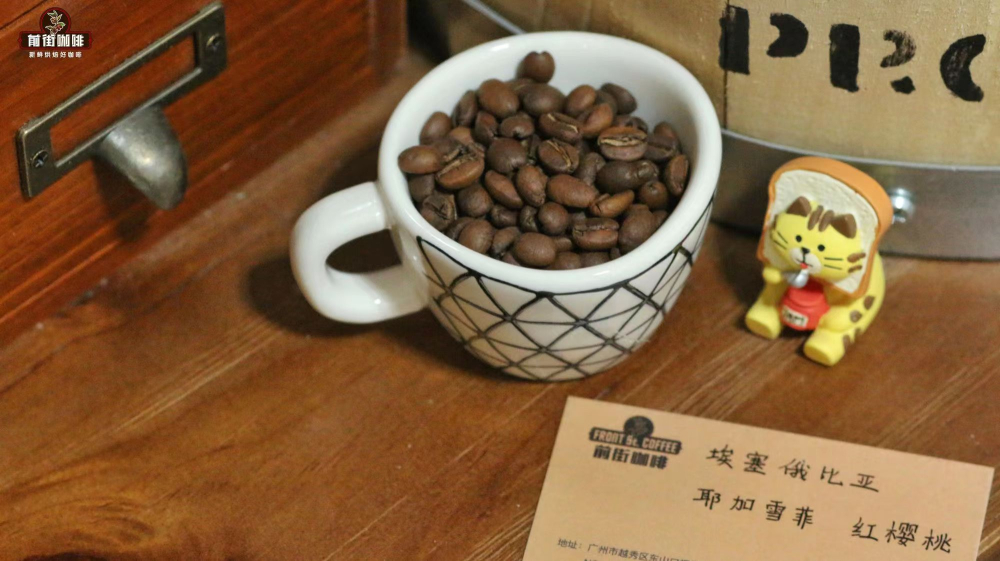
Nowadays, on the menus of many coffee shops, you often see phrases like "xx Red Cherry Plan," "xx Red Cherry Natural," or "xx Red Cherry Washed." Some customers wonder: does Red Cherry mean the coffee has a cherry flavor? Some even claim that the Red Cherry coffee they tasted indeed had a cherry flavor (that's impressive)... Of course, some will surely ask: since it doesn't have a cherry flavor, why use the words "Red Cherry" instead of names like Red Apple or Red Strawberry? The reason is that when coffee cherries are fully ripe, they take on a dark red appearance similar to cherries, closely matching cherries in both color and shape, hence the name Red Cherry. The Red Cherry Plan, also known as Operation Cherrie Red, was initiated by the Dutch, with the core demand being to pick only fully ripe cherries to achieve the flavor of ripe fruit.
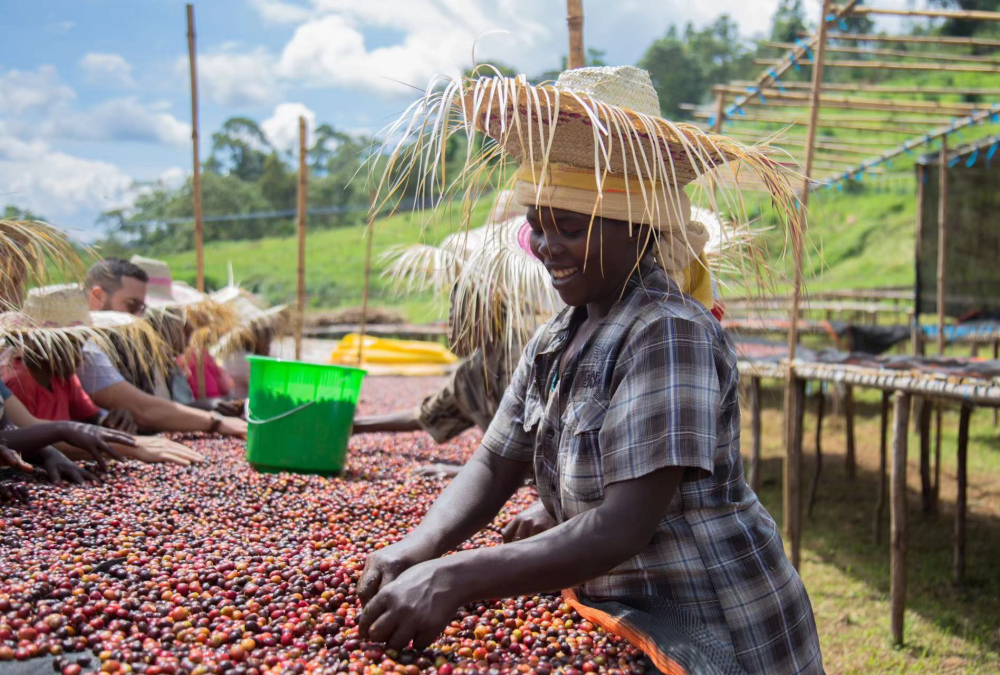
Operation Cherrie Red (ORC) is a project aimed at improving the quality of small-scale farms, primarily to encourage bean farmers and surprise roasters. Trabocca, the largest coffee bean trader in the Netherlands, invites all Ethiopian farms before the harvest season to produce small batches of beans for them, about 1,500 to 3,000 kilograms (25 to 50 bags). During picking, women are responsible for selecting only 100% fully ripe red cherries, which greatly influences the final brewed coffee flavor. Therefore, careful, sharp-eyed, and hardworking Ethiopian women are a vital driving force behind the Red Cherry Plan.
The Red Cherry Operation is also a reinforcement practice, prompting farms to invest more effort in screening and sorting beans, and these coffees are relatively more expensive. The Red Cherry Operation covers various processing methods such as washed, natural, semi-washed, semi-natural, and experimental coffee. The main production areas include Yirgacheffe, Sidamo, Bonga Forest, Lekempti, Kembata, Ilubabor, Harar, Limu, and in 2011, the Golocha region (near Harar) was added. These regions each have unique flavors that fully showcase the charm of Ethiopian coffee beans. After receiving the coffee, Trabocca further screens it. Through cupping quality tests by offices in both Ethiopia and the Netherlands, farms that meet the standards receive high bonuses. The cupping score must be above 88 points to become a recognized good coffee under the Red Cherry Plan.
Trabocca, the promoter of the Red Cherry Plan, has invested all its profits over the years into partner farms. Trabocca emphasizes that this is a non-profit plan, so the company has only 4 people executing the Red Cherry Plan, including the boss and a secretary, with other administrative tasks supported by the parent company to reduce administrative expenses, and all profits are returned to partner farms.
Front Street Yirgacheffe Red Cherry Plan Natural coffee bean flavor description: peach, cocoa, honey, lemon. So, can Front Street Yirgacheffe Red Cherry only be light-roasted? If medium roasting is used, what flavor and mouthfeel would Front Street Natural Red Cherry present? We at FrontStreet Coffee have also roasted Front Street Yirgacheffe Red Cherry coffee to a medium roast to make SOE, and the coffee showed distinct fermented fruit aromas, rich and prominent, with clear citrus flavors and noticeable sweetness. If extracted by pour-over, we recommend using a water temperature of 90-93°C to brew Front Street Yirgacheffe Natural Red Cherry coffee.
Recommended brewing method: Pour-over
Dripper: Hario V60
Water temperature: 90-93°C
Coffee-to-water ratio: 1:15
Grind size: Medium-fine
Front Street Yirgacheffe Natural Red Cherry coffee brewing technique: Bloom with 30g water for 30 seconds, pour to 125g in stages, and when the water level drops and the coffee bed is about to be exposed, continue pouring to 225g and stop. (Start timing from the beginning of the bloom) The extraction time is 2 minutes.
The above content is compiled by CoffeeHunters, a coffee news website.


