








As coffee has become part of everyone's daily life, it's not hard to learn a lot of new and comprehensive knowledge about coffee from video apps. Besides researching how to brew and how to taste the flavors, many people have started to develop a strong interest in coffee bean roasting.
But many people act on a whim, buying green coffee beans without knowing how to roast them. Below, based on Front Street Coffee's own practical experience, we'll introduce ways to roast coffee beans at home.
Differences in Taste by Coffee Bean Roast Level
When roasting at home, you must use low heat at the beginning, then adjust slowly later. No matter what tool you use, you must keep stirring the coffee beans! At the same time, pay attention to observing the color changes of the coffee beans! If the coffee bean color changes quickly, but the change is not uniform throughout, this indicates the heat is too high or the stirring frequency is insufficient. If you feel the stirring is already adequate and there's no room for improvement, this means the heat is indeed too high! When this happens, immediately turn down the heat and move the pan away to quickly lower the temperature inside! After it cools down, put it back on the stove with the heat adjusted and continue heating and stirring.
If the coffee bean color doesn't change for a long time (3, 5, 10 minutes, or even longer), it means the heat is too low. In this case, you should appropriately increase the heat. If the coffee bean color changes slowly and the change is uniform throughout, this means you've controlled the heat very well! In this situation, while paying attention to the coffee bean color, you can also listen to the sound of the coffee cracking.

As roasting continues, the beans' color gradually changes from the initial light green to yellow, then to brown, to dark brown, and finally to black. During this process, as the coffee beans change from yellow to brown, there is a crack, but this cracking process is very short and sometimes not very obvious—sometimes it ends after just 3-5 sounds. This is first crack.

During the process of changing from brown to dark brown, there is another crack. This crack lasts 2-3 minutes, or even longer, with a very high frequency of sounds, crackling like firecrackers! This is second crack. Second crack is very easy to detect. Generally, when second crack has just begun—that is, after hearing about 10 or so sounds—if you stop the heat at this point, the beans you get are a medium roast - full city roast.
Bean characteristics: the bean surface is dry, not yet oily or slightly oily, with small black spots on the brown bean body! As the second crack sounds continue, the roast also deepens. When there is completely no sound—that is, second crack has ended—the beans are basically blackened and severely carbonized.
Of course, this is also a roasting style, and many people like this burnt flavor! Generally speaking, from when the beans start turning golden yellow to the later blackened state, all are normal roasting. You can stop the heat at any point in between, and the resulting coffee is drinkable! As for when to stop the heat, it depends on your own preference!

Generally, the darker the coffee bean roast, the heavier the bitterness, while the coffee's flavor layering is also worse and its nutritional value is lower. Fully carbonized beans do have a unique flavor, but they really don't have much nutritional value! So it's not recommended to roast to this degree!!
What Tools to Use for Roasting Coffee Beans at Home?
Recommended - a rotary cage specifically for roasting coffee beans
The rotary cage is recommended because it is closer to how coffee beans are handled in a coffee roaster. Roasting coffee beans with a roaster actually means the coffee beans enter a drum, and then the machine rotates at a fixed speed of 60-65 revolutions per minute (the speed can be adjusted according to the different states of different coffee beans), allowing the coffee beans in the drum to be heated more evenly and ensuring the uniformity of the final coffee bean product.
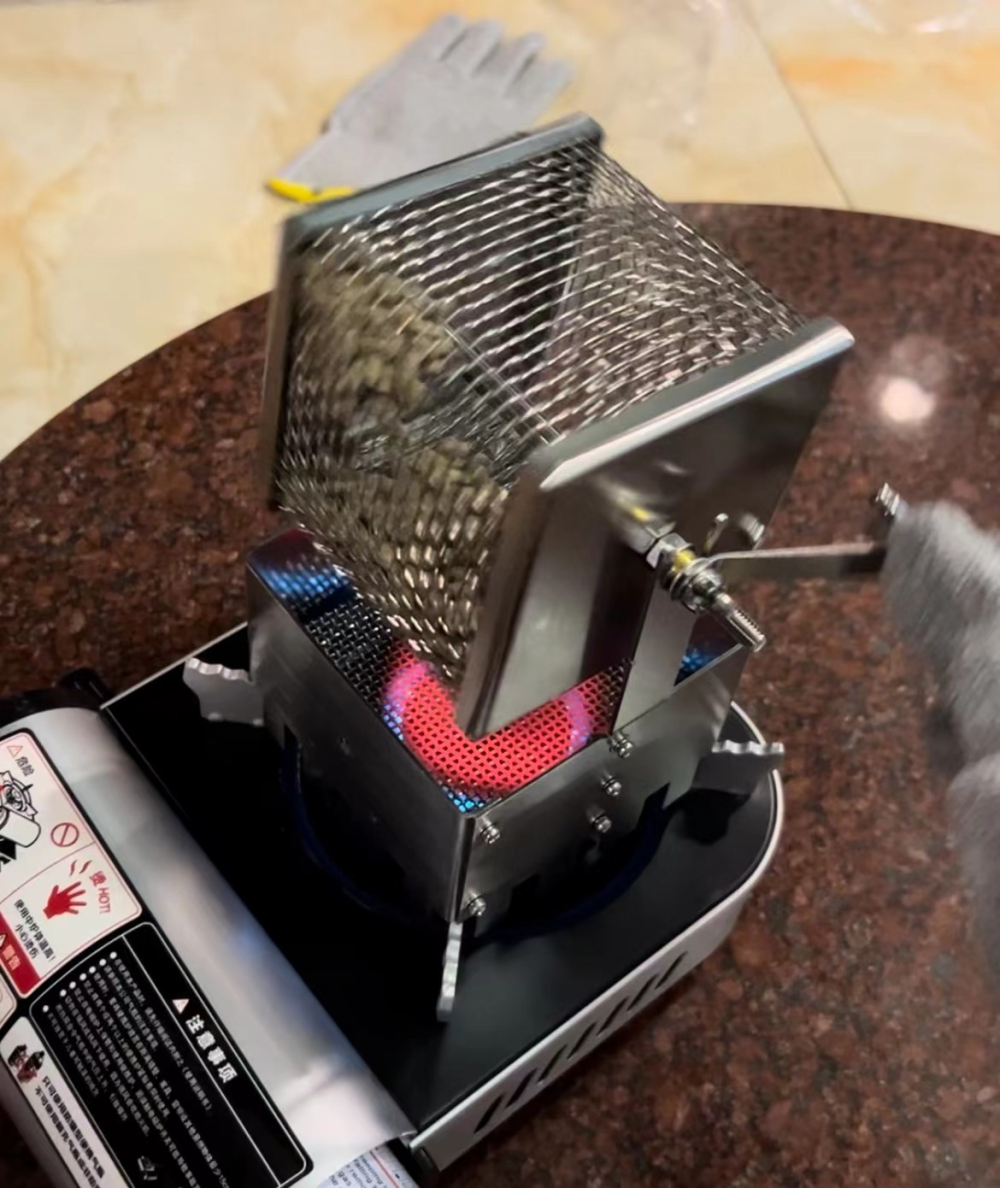
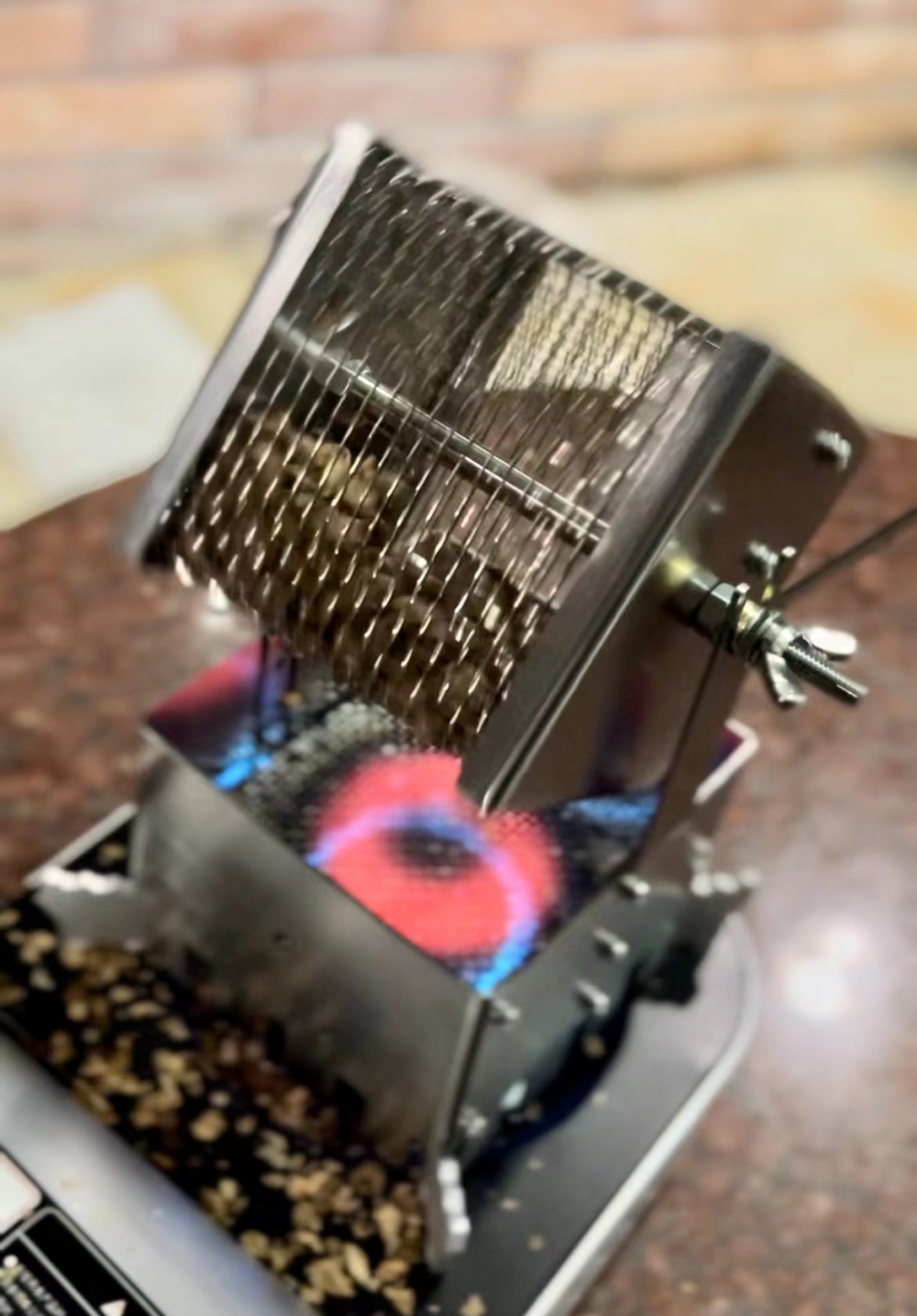
Based on the personal experience of Front Street Coffee's baristas,when using a rotary cage to roast coffee beans,two points need attention: use low heat for roasting, otherwise the coffee beans very easily change color on the outside while still being raw inside; after lighting the fire and adjusting the flame size, place the rotary cage on and immediately start turning it, at a speed of 60-65 revolutions per minute.
Roasting with a rotary cage takes more than twice as long as with a dedicated roaster. For example, when Front Street Coffee uses a Yangjia 800n roaster to roast Red Bourbon coffee beans from the Cerrado region of Brazil, the time from first crack to discharge is 3:30, for a medium-dark roast, with a total roasting time of 13 minutes.
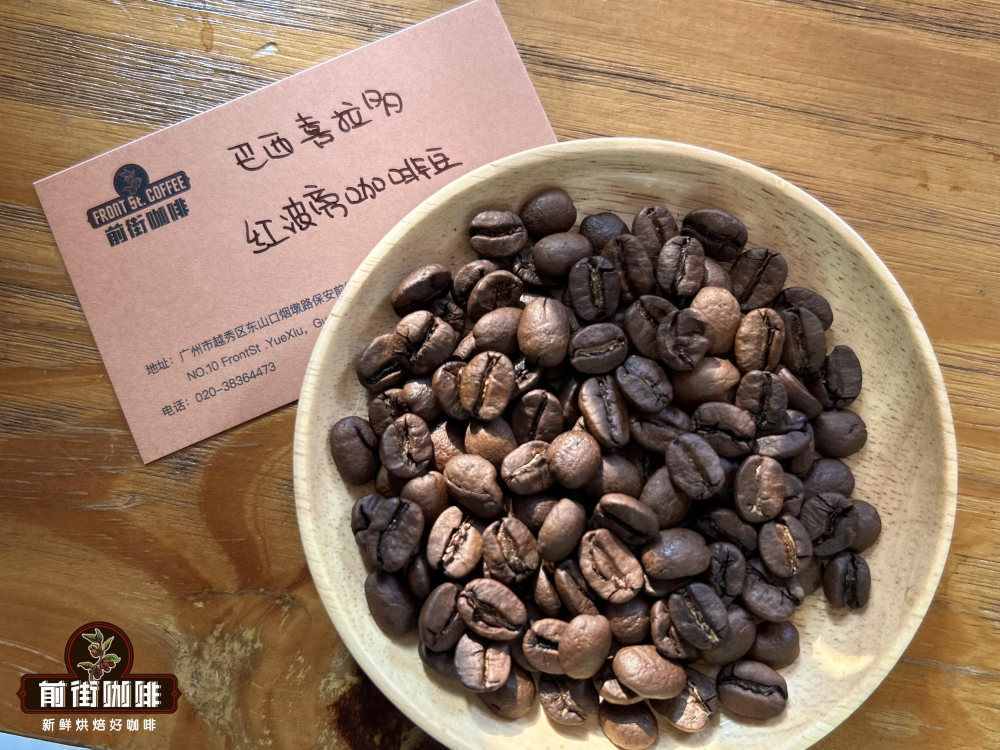
This is the Brazilian Cerrado coffee beans that Front Street Coffee roasts with professional machines and sells.
But when roasting with a rotary cage, to reach a similar degree, the total roasting time is 31 minutes. During this time, you also have to keep turning the cage continuously (60 revolutions per minute); if you stop or slow down, it very easily burns... You could say it's quite hard on the hands.
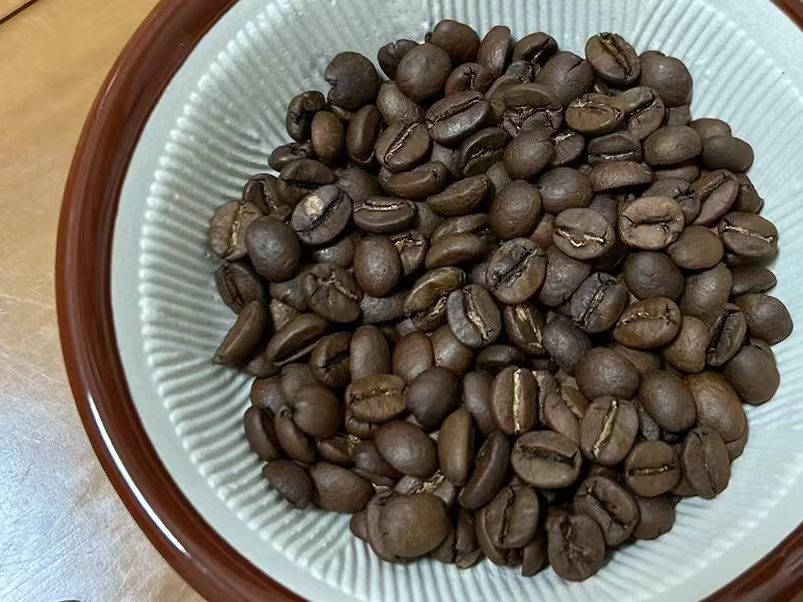
This is the same type of coffee beans that Front Street Coffee's baristas roasted at home using a rotary cage.
Although roasting coffee beans at home is very tiring, you can very clearly and intuitively feel the coffee beans slowly changing from green raw beans to yellow, giving off a corn-like sweetness, then slowly turning cinnamon-colored, giving off a caramel aroma, then slowly turning chocolate-colored, giving off the smell of roasted nuts.
2. The simplest and most primitive method - pan roasting
For everyday cooking, every household has a pan for stir-frying. In the long period before professional roasting machines existed, coffee was roasted by pan roasting. Of course, coffee roasted in a pan cannot be compared with the output of professional coffee roasters.
The biggest reason is that during the stirring process, the coffee beans cannot roll evenly in the pan, so uneven heating of the coffee beans occurs. But participation is what matters! During the stirring process, we can constantly see the coffee beans going from green to chocolate-colored. No matter how the final coffee tastes, it is a great experience.
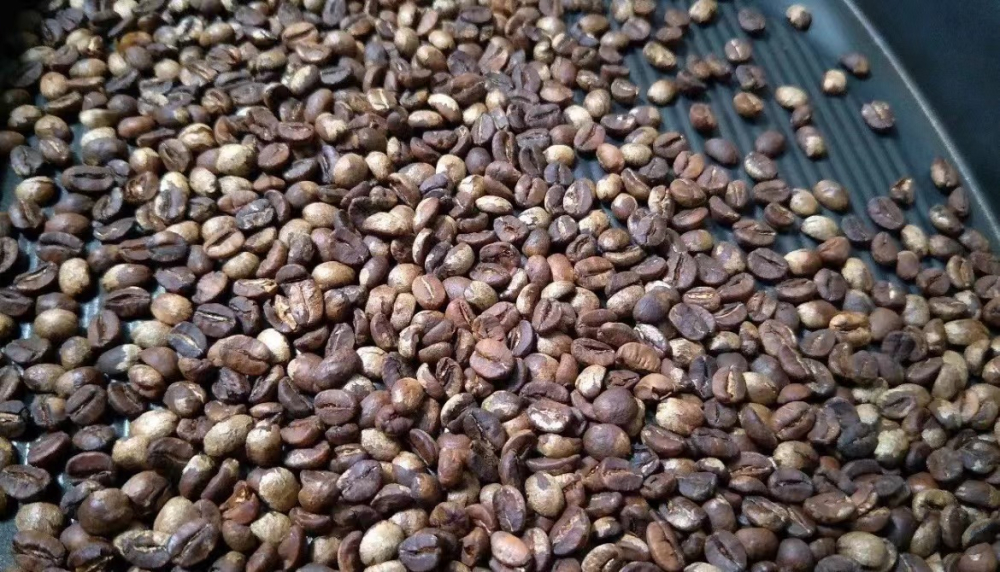
To roast coffee beans in a pan, first clean the pan used for roasting coffee thoroughly to remove the oil on it. Household pans used for stir-frying for a long time definitely have a lot of residual oil on them. So before roasting coffee, you must wash it clean! Generally, after washing the pan, turn on the heat and dry the water on it, then add water and boil it for a while, pour out the water and turn on the heat again to dry it! Repeat this 1-2 times.
Heat it to dry the moisture on the pan surface until no obvious oil can be seen! Turn on the heat. When the pan surface is already dry with no water vapor, put in the green coffee beans! The amount should not be too much; 100-200 grams is suitable! As for whether you use electricity, gas, or another heat source, it doesn't matter much. The key is to control the heat well! This can be compared to other roasted or fried foods: the whole process requires moderate, stable heat.

3. Not recommended, but worth trying - electric oven
Many people may choose an electric oven. Ovens generally cannot stir the beans inside at all times, so if that's the case, it's recommended not to roast too many beans each time. Also, do not stack or pile the beans; that is, spread the beans flat in the tray, in just one layer. Then, according to color changes, take them out regularly and stir them to ensure the coffee beans are heated evenly.
The above content is compiled by CoffeeHunters, a coffee news website.

