








Mainstream Third Wave Specialty Coffee
Nowadays, cafés often emphasize that they serve "specialty coffee." But what exactly is "specialty coffee"?Why is it that among the home-roasting scene blooming like wildflowers, over ninety percent of shops choose so-called light-to-medium roasts to interpret the flavors of green coffee beans?
If you pay even a little attention to coffee articles, most coffee lovers have probably heard of the "third wave specialty coffee movement" that is currently trending in the coffee world. The first and second coffee waves each brought their own era's revolution to the world of coffee. If the first wave brought instant coffee, making it easier and more convenient for everyone to drink coffee; and the second wave promoted espresso, elevating coffee quality and turning coffee from a necessity into a luxury; then the third wave specialty coffee movement demands even more.

Natural process, washed process, honey process, low-pollution processing methods, origin cultivation, micro-lots—the third wave specialty coffee has many demands, but its most core pursuit is just one thing—"terroir."
【Terroir】This concept comes from the world of wine, and it mainly describes how even the smallest conditions of the place of origin can change the flavor of a bean.
In the past, we often distinguished coffee flavors by Ethiopia, Blue Mountain, Kenya, and so on. But today, we not only talk about Ethiopia, but also about the larger region Yirgacheffe, the smaller region Kochere, and even the washing station Boliffee, the natural process, Grade G1, altitude 1800M–2300M, the variety Ethiopian heirloom, and the story of the Red Cherry Project...
With so many labels, the goal is to let us use "knowledge" to get as close as possible to the "flavors" we have not yet tasted. Simply put, it makes it easier for consumers to find or discover the beans and flavors they like. And precisely because it pursues such original and detailed flavor expression, "light roast"—this roast level—has become popular.
At a light-to-medium roast level, the coffee's own "terroir" is most easily expressed. The bright, lively, acidic fruity notes are mostly the flavors this roast level aims to present, and paired with "black" coffee extraction methods such as pour-over, siphon, and AeroPress, this is the approach most in line with the core concept of third wave specialty coffee.
Light-roasted coffee also contains more chlorogenic acid. Many coffee research reports indicate that this component has the effect of raising HDL cholesterol, as well as protecting the liver and slowing arteriosclerosis. Combined with the rising trend of natural diets in recent years, specialty black coffee has become even more dominant.
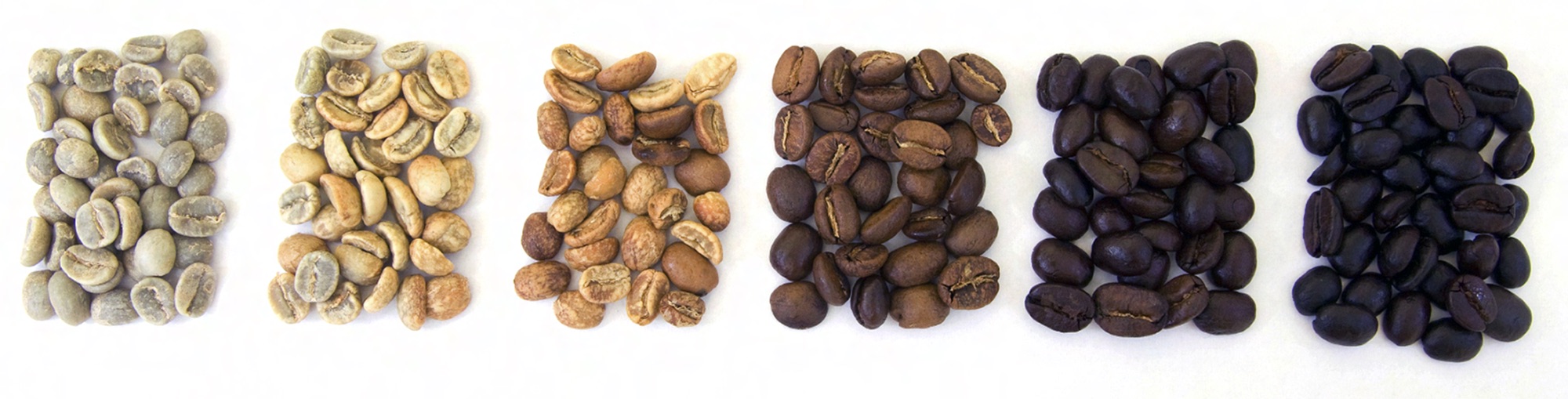
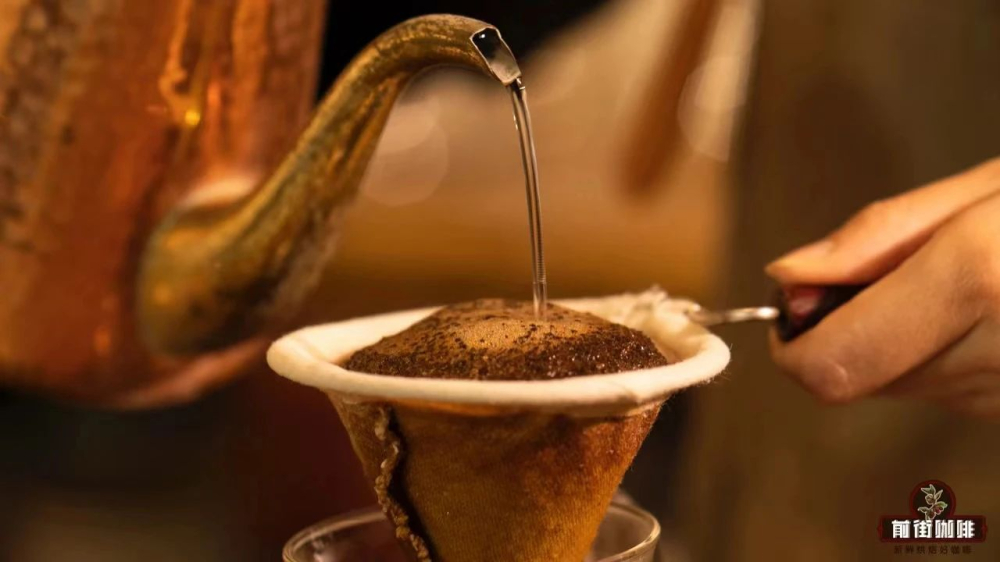
In terms of extraction, because the cell walls of light-roasted coffee are less damaged, Front Street can use a somewhat more "aggressive" approach when brewing without any problem. That is: fine grind (caster sugar size), high water temperature (about 88–92°C), strong water flow with agitation (height of the pour-over kettle, swirling the kettle to increase pressure, etc.), high water-to-coffee ratio (about 1:13.33–1:16.67).
Of course, this is only a very general statement.Because everyone's preferred taste is different, the method suited to each person is of course also different.
Light roast is simply too popular in the domestic coffee scene, so popular that many enthusiasts may shake their heads and sigh as soon as they see dark-roasted coffee: "Chinese herbal medicine." This situation is all too normal. Trends reflect market demand, and market demand is limited by the spread of knowledge.

As the representative figure of the second coffee wave—Starbucks naturally carries the opposite attribute of specialty coffee. Therefore, by extension, many people also avoid Starbucks' signature dark-roasted coffee beans as if they were filthy, and even believe that "only inferior beans use dark roasting to mask off-flavors," "after dark roasting, coffee beans all taste about the same, and you can't taste any flavor characteristics at all," "dark-roasted beans are unhealthy for the body"...
Is that really true?Today, Front Street is going to discuss whether specialty coffee can be dark roasted.
First, let's talk about why dark roasting exists.
First: Discussing it from the current mainstream SCA system
If we discuss it from the current mainstream SCA system, a darker roast can modify acidity that is too strong and sharp. For example, why did Mandheling and Kenya AA often adopt darker roasts in the past? The main reason is that due to origin and processing method, these two beans have strong acidity, and dark roasting largely plays the role of reducing the stimulation of acidity on the tongue, transforming it into sweetness and body.

Second:Discussing it from the concept of old Japanese-style kissaten
When dark roast is mentioned, many people subconsciously attach the prefix "Japanese-style," just as when light roast is mentioned, Front Street, for example, first thinks of Nordic light roast. When it comes to dark roast, Japanese-style coffee cannot be avoided. In the coffee concept of old Japanese-style kissaten, what they care about is that coffee should have the most diverse good layers and elegant bittersweetness. As for the former, the source of coffee flavor includes not only its own flavor, but also the flavor that roasting can provide. The concept of third wave specialty coffee is to preserve the former as much as possible; the concept of old Japanese-style kissaten is to maximize the sum of both.
In addition, the philosophy of Japanese-style coffee differs from the SCA system in that it also includes elegant bittersweetness (not burnt bitterness) within so-called good taste (the SCA does the opposite). Under long-standing cultural habits, a darker roast level naturally became the taste memory exclusive to Japanese-style kissaten.
Our imagination of dark roast mostly includes burnt bitterness and smokiness, mainly because our methods of handling dark roast are mostly high-heat quick roasting, while Japanese-style roasting insists on low-heat slow roasting. Therefore, under the same dark roast level, the Japanese-style method is relatively more likely to retain more of coffee's sweetness and body.
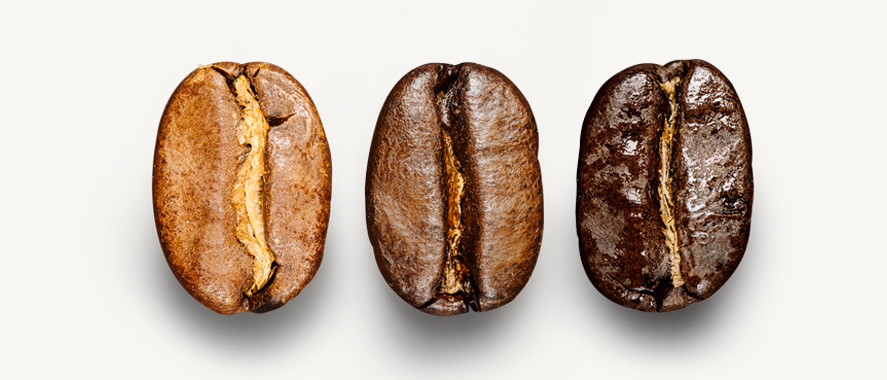
So, does that mean darker roasts won't use good beans, because the roasted flavor turns out about the same anyway?
Of course not!
It is not that better beef is unsuitable for sukiyaki, nor that better fish is unsuitable for clay-pot fish head. Using better ingredients is absolutely different from using inferior ingredients and will present different flavors.
If you are fortunate enough to have tried an extremely dark roast of specialty-grade coffee beans and an extremely dark roast of ordinary-batch coffee beans at an old Japanese kissaten, you will find that the two differ clearly in sweetness, aroma, and layers.It is absolutely not the case that any roaster or any green bean will taste about the same when dark roasted—it mainly depends on whether the roaster's skill is up to par&whether the green bean quality is excellent or not.
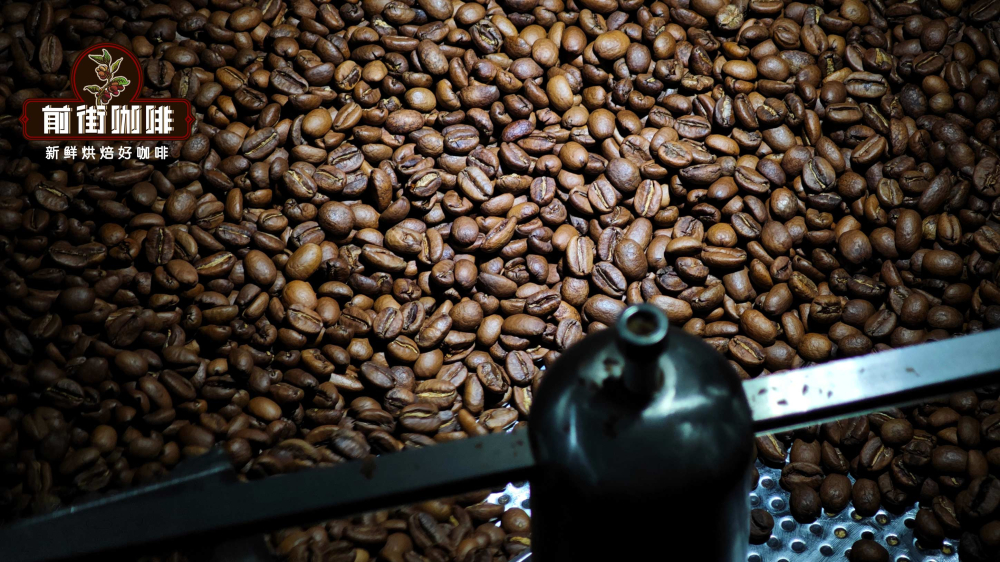
This is also why a good-tasting dark roast is always harder to find than a good-tasting light roast.
Even setting aside taste preferences shaped by local cultures, dark roast demands greater precision in roasting, greater control, and longer periods of concentrated attention than light roast.
I once heard that for a good-tasting "charcoal-roasted coffee," a coffee master needs at least 30–40 years before he can produce excellent and stable quality. Although that was in an era before data was available to assist the accumulation of experience, it is still enough to show where the difficulty of dark roasting lies.The reason dark roasting has become the "non-mainstream" in the specialty coffee world is not unrelated to its harsh demands for accumulated experience.
If you have the chance to visit an old kissaten in Japan that sells specialty coffee, please "by all means" give it a try... Of course, you must satisfy 1. It has specialty grade 2. The master's skill is authentic 3. The master's qualifications are sufficient Only under these premises can you taste a dark-roasted coffee flavor you will never forget!
And dark roast is absolutely not a less healthy bean.As long as it is a dark-roasted bean made with "appropriate and skilled technique," the impact of charred substances on the human body can be largely avoided. Dark-roasted coffee beans also degrade more trigonelline and generate more nicotinic acid (commonly known as vitamin B3), which is also a beneficial component for the human body.
In recent years, scientists have also discovered that coffee contains various other chemical substances that stimulate gastric acid secretion. During research, they unexpectedly found an active substance called NMP (N-methylpyridium), which can block the ability of stomach cells to produce hydrochloric acid and reduce stomach discomfort.
Interestingly, NMP does not exist in green coffee beans and can only be produced through the roasting process, and the darker the roast, the more it contains. This also means that drinking dark-roasted coffee is less harmful to the stomach. In addition, acidic substances that easily cause stomach discomfort are present in lower amounts in dark-roasted beans. Veronika Somoza, a professor in the Department of Nutritional and Physiological Chemistry at the University of Vienna in Austria, who led the research, pointed out that the NMP content in dark-roasted coffee may be more than twice that in light-roasted coffee. So, do you easily get a cold stomach or heartburn from drinking light-roasted coffee? Then you may be better suited to drinking coffee roasted a bit darker...

However, judging solely from aroma and appearance, it is really difficult to determine whether a bean is "appropriately dark roasted" or "burnt."; just like steak, "burnt" and "a perfect Maillard reaction crust" are separated by a fine line. So, can the winner only be decided by taste?
Unfortunately, dark-roasted coffee indeed has relatively fewer extractable substances than light-roasted coffee, and because the cell walls are severely damaged, it is much easier to extract than light roast. If you still brew dark roast using the method for brewing light roast, it is predictable that you will also brew out burnt bitterness. Because these two roast levels differ too greatly in the degree of cell wall damage, their extraction concepts are also quite different. If you want to brew a cup of sweet, full-bodied dark-roasted coffee, it still requires great care.

Unlike light roast, the aroma and sweetness of dark roast are provided by relatively larger-molecule "brown pigments," so a relatively longer extraction time is needed. But because it is also easy to extract, you need to "reduce agitation as much as possible," in other words, "treat the coffee grounds as gently as possible," pouring water slowly, so that these requirements can be met at the same time. Today, Front Street Coffee (FrontStreet Coffee) will share up to here. Wishing everyone happy brewing~
The above content is compiled by CoffeeHunters, a coffee news website.

