







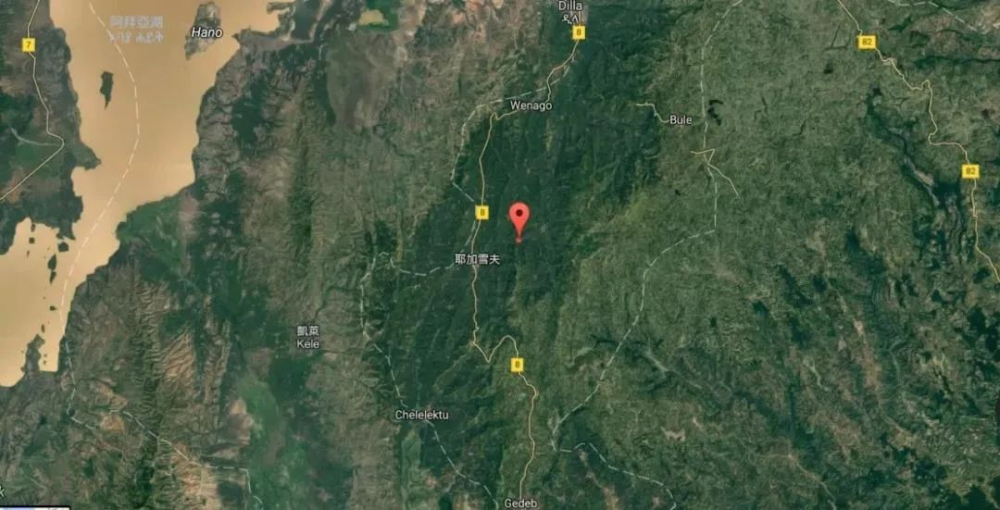
We know that coffee bean grading methods are usually based on the actual conditions of the growing country. Some are graded by bean size, such as Kenyan coffee; some by altitude, such as Blue Mountain coffee; and some by defect rate, such as Ethiopian coffee.
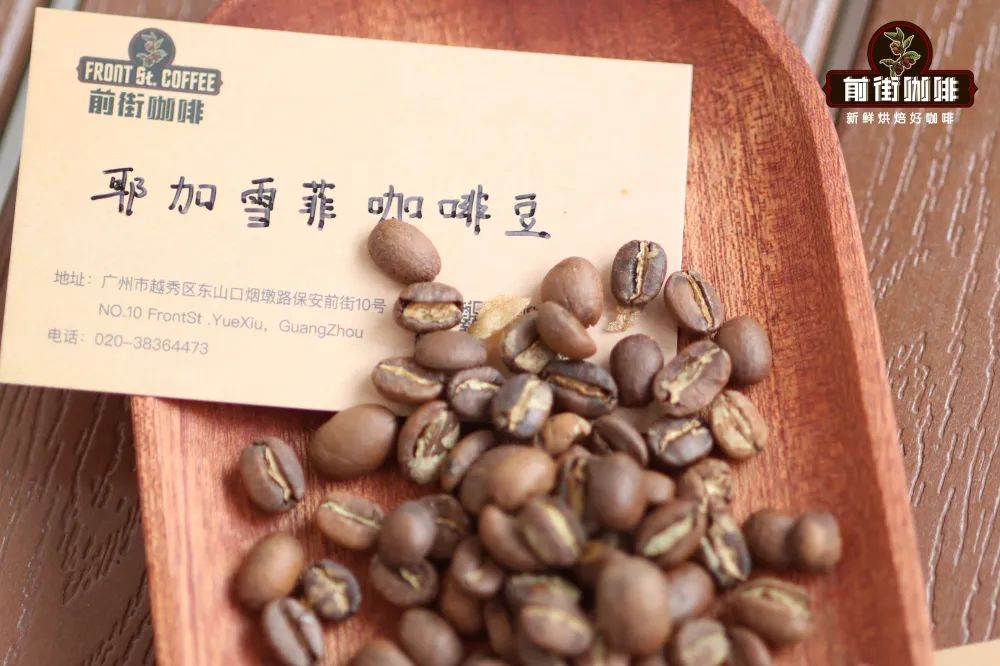
Ethiopia, as the gene pool of Arabica, has a vast variety of coffee varieties, making identification difficult. In addition, to protect these unknown varieties and prevent industry players from various countries from scrambling to obtain them, the local government decided to collectively refer to them as the native species "Heirloom." Green beans labeled as Heirloom appear small in size, vary in shape, and are relatively round. For example, Front Street Coffee's Red Cherry coffee beans belong to the local native species, are sun-dried, and carry flavors of berries, citrus, florals, and fermentation.

In Ethiopia, because coffee trees mostly grow in a wild or semi-wild state, when the harvest season arrives, you can see coffee cherries ripening one after another in fields, backyards, and forests. In a single coffee grove, it is commonplace for dozens of coffee varieties with different forms to be mixed together. Coffee farmers do not actively distinguish these varieties, but instead harvest them in a "mixed" form, then send the coffee cherries to nearby processing stations for unified processing. It is precisely because of this "less rigorous" production and harvesting method that Ethiopian coffee beans often appear uneven in size and diverse in form.
Based on the above situation, it is very difficult to grade by green bean size at export the way Kenya does, so the Ethiopian government decided to classify by defect rate.
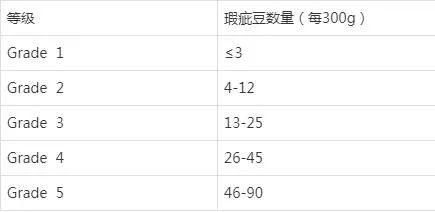
Ethiopia's old grading system graded purely by the number of defects in coffee beans. Before 2009, that is, before the emergence of the Ethiopia Commodity Exchange (ECX), Ethiopia's coffee export grades were set by the CLU department (Cupping and Liquoring Unit) under the Ministry of Agriculture, and coffee beans were divided into five grades. Only washed processing methods could qualify for G1 and G2 grades, and only G1 and G2 counted as specialty coffee. Before 2009, the washed beans exported by Ethiopia were all G2 grade. G1 washed beans were extremely rare and generally very difficult to buy.
Traditional sun-drying processing was too crude. Every coffee farmer could carry it out in their own small yard, spreading the beans directly on rooftops or the ground to dry. The rough method easily brought unpleasant flavors and could even be mixed with stones, twigs, and other debris, causing inconsistent coffee quality. In the 1970s, Ethiopia introduced the washed processing method from Central and South America. Compared with sun-drying, washing added a "flotation" step, which removed underripe beans and debris floating on the water surface, resulting in more stable coffee quality. At the time, washing was also regarded as a higher-grade processing method. At that time, only washed beans could reach G1 or G2 grade, while sun-dried beans were usually below G3.
Grade 1, that is, G1 grade, represents washed beans containing 0–3 defective beans per 300g;
Grade 2, that is, G2 grade, represents washed beans containing 4–12 defective beans per 300g.
ECX's new grading method (grading by coffee bean defect rate and comprehensive cupping score)
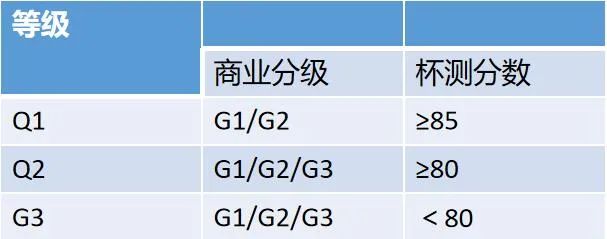
In October 2009, with the endorsement and witness of the Specialty Coffee Association of America and the Specialty Coffee Association of Europe, Ethiopia officially launched the new grading system of the Ethiopian Commodity Exchange (ECX). On the basis of the original defect-rate grading, a comprehensive rating also needed to be combined with cupping scores. Sun-dried coffee beans would no longer be limited to G3, G4, and G5 grades. As long as sun-dried beans passed evaluation by ECX cuppers, high-quality sun-dried beans could also be awarded Grade 1 and Grade 2, breaking the half-century "convention" that sun-dried beans had no first or second grade. Today, sun-dried Ethiopian coffee batches marked G1 and G2 are often seen on the market, while G3 is gradually becoming less common.
ECX defines all coffee according to processing method—sun-dried processing and washed processing—into three types:
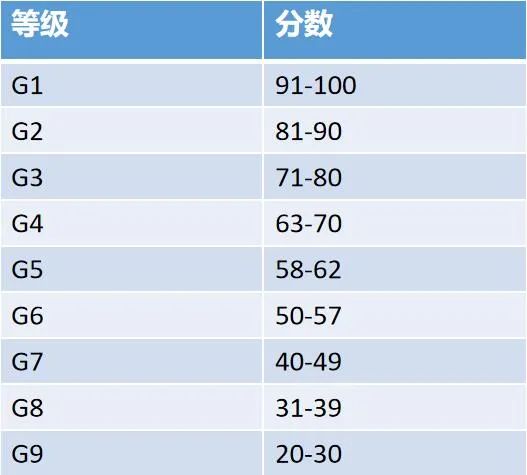
How big is the difference between G1 and G2 washed Yirgacheffe?

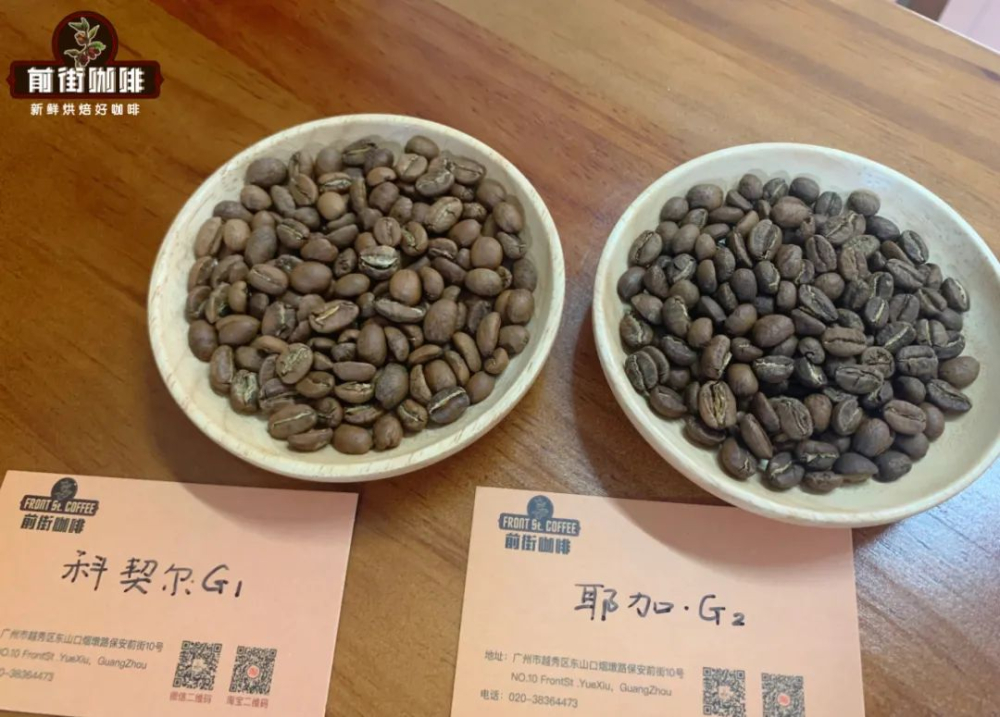
Here, taking Yirgacheffe as an example, by observing and comparing Front Street Coffee's Gutingding coffee beans (G1) and Front Street washed Yirgacheffe everyday beans (G2), let's see just how big the difference between the two grades is.
Looking at unroasted green beans, G1 green beans are overall relatively uniform in particle size, more consistent in color, and clearly have fewer defective beans; while G2 green beans are somewhat uneven in size and have more defective particles. From the perspective of green bean defect rate, G1 is certainly better than G2, because with fewer defects, the bean quality is better, and the price will naturally be somewhat higher. For example, when we buy apples, some are more uniform in size and some are more uneven. Although there is no difference in taste, at first glance we still think the uniformly sized ones look prettier and taste better, and of course they are more expensive.
ConsideringFront StreetYirgacheffe uses a light roast. Light-roasted beans are relatively hard and need higher-temperature water for brewing. Front Street uses a V60 and 91°C water temperature, a grind size of 80%, and a 1:15 ratio for brewing.
Flavor of G2 Front Street washed Yirgacheffe: white florals, lemon, citrus, and tea-like notes.
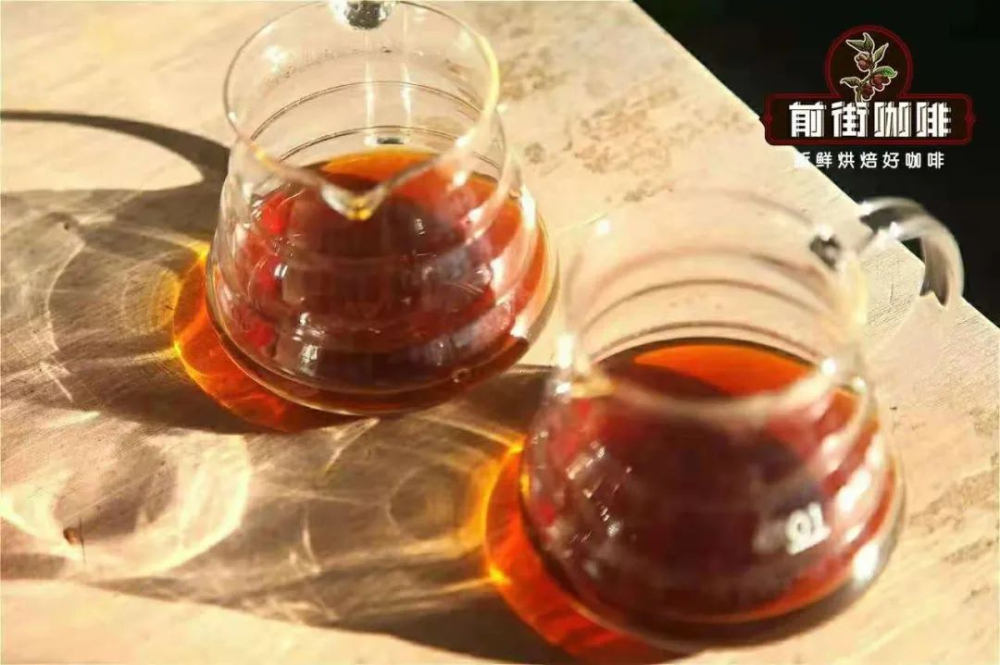
Since both batches are washed Yirgacheffe and both have undergone selection at the green bean and roasted bean stages, the coffee flavor profiles are not too far apart, both showing bright acidity and floral aromas. But through direct comparison, the mouthfeel of G1 is noticeably cleaner than G2, and the aroma is also more refined and richer.
The above content is compiled by CoffeeHunters, a coffee news website.


