







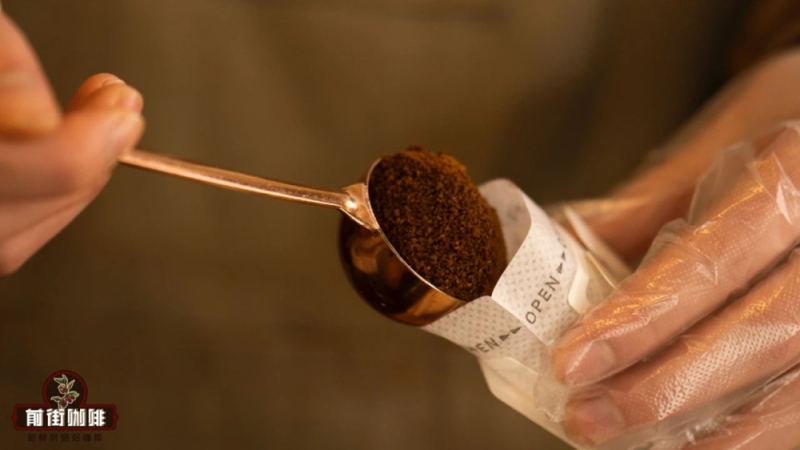

With the rise of the specialty coffee trend, coffee culture has been continuously spreading, and sales of both coffee equipment and coffee beans are constantly increasing. As a shop focused on specialty coffee, Front Street not only brews a delicious cup of coffee for every customer, but also wants to spread coffee culture. If you follow Front Street's official account, you will find that the latest coffee news is updated every day. The coffee information you see is all carefully written by every barista at Front Street, with the aim of spreading coffee culture to more people. A delicious cup of coffee, besides its taste, contains more human stories.

Front Street Coffee stores have at least two hundred kinds of coffee beans, with different processing methods, different roasting levels, and different countries of origin. Where should one start drinking? Very few customers can finish all the coffee beans on Front Street Coffee's store bean list, so how to select suitable coffee beans for every customer who comes to Front Street is also our task.
Recently, many customers have come to ask about knowledge related to drip bag coffee: which drip bag coffee tastes best, how to brew a delicious cup of drip bag coffee, and whether drip bag coffee can really be brewed multiple times? This article will discuss drip bag coffee from these questions.
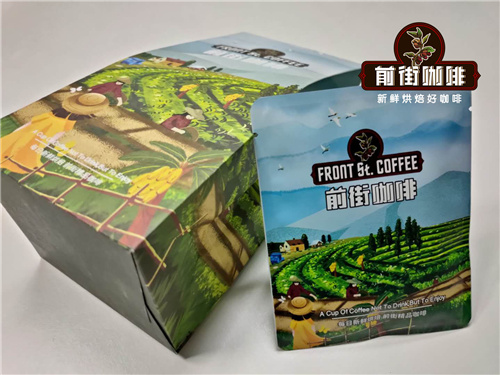
I. The Origin of Drip Bag Coffee
The history of drip bag coffee originates from Japan, where UCC Ueshima Coffee invented drip bag coffee. This kind of drip bag coffee is very simple and efficient. Nowadays, everyone does not have extra time to go to a coffee shop to drink a cup of pour-over coffee carefully made by a barista, so once drip bag coffee was promoted on the market, it was favored by many coffee lovers. Just among the customers who come to Front Street for coffee, many ask whether the store sells drip bag coffee, which shows that the market for drip bag coffee is very broad.
II. Can Drip Bag Coffee Be Brewed Multiple Times?
Drip bag coffee is also like agricultural products. Agricultural products emphasize freshness, while coffee emphasizes the best flavor, that is, the optimal flavor period of coffee. Therefore, Front Street generally recommends that everyone drink coffee within the optimal flavor period as much as possible, otherwise the taste of drip bag coffee will gradually change over time. You may ask, can drip bag coffee really be brewed multiple times?

Front Street has also noticed that many people compare instant coffee with drip bag coffee. Compared with drip bag coffee, instant coffee is much simpler. There is no need to consider what water temperature to use; it can be dissolved directly with boiling water. But everyone should understand that instant coffee is a dry coffee extract obtained by evaporating the water from coffee extract, so its taste is relatively simple, usually with obvious bitterness or sweetness, and it contains a large amount of saccharin and non-dairy creamer.

The coffee powder used in drip bag coffee, however, is ground from freshly roasted coffee beans, and real black coffee is extracted through drip filtration. The brewing methods of instant coffee and drip bag coffee are different. Drip bag coffee cannot have its coffee powder poured out like instant coffee, otherwise the cup of coffee will be full of coffee grounds. How could you drink that? It greatly affects the coffee's mouthfeel, and this brewing method is also wrong. Therefore, Front Street recommends that before brewing drip bag coffee, everyone must read the brewing method clearly.
Generally speaking, drip bag coffee cannot be brewed a second time, because only 3% of the flavor substances in coffee can be extracted, and the other flavor substances are difficult to extract. Generally speaking, coffee can only be extracted once. Front Street has also tried before whether drip bag coffee can be extracted a second or even third time, and Front Street found that after the first extraction, the subsequent coffee basically has no flavor left.

In fact, a small packet of drip bag coffee generally contains 10 grams of powder, and 10 grams of powder can generally only be brewed once. When you repeatedly brew it, you may find that the coffee still tastes strong and should still be drinkable. But that is not actually the case, because when you brew drip bag coffee for a long time, the longer the coffee is soaked, the more caffeine is released. This is because the coffee has already been over-extracted. Over-extraction will release the bitterness and astringency in the coffee, and then basically the best flavor of this coffee is already gone. Even if this coffee is within its optimal flavor period, repeated brewing will dilute the coffee's best flavor, so Front Street generally does not recommend that customers repeatedly brew the same drip bag coffee.
Even if this drip bag coffee is still within its flavor period, Front Street does not recommend brewing one coffee multiple times, because drip bag coffee itself is an instant-brew coffee that can brew a rich and fragrant black coffee anytime and anywhere, perfectly allowing you to taste the acidity, sweetness, bitterness, and mellow aroma in the coffee. The flavor of repeatedly brewed drip bag coffee is basically lost.

III. How to Choose a Drip Bag Coffee That Suits You
When drinking coffee, of course you want to drink the coffee flavor you like. Some people may like the lemon-citrus notes of Ethiopian Yirgacheffe, some like the full body of Indonesian Mandheling, or the rich floral aroma and fruity juice-like mouthfeel of Panama Geisha. These are all very good choices. But Front Street has one precondition on this basis: the drip bag coffee you buy must be fresh, and must be exactly within the optimal flavor period of the coffee. Otherwise, no matter how delicious the coffee is, you cannot truly taste a delicious cup of coffee. Generally, experienced baristas and even enthusiasts can even judge how long coffee has been stored by its smell. But ordinary coffee lovers like us should honestly use the following methods to identify whether coffee is fresh.

1. Check the production date
First, when buying drip bag coffee, look at the roasting date on the drip bag coffee packaging. The roasting date indicates the date marked when the coffee beans came out of the roaster. When we usually talk about whether coffee beans are fresh, we generally look at the roasting date rather than the shelf life.
2. Check the optimal flavor period on the packaging bag
Coffee bean packaging is usually equipped with a one-way valve, the purpose of which is to let carbon dioxide inside the coffee packaging escape, so as to prevent the packaging bag from expanding and bursting. Front Street's drip bag coffee does not have a one-way valve, because although a one-way valve can be squeezed to smell the coffee aroma, squeezing it at the same time causes the coffee to release aroma and shortens the life of the coffee. Therefore, even if a one-way valve is added to the drip bag packet, it can only increase the cost of the drip bag coffee, but cannot extend its optimal flavor period.
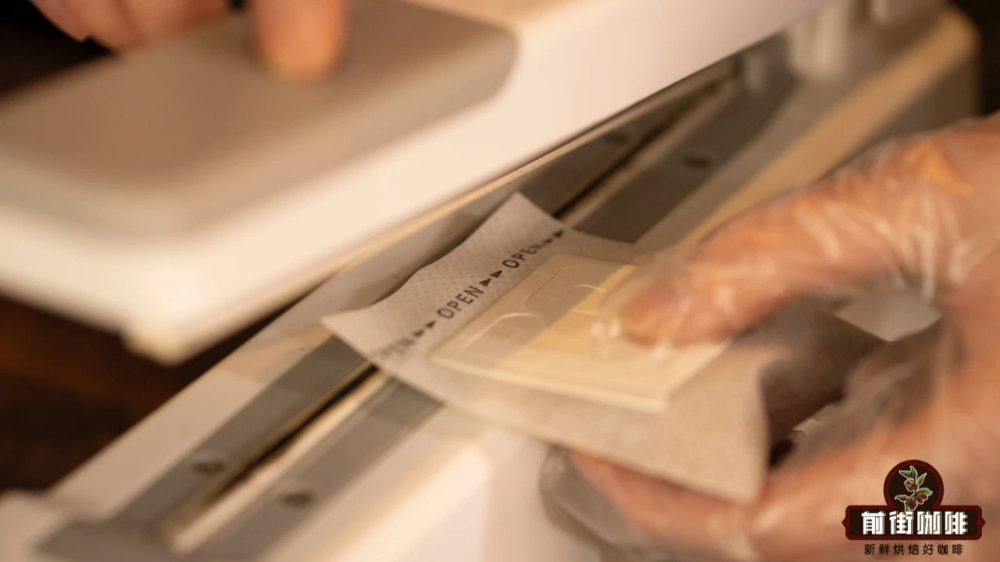
Front Street also recommends that everyone not buy several months' worth of drip bag coffee at once just because buying more gives a discount. Drip bag coffee emphasizes freshness. If you buy so much drip bag coffee that you cannot finish drinking it, it will pass the optimal flavor period, and then the brewed coffee will certainly not taste as good.
3. Choose the coffee flavor you like
Drip bag coffee is simplified pour-over coffee, so just like pour-over coffee, what ultimately determines the coffee flavor is still the coffee beans inside the drip bag coffee. Drip bag coffee can be single-origin or blended coffee. However, drip bag coffee sold by Front Street is generally single-origin coffee, with relatively few blends. Generally, the packaging of drip bag coffee will indicate the coffee's flavor, such as jasmine floral aroma, citrus, lemon, cream, and other terms describing coffee flavor. These generally describe the flavor tendency of the drip bag coffee.

For example, Front Street has a Brazil Red Fruit coffee, which carries the nutty, chocolate, creamy, and peanut flavors unique to Brazilian coffee. There is also a Panama Butterfly coffee. This Butterfly coffee is a blended bean, with 70% high-quality Geisha lineage, plus a small amount of Caturra and Catuai. When brewed, its floral aroma is especially rich, and its citrus, floral, honey, and sweetness are very high. There is also the fresh cherry tomato-like bright acidity of Kenyan coffee, and so on. All are very suitable for making drip bag coffee.
Some customers at Front Street also choose suitable drip bag coffee according to the coffee processing method. There are many coffee bean processing methods. For example, Brazil often uses the natural method to process coffee beans. The natural method can retain more of the coffee beans' flavor and increase their aroma and sweetness. For example, the reason Brazil Queen Estate has relatively high sweetness is that it uses the natural method. There is also the washed processing method. For example, Ethiopian Yirgacheffe coffee uses the washed method, and its mouthfeel is very clean, with obvious lemon-citrus notes and a light jasmine floral aroma. There is also Costa Rica's honey processing method. For example, the Costa Rican Musician Series launched by Front Street uses the raisin honey processing method, drying selected coffee cherries like raisins, then hulling them, and drying the processed coffee beans. Therefore, Costa Rican coffee beans have a relatively full body and relatively sweet sweetness.

Of course, all of the above are very suitable for making drip bag coffee. Some coffees using special processing methods are also very popular when made into drip bag coffee, such as the Honduras Sherry coffee launched by Front Street, which uses fine washing and then fermentation in whisky barrels. Coffee beans processed this way carry a rich fermented wine aroma. Honduras Lychee Orchid works by the same principle, but Lychee Orchid coffee beans are placed in brandy barrels, so the flavor is very different from Sherry coffee. The wine aroma of this Lychee Orchid coffee bean leans more toward brandy, with a hint of tropical fruit lychee. Making it into drip bag coffee is also a good choice.
IV. How to Brew a Delicious and Rich Drip Bag Coffee
At this point, I believe you already have a general range for your own taste. Next, you need to understand how to brew a delicious cup of drip bag coffee. Before that, Front Street recommends that everyone first understand the grind size of drip bag coffee below. The coarser the coffee powder, the lower the extraction efficiency, and vice versa. But the coarseness of coffee powder also relates to sweetness. Coffee powder that is too coarse will lead to under-extraction, making it taste like drinking water. Coffee powder that is too fine will lead to over-extraction, making the coffee difficult to swallow. After many explorations of the grind size for drip bag coffee, Front Street finally adopted a medium-fine grind as the grind size for drip bags, which is more conducive to brewing coffee with a rich aroma.

Front Street believes that drip bag coffee is equivalent to simplified pour-over coffee, and there are certain requirements for brewing time, temperature, and water amount. The water temperature for drip bag coffee is relatively particular and is determined according to the flavor of different producing regions and the roasting level. For darker roasts, Front Street drip bag coffee is best brewed with 88°C water; for light roasts, it is best to use 90°C to 92°C water. However, friends do not need to worry about not being able to identify the coffee roasting level. Front Street's official account has published relevant knowledge and brewing methods about drip bag coffee, so everyone can buy with confidence.
In addition, Front Street has attached the brewing method for drip bag coffee for everyone.
The Brewing Process of Drip Bag Coffee
1. Warm the cup -
Prepare a cup and first pour in some hot water to warm it. The purpose is to keep the brewed coffee from cooling too quickly. Coffee flavor keeps changing as the temperature drops. If it cools too quickly, you will miss many different tastes.

2. Water temperature -
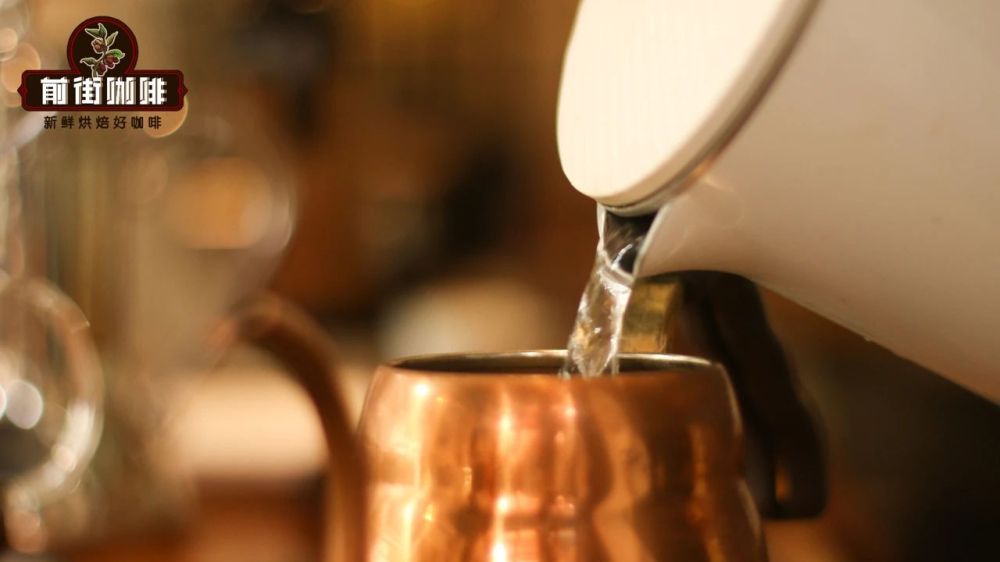
First, we need to prepare enough boiling hot water, because only when the water temperature is high enough can more aromatic substances in the coffee powder be released. When making pour-over coffee, Front Street recommends brewing at 86–93°C. If the temperature is only around 80°C, the brewed coffee tends to be bland and tasteless, while boiling water easily extracts burnt and bitter flavors. Therefore, Front Street will leave boiled water uncovered at room temperature for 1–2 minutes to let the water temperature drop slightly to around 90°C.
3. Hang the coffee bag -
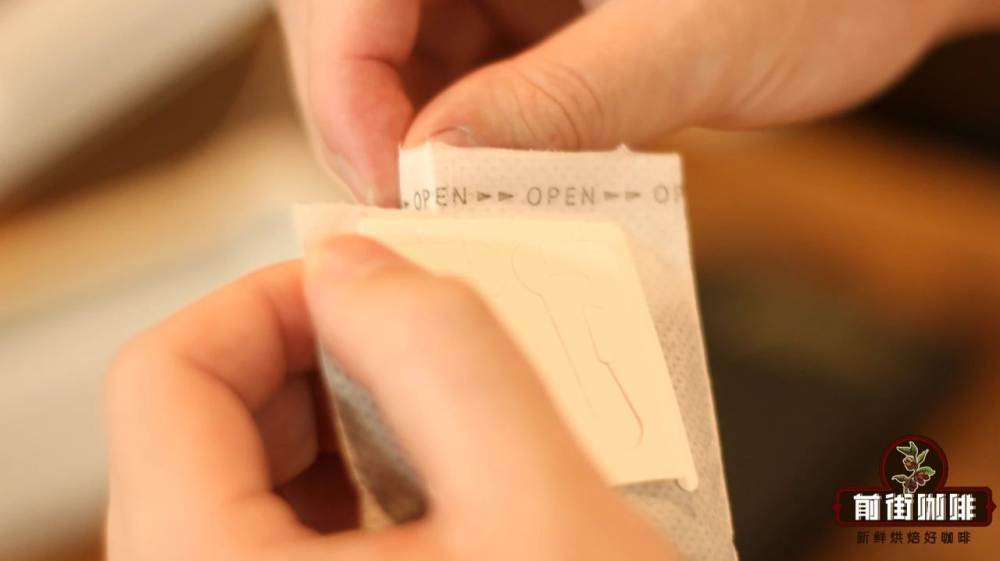
First gently shake the drip bag to let the coffee powder settle, avoiding coffee powder scattering when tearing it open. Then pour out the hot water in the cup. After tearing off the seal strip on the drip bag, spread open the paper hangers on both sides and shake so the coffee powder is level. Finally, hang it on the rim of the cup.
4. Pre-wetting -
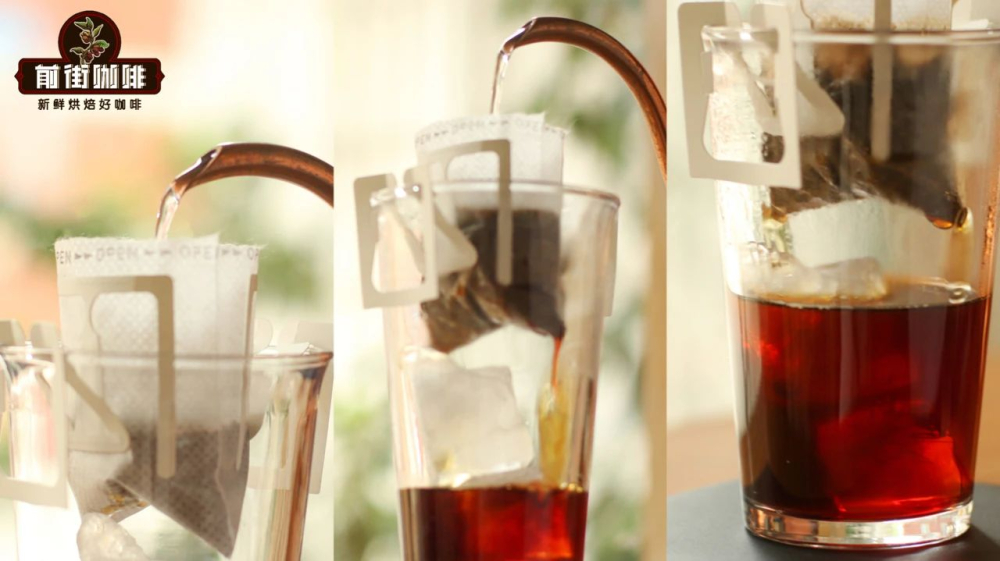
The amount of water for the first pour should be just enough to wet the coffee powder; too much or too little will affect the flavor. Then wait 20 seconds to let the coffee powder fully absorb the water. The strength of the coffee can be adjusted by the pre-wetting time; extending it to 40 seconds can produce a stronger coffee.
5. Pouring water -
For the second pour, you can fill to eight-tenths of the filter paper. It is best to use a thin, slender stream of water. After the water level drops to the pre-wetted height, you can continue pouring to eight-tenths full until 150 to 180 cc has been extracted. Once extraction is complete, there is no need to wait for all the water in the filter paper to flow out; simply discard it directly.
6. Enjoy the coffee! Remember that as the temperature changes, you can taste different flavors!
The above content is compiled by CoffeeHunters, a coffee news website.


