








With the growing popularity of specialty coffee culture, more and more coffee enthusiasts are starting to study at home how to brew pour-over coffee to bring out the flavors of single-origin coffee beans, but they don't know how to do it. They always feel that the coffee they brew doesn't taste as good as what they drink in cafés. So how can you brew out the flavors of a single-origin coffee bean? In this next article, Front Street Coffee (FrontStreet Coffee) will explain the basic knowledge of pour-over coffee, the equipment needed, and the brewing method parameters for coffee enthusiasts.
What is pour-over coffee?
Pour-over coffee, literally understood, is manually brewed coffee. So what does it specifically mean? Coffee enthusiasts who often come to Front Street Coffee (FrontStreet Coffee) to taste single-origin coffee have all seen that pour-over coffee refers to brewing under one atmosphere of pressure, using a dripper and filter paper filled with appropriately ground coffee powder, where the brewer uses a steady pouring method to pour water at the proper temperature and volume onto the coffee grounds to extract the coffee liquid.
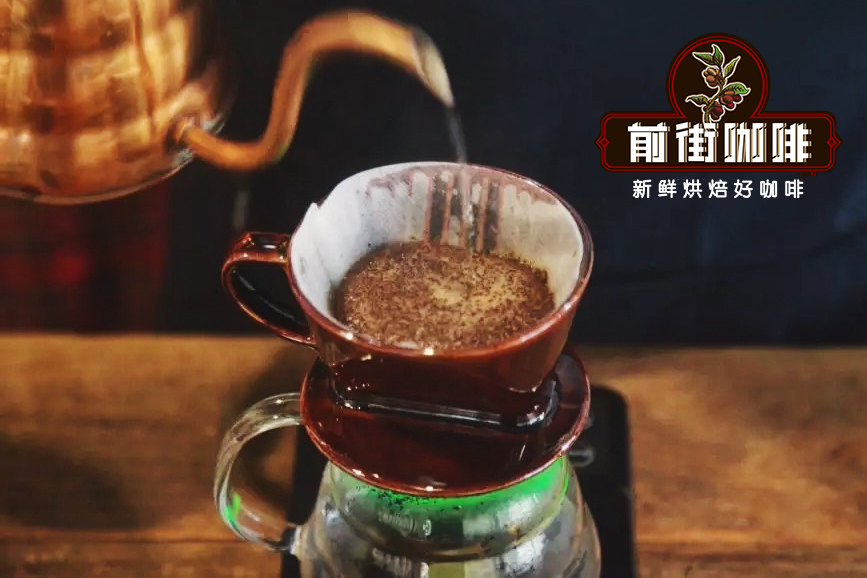
Moreover, when brewing coffee beans from different regions, Front Street Coffee (FrontStreet Coffee) adjusts the grind size, water temperature, pouring method, and brewing time, because these all affect the extraction of coffee flavor. So pour-over coffee is not as simple as it looks, but a brewing method that places great emphasis on technique and professional coffee knowledge.
What are single-origin coffee beans?
The purpose of pour-over coffee is to brew single-origin coffee. So why does single-origin coffee require so many parameters? This is because single-origin coffee refers to coffee beans produced from a single region, and it can also be traced back to the coffee's place of origin, down to the producing region, estate, and estate characteristics, allowing you to understand the story of the coffee's origin from the source. Therefore, Front Street Coffee (FrontStreet Coffee) also provides somewhat detailed introductions for each coffee bean introduced in the shop, and this is also one of the charms of single-origin coffee.
The producing countries of specialty coffee are spread all over the world and can be divided into three continents: Asia, Africa, and Latin America. The altitude and climate of these three continents each have their own characteristics, which leads to differences in the flavor expression of coffee beans. But overall, the flavor differences among producing areas within each continent are not too great, so from a macro perspective, coffee flavors can be divided into three major categories.

For example, the more representative Asian Mandheling coffee bean presents spice and herbal flavors with a full body; African coffee flavors present clean citrus-lemon acidity or cherry tomato acidity, with a fresh and bright mouthfeel; while Latin American coffee flavors fall between the previous two, being more balanced and carrying nutty and cocoa flavors, which is also caused by the large differences in climate and altitude within its producing regions.
So if you want to brew out the original flavors of these coffee beans by pour-over, some detailed things that must be paid attention to cannot be ignored, just as Front Street Coffee (FrontStreet Coffee) mentioned above: the grind size of the coffee beans, water temperature, pouring method, brewing time, brewing equipment, and so on will all affect the flavor of the pour-over coffee. So if coffee enthusiasts do not brew out the original flavor characteristics of a coffee bean at home, it is very likely that a pour-over parameter was set incorrectly. Next, Front Street Coffee (FrontStreet Coffee) will talk about what impact pour-over parameters have on coffee flavor.
The impact of common different pour-over variables on coffee flavor
Generally speaking, to brew a good pot of coffee, Front Street Coffee (FrontStreet Coffee) believes there are mainly four aspects to start with: grind size, water temperature, coffee-to-water ratio, and brewing technique.
1. Grind size
This is an important reason why many problems occur in coffee brewing. Maybe the shop will give a grind size and a reference object, but every grinder is different. We also need to pay attention to whether our own grinder grinds evenly, how many fines there are, the state of the particles, and so on. Even with the same model of grinder, the state of the ground coffee is different (the length of use will cause deviations in grinding), not to mention that you and the merchant are not using the same machine.
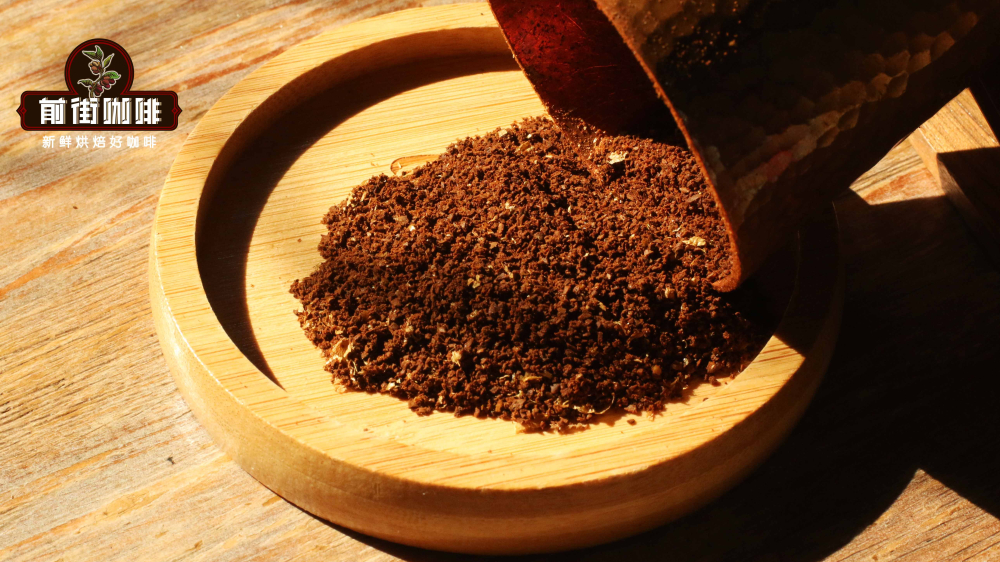
The solution to this is to unify the standard. For example, Front Street uses the national standard No. 20 (850 microns) standard sieve for sieving calibration. According to SCAA cupping standards, the grind size for cupping is a 70-75% pass rate through a No. 20 standard sieve. So Front Street Coffee (FrontStreet Coffee)'s grind size for brewing light-roast pour-over coffee is generally in the 75-80% range.
2. Water temperature
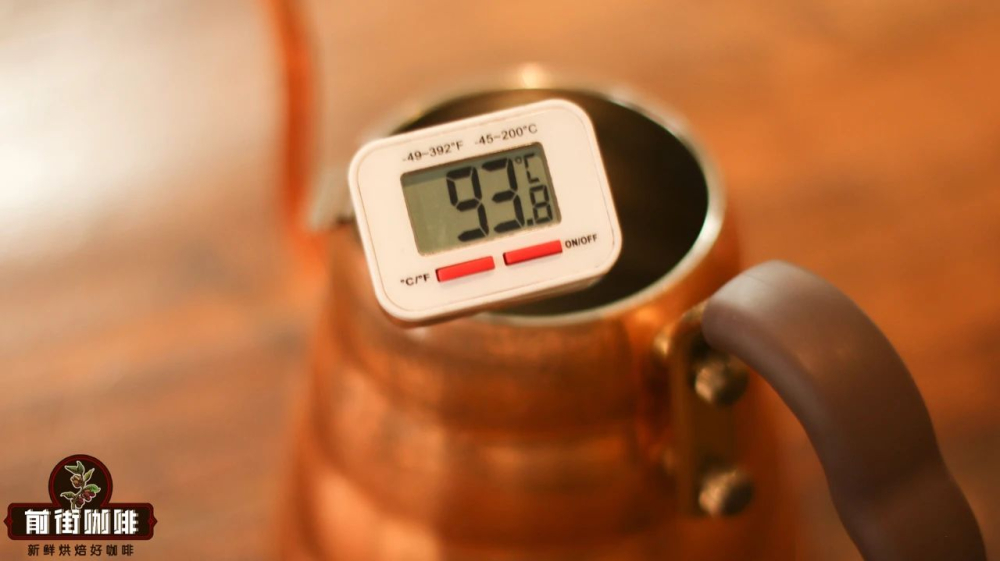
The water temperature for pour-over coffee is generally recommended to be between 86 and 93℃degrees Celsius. For lighter-roasted coffee beans (such as Front Street Coffee (FrontStreet Coffee)'s Ethiopia Yirgacheffe G1 coffee beans), use between 90 and 91℃degrees Celsius, while for darker-roasted coffee beans (such as Front Street Coffee (FrontStreet Coffee)'s PWN Golden Mandheling), use a lower water temperature (between 88 and 89 degrees Celsius). In other words, the darker the roast of the coffee beans, the water temperature used is not lower than 86℃and not higher than 89℃, and the lighter the roast of the coffee beans, the water temperature used is not lower than 90℃and not higher than 93℃.
3. Coffee-to-water ratio
The coffee-to-water ratio refers to the ratio of coffee grounds to brewing water, affecting the strength of the coffee. It can be 1:10, 1:13, 1:15, or 1:16. Front Street Coffee (FrontStreet Coffee) suggests using a 1:15 coffee-to-water ratio, which is relatively moderate in both strength and mouthfeel. Of course, everyone pursues a different coffee mouthfeel. When extracting coffee, everyone can adjust their own coffee-to-water ratio according to the strength and mouthfeel they want.
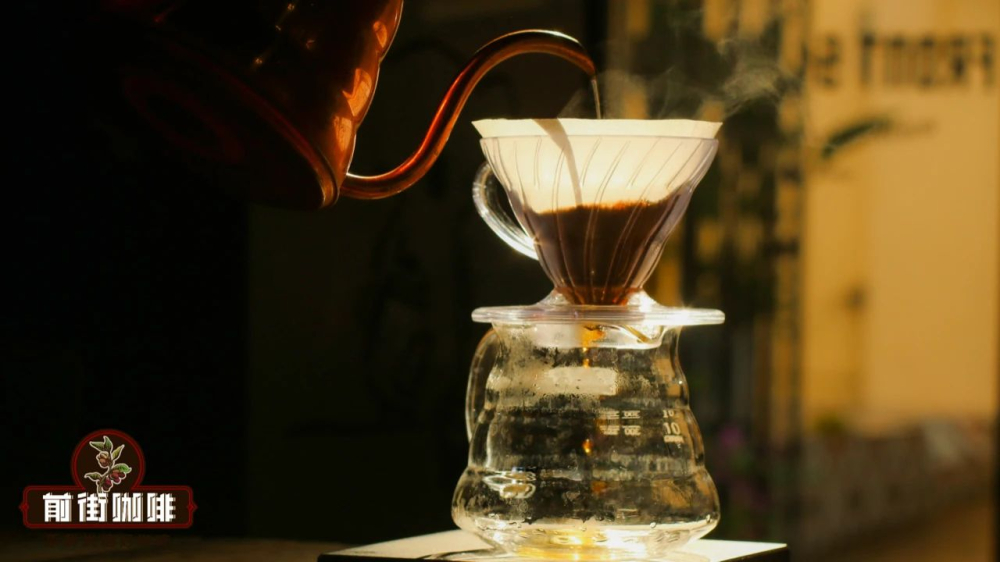
And according to Front Street Coffee (FrontStreet Coffee)'s understanding, the differences in taste based on the pour-over coffee water-to-coffee ratio extraction parameters derived from the SCA Golden Cup extraction theory are
[Heavy taste] 1:10~1:11, i.e. 1:12.5~1:13.5 under the Golden Cup standard
[Moderate taste] 1:12~1:13 (i.e. 1:14.5~1:15.5 under the Golden Cup standard)
[Light and fresh] 1:14~1:16 (i.e. 1:16.5~1:18.5 under the Golden Cup standard)

This is also why Front Street has always recommended using a 1:15 coffee-to-water ratio. Therefore, Front Street Coffee (FrontStreet Coffee) summarizes the information given to us by the above SCA extraction ratio parameters as follows:
(1) The larger the coffee-to-water ratio, the weaker the coffee taste; the smaller the coffee-to-water ratio, the stronger the coffee taste.
(2) Increasing the amount of water to raise the coffee-to-water ratio affects more flavor substances but makes the taste weaker; reducing the amount of water to lower the coffee-to-water ratio affects fewer flavor substances but makes the taste richer.
(3) Increasing the amount of coffee to lower the coffee-to-water ratio reduces the extraction of large-molecule substances in the tail end of the coffee while making the taste stronger; reducing the amount of coffee to raise the coffee-to-water ratio, before reaching the extreme, extracts more complete flavor substances while lowering the intensity of the taste.
4. Brewing technique
There are many kinds of brewing techniques, and commonly seen ones include the three-stage method, one-cut method, drip method, and so on. Here Front Street Coffee (FrontStreet Coffee) suggests that beginners use the three-stage pouring method to brew, because this technique is suitable for light-roast, medium-light, and medium-roast coffee beans. The segmented extraction method of three-stage pouring can clearly define the front, middle, and back-end flavors of the coffee and can relatively ensure the flavor presentation of the coffee.
Pour-over coffee three-stage brewing method:
First pour: blooming (helps release gas)

During the roasting process in which green coffee beans become roasted beans, a series of chemical reactions and physical changes occur. After reaching a certain degree of roasting, a large amount of gas (mostly carbon dioxide) accumulates inside the coffee beans.
Generally speaking, the fresher the beans and the closer to the roast date, the more bubbles usually appear during blooming. Dark-roasted beans also release more gas during the blooming process than light-roasted beans. Front Street Coffee (FrontStreet Coffee)'s coffee beans are all freshly roasted, so it is generally recommended that customers first rest the beans for three days to let the coffee beans release carbon dioxide first, which in brewing can avoid the problems of instability and under-extraction.
After the gas is released during blooming, the coffee particles can absorb water evenly, which allows later extraction to be uniform. A good bloom can allow the coffee grounds to release gas quickly, fully, and evenly, while also allowing the coffee grounds to fully and quickly contact water, helping the coffee grounds to be extracted evenly.
Second pour
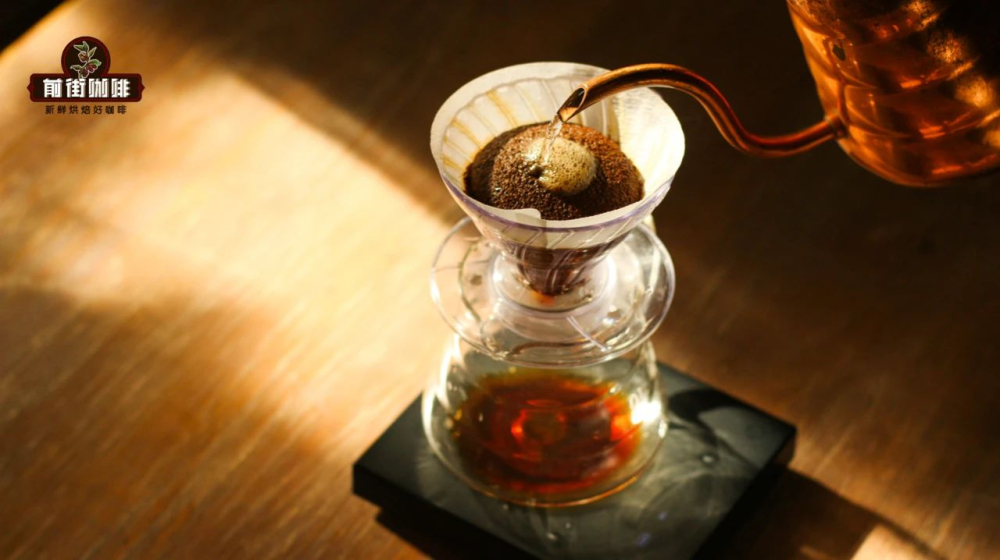
The second pour starts from the center, injecting with a small stream into the bottom of the coffee bed. In order for the penetrating force of the water stream to be concentrated, the range of circular movement should be small, about the size of a coin, and then circle outward. From the start of the second pour, pay attention to the water amount and try not to exceed the height of the coffee bed. That is to say, when the water stream circles to near the filter paper, you can stop pouring.
Third pour
As the thicker coffee bed near the edge of the filter paper becomes heavier from absorbing water, it slides down and becomes thinner as the water level drops. When the water level drops by half, you can proceed with the third pour.
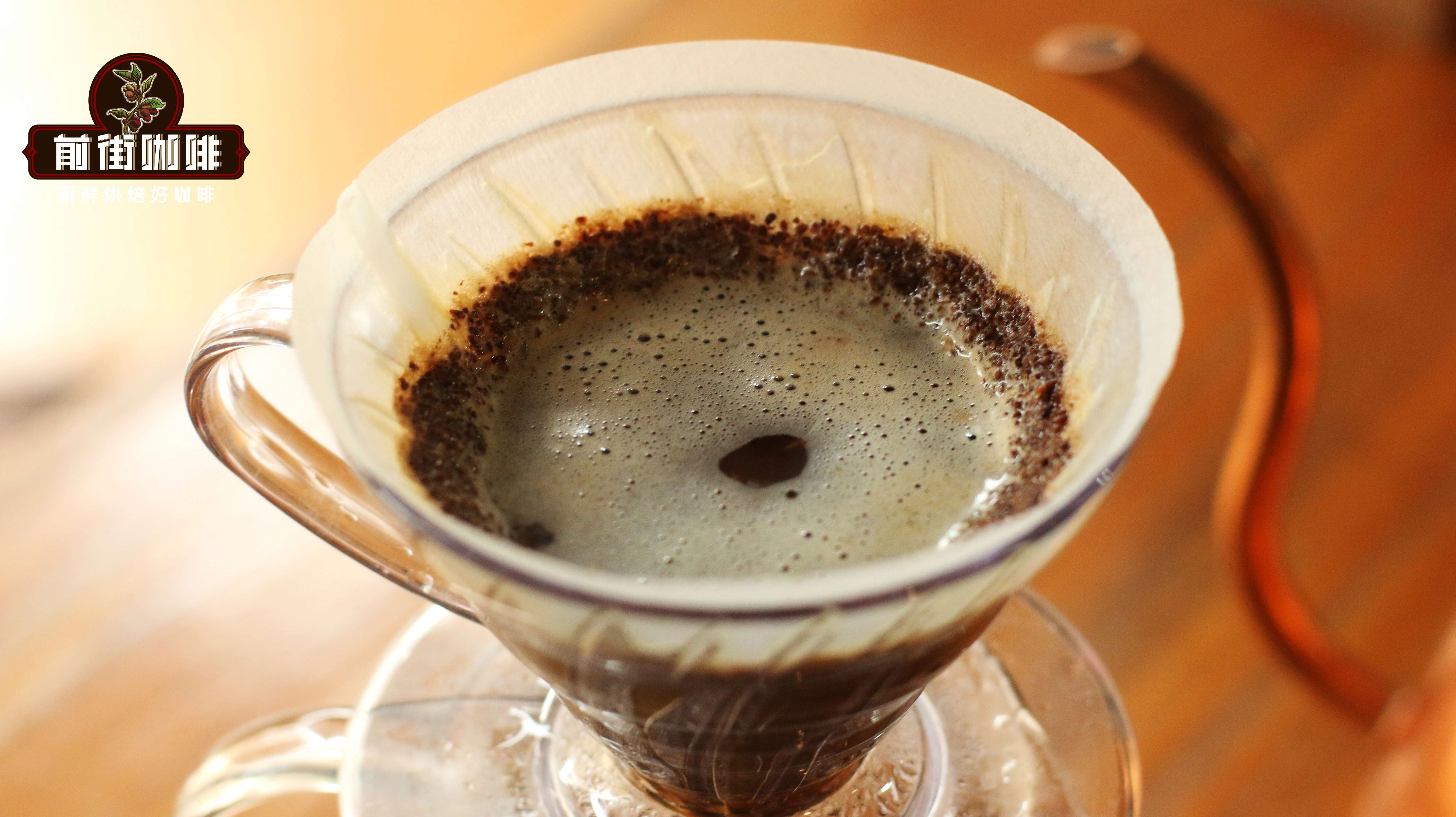
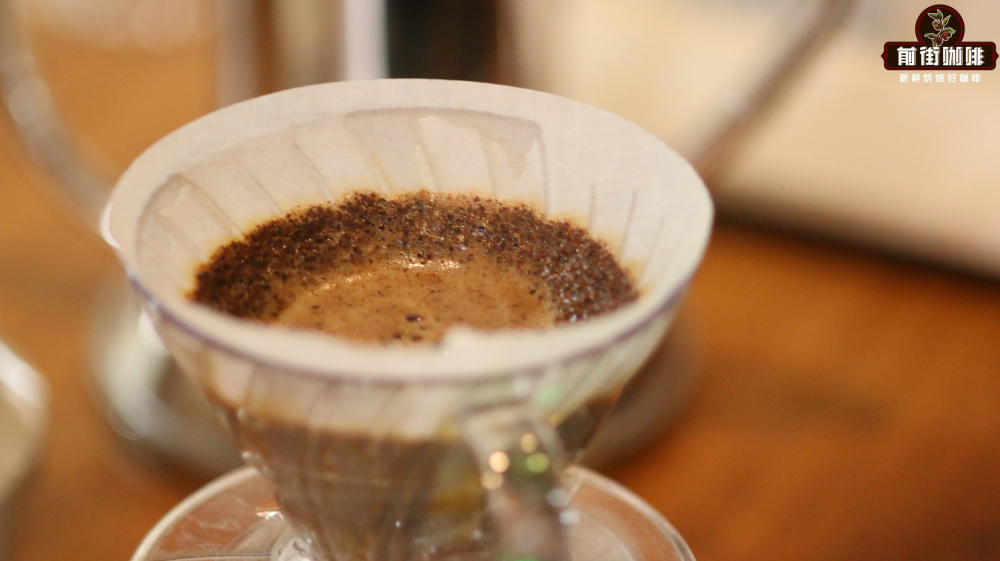
Starting from the third pour, observe the extent to which the water level drops. Similarly, start pouring from the center and circle outward, and do not let the water amount exceed the height of the coffee bed. At this time you will also observe that the foam ratio has already filled the surface. The third pour should increase the tumbling of the coffee particles so that all the settled particles tumble and thereby dissolve soluble substances.
The rolling particles will begin to become still when water is stopped. At this point, it relies on the flow rate caused by the dropping water level to create friction among the coffee particles. So once pouring stops, the coffee particles sink downward, causing clogging, so pay special attention to the rhythm of pouring. If there are too many pours with interruptions, it is equivalent to letting the coffee particles sit in water the whole time, and this will cause the tail-end extraction of the coffee to produce astringency and off-flavors.
What situations usually cause the brewed coffee to have an astringent feeling?
First, excluding the impact of defective beans on brewing quality, Front Street Coffee (FrontStreet Coffee) also encountered sour-astringent and bitter-astringent situations when first getting into pour-over single-origin coffee. The main reasons are roughly:
1. The water temperature is too high (or there is a heat source continuously heating the water);
2. The water temperature is too low (or the hot water loses heat too quickly);
3. The water flow is too full (or too fast);
4. The coffee grind is too fine (or there are too many superfine particles);
5. The coffee grind is too coarse.
These factors will either cause the coffee extraction rate to be raised, so that too many dissolved substances are extracted, including both good and bad flavors, generally mostly manifesting as bitterness; or they will cause the coffee extraction rate to be too low, so that too few flavor substances are extracted and the balance is lost, the astringent taste is amplified and highlighted, generally manifesting as sour-astringent taste, that is, the unpleasant sourness that coffee novices encounter when first getting into coffee.
The above is Front Street Coffee (FrontStreet Coffee)'s compilation of pour-over coffee techniques and brewing methods. Next, Front Street Coffee (FrontStreet Coffee) will explain the equipment needed for pour-over coffee.
Pour-over coffee equipment

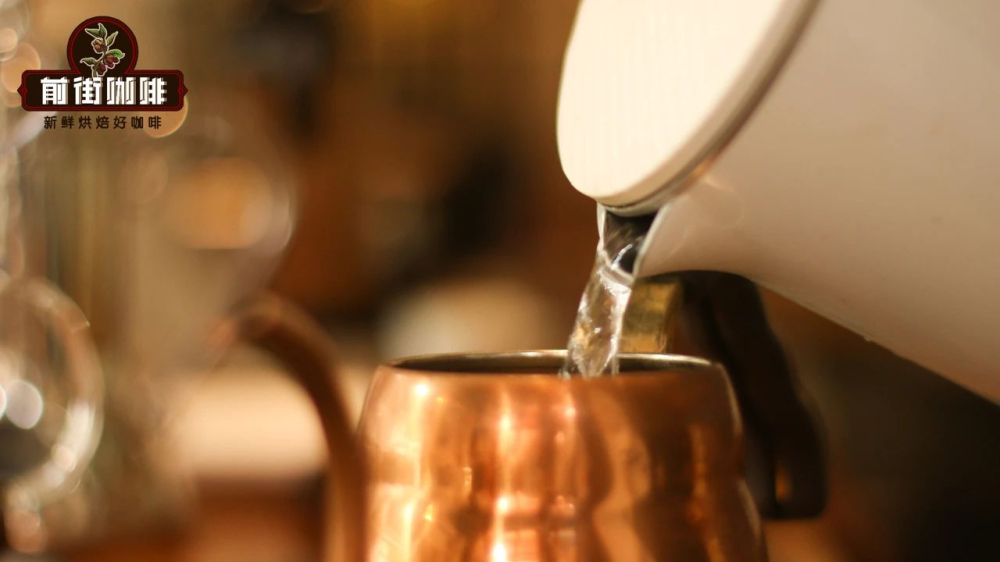
1. Pour-over kettle:There are pour-over kettles of various sizes and materials on the market, and you can choose according to your needs. What affects the brewing result more is the size of the spout, because it is related to the water flow. Beginners are generally advised to use a narrow-spout kettle, which is easier to control. In addition, each kind of pour-over kettle is suitable for different heating methods (induction cooker or gas stove), so pay special attention when buying.
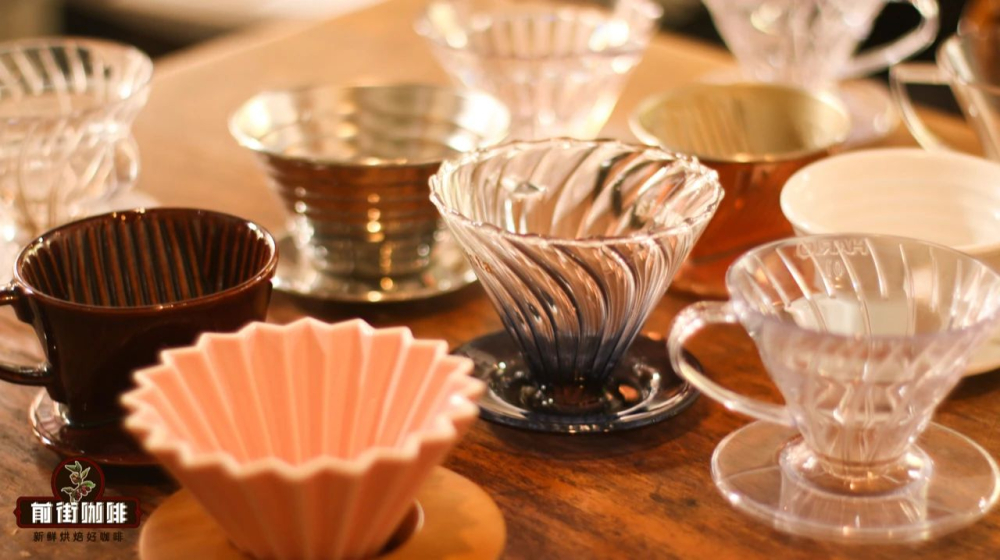
2. Dripper:Drippers also differ in size and material, and are mainly divided into three shapes: flat-bottom, cone, and wave. The size of the hole at the bottom of the dripper affects the flow rate of the extracted coffee, and thereby affects the coffee flavor. The flat-bottom dripper has a small hole and a slow flow rate, giving a fuller mouthfeel; the cone dripper has a large hole and a fast flow rate, giving a lighter mouthfeel; the wave dripper has a flat bottom and is paired with special wave filter paper, and the filtered coffee has the most uniform mouthfeel. More special is the metal mesh dripper, which does not need to be paired with filter paper and can retain more coffee oils, giving a fuller mouthfeel, but some finer coffee grounds may not be filtered out.

3. Filter paper:Filter paper comes in bleached and unbleached types. Bleached filter paper looks whiter, while unbleached filter paper looks close to light brown. The function of filter paper is to use extremely dense fibers to hold the ground coffee and filter the extracted coffee into the cup. When buying filter paper, choose the corresponding filter paper according to your own dripper.
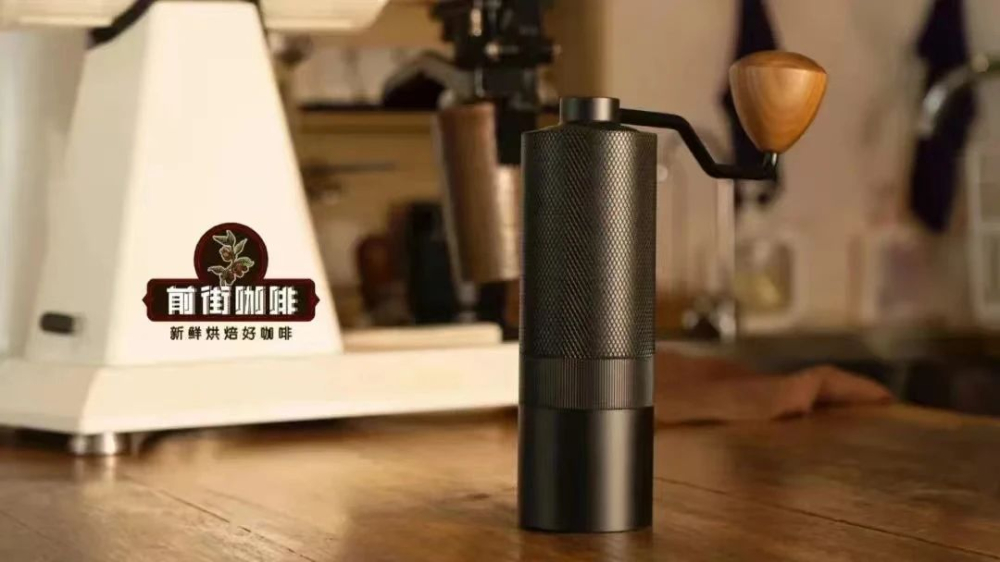
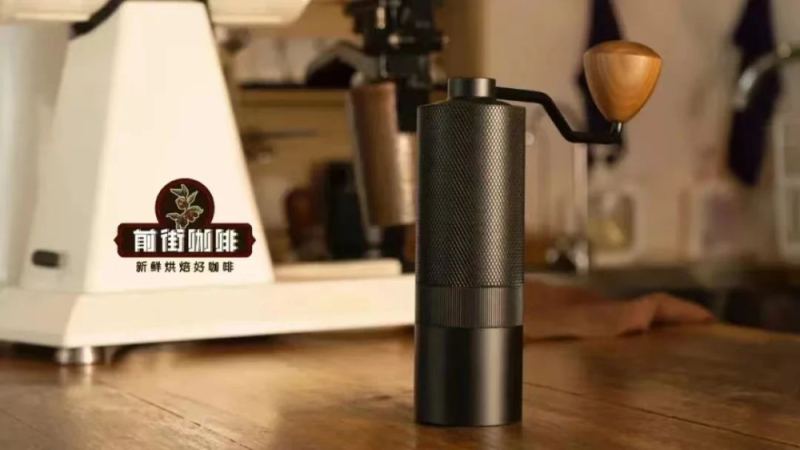
4. Grinder:Good pour-over coffee requires a good grinder. There are three types of grinders on the market.
(1) Ghost tooth grinder
(2) Flat burr grinder
(3) Conical burr grinder
5. Thermometer:A thermometer is used to measure the water temperature of the coffee. Thermometers on the market include the Tiamo thermometer, Hero thermometer, and Cafede Kona thermometer.
6. Electronic scale:An electronic scale allows us to better control the coffee-to-water ratio when brewing coffee, reduce unstable factors, and increase sufficient tolerance for error. Electronic scales can cost as much as several hundred yuan each or as little as several dozen yuan each. There are Yami electronic scales, Hero smart scales, and Timemore electronic scales.
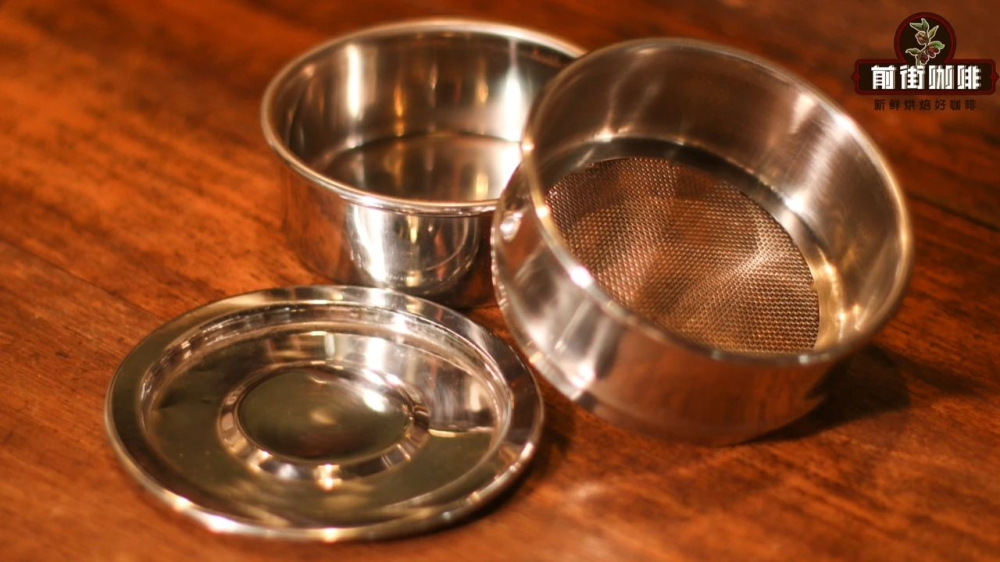
7. Sieving net:It is mainly used to judge the grind size. Each coffee bean has a different suitable grind size for pour-over. Through continuous testing, Front Street Coffee (FrontStreet Coffee) has determined a grind size for pour-over of 80% passing through the Chinese standard No. 20 sieve.
The above is Front Street Coffee (FrontStreet Coffee)'s compilation of relevant knowledge about pour-over coffee, and I hope it can help coffee enthusiasts who want to learn about this area. Next, Front Street Coffee (FrontStreet Coffee) will share the brewing parameters and method for a coffee bean from Ethiopia Yirgacheffe with coffee enthusiasts.

Front Street Coffee (FrontStreet Coffee) Ethiopia Yirgacheffe G1 coffee beans
Country: Ethiopia
Region: Yirgacheffe
Altitude: 1900-2300m
Variety: local heirloom varieties
Processing method: washed processing
Flavor: tropical fruit, cream, honey, berries, citrus
Front Street Coffee (FrontStreet Coffee) brewing data sharing
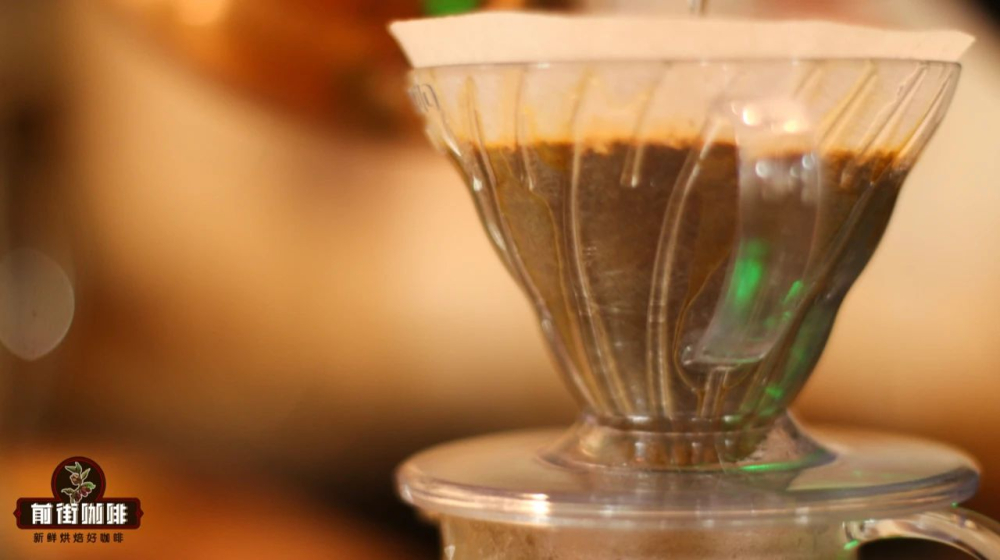
Dripper: V60 #01
Water temperature: 90-91 degrees
Coffee dose: 15g
Coffee-to-water ratio: 1:15
Grind size: BG6m / medium-fine grind (80% passing through a No. 20 sieve bowl)
Brewing method: three-stage extraction
In the first stage, pour 30 grams of water for a 30-second bloom, then pour 95 grams (the electronic scale shows about 125 grams), finishing the pour in about 1 minute. When the water level drops to 2/3 of the coffee bed, pour the remaining 100 grams (the electronic scale shows about 225 grams), finishing the pour in about 1 minute 35 seconds. Drip filtration is completed at 2‘00”-2'10", then remove the dripper to complete extraction.
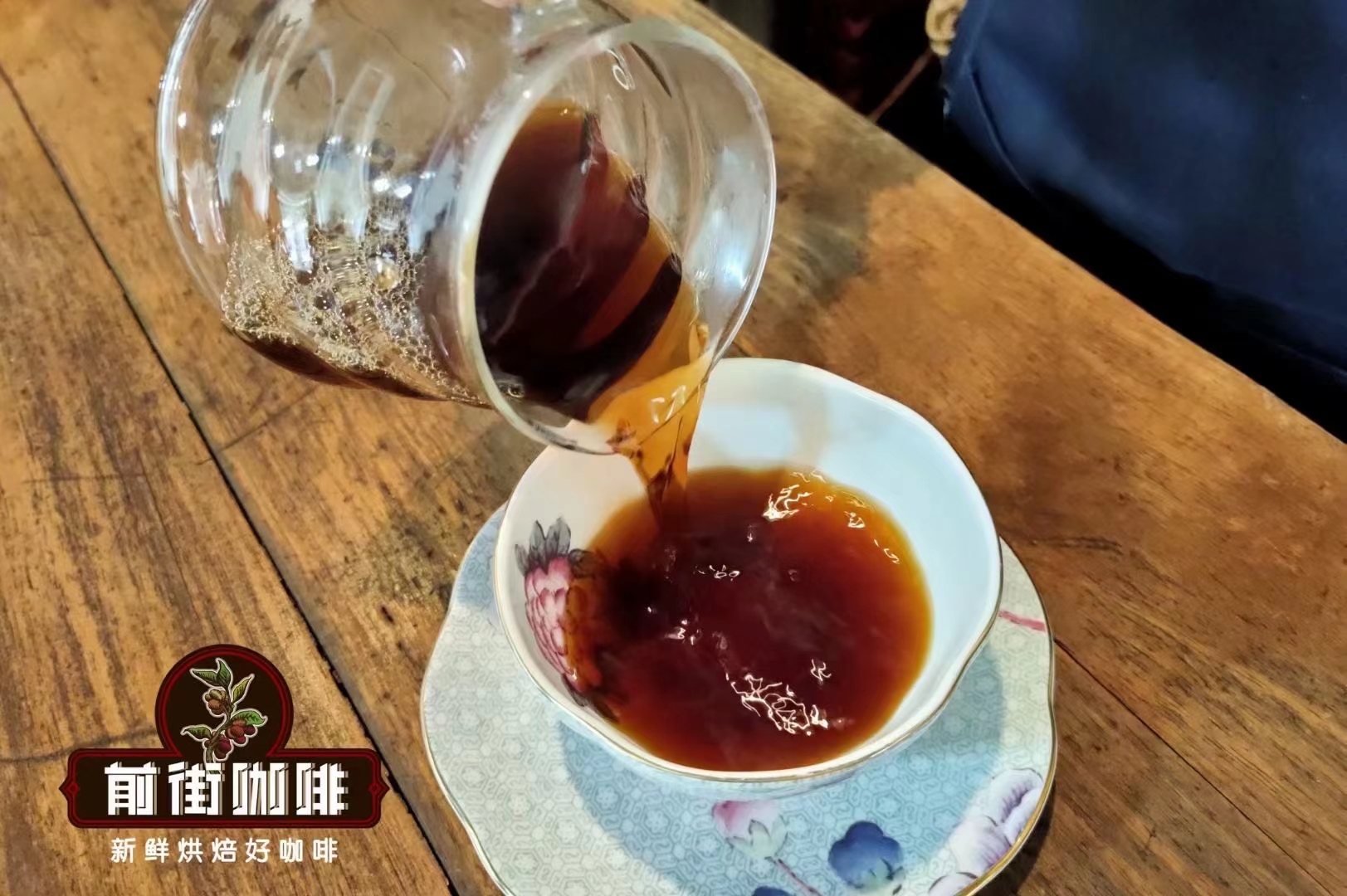
Washed G1 brewing flavor:On the palate there are citrus and black tea, and as the temperature changes there are cream, caramel, and almond. The finish is noticeably sweet and the mouthfeel is clean and refreshing.
The above content is compiled by CoffeeHunters, a coffee news website.


