







For more specialty coffee knowledge, please follow: Front Street Coffee (Frontsteet Coffee)
What temperature is needed for brewing pour-over coffee? Currently, mainstream brewing temperature recommendations are between 86°C and 93°C. Use higher temperatures for light roasts and lower temperatures for dark roasts.
Once, while sharing pour-over coffee with guests as part of our daily routine, a guest quickly guessed the name of the coffee bean, and this became an opportunity for us to have a brief exchange. Through the conversation, we learned that this guest also often brews coffee at home. It was because he had previously purchased this same Front Street Coffee bean to brew at home, and when he drank the coffee we shared, the exact same flavor came through, which is why he guessed the answer so quickly.
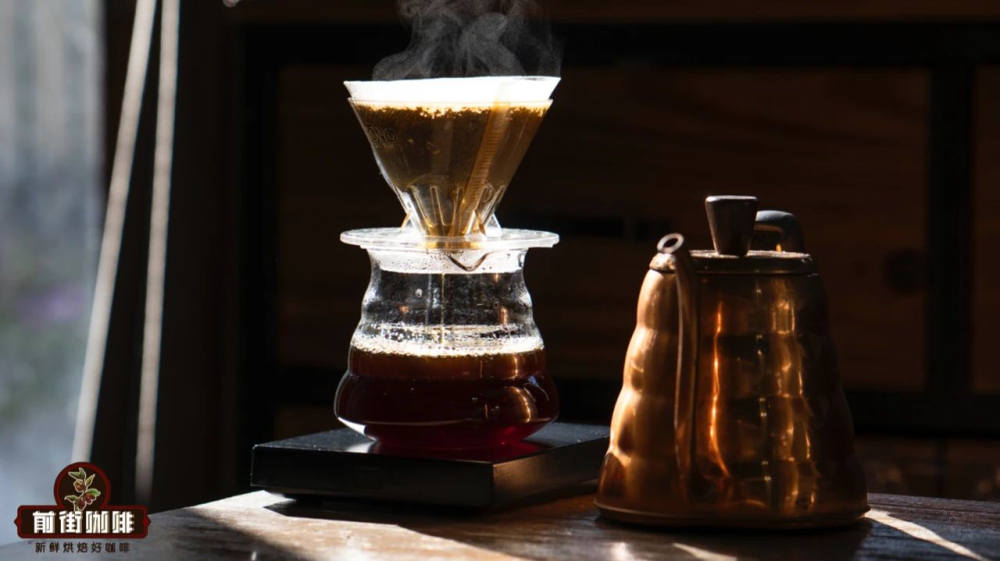
While exchanging brewing tips, the guest said, "I've tried water temperatures of 90-94°C, and only 93°C brews it well—just like your cup." But the water temperature used for that shared pot of coffee was 90°C!
Front Street Coffee's brewing parameters are all based on the characteristics of the coffee beans, the roast level, and the flavor profile. The higher the water temperature, the higher the extraction efficiency, the easier it is to release various substances and components, and the higher the concentration. If you brew with hot water close to boiling, it is easy to extract unpleasant bitter substances. Therefore, when brewing medium-dark roasted coffee beans, Front Street Coffee uses different brewing parameters from those for light roasted coffee beans. The caramelization reaction will be greater than in light roasted coffee beans, making it easier to release bitter large-molecule substances. In order to avoid extracting too many off-flavors, Front Street Coffee lowers the water temperature a little. The brewing water temperature for light roasted coffee is 91–93°C, while for medium-dark roasted coffee beans Front Street Coffee recommends 87–88°C.
Of course, when using different parameters (with corresponding reasonable adjustments to grind size, water temperature, etc.) to brew the same coffee bean, there is a chance of producing a similar flavor—after all, there are countless brewing recipes that can make coffee taste good. But if only the water temperature is different, is such a thing possible?
The water temperature in the brewing parameters vs. the actual extraction water temperature
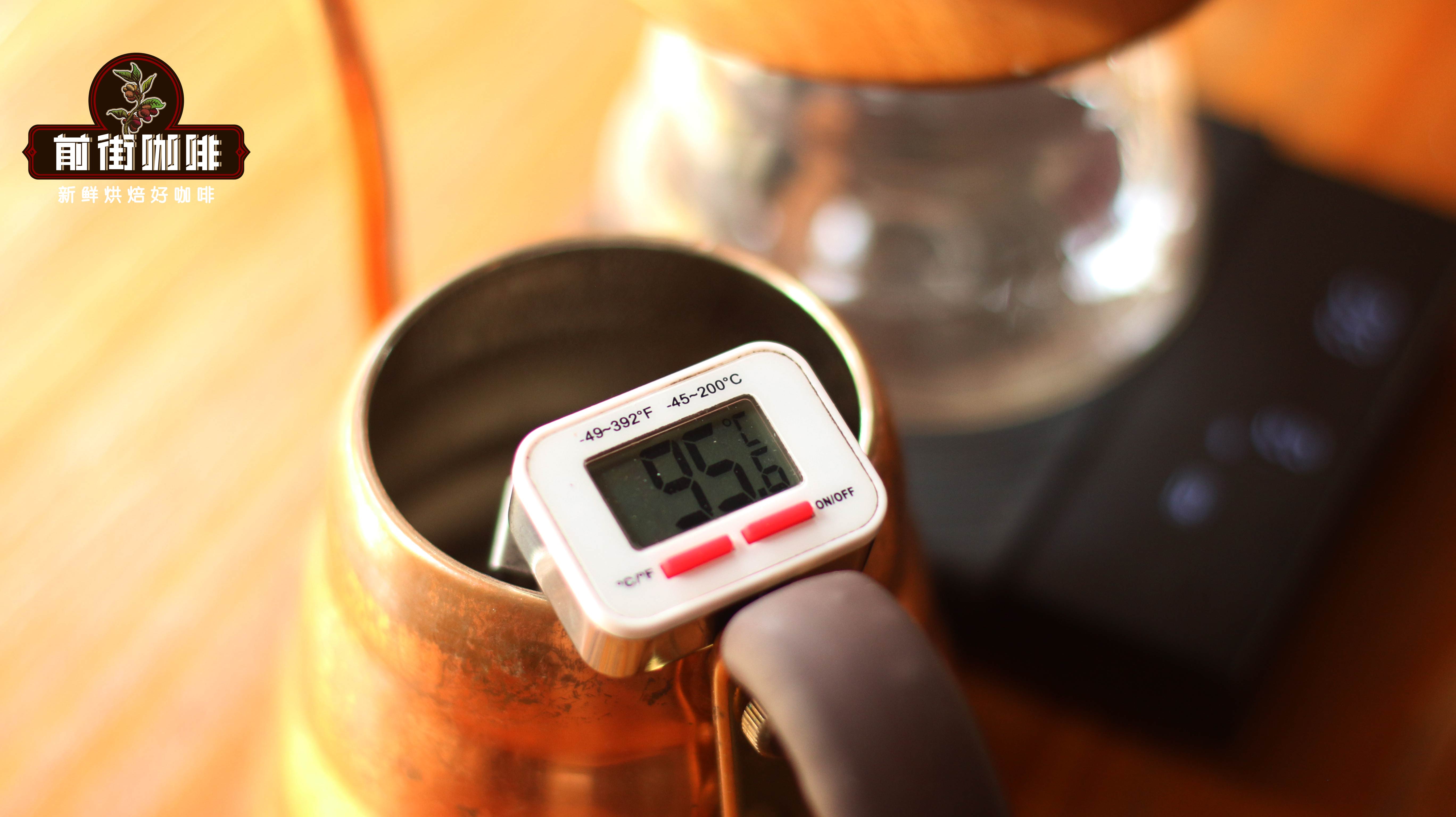
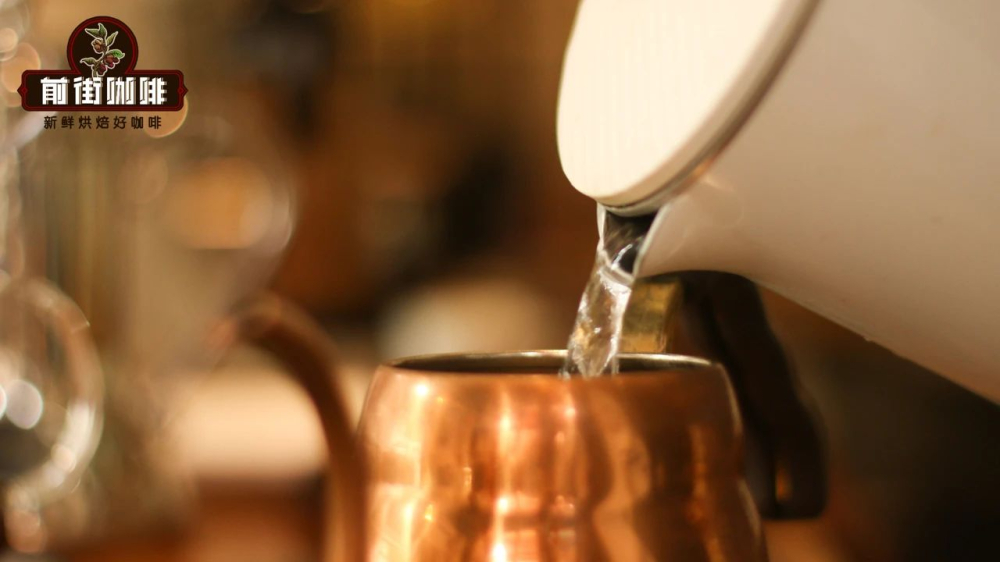
The brewing water temperature we talk about actually refers to the initial temperature in the pour-over kettle. That is, if we need 91°C water to brew coffee, we only need to control the initial water temperature in the pour-over kettle at 91°C, then put the lid on and start brewing. But the water temperature that actually comes into contact with the coffee grounds for extraction is definitely not 91°C. For this reason, Front Street Coffee conducted a simple temperature measurement experiment.
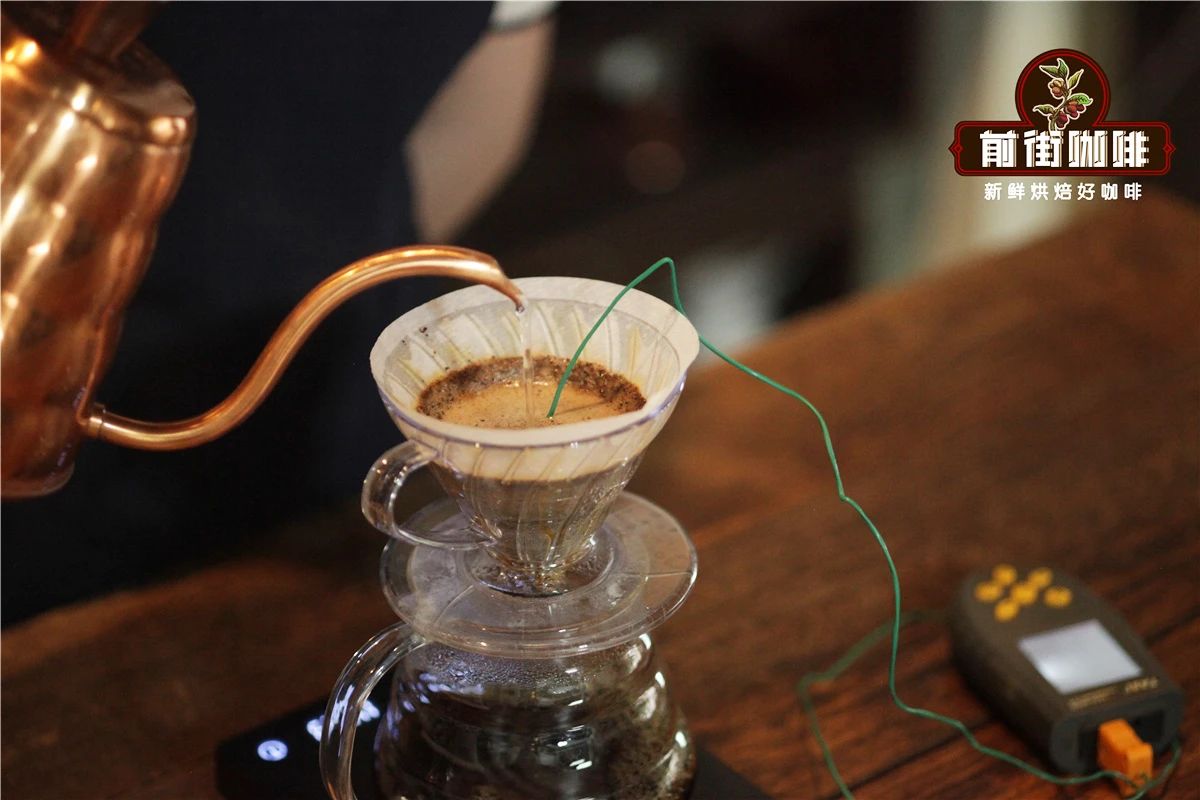
A wire probe thermometer was fixed in the coffee grounds to measure the temperature changes within the coffee bed during brewing. When the coffee grounds were dry, the temperature was about 32°C. When we brewed with 90°C water, at the start of blooming, the bed temperature rose to 85°C. As the first pour ended and the brew was in the blooming stage, the internal temperature dropped to 78°C; then the second pour began, the temperature rose to 85°C, and afterward the extraction temperature stabilized between 84.5–86°C, with a maximum temperature of 86.2°C.
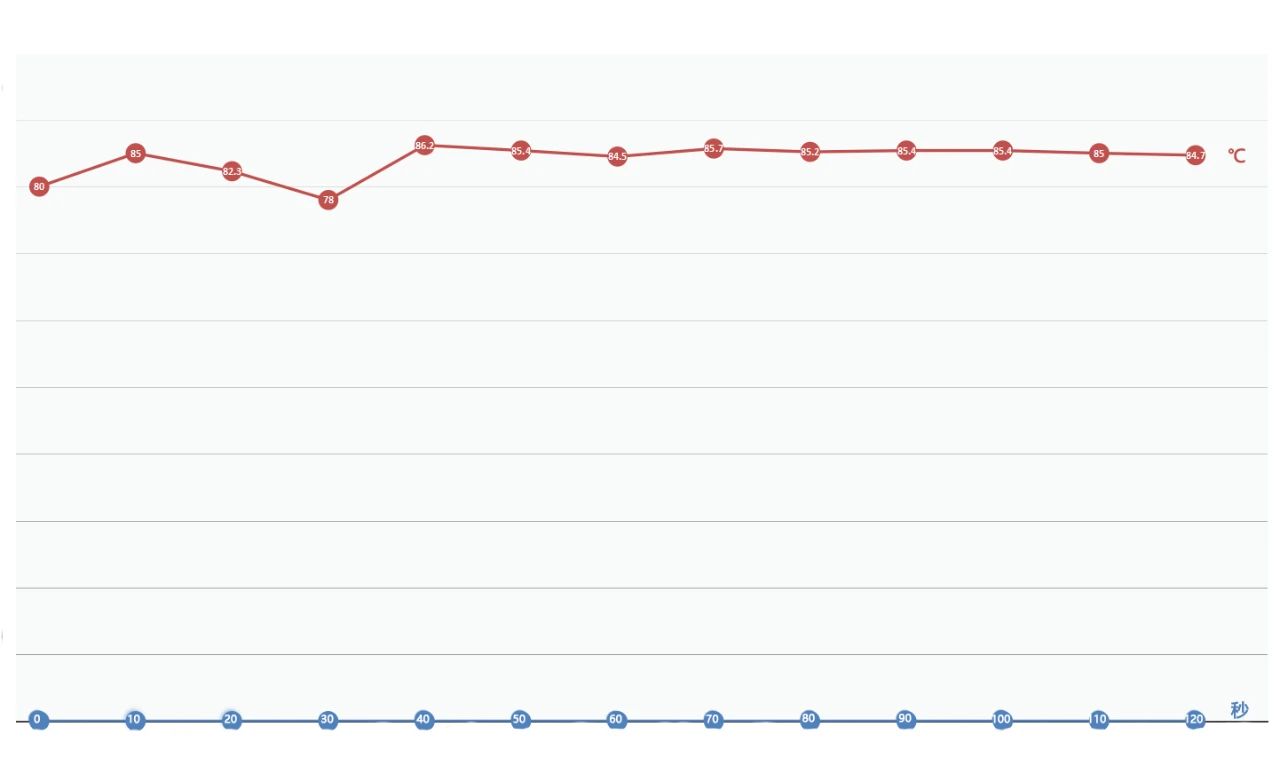
It can be seen that when we brew with a water temperature of 90°C, the water temperature actually involved in extraction is between 84.5–86°C.
Then we brewed again with water at an initial temperature of 93°C. At the start of blooming, the bed temperature rose to 86.3°C. As the first pour ended and the brew was in the blooming stage, the internal temperature dropped to 83°C; then the second pour began, the temperature rose to 87°C, and afterward the extraction temperature stabilized between 85–88°C, with a maximum temperature of 88°C.
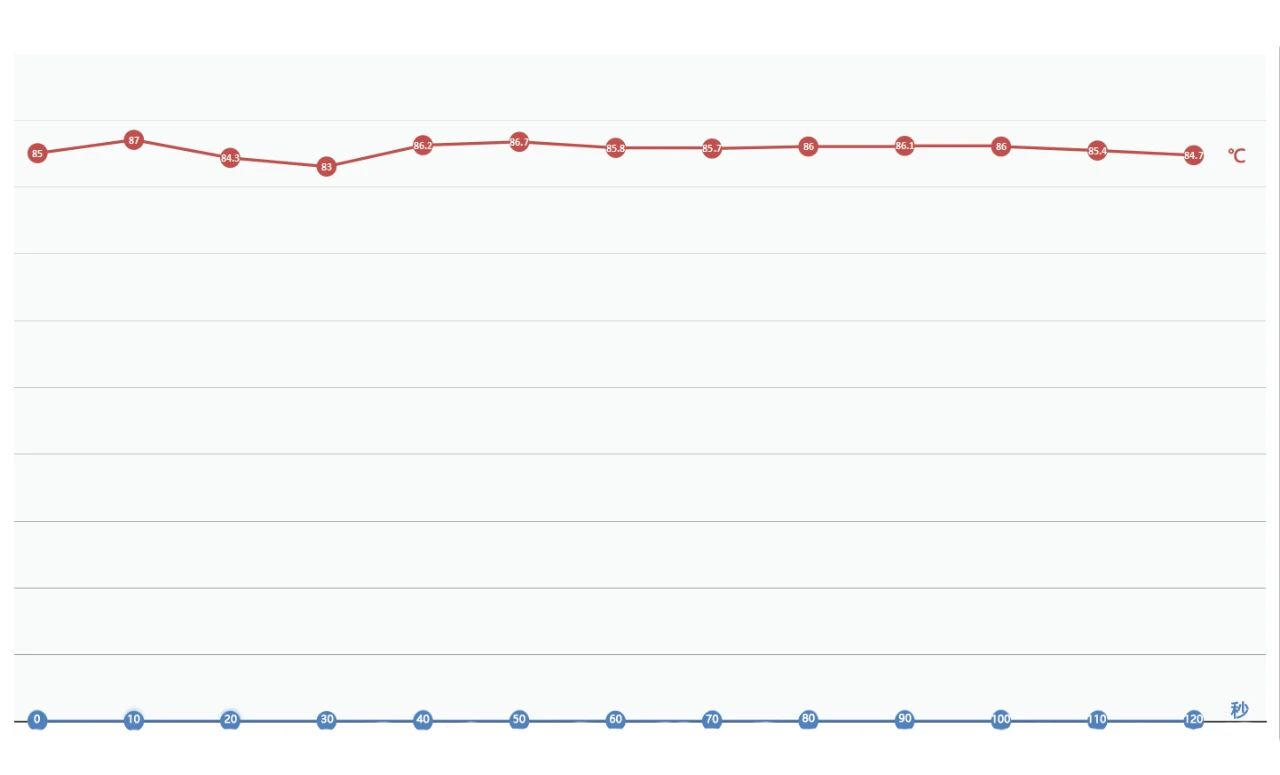
From the comparison of the two groups, it can be seen that the initial brewing temperatures differed by 3°C, while the actual extraction temperatures differed by less than 3°C. Although the gap was narrowed, it could still be clearly distinguished by taste.
It seems that, with other parameters unchanged, different water temperature parameters can only express different flavors. No—let Front Street Coffee briefly review the previous information again. When brewing with 90°C, the actual extraction temperature was 84.5–86°C. So how were those 4–5.5°C lost? The coffee grounds absorb heat, the dripper absorbs heat, and the water loses heat when exposed to air. Therefore, it is only necessary to speed up heat loss during the period from when the water is in the kettle to when the water contacts the coffee grounds.
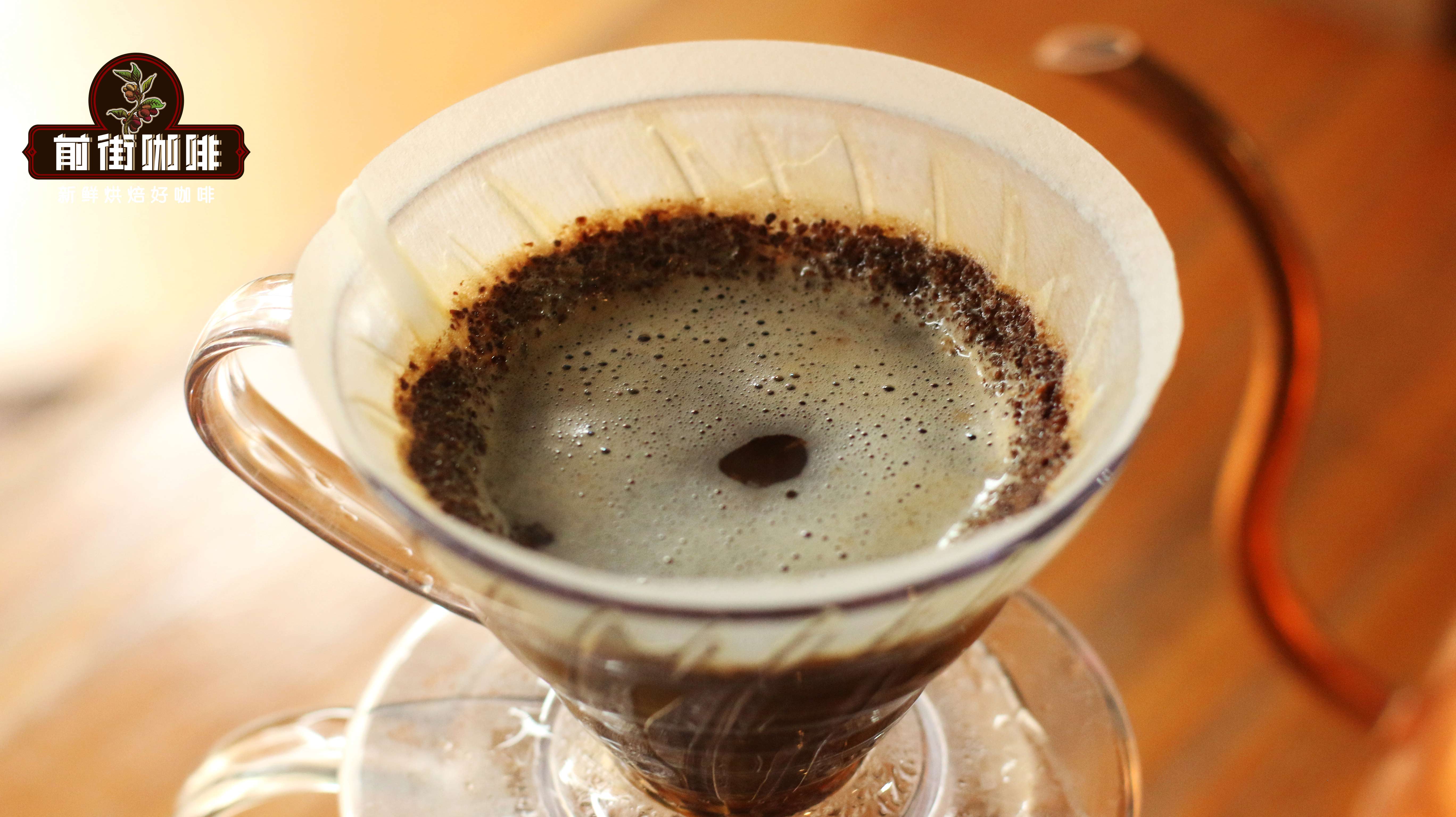
Looking at this literary-sounding expression, it seems some "high technique" is needed to achieve this. In fact, you only need to raise the pouring height. Normally, Front Street Coffee's pour-over pouring height is about 3–4 cm. So this time, raise the pouring height to 7–8 cm for the experiment, using a water temperature of 93°C.
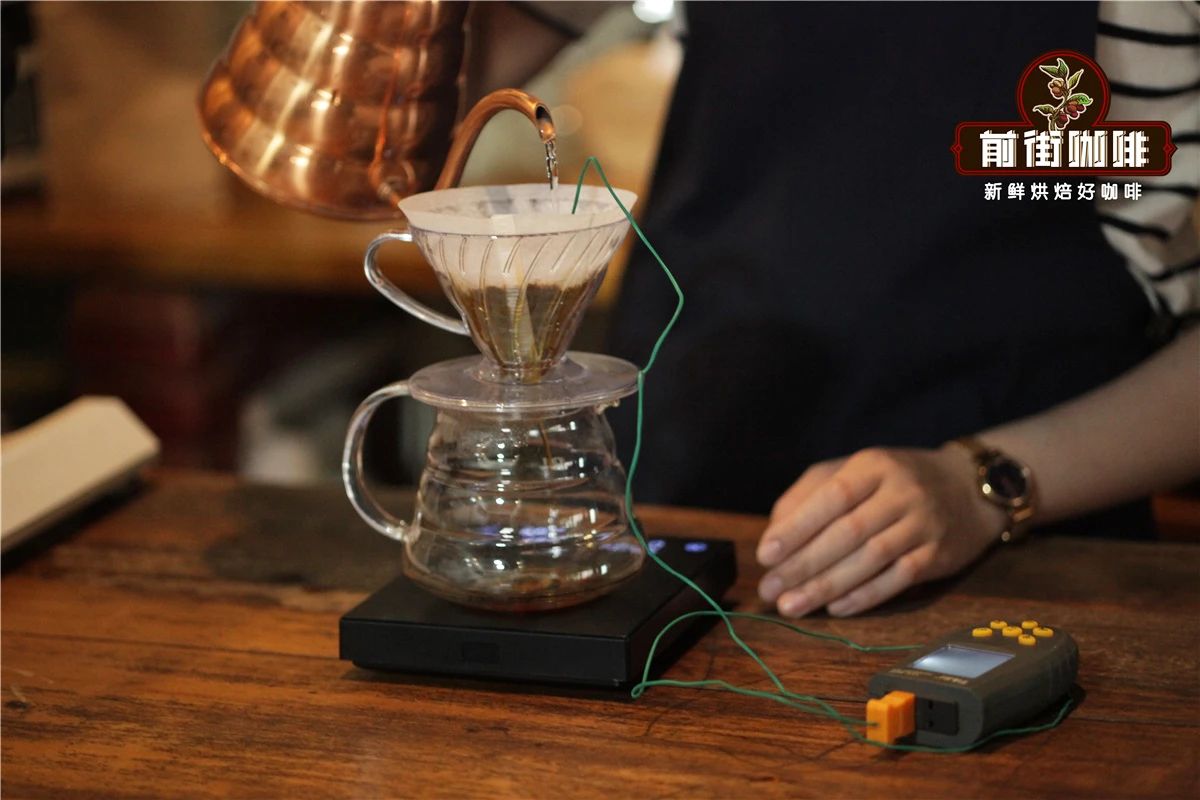
At the start of the blooming pour, the bed temperature rose to 87°C. As the first pour ended and the brew was in the blooming stage, the internal temperature dropped to 83°C; then the second pour began, the temperature rose to 86.2°C, and afterward the extraction temperature stabilized between 84–86.7°C, with a maximum temperature of 87°C.
This brew was closer to brewing with an initial temperature of 90°C both in data and in taste evaluation. I believe that by this point, everyone can probably understand where the key point of brewing coffee water temperature lies, and also understand why some people like to pour close to the liquid surface while others like to raise a straight stream of water high.
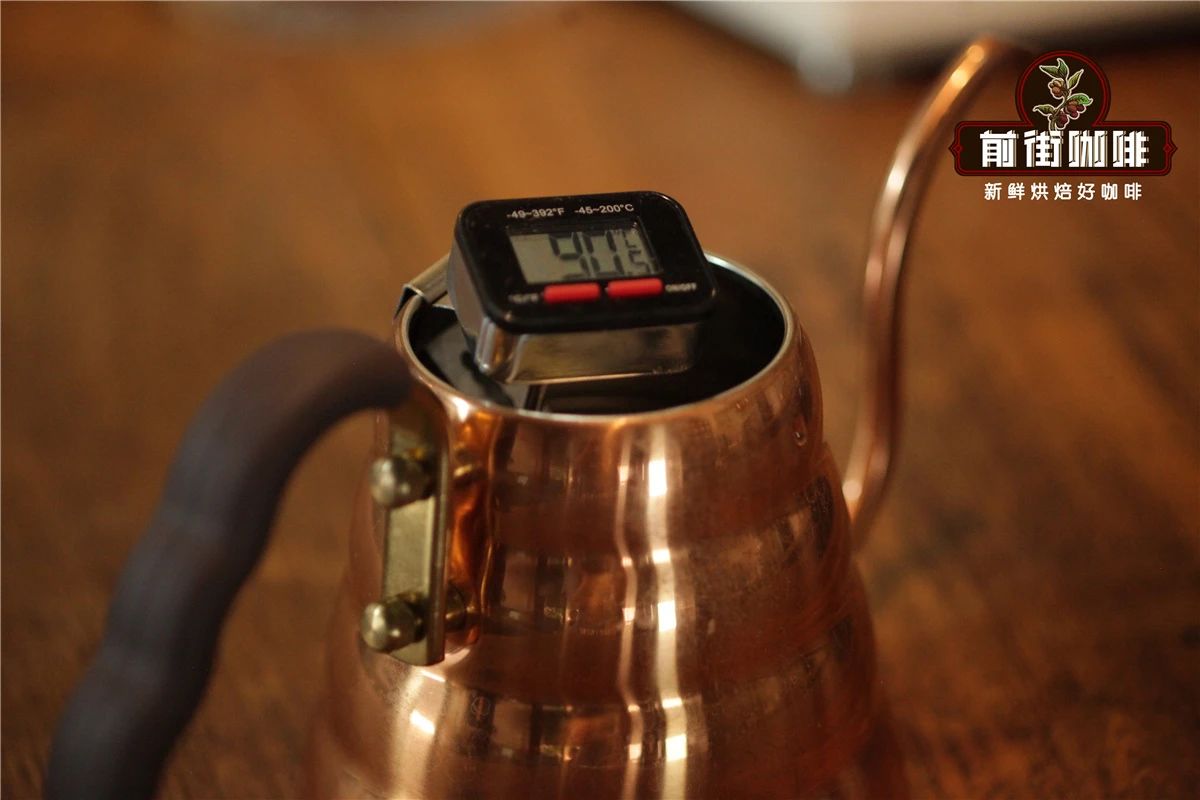
If, in everyday coffee brewing, we are not going to go to great lengths to measure the temperature in the coffee bed, then we can only take the easier parameter:——the water temperature in the pour-over kettle. But at least you now understand the relationship between the water temperature in the parameters and the actual extraction water temperature, and you will be more than capable in practical brewing!!!
The above content is compiled by CoffeeHunters, a coffee news website.


