







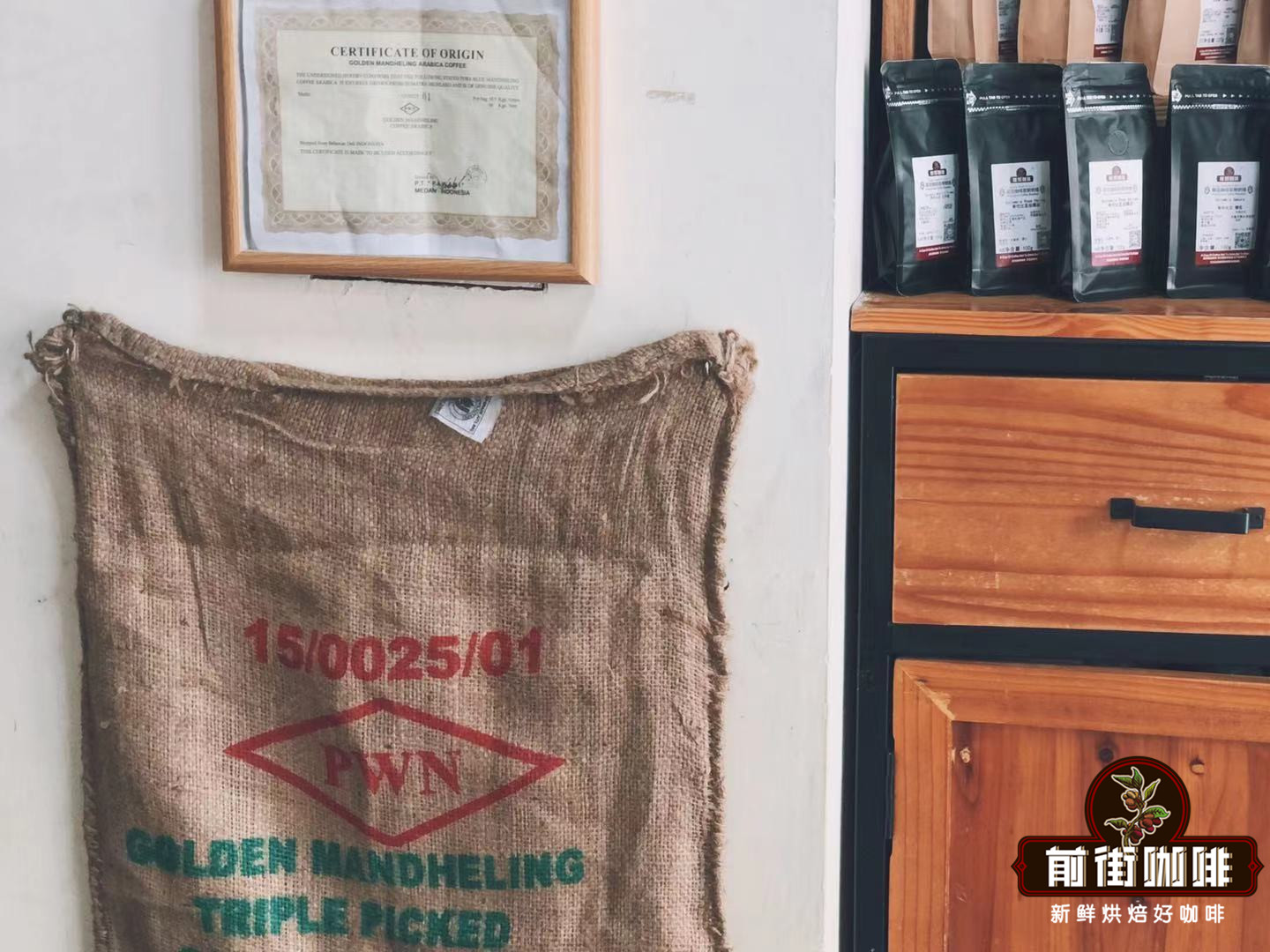
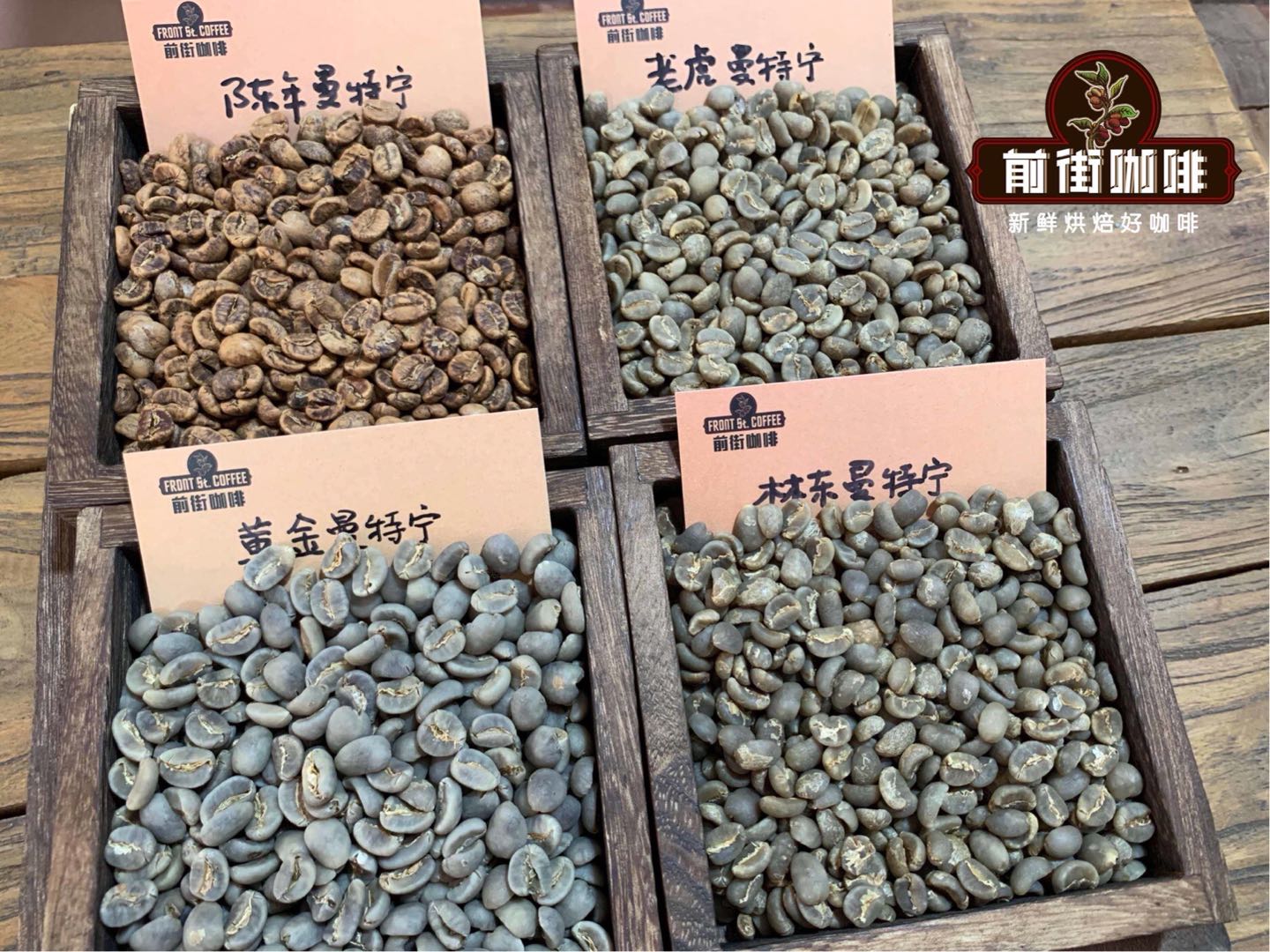
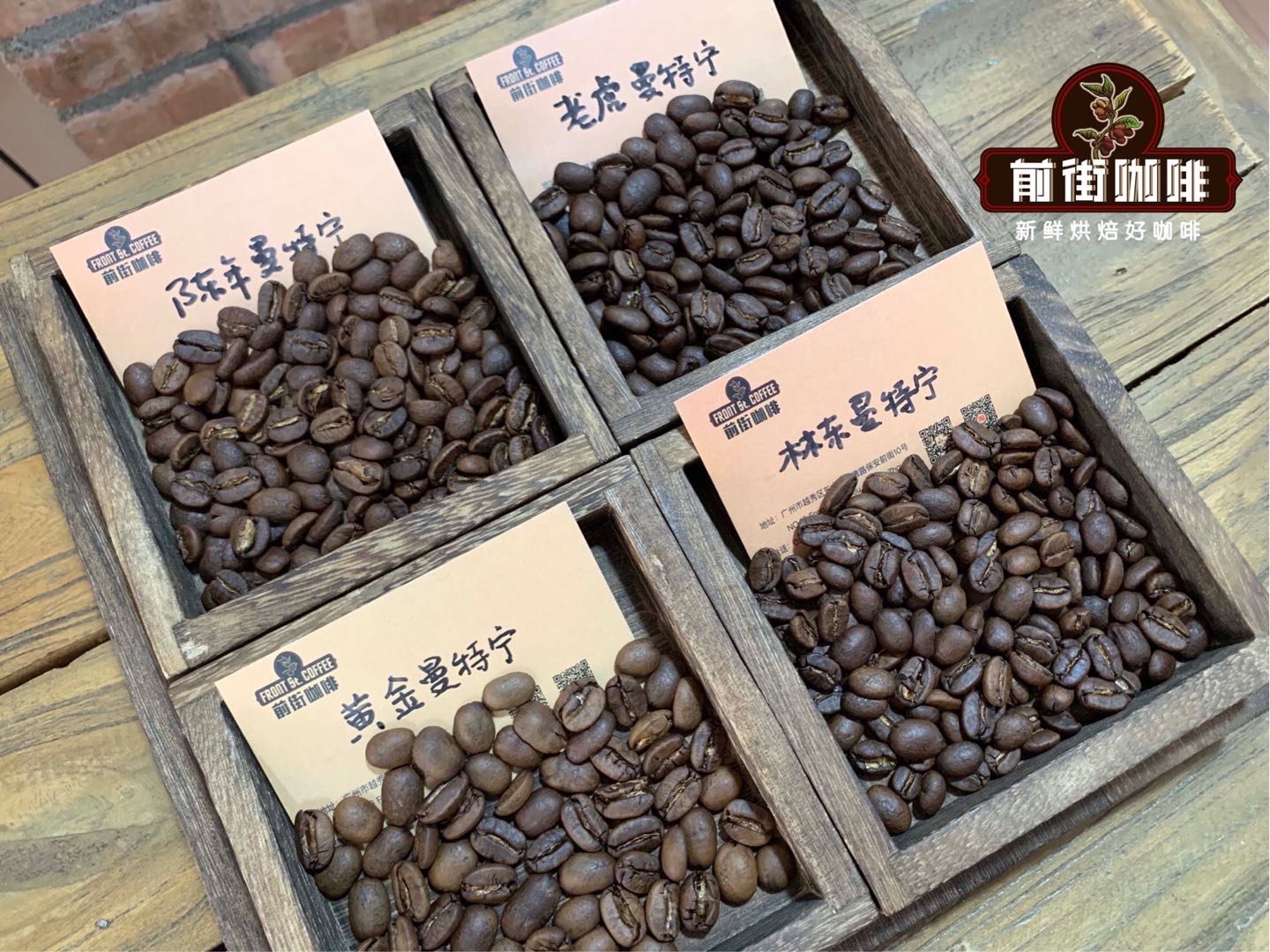
Indonesian coffee beans are famous for their rich aroma and mellow taste, with a sweet aftertaste that is truly wonderful, which has made many coffee lovers fall in love with the coffee beans from this region, and among them, Indonesian Mandheling is the most representative. Many people know that Mandheling has many different classifications, such as the 5 types available at Front Street Coffee, but the most famous is undoubtedly the Golden Mandheling produced by PWN. So in this article, Front Street Coffee will explain the IndonesianPWNGolden Mandheling's producing region and flavor characteristics.
The Origin of the Name of Indonesian Mandheling Coffee Beans
Seasoned coffee enthusiasts know that most coffee bean names are based on the producing region or estate, such as the Costa Rica Monster Estate coffee beans that Front Street Coffee recently put on its shelves, or Ethiopian Yirgacheffe coffee beans. However, the origin of the name Mandheling involves an interesting little story.
According to Front Street's understanding, this story began when Japanese soldiers returned to Japan after colonizing Indonesia and could not forget the delicious local coffee. Through trade connections, they asked the locals to help collect high-quality coffee beans, among which was this Mandheling. The Japanese loved this coffee bean very much and asked for its name. The local mistakenly thought they were asking where he was from, so he blurted out "Mandailing". The Japanese mistakenly said "Mandailing" as "Mandehling'. Due to this double misunderstanding, Mandheling accidentally became the name of this coffee bean. And this local was the owner of PWN Company (Pwani Coffee Company), which Front Street will mention later as the producer of Indonesian Golden Mandheling.
The "Battle" for Golden Mandheling
Coffee enthusiasts should all know that Japanese people love refined specialization, especially when it comes to food. Golden Mandheling coffee beans were originally promoted by the Japanese, and they were bound to have the upper hand in seizing high-quality resources. Therefore, they improved Mandheling's characteristic of having a high proportion of defective beans and established a strict screening system. After processing, the green beans undergo density and color sorting, and then still need to be manually sorted four times before they can present Golden Mandheling with uniform color and uniform bean shape. After strict screening, Golden Mandheling not only loses the earthy and miscellaneous flavors unique to ordinary Mandheling, but also tastes cleaner and more transparent, with a stronger sweetness.
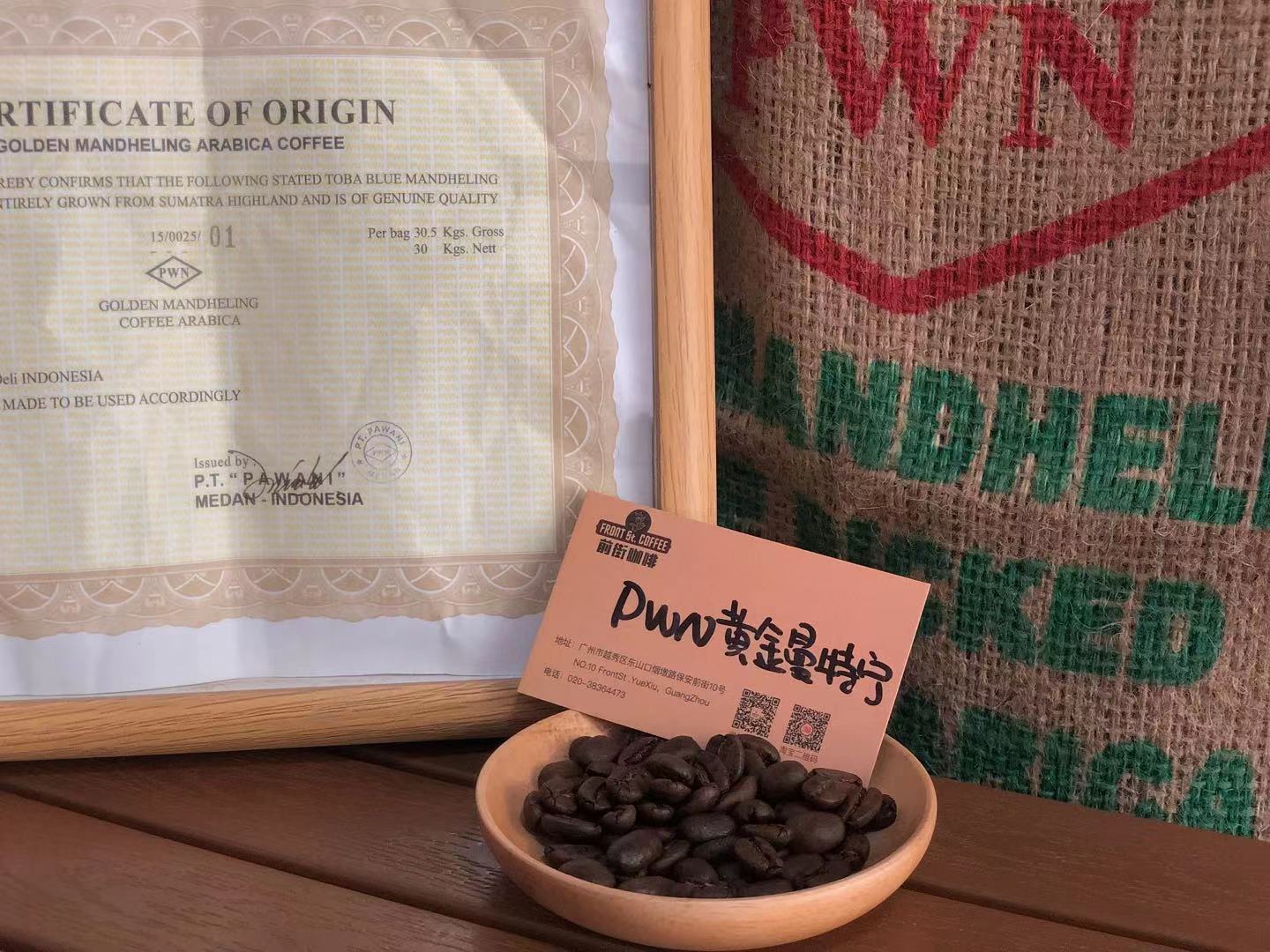
Unfortunately, however, Golden Mandheling had already been registered as a trademark, and the registrant was not a Japanese company, but Indonesia's Pawani company, which beat them to it, namely PWN Company (Pwani Coffee Company). The Japanese company was then forced to change the name to "Gold Top Mandheling". The two can be slightly distinguished by bean shape: PWN Company's is mainly the old Typica, with larger beans, but in 2020, PWN Company newly launched Ateng variety coffee beans to grow Golden Mandheling, while Japan's Gold Top mainly uses mutated Typica, with smaller beans. As for flavor, which is better or worse is a matter of opinion.
Indonesian Mandheling Coffee Producing Region
Front Street Coffee has also often mentioned in previous articles that there are three major factors determining coffee bean flavor: producing region, variety, and processing method. So next, Front Street Coffee will discuss Mandheling coffee around these three points.
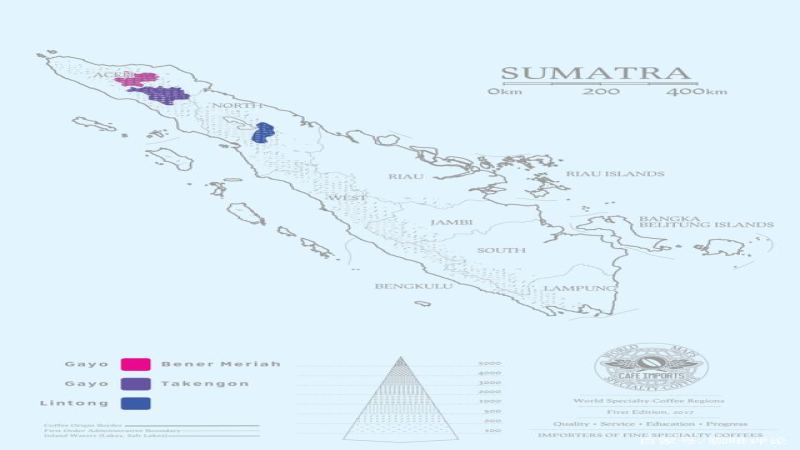
Mandheling is mainly produced in Sumatra, Indonesia. It is Indonesia's largest island, located near the equator, with a typical tropical rainforest climate, high temperature and humidity, and abundant rainfall, making it very suitable for the growth of high-quality Arabica coffee beans.
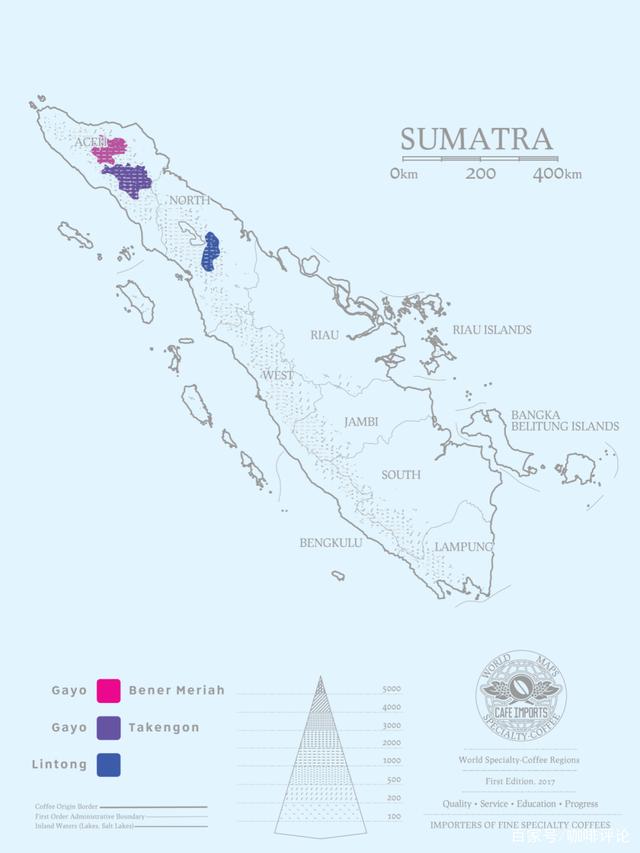
However, due to the limited altitude of Indonesia's producing regions, the space for growing high-quality Arabica coffee beans is also limited. Therefore, among the coffee beans produced in Indonesia, only 25% are Arabica. Arabica can only develop its best flavor when grown at high altitudes, so the remaining 75% are Robusta coffee trees that can be grown at low altitudes. Within all of Indonesia, the highest-altitude area is Sumatra.
In the past, among the traditional Arabica coffee produced in northern Sumatra, the best quality would be sold on the market under the name Lintong Mandheling. However, strictly speaking today, Lintong Mandheling coffee beans refer to coffee grown in a small area southwest of Toba Hu in the Lintong administrative region.
Aceh Gayo Mountain Producing Region
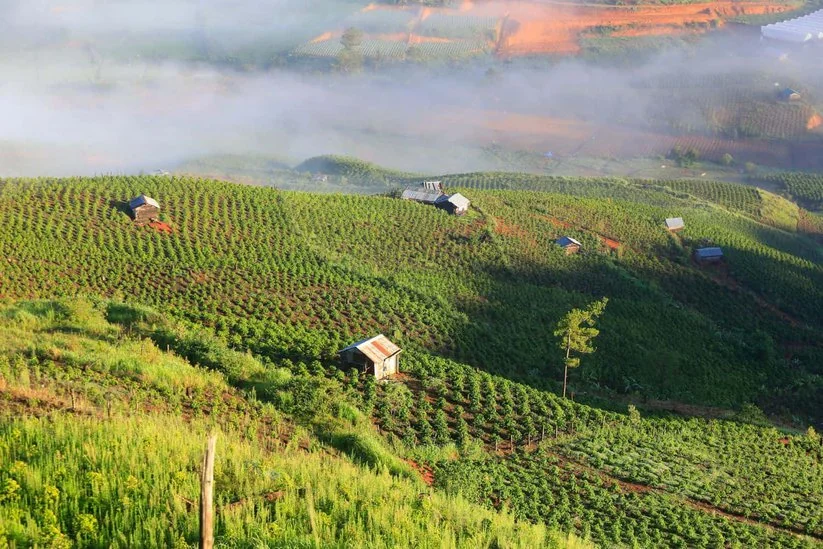
According to Front Street's understanding, PWN Company chose a new producing region in 2020, namely Aceh Gayo Mountain within the Sumatra producing region, located in the northernmost corner of Sumatra Island. Coffee cultivation in Gayo Mountain is mainly around Takegon town and the hillsides beside Lake Tawar, with production areas averaging between 1100 - 1600 meters in altitude. Its coffee quality has always been excellent, but due to previous political instability, coffee from this area was difficult to export. In recent years, as the situation has become peaceful, Aceh's coffee cultivation has also developed, and its quality is also superior to that of the Lintong area.
Indonesian Mandheling Coffee Processing Method
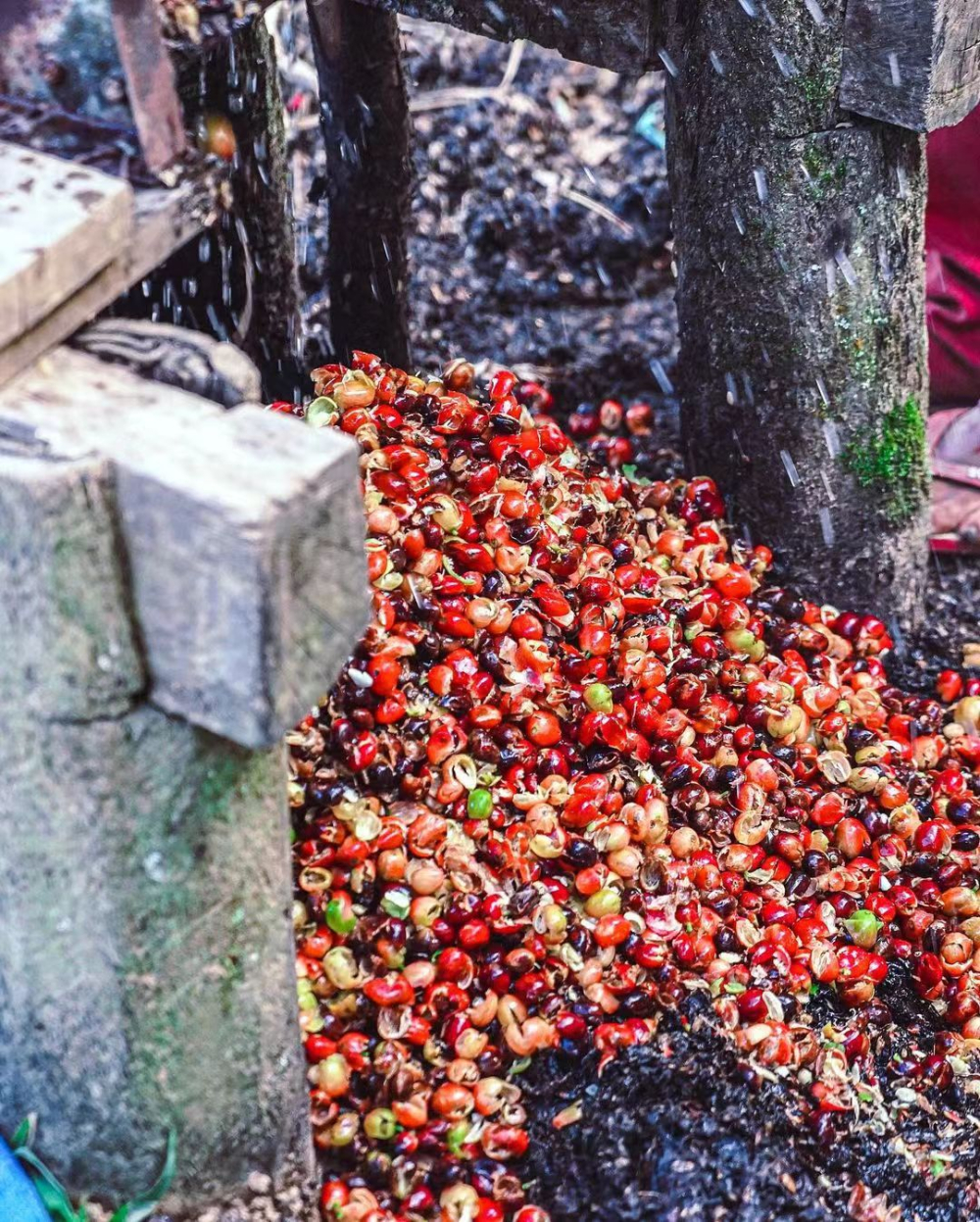
Front Street Coffee mentioned above that Indonesian Mandheling coffee is loved by a wide range of coffee enthusiasts because of its unique flavor. This is actually also thanks to Indonesia's unique coffee processing method—Indonesian wet hulling. It is precisely this processing method that gives Mandheling coffee its unique earthy, herbal, and spicy notes.
It is worth noting that when using the wet hulling method, because the semi-hard, semi-soft wet green beans are easily crushed when the mucilage and parchment layer are removed, the beans are damaged and split open like sheep's hooves, commonly known as sheep hoof beans. Front Street Coffee considers this a very prominent characteristic of Mandheling and does not count it as a defective bean.
The Origin of Indonesia's Wet Hulling Method
The reason Indonesia frequently uses the wet hulling method to process coffee cherries is mainly that the local weather is mostly rainy, with continuous typhoons, making it impossible to achieve the good weather required for sun-drying. Moreover, the local economy is not good, so they also cannot use the more expensive washed method. This gave rise to the highly locally characteristic wet hulling method.
Of course, Indonesia's coffee development today is no longer the poor situation it once was. There are quite a few estates and companies that can use the washed method, but they still have not abandoned wet hulling. Front Street believes that wet hulling is the factor that made Mandheling coffee known to the world. At the mention of Mandheling, people think of wet hulling. Clearly, the two have also become mutually complementary.
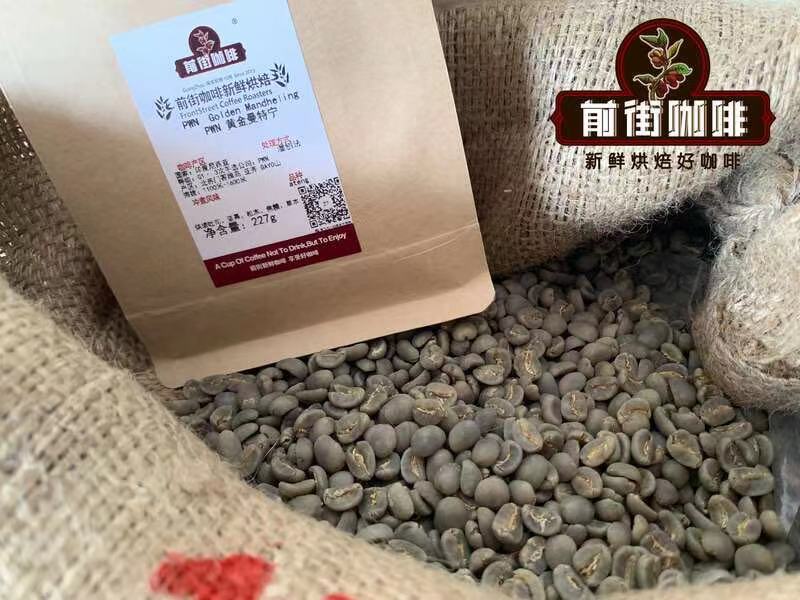
The specific steps of wet hulling can be divided into the following two stages:
In the first stage, a wooden pulper is used to remove the skin and pulp. After fermenting for 3 hours, it is spread out to dry until the moisture content drops to a semi-dry, semi-wet 30-50%.
In the second stage, the mucilage and parchment layer are removed, and drying continues in the later stage. The drying process takes 2-4 days, and the moisture content drops to 12-13%.
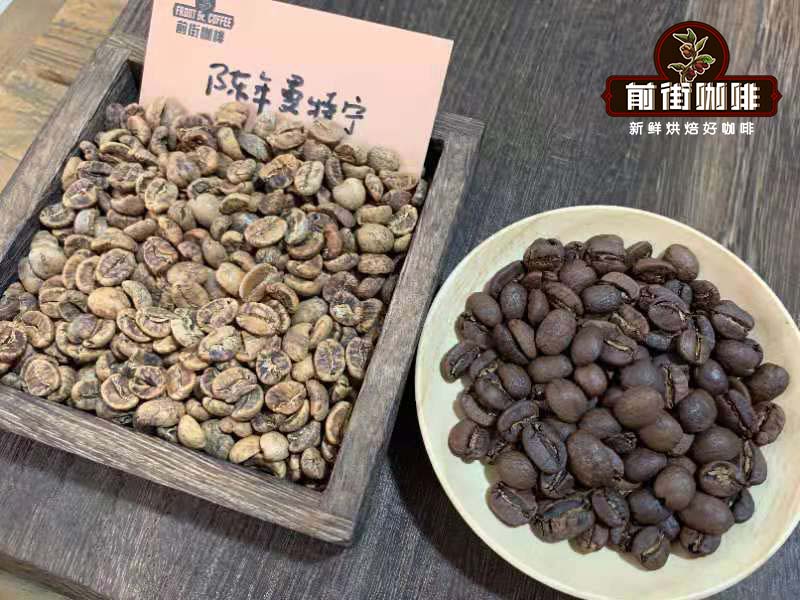
In addition to the conventional wet hulling method, there is also an aged wet hulling method. Coffee beans first undergo ordinary wet hulling, then are sealed and stored in a warehouse for 2~3 years. The warehouse environment must be cool and ventilated, and the beans must be turned regularly to prevent mold and spoilage. During this period, the acidity of the coffee beans gradually weakens and turns into sugar, and the color also becomes deeper, mostly yellowish-brown or dark brown. The Mandheling coffee bean on Front Street Coffee's bean list that uses this processing method is called Aged Mandheling coffee beans.
Indonesian Mandheling Coffee Variety
As Front Street Coffee also mentioned above, Mandheling is mainly cultivated in Sumatra. Its coffee variety is generally mainly pure Arabica coffee beans, but Arabica coffee beans have weak pest resistance. Therefore, in October 2020, Indonesia's PWN Company abandoned the original Typica variety of Golden Mandheling and instead used Ateng variety coffee beans for the production of Golden Mandheling. The Ateng variety coffee bean is actually the Catimor variety coffee bean most widely planted in the Yunnan producing region. So next, Front Street Coffee will explain the characteristics of Typica and Catimor variety coffee beans.
Typica
Typica is Ethiopia's oldest native variety. Almost all coffee bean varieties belonging to Arabica today are derived from Typica. Typica has an elegant flavor, but it is physically weak, has low disease resistance, and is susceptible to leaf rust. In addition, Typica has low yield per plant and cannot achieve the economic benefits farmers expect. In recent years, Typica in Central and South America has gradually been replaced by high-yield varieties such as Caturra and Catuai, so we see Typica less and less.
Ateng Variety
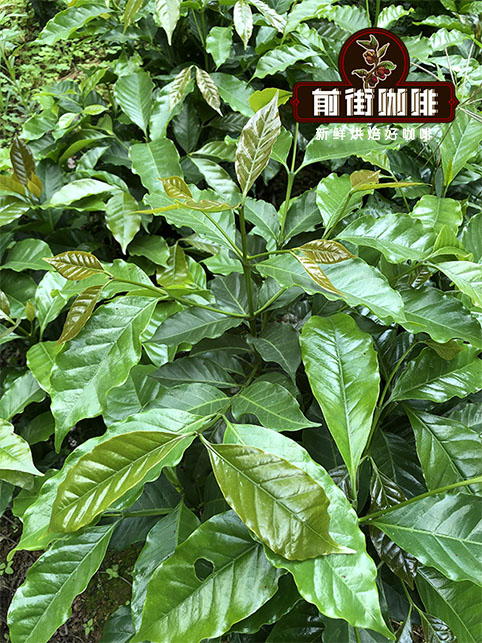
PWN Golden Mandheling coffee beans use the Ateng coffee variety, which is actually what we often hear as Catimor.
Catimor was created in 1959 when the Portuguese moved the Brazilian Bourbon mutation Caturra to East Timor and crossed it with Timor, which has Robusta ancestry. It has extremely high disease resistance and is 3 times the productivity of Typica. During the leaf rust crisis, the Indonesian government not only introduced Robusta (whose flavor is far from Arabica), but also introduced Timor from East Timor in an attempt to replace Typica. According to later expert investigations, a batch of Timor seeds introduced by the Indonesian government in 1980 was mixed with some Catimor seeds. This batch of seeds was planted in Aceh in northern Sumatra, and the area in Indonesia where Catimor was first detected was Central Aceh, so locals also call Catimor Ateng, taken from Aceh Tengah (Central Aceh).
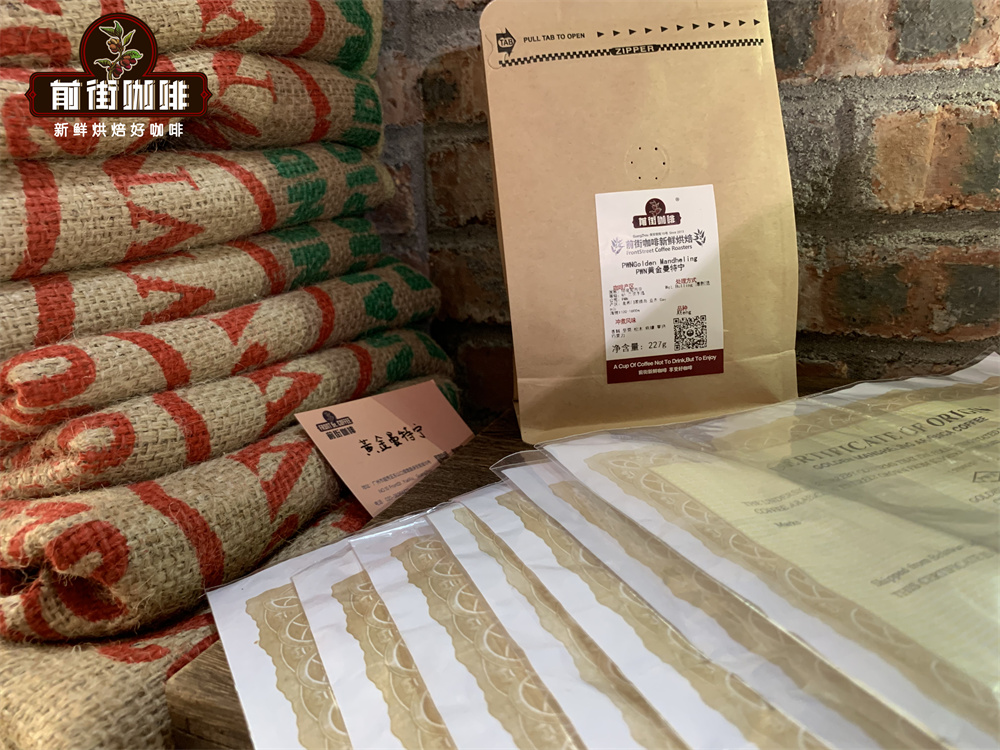
The above is the information compiled by Front Street Coffee regarding IndonesianPWNGolden Mandheling. We hope it can help coffee enthusiasts better understand the relevant knowledge so they can choose coffee beans that suit them. Next, Front Street Coffee will share how to hand-brew thisPWNGolden Mandheling coffee bean.
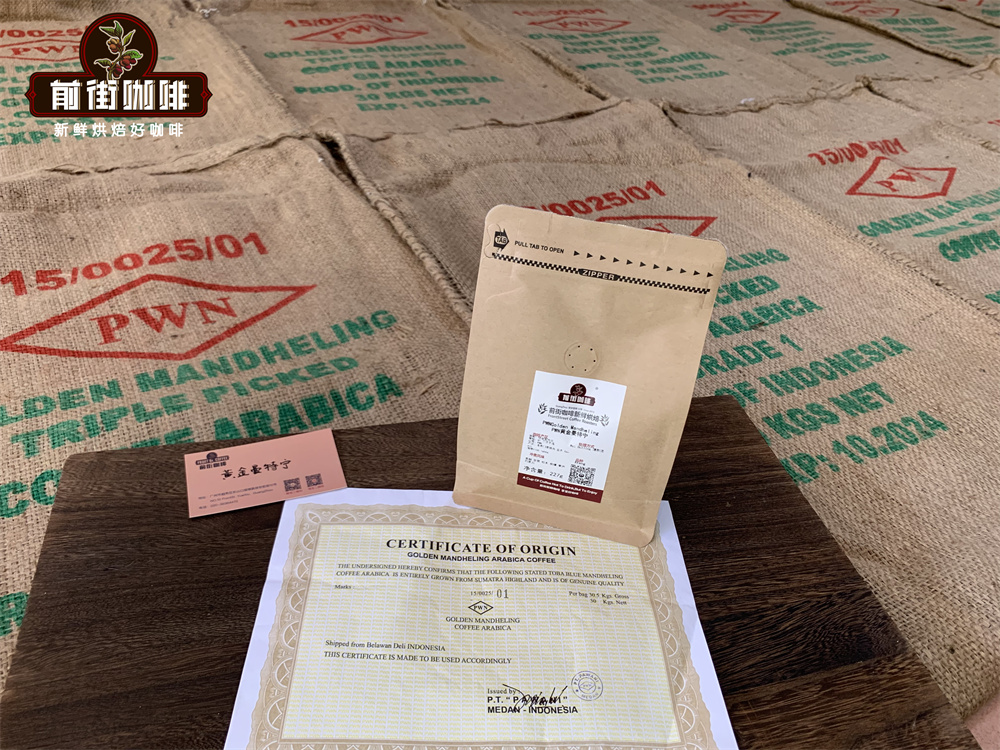
Front Street Coffee——PWNGolden Mandheling Coffee Beans
Country: Indonesia
Producing Region: Sumatra Aceh Gayo Mountain
Altitude: 1100-1600m
Variety: Ateng
Processing Method: Wet Hulling
Flavor: Baked toast, nuts, pine wood, caramel, herbs
Front Street CoffeePWNGolden Mandheling Coffee Bean Brewing Suggestions
Dripper: KONO
Coffee Dose: 15g
Coffee-to-Water Ratio: 1:15
Water Temperature: 86-87°C
Grind Size: EK43s setting 11 (70% passing rate with China No. 20 standard sieve)
Front Street CoffeePWNGolden Mandheling Coffee Brewing Method: staged extraction.

For the first pour, use 30g of water for a 30-second bloom. For the second pour, pour in a slow circular motion until 125g, then pause. When the water level is about to expose the coffee bed, continue pouring for the third stage until 225g and stop. When the water level is about to expose the coffee bed again, remove the dripper. (Start timing at the beginning of the bloom.) Total extraction time is 2'00".
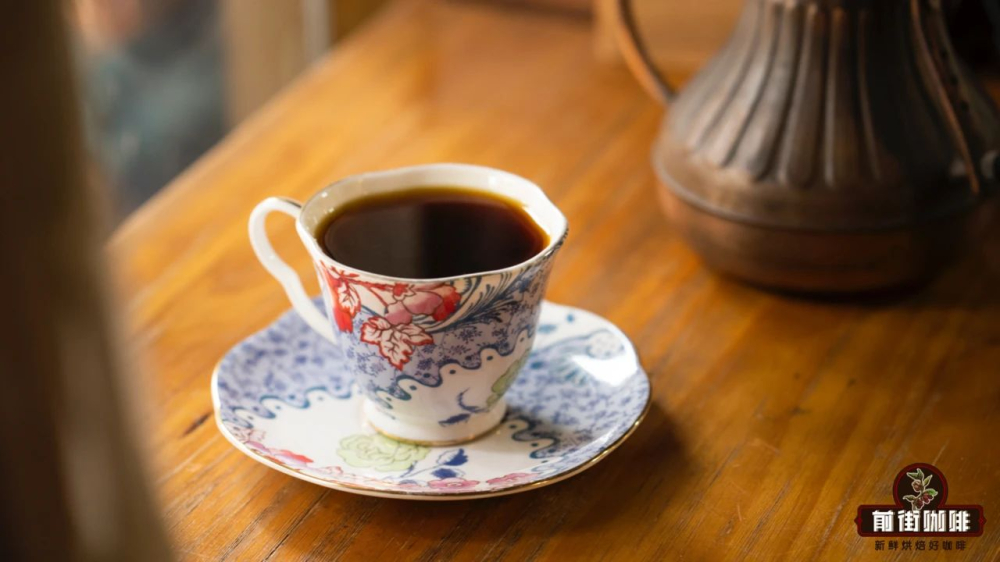
Front Street CoffeePWNGolden Mandheling Coffee Bean Flavor:Layered and complex, mellow and clean, highly balanced, with rich nut and caramel aromas, chocolate notes, and a long-lasting finish.
The above content is compiled by CoffeeHunters, a coffee news website.

