







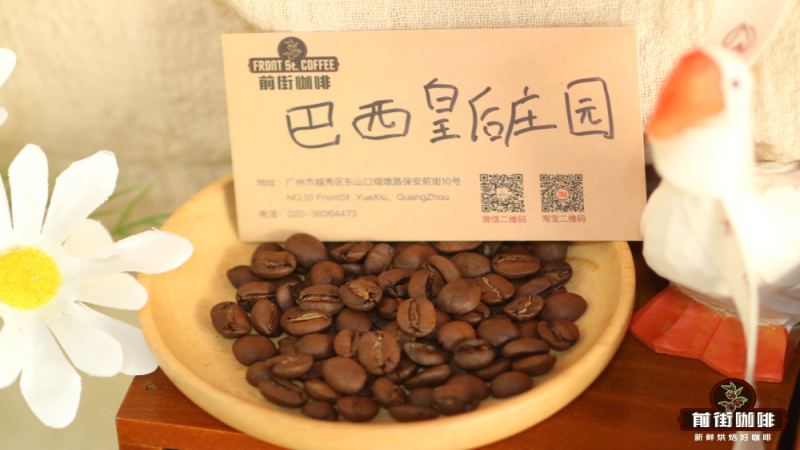
Traditionally, to highlight a rich, full-bodied coffee flavor, roasters commonly use dark roasts. The increased roast level promotes more caramelization of substances, so dark-roasted coffee typically carries abundant notes of chocolate, spice, caramel, cocoa, maple syrup, and more.
In terms of aroma, dark-roasted coffee has a slight bitter note of chocolate, lower acidity, strong caramel sweetness, and flavors of spice, wood, and charcoal. There are many dark-roasted coffee beans, such as Indonesia's Front Street PWN Golden Mandheling coffee beans, Brazil's Front Street Queen's Estate, Jamaica's Front Street Blue Mountain, Colombia's Front Street Huila... all are popular single-origin dark roast coffees well loved by people.
How do you brew dark-roasted coffee so it tastes good?
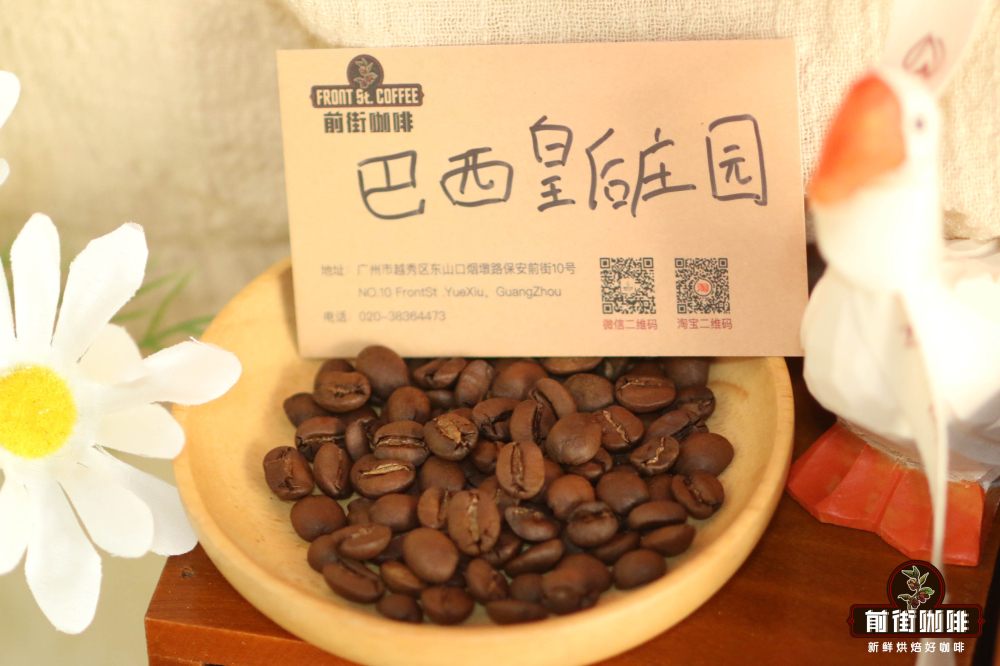
To explain the brewing method in more detail, this time we chose the extremely cost-effective everyday coffee Front Street Queen's Estate, because it uses a medium-dark roast, which retains a sugarcane-like sweetness while still keeping the flavors of roasted nuts, cocoa, and cream. The pour-over parameters are as follows:
1. Coffee-to-water ratio
When brewing dark-roasted coffee, Front Street adjusts the ratio to the range of 1:14-1:15. Once the water amount exceeds a ratio of 15, it will dilute the concentration, and the resulting taste will easily become thin. So controlling the final ratio at 1:15 is the most suitable.

Because everyone's perception of taste, flavor, and concentration is different, if you feel this ratio is still too weak, the taste is thin, you can still reduce the water ratio to 1:13-1:14, and that is also fine. Or alternatively, there may be a problem with controlling the time.
2. Brewing time
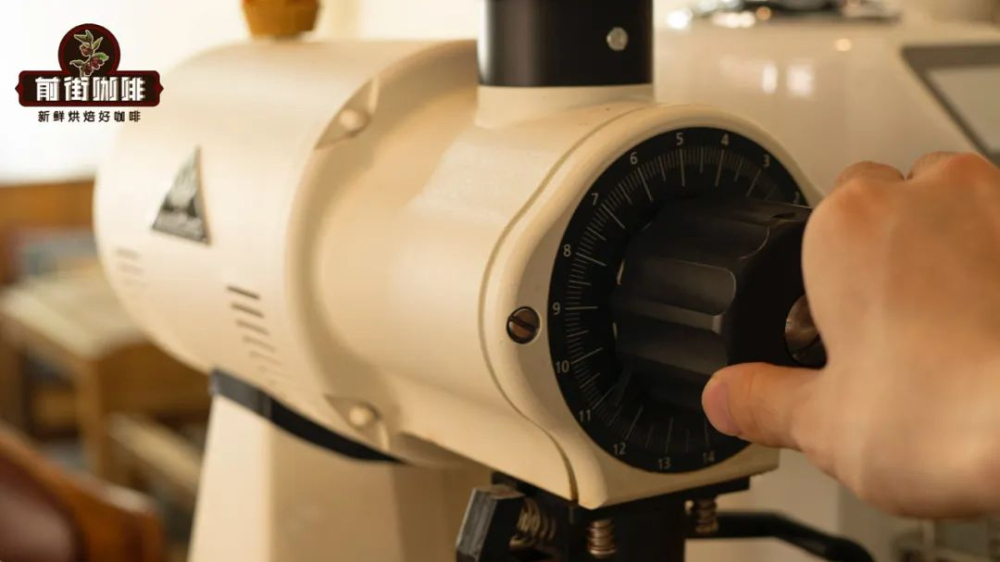
When brewing dark-roasted coffee, Front Street uses a grind size similar to granulated white sugar, corresponding to a 75% passing rate on China's No. 20 sieve. The final brewing time for a pot of coffee should be about 2 minutes.
But if you have changed the ratio several times and the dark-roasted coffee still comes out thin, then it is most likely under-extraction. At this point you can observe the brewing time. If you used more than 15g of beans and the brewing time is around 1 minute 30 seconds, then it is very likely that the grind is too coarse, causing the flow rate to be too fast.
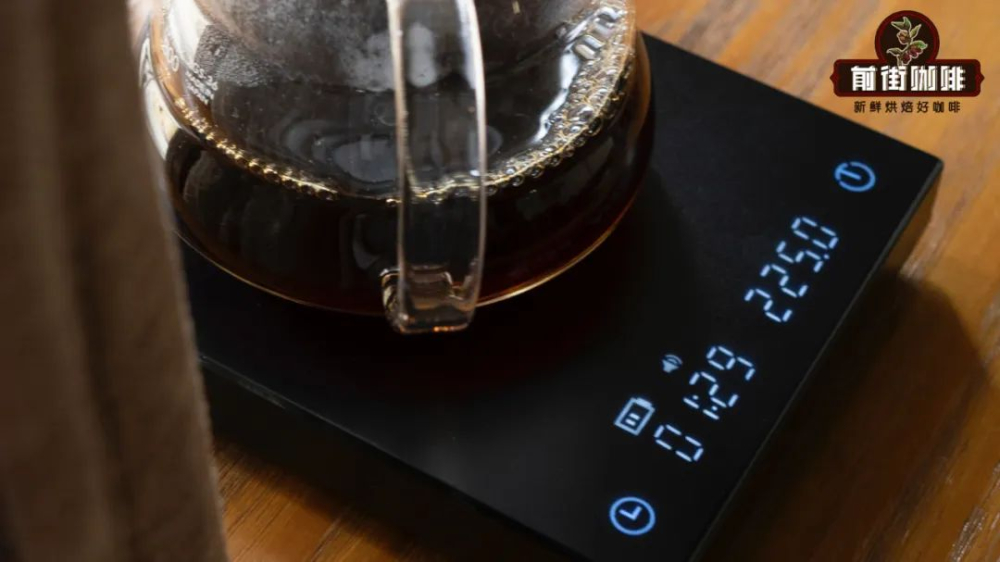
Then! We can adjust to a finer grind and control the brewing time to the range of 2:00-2:30, allowing the coffee to be more fully extracted, and the taste will naturally become fuller~
3. Dripper choice
When brewing dark-roasted beans, Front Street does not use the common V60 dripper, but rather the Kono dripper. This is because the V60 dripper's guiding rib design makes the flow rate relatively fast, making it more suitable for medium-light roasted coffee. Because they need a finer grind to bring out more layers in the extracted flavor, if the dripper's extraction speed is slower, over-extraction is very likely to occur. That is why it is said that the fast-flowing V60 dripper is more suitable for brewing medium-light roasted coffee beans.
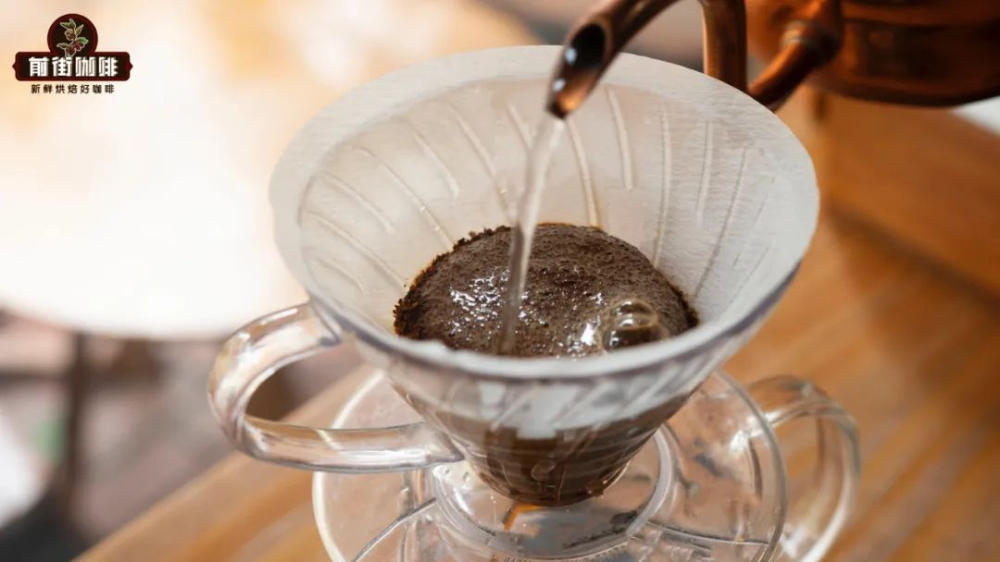
Dark-roasted coffee beans have a looser texture and higher extraction efficiency (it is easy to extract the aromatic substances), so a coarser grind than for medium-light roasts should be used to reduce its extraction efficiency (to prevent over-extraction). At this point, if you use a V60 dripper with a relatively fast flow rate, under-extraction can easily occur.
The Kono dripper's guiding ribs are distributed only in the lower half. The effect of this design is to slow the flow rate and effectively extend the time for the coffee grounds to steep and extract. That is why Front Street uses the Kono dripper as the extraction tool when brewing dark-roasted coffee beans, so that the extraction is more complete and the taste can be fuller.

4. Pouring technique
The pouring technique here does not refer to whether to use a three-pour or one-pour brewing method, but rather to paying attention to avoiding rinsing water against the wall of the cup as much as possible when pouring. What problem arises if the water stream hits the wall of the cup during brewing?

Exactly! The water will flow directly down along the wall of the cup, and what lands in the server is not extracted coffee liquid but ordinary hot water, reducing extraction while also diluting the other coffee liquid in the server, thereby making the taste thin. So when pouring in circles, try to avoid rinsing the cup wall multiple times, to ensure you ultimately get a satisfying taste~
The above content is compiled by CoffeeHunters, a coffee news website.


