








"Boss! Why doesn't the latte I make at home taste as good as the one in your shop? Are you hiding some secret recipe?" This is a conversation that tends to pop up after many customers try the latte sold at Front Street's storefront~
To be honest, latte coffee doesn't have many key points—you just need to pay attention to a tiny bit of detail, and its deliciousness can double! So today, Front Street is here to share how to make a latte at home that's just as delicious as the one from the shop!

1. Choosing Coffee Beans
Coffee beans are the main controller of a latte's flavor. The roast and flavor direction of a bean determine what kind of latte you'll get.
Generally speaking, Front Street recommends using beans with a medium roast or darker to make a latte, because latte coffee uses a relatively large amount of milk, while beans roasted lighter than medium usually have a milder flavor that struggles to hold up against a large amount of milk and is easily overpowered by the milky taste. So for coffee with a lot of milk like a latte, medium-dark and dark roasted beans are more suitable.
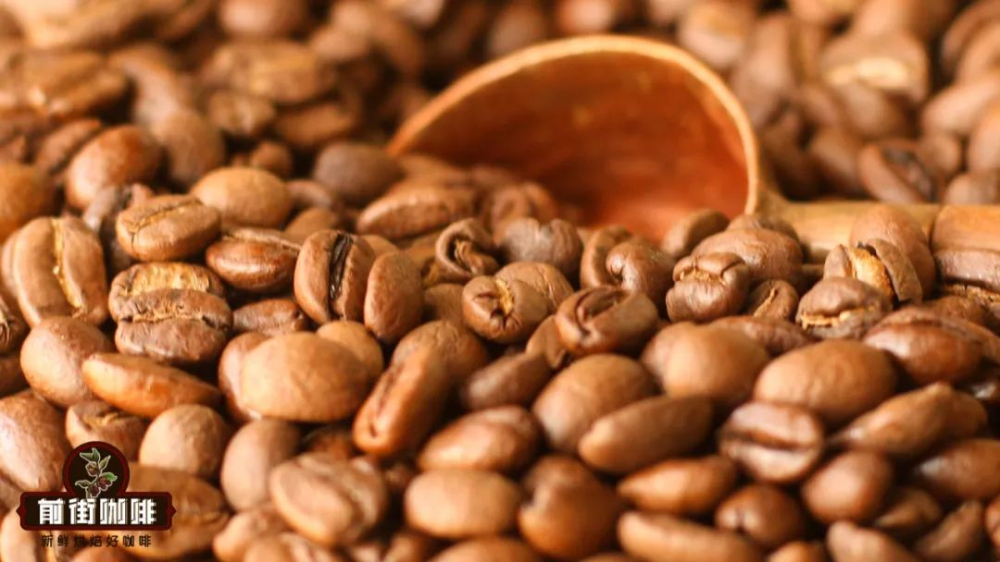
The reason Front Street's latte is praised by so many customers is largely due to the use of the medium-dark roasted Warm Sun Blend. The latte made with it has flavors of butter cookies, vanilla, chocolate, and a slight wine aroma. If you like lattes with a roasted nut flavor, Front Street Queen's Estate is recommended; if you like milk coffee with a rich spicy taste, Front Street Golden Mandheling is recommended; if you want good value for money, we suggest buying Front Street Dark Cocoa Blend...
2. Choosing Milk
Once you've settled on a bean, the second important ingredient is milk! There are so many kinds of milk on the market, but the milk that pairs perfectly with your bean might be just one!
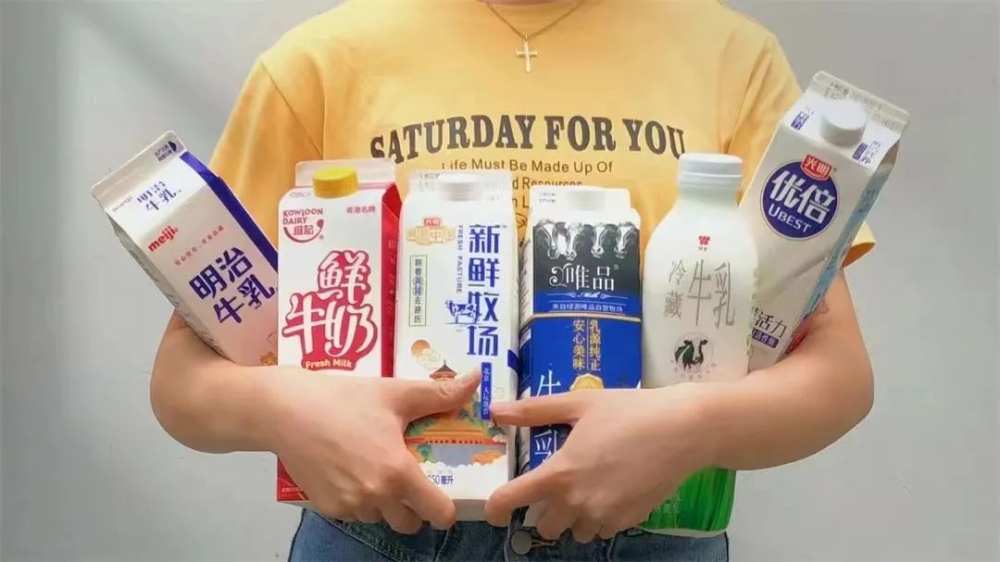
For example, "Milk A" has a relatively rich, prominent milk flavor. Paired with a dark roasted bean, the latte it makes is very rich and fragrant, with the milk flavor and coffee flavor complementing each other without masking one another. But if Milk A is used with a medium-dark roasted bean, it will mask the coffee's flavor, dominating on its own and throwing the taste off balance—drinking like a cup of coffee-flavored milk.
Here's another example! "Milk B" is a milk with a thinner milky taste and higher sweetness. Paired with a medium-dark roasted bean, it makes a latte with a clean mouthfeel and extremely high sweetness. But if it's used with a dark roasted bean, then not only can its milky taste fail to balance with the coffee, it will instead be suppressed, turning into a bitter "watery" latte (because the flavor is thin, it feels very watery when drinking). So the choice of milk is really quite important!
You can head over to this article to learn about "Common Latte Milks on the Market," see which ones are available near you, then buy them and give them a try at home~ You can skip the experimental comparisons in the article, since those were only done using Front Street's Warm Sun Blend and can't be applied to different beans.
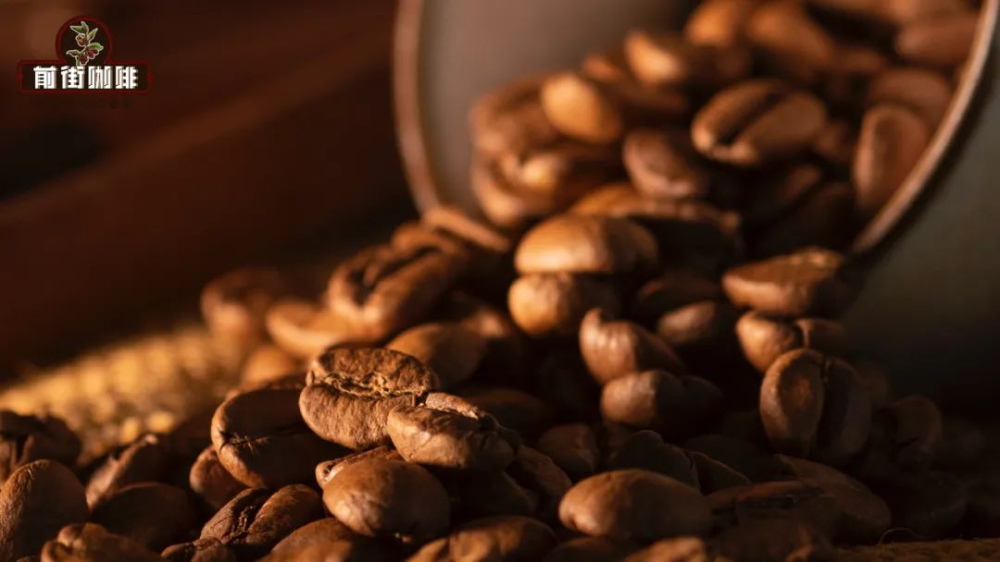
Operational Details
Many people think that because the machine they use at home is cheaper (referring to the espresso machine), the espresso it makes isn't that good, which makes the latte not taste great. But actually, this is the one point you don't need to worry about too much.

As we said earlier, the coffee's flavor is mainly controlled by the beans. There are indeed certain differences between coffee machines at different price points, but those are mainly concentrated in specific features (such as pre-infusion, strong steam, adjustable water temperature, pressure, etc.), or in the design for continuous, fast, and stable output!
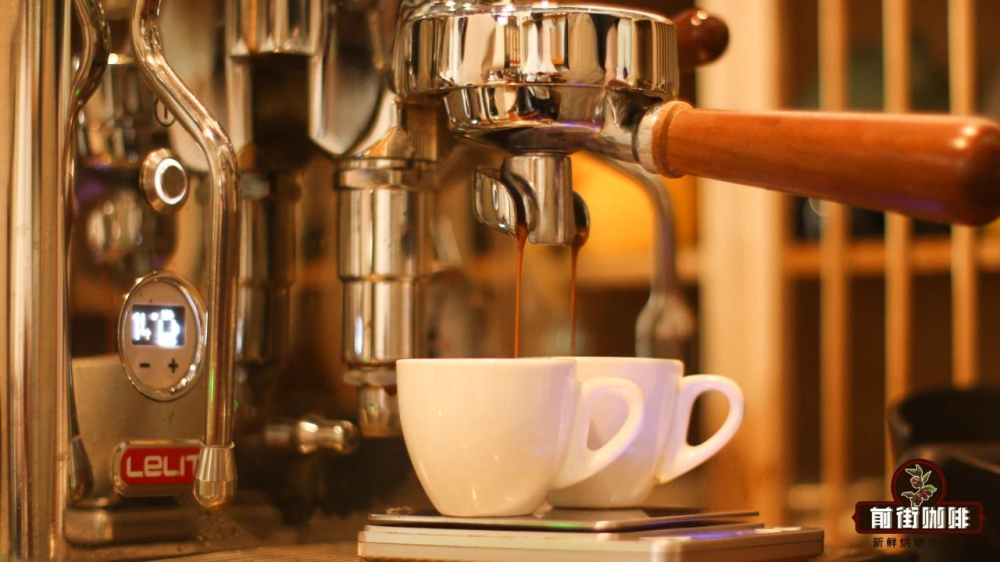
As long as we operate and adjust properly (extraction is normal: no insufficient pressure, channeling, etc.), a home machine costing a few thousand yuan can also produce an espresso base similar to that of a shop's ten-thousand-yuan machine. You can refer to the extraction formula commonly used by coffee shops: a 1:2 coffee-to-liquid ratio, then control the time within the 25~35 second range to finish extracting the target liquid.
Steaming the Milk Foam
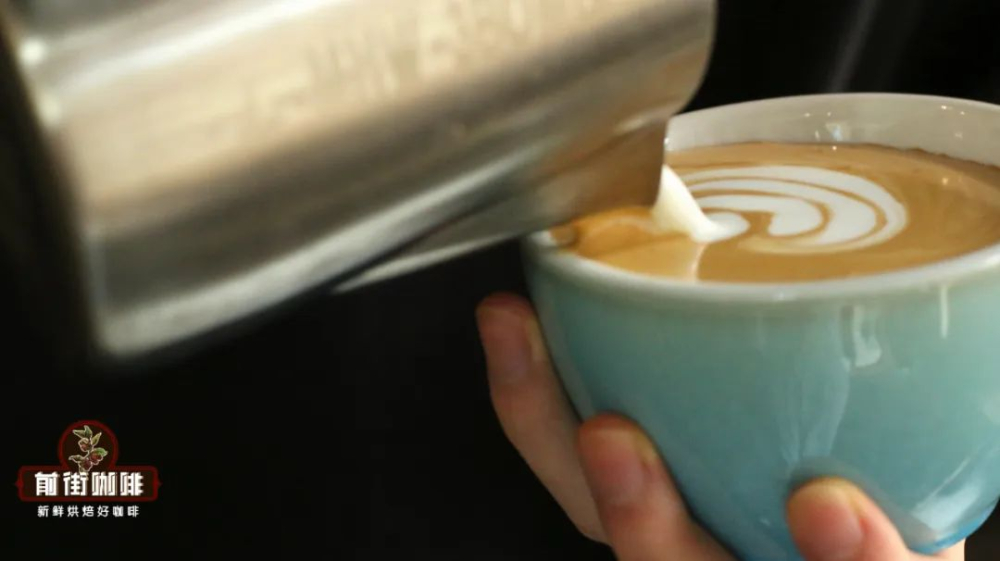
Although it's a latte you're making for yourself, some people still have fairly high demands for mouthfeel! Dense, delicate milk foam can blend better with the coffee, resulting in a latte with an ultimate mouthfeel! So we can head over to the article "Delicate Milk Foam Steaming Tutorial" to learn how delicate milk foam is steamed!
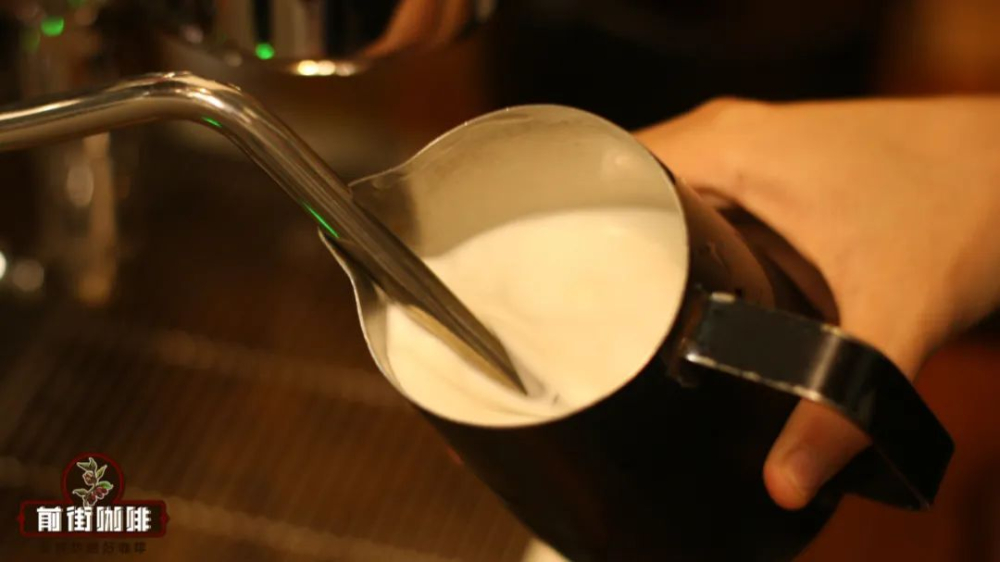
The reason Front Street isn't going into detail here is that home-made lattes are mainly about flavor. Aside from those chasing the ultimate experience, many people don't really need milk foam to enhance the mouthfeel (or they're drinking iced lattes). So just use any heat source to heat the milk to 65±2°C, pour it into the espresso, stir evenly, and it's ready to drink! Simple and convenient—what's not to enjoy~
So what's the ratio of espresso to milk?
Front Street's fixed output ratio is 1:5, that is, 40ml of espresso and 200ml of milk. But for a latte you're making for yourself, you don't need to follow any recommendation online! Because everyone's taste is different. Although lattes emphasize a balance of milk and coffee, if that balance doesn't suit you, why pursue the standard? Feel free to adjust it yourself and find the ratio you like.
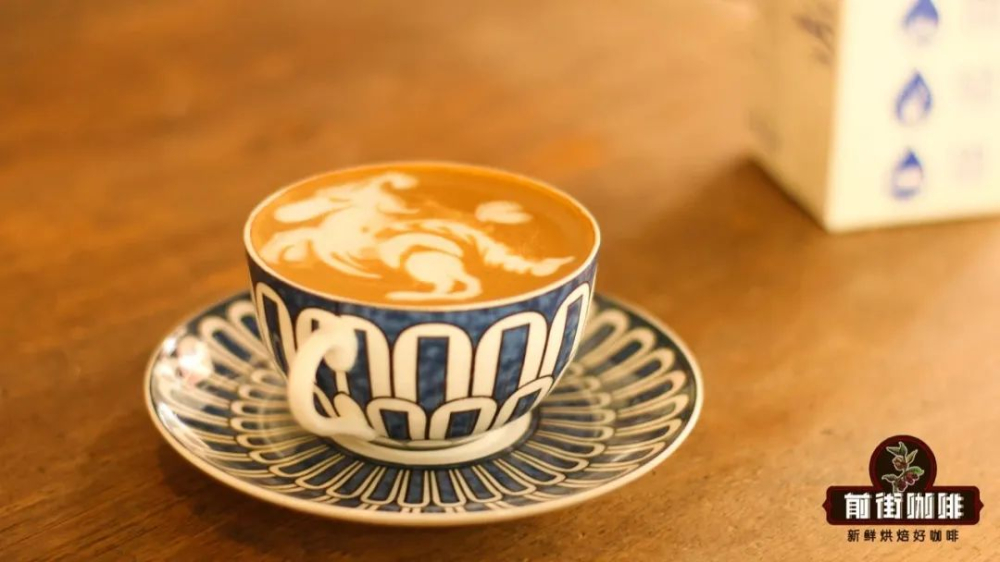
Just like how colleagues at Front Street's storefront, when making lattes for themselves, those who prefer a lower coffee concentration use a 1:6 ratio; those who prefer a higher coffee concentration use a 1:4 ratio to make their lattes. It's roughly the same principle: more milk reduces the coffee's flavor, less milk makes the coffee's flavor more pronounced (bitter).
So, as long as you understand the above few points, you'll be able to figure out and make a delicious latte at home that suits your own taste!~
The above content is compiled by CoffeeHunters, a coffee news website.


