








Coffee flavor comes 60% from green beans, 30% from roasting, and 10% from brewing. Clearly, there are many factors that influence coffee flavor. So, as a roaster, how do you decide the roast level of coffee beans? Today Front Street Coffee will discuss how roasting styles are determined.
There are two points to keep in mind. First, coffee is roasted to different degrees depending on each roaster's understanding of the beans; there may be no absolute right or wrong, only a choice of flavor expression, not a universal standard. The second point is that roast level is not based on a strict standard either.
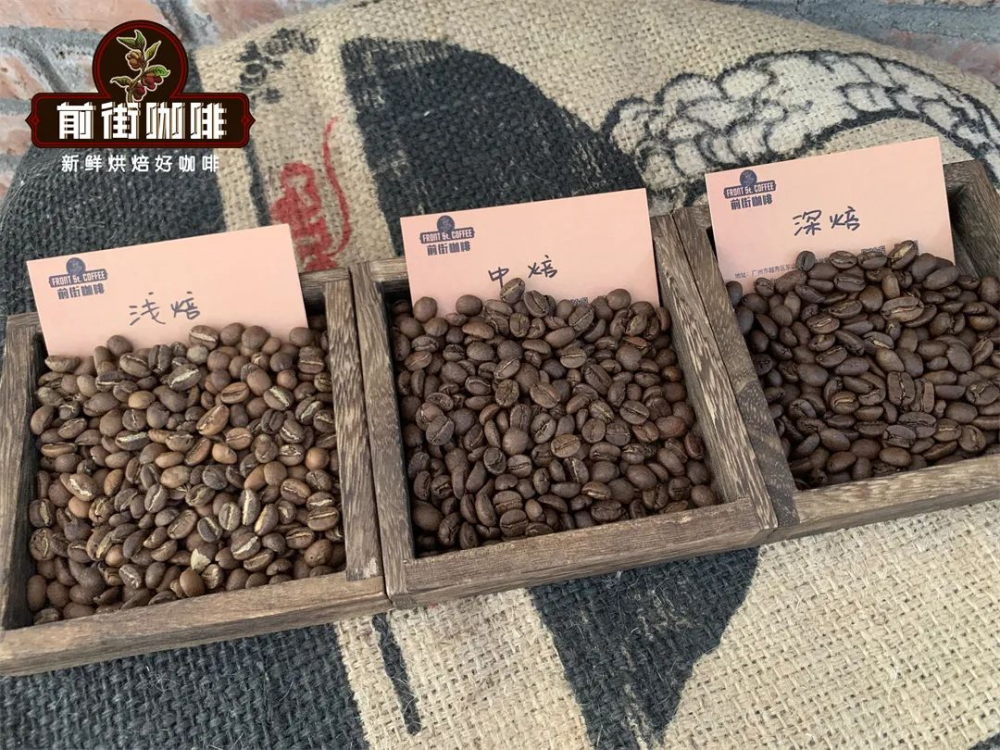
Generally, roast level is named after the color of the coffee beans, that is, a standard color palette. The terms we often see in textbooks—Cinnamon, City, Vienna, French, and Dark French—come from this. This standard is only a general international naming convention, and in actual roasting there are often exceptions, and such exceptions are not rare. For example, beans from some producing regions do not color easily; roasting them further would produce burnt bitterness, so roasting has to stop there. Although the color is very light, the flavor has already formed. In some other producing regions, perhaps because of higher caramel content after roasting, the beans appear darker. In these cases, the color value is only a reference standard.
Some people also use drop temperature as the standard for roast level, but in reality, roasters of different brands or technical approaches also differ somewhat, and the drop temperatures of different roasters vary greatly when compared. This is also why we often see 230–240°C in Japanese roasting curves.
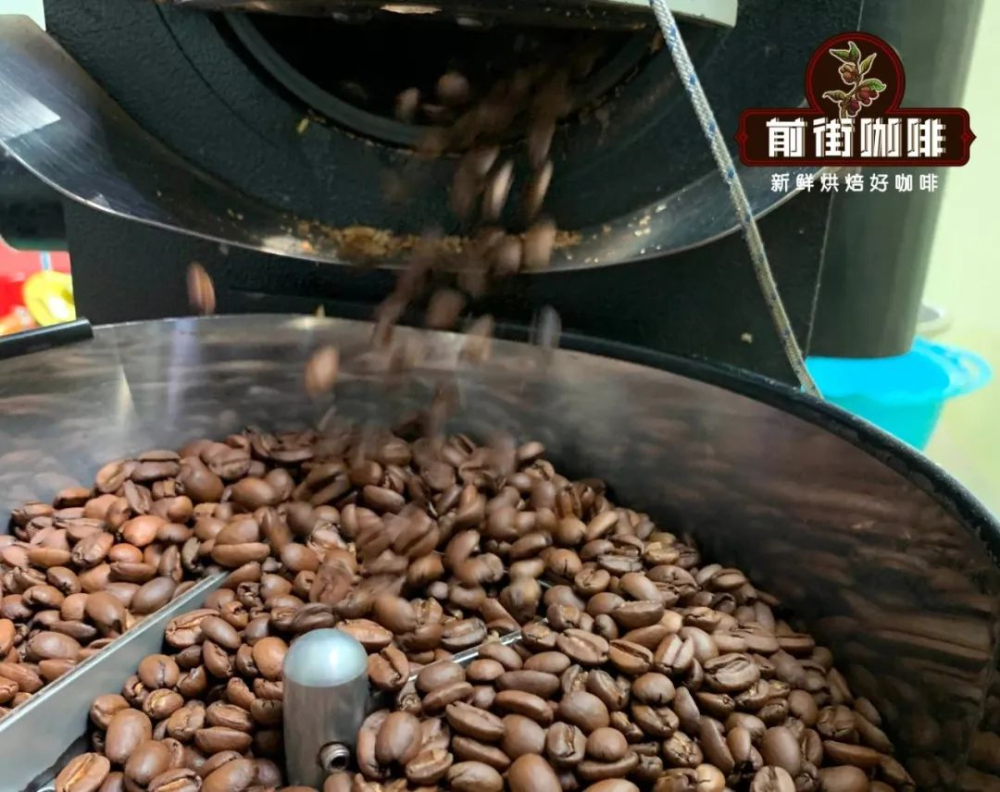
Roasting is the process of transforming the chemical and physical properties of green coffee beans into roasted coffee products, lasting ten to fifteen minutes, with temperatures reaching over two hundreddegrees Celsius, undergoing multiple chemical changes, producing first crack and second crack, sounds like popcorn popping, and losing moisture, causing the green beans to expand and change their color, taste, aroma, and density. During the roasting process, chlorogenic acid gradually disappears, releasing familiar and pleasant fruit acids, such as acetic acid, citric acid, and the malic acid contained in wine. Proper roasting presents these wonderful acids to an appropriate degree. Thus, the special flavor of coffee is produced.
Theoretically, after first crack you can choose a suitable time point to drop the beans. But to avoid risk, usually the beans are not dropped immediately after first crack; they need to develop another two or three degrees for the aroma to become fuller. That is, from two degrees Celsius after first crack to a little after second crack, a total range of only 10 degrees Celsius, which we roughly simplify into three styles: light roast, medium roast, and dark roast. From this we can see that in fact their drop temperatures do not differ much, sometimes perhaps by only two or three degrees, yet the appearance already differs greatly. Therefore, we combine color, shape, and taste to describe the roast level of a coffee bean.
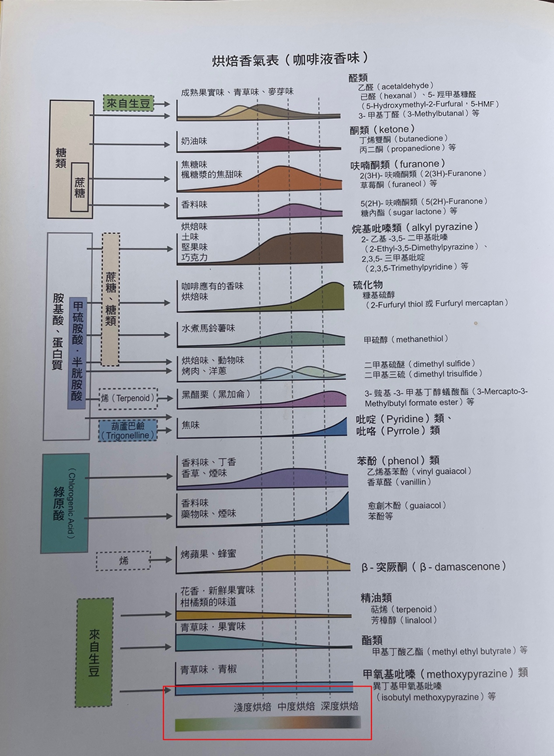
From the perspective of roasting:
As Front Street mentioned in new staff assessments, light roast refers to coffee beans from the middle of first crack to just after first crack. At this stage, enzymatic action and the early Maillard reaction mean the coffee beans' organic acids have not yet been completely broken down, so the acidity is more prominent and the bitterness is so light it is barely noticeable. It is very suitable for friends who like acidic coffee.
Medium roast usually refers to the period from the end of first crack to before second crack. At this time, the roasting process caramelizes and produces more Maillard reactions. Although there is still acidic aroma, it is clearly weaker than in light roast. At this point, acidity and bitterness are more balanced, so the sweet, clean flavor stands out more, making it very easy to drink, with caramel, chocolate, and similar notes becoming the main theme. This roast level often allows specialty coffee to release its best characteristics, and it is also the roast level most often used by Front Street Coffee.

Dark roast usually refers to beans after second crack. The caramelization reaction is nearing its end, and the Maillard reaction dominates, producing aromas such as resinous, spicy, and carbonized notes.
So how do we decide these different roast levels?
The first basis is history. In the past, consumers did not have high demands for coffee flavor and paid more attention to its function. During that long period, coffee roast levels were strikingly consistent—dark. Therefore, the styles formed in major coffee-producing regions over this period of several hundred years were mainly full-bodied, such as Mandheling, Brazil, Colombia, or Blue Mountain. By comparison, Blue Mountain was full-bodied yet not burnt-bitter, and perhaps this was also an important factor in coffee becoming the king of coffee in the old era. The influence of this roasting was profound. Even today, some consumers ask for sugar and milk when ordering coffee, and this habit comes from that.

Therefore, in choosing roast levels, for coffee beans from these classic producing regions, we try as much as possible to return to the era of that time and maintain the classic full-bodied taste.
Take Mandheling as an example. Mandheling's unique "heavy taste" gives it a feeling of hearty satisfaction, like galloping through the world. Not a few men like it, and now many female friends like it too. Indonesia is the world's largest archipelago country, known as the Country of a Thousand Islands. Indonesia's relatively high altitude, volcanic ash soil, and its climatecharacteristics are all excellent conditions suitable for the growth of Arabica coffee trees. Sumatra has long been known as the Island of Spices. In the mountains, coffee trees keep company with wild animals, cloves, nutmeg, and pepper; in addition, the unique three-stage drying method (wet-hulling) creates Mandheling's unique flavor: distinctive herbal notes, woody agarwood, moderate acidity, rich and mellow yet like the bittersweetness of life, and a strong sweet aftertaste.

Mandheling coffee beans are relatively large and hard in texture. To highlight its famous body, low acidity, and local herbal notes, Front Street uses a dark roast. If Mandheling coffee beans were given a light or medium roast, the taste might not reach the full-bodied richness everyone likes, and the acidity would become more obviously prominent. It would no longer be the Mandheling coffee everyone loves. Of course, if someone likes acidic Mandheling, they can also try a medium roast. But then again, if a Mandheling has no Mandheling flavor, do we still call it Mandheling?
The second basis is the bean's shape and characteristics. For example, Yirgacheffe coffee beans are given a light roast. It is not that this producing region shows good acidity, but rather the opposite: it is precisely the very light roast that leads to its acidic expression.
Yirgacheffe, Ethiopia. In order to sell most of their coffee beans, coffee farmers do not, like the traditional countries mentioned earlier such as Brazil, Mandheling, and Colombia, like to grade goods by size. Ethiopian coffee will therefore have large and small beans; only defective beans that would bring bad flavors are excluded. For the phenomenon of uneven size, the variety is usually labeled as Heirloom [Heirloom native variety] for the green bean variety.

Front Street often mentions in articles that Ethiopian beans come in different sizes. When roasting, you need to roast the large coffee beans through while not burning the small ones, and the safer way is to drop them as quickly as possible. Some people ask: can't high skill roast them evenly? The woody structure of coffee beans determines that their heat conductivity is very slow. If the difference between large and small beans is too great, this conductivity cannot achieve even transfer. Although you can reduce the heat after dehydration and slowly prolong the roasting time, this frog-in-warm-water approach can make the bean color look even, but in terms of aroma characteristics it inevitably leads to blandness because of the overly long roast. This is also a trade-off. For the floral and fruity acidity of Ethiopian beans, Front Street, like most roasters, uses a light roast.
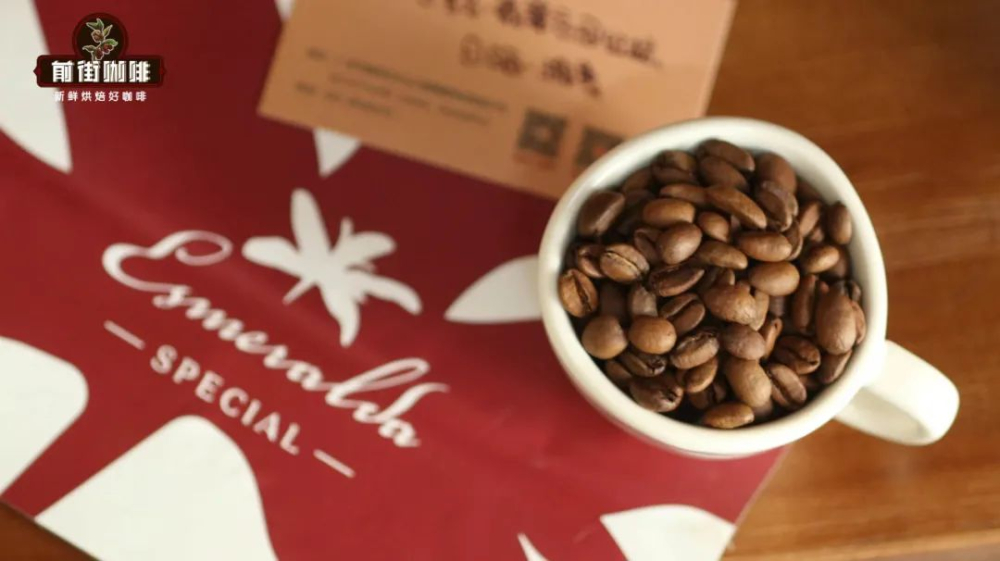
Another example is Geisha. Its floral and fruity profile distinguishes it from most coffee varieties, and many reviews take this characteristic as grounds for considering it a medium-light roast. The Geisha variety has one characteristic: its long, narrow shape makes it larger in volume than some varieties. Especially compared with Ethiopian beans, which have already been unanimously recognized as light roast, it often takes two or three small beans to match one Geisha bean. Whether you like it or not, roasting it requires a longer time. On the other hand, from the principle of roasting, roasting as much as possible without causing burnt bitterness will produce more aromatic characteristics and lead to more flavor changes. This is the pursuit of roasting.
Whether it is the person roasting or the person drinking, people have different understandings and views of coffee. Sometimes there may be no completely standard answer, only different choices.
The above content is compiled by CoffeeHunters, a coffee news website.


