







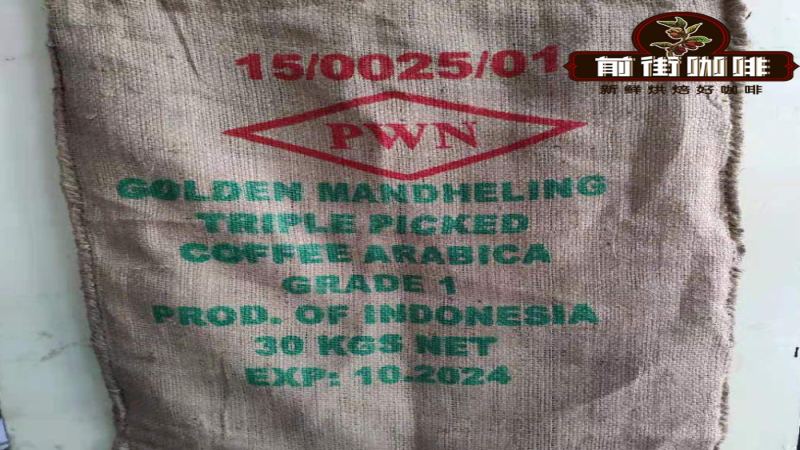
When it comes to Mandheling coffee beans, everyone must know that the most famous coffee bean in Indonesia is the Golden Mandheling coffee bean produced by PWN. However, this coffee bean was not originally a PWN product, but a Japanese product. So why is it that when people mention Front Street Golden Mandheling, their first reaction is always the Indonesian PWN company rather than the Japanese company? In the following article, Front Street Coffee will answer these questions one by one.
Mandheling coffee beans andGolden Mandheling coffee beansThe origin of the name
As the representative coffee of Sumatra, Mandheling was originally a very small place name, and later gradually evolved into the name of an ethnic group—Mandailing. Today, it has long been one of the most well-known single-origin coffees in all of Indonesia. I believe many people have heard the story about the origin of the name Mandheling. Although it is just a "rumor," and even today no one knows how the name Mandheling came to be used for coffee, it is true that it became very popular in Japan.
The fame of Mandheling coffee came from Pawani Coffee Company (PWN) successfully bringing it to the Japanese market. Pawani is a trading company engaged in export business, founded by a Chinese family from Quanzhou, Fujian, and located in Medan, an important port in Sumatra. It has been in the export business since 1957, dealing in goods such as rubber, cassia seed, cloves, patchouli oil, and of course, exporting Sumatra coffee beans to Japan. Unlike many local Indonesian green bean traders, Pawani is an exclusive supplier of high-grade Mandheling coffee beans, and all the Mandheling beans it produces are top quality.
The high quality of Front Street Golden Mandheling lies in the fact that PWN manually sorts G1-grade Mandheling green coffee beans three times. G1 grade means the bean size is strictly controlled at 18 mesh or above, and in every 300-gram sample of green beans, there are fewer than 3 defective beans. Multiple rounds of screening reduce the defect rate of Front Street Golden Mandheling coffee beans to a minimum, producing higher-quality batches with a clean sweetness and a richer aroma.
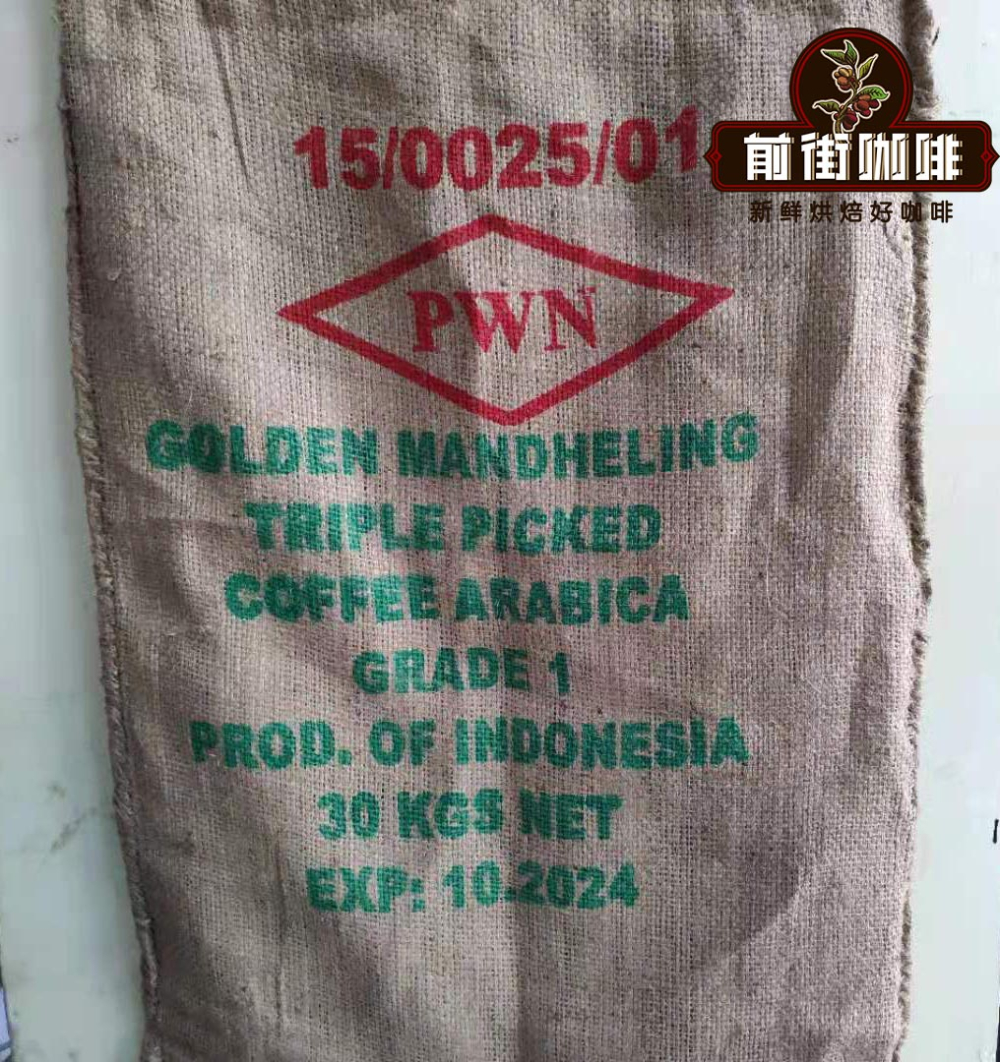
At the time, after the Japanese took an interest in Sumatra coffee, they planned to purchase it long term, but gradually discovered that the quality of the beans was often uneven. So they had to pay more attention to the production process of Mandheling and began setting strict screening standards and methods for removing defects, including starting with values such as bean density, size, shape, and color. All green beans needed both machine and manual sorting to remove defects, ensuring that the Mandheling produced was complete, uniform, large, and translucent, while also reducing earthy and grassy flavors. At that time, the name was Golden Mandheling, which translates directly into Chinese as "Golden Mandheling."
However, because Golden Mandheling was registered as a trademark by Pawani first, all companies in Japan introducing this product had to remove the name Golden Mandheling and could not use it. This also led Japanese importers to change the original Golden Mandheling to Gold Top Mandheling, which was then translated as "Dingshang Golden Mandheling."
So is Indonesian Dingshang Golden Mandheling good? AndPWN Golden MandhelingWhat is the difference between them?
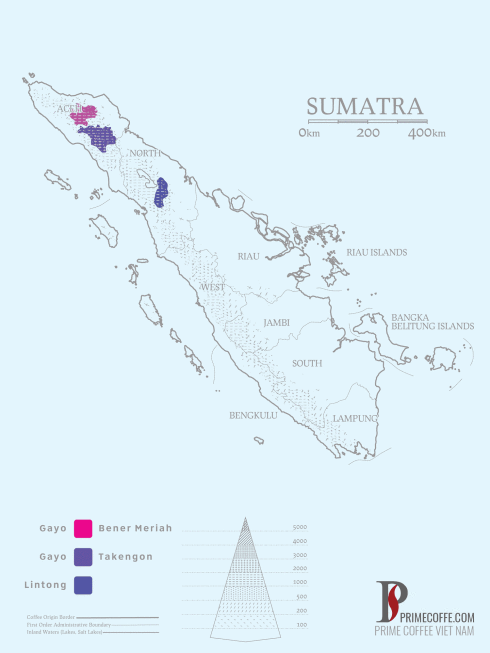
According to Front Street Coffee, Dingshang Golden Mandheling and the Front Street PWN Golden Mandheling on Front Street's bean list are both produced in the Lintong area of North Sumatra, Indonesia. The harvesting operation is limited to fully manual picking of individual ripe cherries to ensure the initial quality of bean selection. The coffee cherries are processed using the wet-hulling method, then after hulling they undergo another drying and refining process, two rounds of green bean cleaning, and four rounds of manual selection! Therefore, both of these coffees can be said to be strictly selected top-grade Mandheling coffee.
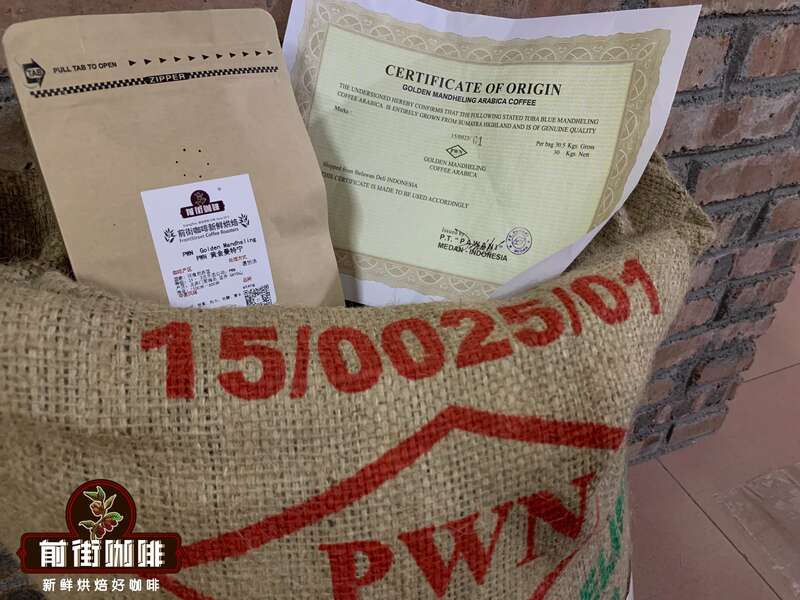
It is just that Golden Mandheling was registered as a trademark by Indonesia's Pawani Coffee Company, making Golden Mandheling exclusive to PWN. From this, it can be concluded that the flavor difference between these two coffees will not be too great; it is simply a difference in brand. Next, Front Street Coffee will share with you the relevant information and flavor characteristics of the Front Street PWN Golden Mandheling introduced by the shop.
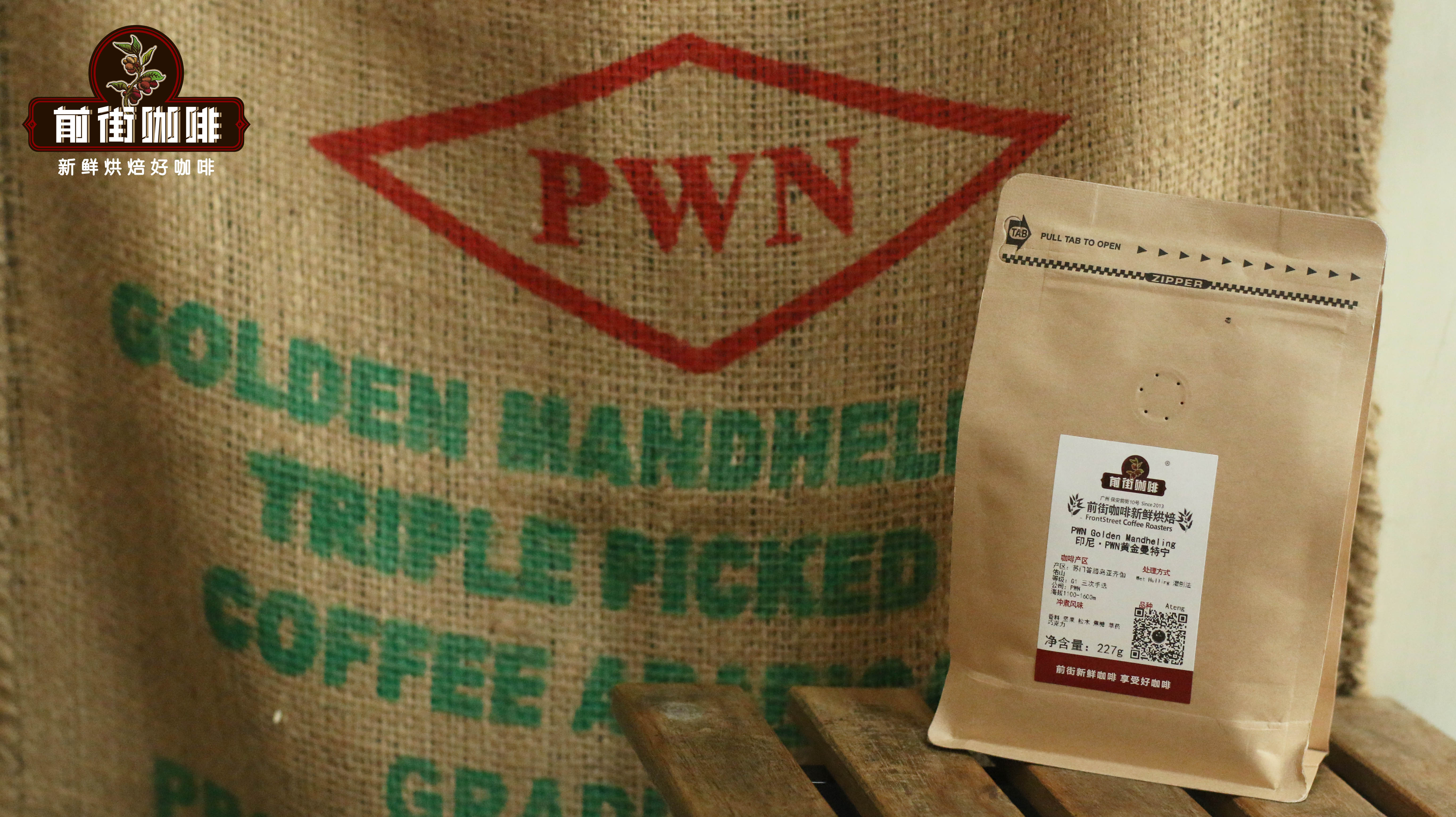
Front Street Coffee PWN Golden Mandheling Coffee Beans
Country: Indonesia
Region: Sumatra Aceh Gayo Mountain
Altitude: 1100-1600m
Variety: Ateng
Processing Method: Wet Hulling
Flavor: Baked toast, nuts, pine, caramel, herbs
Front Street PWN Golden Mandheling Production Region
According to the latest information on Front Street PWN Golden Mandheling introduced by Front Street Coffee, PWN chose a new production region in 2020, namely Gayo Mountain in Aceh within the Sumatra region, located at the northernmost corner of Sumatra Island. Coffee cultivation in Gayo Mountain is mainly concentrated around the town of Takegon and the hillsides beside Lake Tawar. The altitude in the production area averages between 1100 - 1600 meters, and its coffee quality has always been excellent.
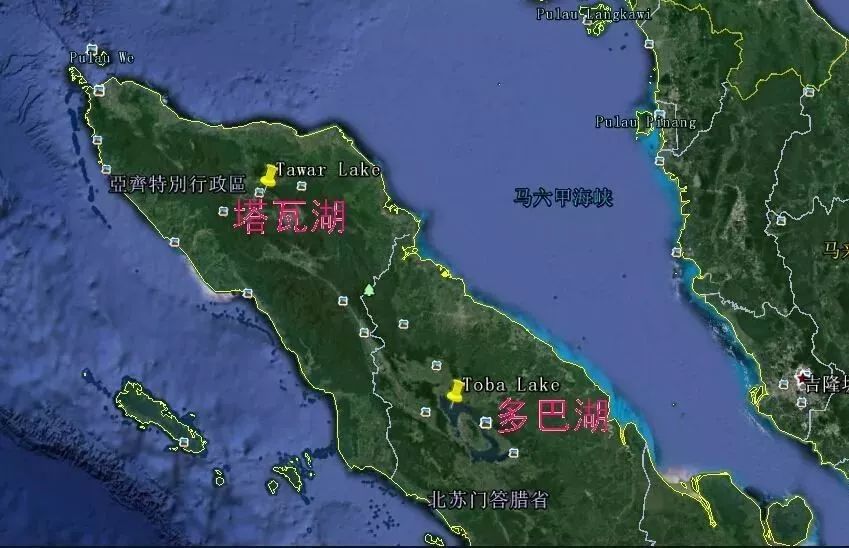
However, due to previous political instability, coffee from this region was difficult to export. In recent years, the situation has become more stable, and coffee cultivation in Aceh has also developed, with quality surpassing that of the Lintong region. This move is undoubtedly an affirmation of the quality of Gayo Mountain coffee cherries. As Indonesia's top coffee brand, Front Street PWN Golden Mandheling will naturally not disappoint coffee lovers.
Front Street PWN Golden Mandheling Coffee Variety
According to Front Street's understanding, Mandheling coffee varieties are generally based on pure Arabica coffee beans, but Arabica coffee beans have weak resistance to pests and diseases. Therefore, in October 2020, Indonesian PWN abandoned the original Typica variety for Golden Mandheling and instead used Ateng variety coffee beans for the production of Golden Mandheling. The "Ateng" mentioned here is actually the Catimor variety commonly seen in China.
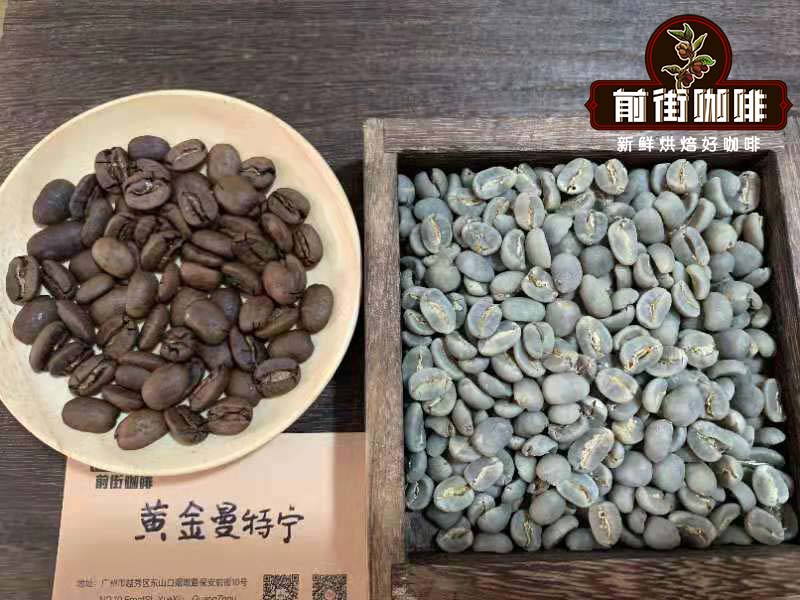
Ateng (Catimor)
Catimor is a hybrid of the Robusta subspecies Timor and Caturra. It was first developed in 1959 and began to be promoted in Brazil in the 1970s and 1980s. With disease resistance and high yield, it secured a place among coffee varieties in Central and South America. The recurring coffee leaf rust crises in Central and South America also helped promote the use of Catimor coffee beans. Its characteristics are high yield and a short plant that can be densely planted, with new leaves appearing reddish-brown. However, because it matures quickly and has high yield, it requires sufficient fertilizer supply and shade. But according to Front Street's understanding, its lifespan is very short, averaging only ten years.
Front Street PWN Golden Mandheling Processing Method
In addition, the green coffee processing method used for Front Street Golden Mandheling coffee beans is also Indonesia's most distinctive wet-hulling method. It is precisely this processing method that creates the unique earthy, herbal, and spicy notes of Indonesian Mandheling.

The origin of this processing method is that the local climate is mostly rainy, with constant typhoons, making it impossible to achieve the good weather required for natural sun-drying. Moreover, the local economy is not strong, so they also cannot use the more expensive washed method. For these various reasons, the highly local wet-hulling method emerged.Wet HullingIt is a fast-processing method of green bean preparation: the coffee bean's skin and pulp are removed, followed by a short fermentation and drying, then the mucilage and parchment layer are removed, and drying continues until the moisture content drops to 12%. Wet-hulled Mandheling coffee beans clearly show varying degrees of挤压裂痕, and Front Street Coffee believes this phenomenon is not a defect bean but rather an inherent characteristic of Mandheling.

Next, Front Street will share how this coffee bean is brewed by pour-over and what its flavor is like.
Front Street Coffee Golden Mandheling Brewing Suggestions
Dripper: Kono dripper
Water temperature: 86℃
Dose: 15 grams
Coffee-to-water ratio: 1:15
Grind size: medium-fine grind (EK43s grinder setting 11)
*Reason for choosing the Kono dripper: The Kono dripper has few ribs and they are located at the lower end. The filter paper fits closely against the dripper, which can restrict airflow and extend the contact time between water and coffee grounds, allowing the coffee grounds to be fully extracted and enhancing the rich mouthfeel. Therefore, this dripper is not only suitable for brewing Front Street Golden Mandheling, but also for brewing Front Street Brazil Queen Estate, Front Street Jamaica Blue Mountain No. 1, and other medium-dark roasted coffee beans.
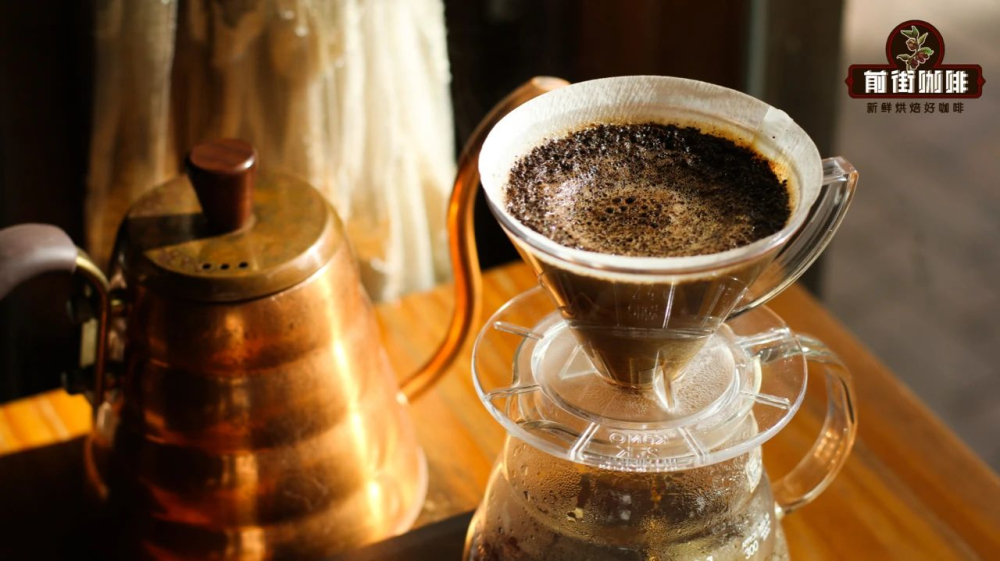
Brewing method: staged extraction
Use 30 grams of water for a 30-second bloom, then pour in a small stream in circles until 125 grams, at which point pause for a stage. When the water level is about to expose the coffee bed, continue pouring until 225 grams and stop. When the water level is about to expose the coffee bed again, remove the dripper. (Start timing from the beginning of the bloom.) The extraction time is 2'00".
Front Street Golden Mandheling Flavor Description:Layered and complex, rich and clean, highly balanced, with strong nutty and chocolate flavors, intense spice and caramel aroma, fruity notes, and a long finish.
For more specialty coffee beans, please add the private WeChat of Front Street Coffee, WeChat ID: kaixinguoguo0925
The above content is compiled by CoffeeHunters, a coffee news website.

