







For more specialty coffee knowledge, please follow: Front Street Coffee (Frontsteet Coffee)
The French press originated in 19th-century France, known in English as the French Press, and in Chinese it can also be called a "French filter press pot." Although the exact time of its emergence is unclear, in 1852, the Frenchmen Mayer and Delforge established the "Smith" company, applied for a patent for a piston-filter coffee device, and named the product "French Press," marking the commercialization of the French press.
The French press, a simple and convenient design
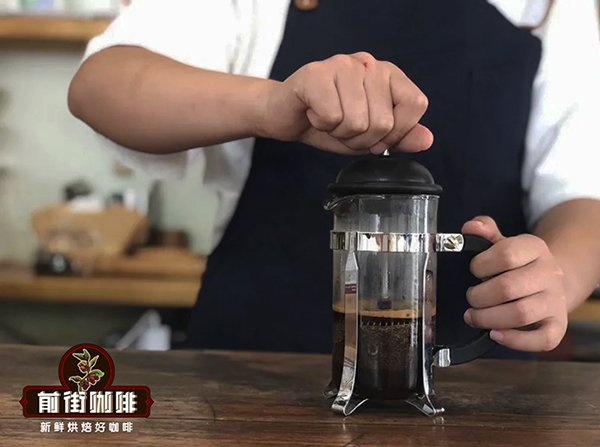
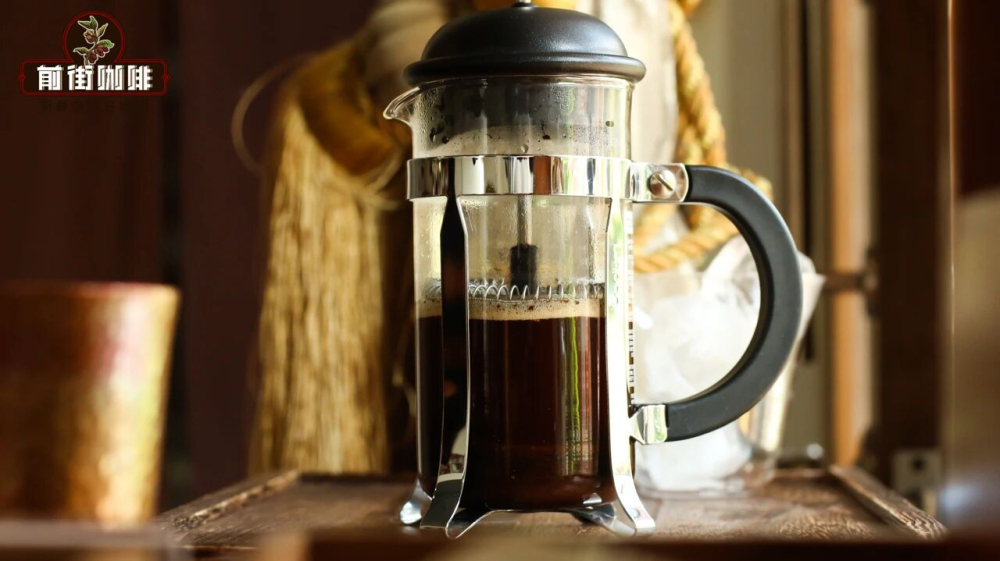
Simple refers to the French press's simple structure, simple principle, and simple operation. The entire French press consists of a heat-resistant glass container and a metal filter with a plunger. When making coffee, you just soak coffee grounds and hot water in the glass container, then use the metal filter with the plunger to filter out the coffee grounds, resulting in a relatively clean cup of coffee. The manual operation part of the entire coffee brewing process consists of three steps: adding grounds, pouring water, and pressing the plunger.
How to use a French press to brew a pot of coffee
The French press uses immersion extraction, so Front Street believes it is more suitable to use medium-roast or medium-dark roast coffee beans. If you want to drink French press coffee with floral and fruity notes, we recommend Front Street Strawberry Candy Coffee, Front Street Mozart Coffee, and Front Street Sidra Coffee; if you prefer coffee with a rich nutty aroma, we suggest buying Front Street Queen's Estate, Front Street Golden Mandheling, and Front Street Huila. All the above coffee beans can be purchased at the Front Street Tmall flagship store or Front Street Taobao store, and orders will be shipped within 24 hours.

Because the French press mainly relies on immersion to extract coffee, within a fixed capacity, a certain amount of water evenly dissolves the substances in the coffee grounds. During the extraction process, the main influencing factor is time. The longer the immersion time, the more substances are extracted from the coffee until saturation, or until it reaches a state where extraction becomes difficult—that is, the longer it steeps, the stronger the taste.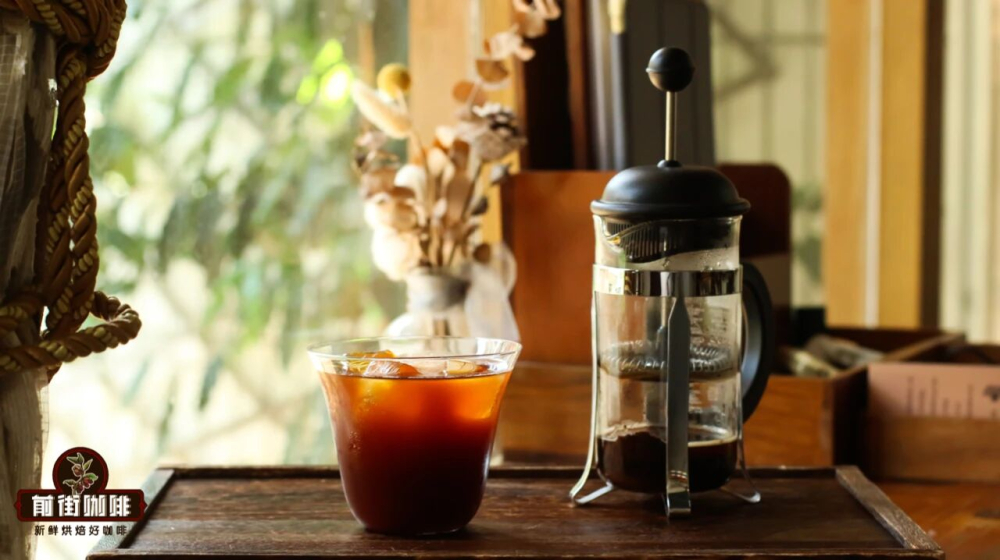
Therefore, first confirm the coffee-to-water ratio. Front Street generally recommends a ratio of 1:15 to 1:16, as these two ranges have a higher tolerance for error, and most coffees show excellent taste and flavor within this ratio range.
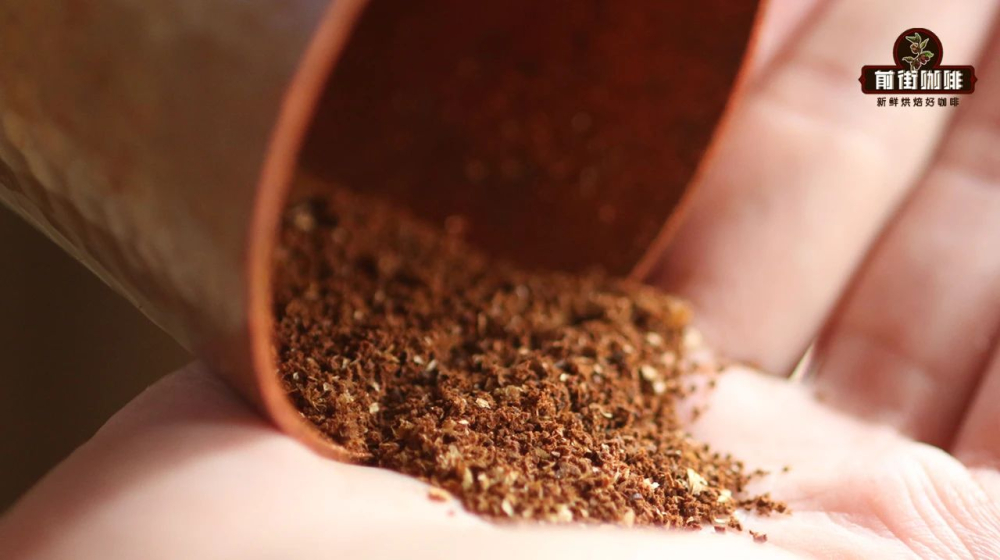
Next is determining the coffee grind size. For the French press, Front Street recommends choosing a coarser grind, because the French press uses a metal filter, and the gaps are visible to the naked eye; choosing a coarser grind also helps with better filtration. Coffee beans of different roast levels also have different grind sizes. Using the No. 20 standard sieve pass rate as the standard, medium-light roast coffee beans can use a finer grind (pass rate 72-75%), and medium-dark roast coffee beans can use a coarser grind (pass rate 68-71%).

Then comes the water temperature. Because the French press uses immersion extraction, the coffee grounds and water are relatively static during the process, so a relatively higher water temperature is chosen. For the same bean, the brewing water temperature for a French press will be 2-3°C higher than for pour-over. When brewing medium-light roast coffee, it is recommended to use 91-94°C, and when brewing medium-dark roast coffee, it is recommended to use 88-91°C.
Finally, there is the immersion time. As mentioned above, time is very important for the French press. Through multiple brewing comparisons, Front Street believes that for most coffee beans, steeping for about 4 minutes according to Front Street's recommended parameters gives the best taste and mouthfeel. You can also use this set of parameters as a blueprint to develop your own favorite brewing parameters.

The operation process is actually really convenient. Taking 15g of coffee grounds as an example, pour the ground coffee into the pot, then pour in 225-240ml of hot water, pull up the plunger, cover with the lid, and wait 4 minutes. Then slowly press down the plunger so that the metal filter presses to about 1/4 of the pot body, avoiding fine grounds at the bottom surging upward.
The simple French press is not only for simply brewing coffee
It can also serve as a cupping tool
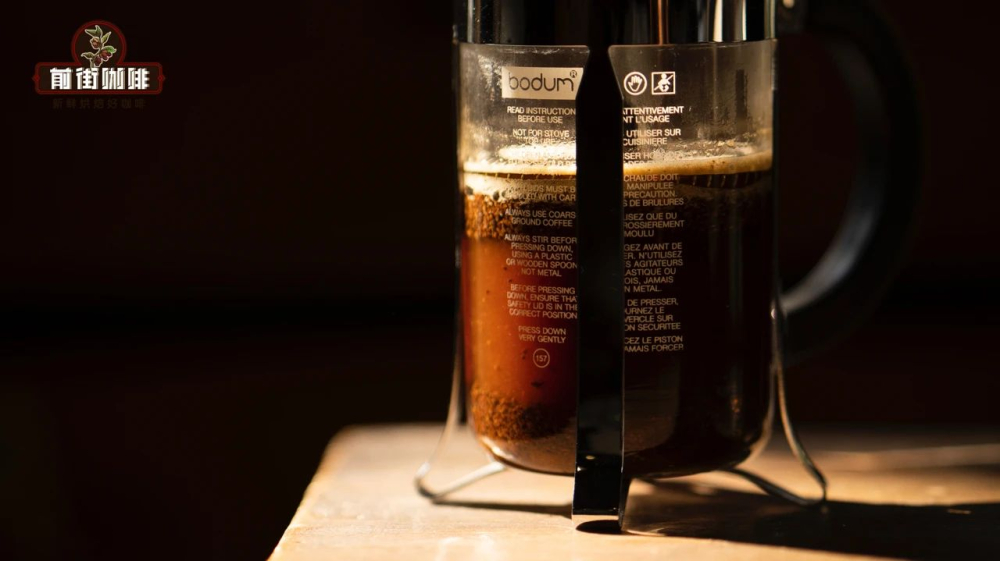
The process of making coffee with a French press is very similar to cupping—both use static immersion. Many people use a French press to test the quality of coffee beans. The French press brewing method recommended by James Hoffman, author of The World Atlas of Coffee, is exactly the same as cupping.
It can also be used to brew tea
The French press is a simple device that integrates immersion and filtration. It can be used to brew coffee, and of course it can also be used to brew black tea, and it is also very convenient to use. If you look carefully, you will find that the tea makers sold on the market are very similar in structure to the French press.

It can even froth milk
The French press can also be used to froth milk. If you want cold milk foam, then you need a manual milk frother. In fact, the structure of a manual milk frother is very similar to that of a French press. Pumping the plunger of the French press can also froth milk just like a milk frother.

Some people may ask: Can a French press make iced coffee?
Front Street was initially quite surprised, but since some friends have asked, we will share with everyone our French press iced coffee method after several attempts.
Concept
The French press uses the principle of immersion extraction. When normally making hot coffee, with the same beans, coffee made with a French press is more balanced and has a thicker mouthfeel than pour-over. Therefore, we also referred to the Japanese-style iced pour-over method to make French press iced coffee. That is, use a small amount of hot water to soak the coffee, extract a concentrated hot coffee liquid, then pour it into ice to dilute and cool it, forming iced coffee.

Considering that ice needs to be added to dilute the coffee concentration, it is not suitable to use light-roast coffee with relatively high acidity to make iced coffee. One reason is that dilution will make the mouthfeel thinner, and another reason is that soaking light-roast coffee with acidity can easily produce undesirable flavors such as almond and peanut skin. Ultimately, Front Street decided to use Honduras Sherry coffee beans, which are characterized by a mellow mouthfeel and rich aromas of vanilla and sherry, making them very suitable for immersion extraction.
Extraction plan
① Preparation stage: prepare a French press, electronic scale, glass cup, hot water, and ice cubes. Use 15 grams of coffee grounds. In order to obtain a more concentrated hot coffee liquid, the ratio of coffee grounds to hot water is 1:8, and the water temperature is 94°C. In terms of grind size, because the French press uses a metal filter, it is not recommended to improve the extraction rate by adjusting to a finer grind. For grind size, use a medium-coarse grind (No. 20 standard sieve pass rate 65%).
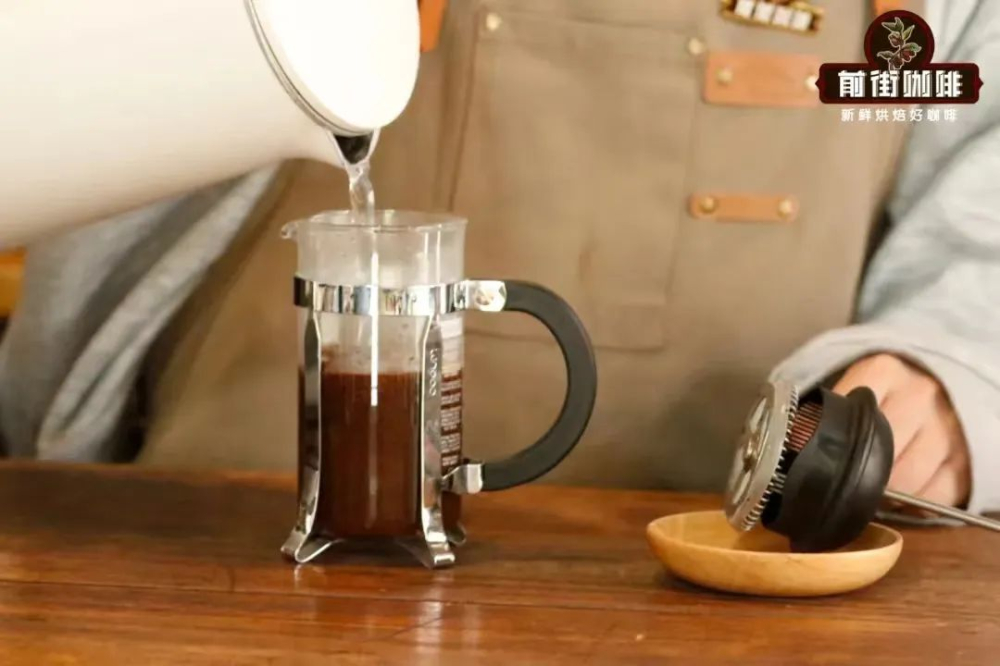
② Grind the coffee grounds, pour them into the French press, and pour in 120g of hot water (and start timing). Pour the water directly into the center.
③ After 30 seconds, use a stirring rod to stir the coffee grounds layer to improve the coffee extraction rate, forming three layers: coffee liquid, coffee grounds, and coffee foam.
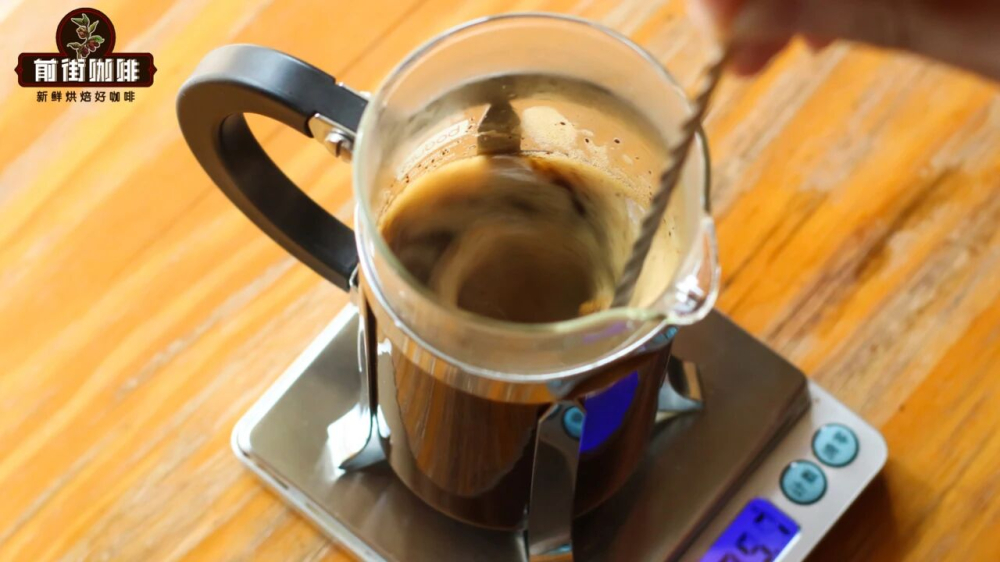
④ Put on the French press lid and wait until 3 minutes. During this time, you can add 105g of ice cubes to the glass cup.
⑤ After 3 minutes, slowly press down the plunger. Let it sit for 1 minute to allow the coffee grounds to settle.
⑥ At the 4th minute, pick up the French press and pour the coffee liquid into the glass cup with ice cubes.

In this way, a cup of iced coffee made with a French press is complete. Because it is filtered with a metal filter, the surface still retains good coffee oils. The vanilla flavor of the Sherry coffee beans is well expressed, refreshing yet still mellow.
So, how do you disassemble and clean a French press?
As mentioned earlier, the French press's metal filter design retains the coffee oils. Although it is environmentally friendly and allows you to enjoy a pot of coffee without spending too much on filter paper, it also means the French press needs to be cleaned more carefully. If you are lazy, the coffee oils left on the French press will affect the taste of the next cup of coffee.
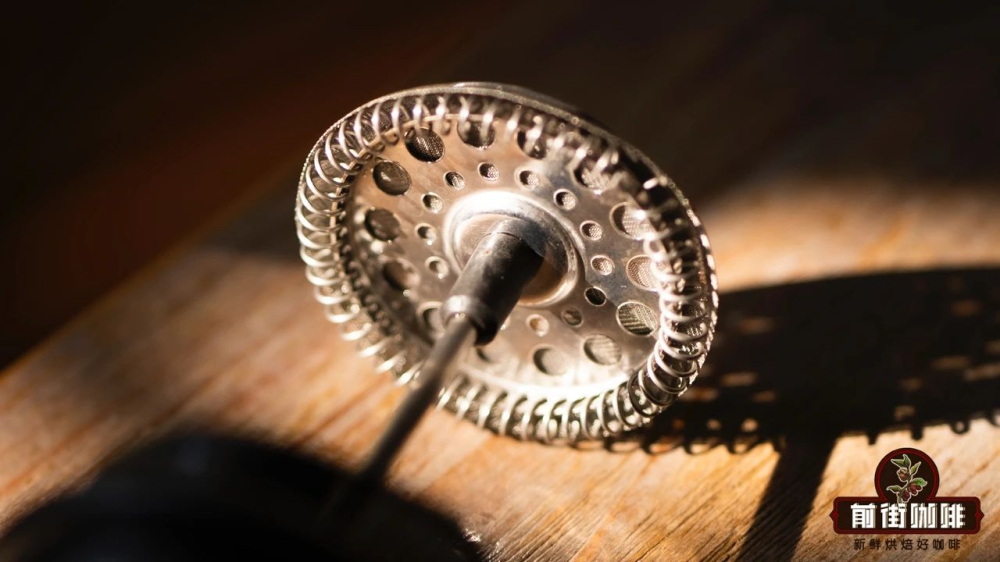
The structure of the French press is not complicated. It mainly consists of a glass body, a metal filter, and a plunger. The part to be disassembled is mainly the metal filter section, because it is made up of several layers, so it is difficult to clean the components inside thoroughly without taking it apart. First, grip the head of the plunger with one hand, and use the other hand to twist and loosen the metal filter section. Then clean the remaining components, drain the water, and reassemble.
The above content is compiled by CoffeeHunters, a coffee news website.


