







For more specialty coffee knowledge, please follow: Front Street Coffee (Frontsteet Coffee)
With the continuous spread of coffee culture, there is a wide variety of coffee equipment and pour-over techniques. Whether it's pour-over, siphon, or French press, Front Street Coffee believes each has its own characteristics. There's no need to disparage any one of them—their existence is reasonable, and each has its fans.
For example, some people enjoy the sense of ritual in pour-over brewing, the laboratory feel of operating a siphon, while others appreciate the convenience and simplicity of a French press. The wonder of each coffee brewing device goes beyond just its appearance and operation technique—making coffee is more like a science. Each device has its own characteristics in extracting coffee, and we all need to continuously experiment with combinations to find the perfect ratio and the best taste.
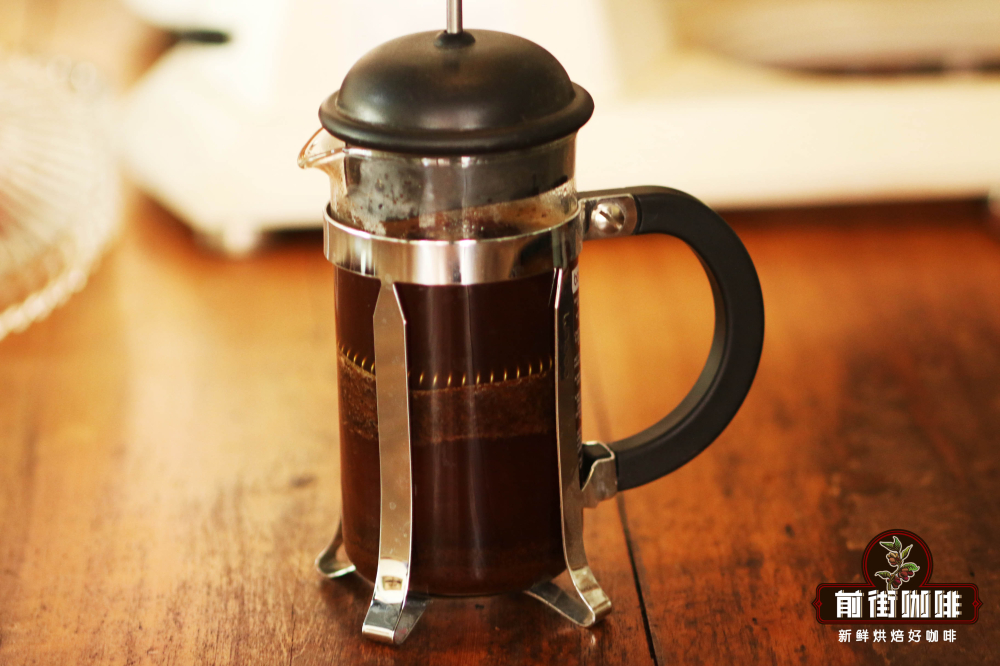
The French press is far more than just a "lazy person's coffee device." Although it's easy to operate, it doesn't sacrifice the full flavor of a good cup of coffee. In fact, French press extraction is the brewing method closest to cupping results—it fully brings out the oils, aromas, and various flavor compounds in coffee. The smooth, sweet, and rich mouthfeel makes it an excellent choice for breakfast coffee.

So, in this article, Front Street Coffee teaches you how to make an excellent cup of coffee with a French press. Before making coffee, Front Street Coffee will first introduce the uses of the French press. The French press, known in English as French Press, can also be called a "French press pot" in Chinese. Some people use it to brew tea, and others use it to froth milk—but today Front Street Coffee is using it to brew coffee!
Step One: Prepare a bag of good coffee
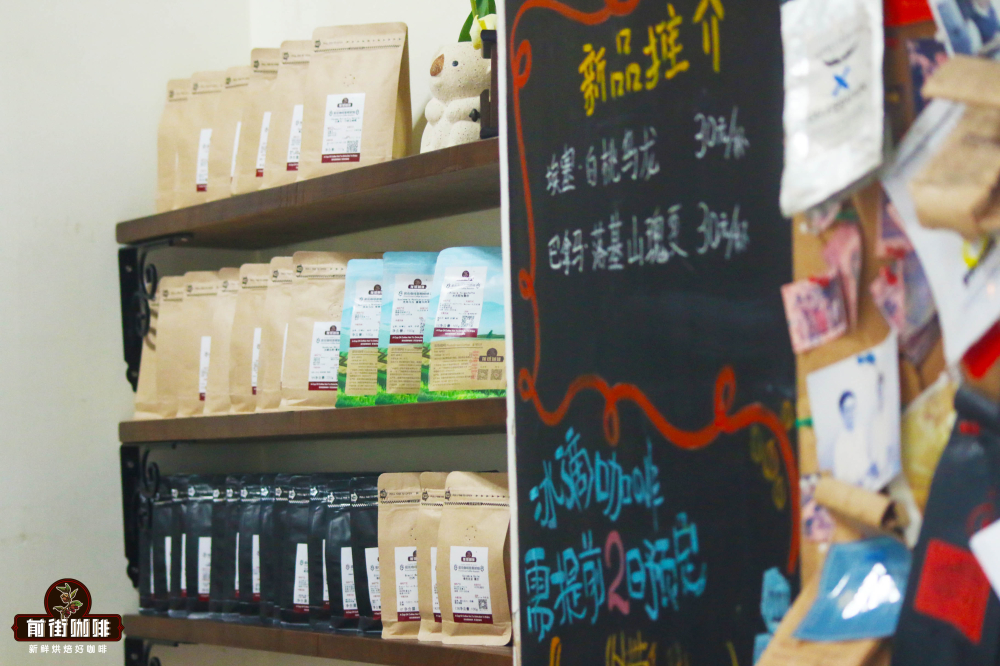
You need to prepare some delicious coffee beans. "Delicious" refers not only to the quality of the green beans but also to freshness—for example, freshly roasted. Please purchase coffee beans roasted no more than 7 days ago and consume them within the 30-day best-flavor period. To get the best taste, you should also grind fresh. Pre-ground coffee powder can still be decent, but it's not optimal. For example, many customers at Front Street Coffee want their beans ground after purchasing. Although Front Street Coffee offers a grinding service, Front Street Coffee recommends grinding fresh for each use, because the coffee's aroma dissipates very quickly after grinding.
Step Two: Design your extraction plan
You can start with a 1:10 coffee-to-water ratio. For example, for 2 servings, that's 20g of coffee beans with about 200g of water. The final ratio depends on your taste.
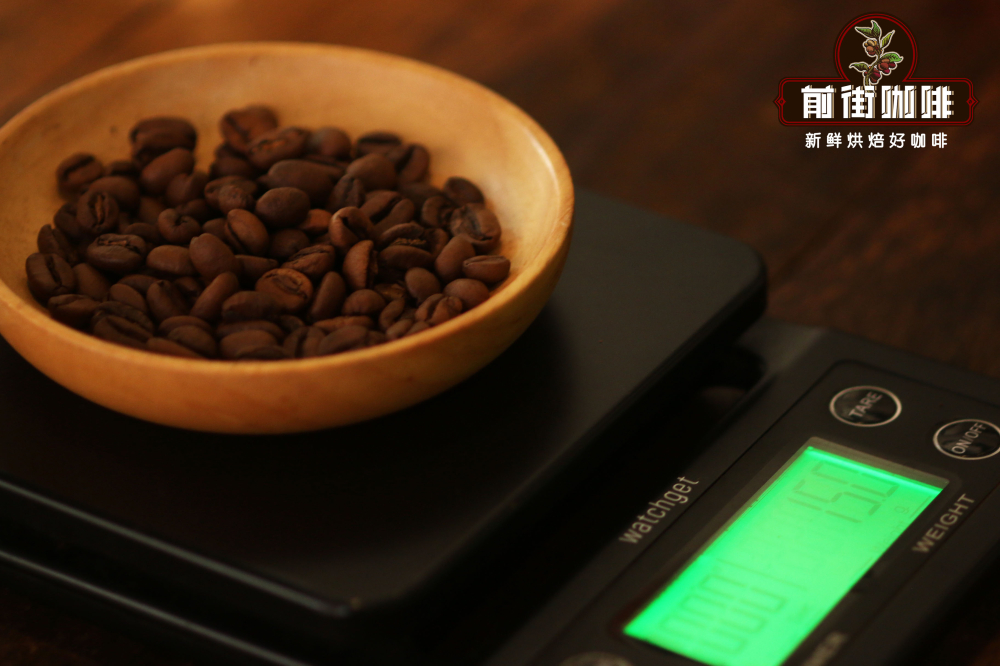
Step Three: Prepare an electronic scale
You might think Front Street Coffee's approach is a bit excessive, but even if your French press has markings and a measuring spoon, an electronic scale is still recommended. This is because coffee beans change density due to factors like growing altitude and roasting method—each type of bean has a different weight and mass. Additionally, if you make a particularly delicious cup of coffee and want to replicate that flavor, you must record the ratio. Conversely, if you make a terrible cup, the data will tell you how to adjust.
Step Four: Use fresh filtered water
Use fresh, clean, soft water. Don't use water that's too hard for extraction, and don't use unfiltered water. If the water itself isn't good, it's hard to make delicious coffee.
Once you have all these ready, you can follow Front Street Coffee's steps to use the French press!
1. First, grind the coffee beans, then pour them into the French press. Ignore what many people say about grind size—don't grind too coarse; medium grind is fine, roughly a bit coarser than regular pour-over. Front Street Coffee believes it's best to grind the coffee beans relatively evenly. This is because with uneven grind size, when the coffee grounds are extracted in water, the water extracts substances from the very fine particles faster than from the coarser ones—meaning the fine particles become over-extracted while the normal-sized particles haven't been extracted sufficiently. The resulting coffee won't taste good either.
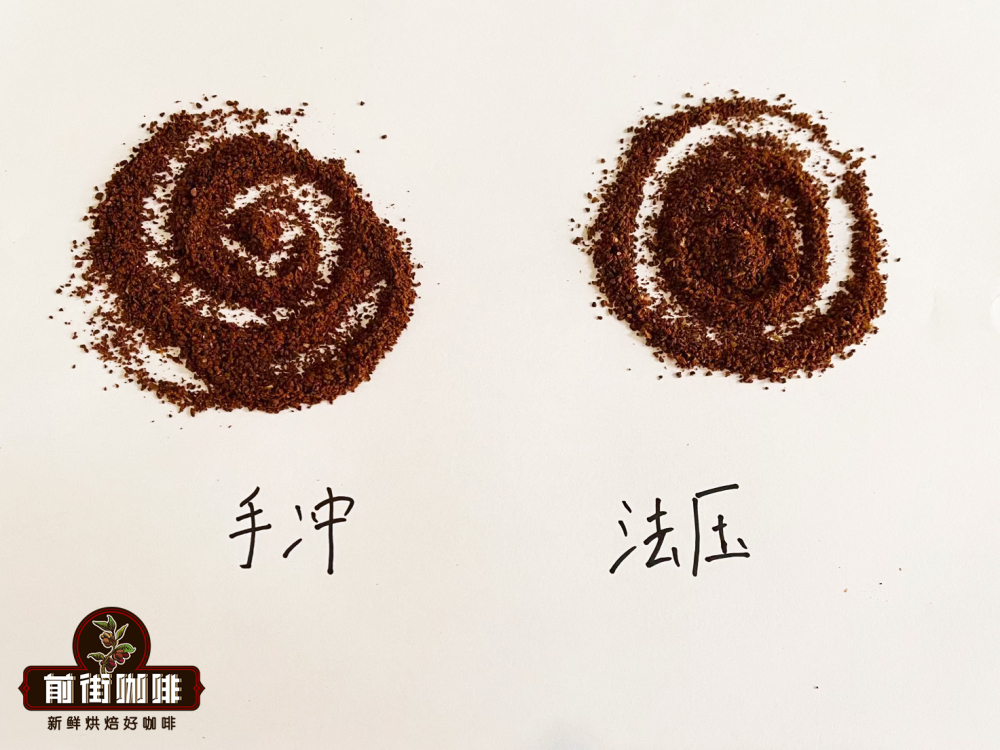
2. The recommended water temperature is around 88°C, and the recommended coffee-to-water ratio is 1:10 to 1:13. After pouring in the hot water, stir with a spoon to let the coffee grounds and water fully blend.
3. Put the lid on the French press with the filter screen staying at the top, then let it sit for 4 minutes.
4. Before pressing down the filter, you can open the lid and use a spoon to scoop out the foam and small fragments floating on top, then press the filter all the way down.
5. Once brewing is complete, immediately pour it out into another insulated container! Don't delay, because the coffee grounds are still steeping inside. Then pour it into a cup and enjoy slowly.

Another question is: which beans are suitable for the French press? What beans taste better when brewed with a French press? Taking Front Street's coffee beans as an example, Front Street Coffee's bean list has coffee beans from over 50 producing regions, and each coffee bean has its own characteristics. The ones most suitable for the French press are Front Street Indonesia Golden Mandheling, Front Street Brazil Queen's Estate, and Front Street Strawberry Candy, among others. These beans are all very suitable for the French press in terms of both mouthfeel and flavor. You can purchase them directly from Front Street's Taobao store or Front Street's Tmall flagship store.
Front Street Coffee suggests that when choosing coffee beans for French press brewing, you can select beans with a balanced profile leaning toward dark chocolate and nutty flavors. As for beans with more complex flavor layers, Front Street Coffee doesn't particularly recommend them, because the French press is an immersion extraction method—if the beans have rich, layered flavors, it's relatively difficult to express those complex layers with a French press.
Unlike pour-over coffee, which is affected by many factors such as temperature, pouring technique, and circling speed, the French press is a coffee device very suitable for beginners. You just need to control the brewing time well, because the longer the immersion time, the more substances are extracted from the coffee until saturation, or until it reaches a state where extraction becomes difficult—meaning the longer it steeps, the stronger the taste.
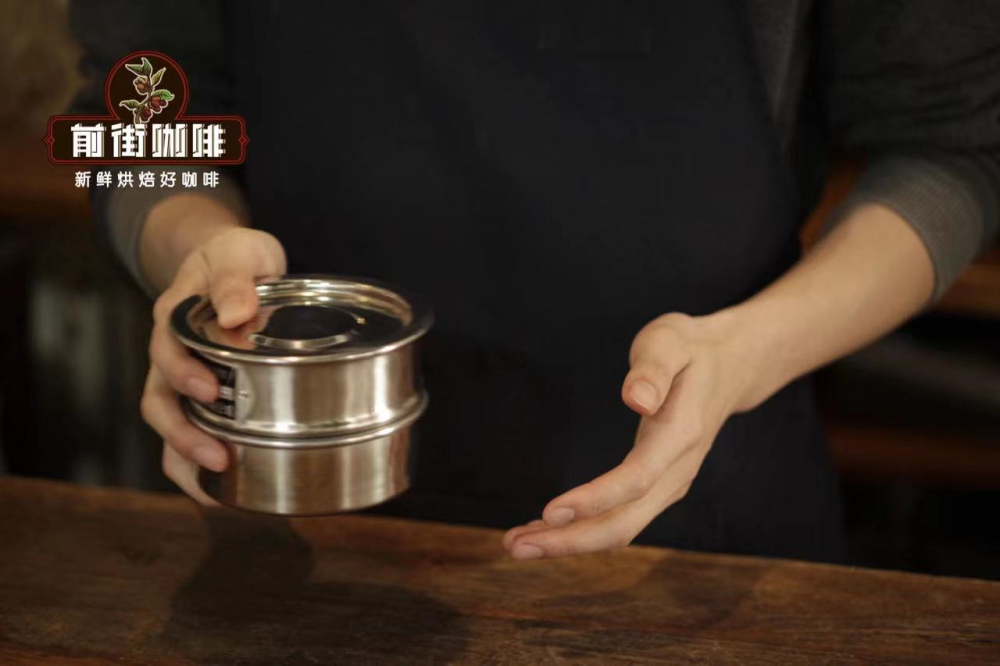
Of course, the strength of the flavor is related to the grind size. Only 30% of the substances in coffee beans are soluble, and only about 18% of those are ideal flavor compounds. The finer the coffee grind, the larger the contact area between coffee particles and water, and the more flavor compounds are extracted. Therefore, Front Street recommends a grind size for the French press where 70% to 75% passes through a Chinese standard No. 20 sieve.
However, some friends aren't confident about getting the grind size right and want Front Street to grind for them. Front Street does offer a grinding service, but be aware that once coffee beans are ground into powder, the flavor compounds dissipate rapidly. To taste the ultimate coffee flavor, Front Street recommends buying whole beans and grinding fresh for each brew.
Additionally, when you taste French press and pour-over coffee side by side, you'll notice that coffee brewed with a French press has a layer of oils floating on the surface, while most pour-over methods using paper filters will filter out most of the oils through the paper. So compared to pour-over coffee, the French press has a richer, fuller mouthfeel, but you'll also get some fine coffee grounds in your cup—because the metal filter design still lets some "escape the net." Don't worry too much about it.
For more specialty coffee beans, please add the private WeChat Front Street Coffee (FrontStreet Coffee), WeChat ID:kaixinguoguo0925
The above content is compiled by CoffeeHunters, a coffee news website.


