







What Are the Main Espresso Characteristics?
A standard espresso shot uses about 18 to 20 grams of coffee and a 1:2 ratio, so 20 grams of grounds yield roughly 40 grams of liquid. Extraction runs about 20 to 35 seconds, with 28 to 30 seconds typical. Under 20 seconds the shot tastes thin; past 35 seconds it over-extracts and turns burnt and bitter.
Before pulling a shot, the basket is wiped dry, the grounds are leveled and tamped vertically, and the group head is flushed for one to two seconds. The cup sits on a scale tared to zero, and extraction stops at 40 grams. Espresso's characteristics center on the golden crema and the dense, full body beneath it.

Front Street uses the "Front Street Classic Espresso Blend" to make espresso. The baristas at Front Street Coffee (FrontStreet Coffee) will first dial in the espresso extraction parameters before officially starting to serve.
Front Street uses a double basket capacity, with a dose of about 18–20 grams. Front Street uses 20 grams of coffee powder when serving. Front Street's extraction ratio is 1:2, that is, 20 grams of coffee powder yields 40 grams of espresso. The time is related to the flow rate of the coffee powder; generally, a single extraction is controlled within 20–35 seconds, because within 20 seconds the coffee taste tends to be thin, while over 35 seconds it is easy to over-extract and develop a burnt bitterness. Front Street's espresso mostly falls within the range of 28–30 seconds.

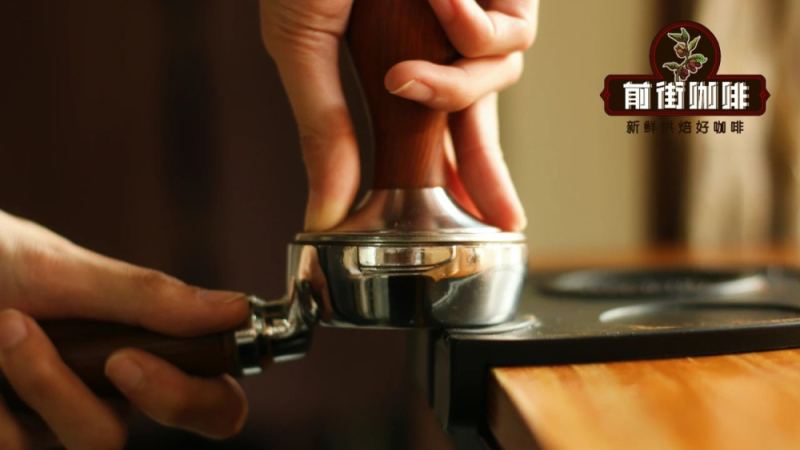
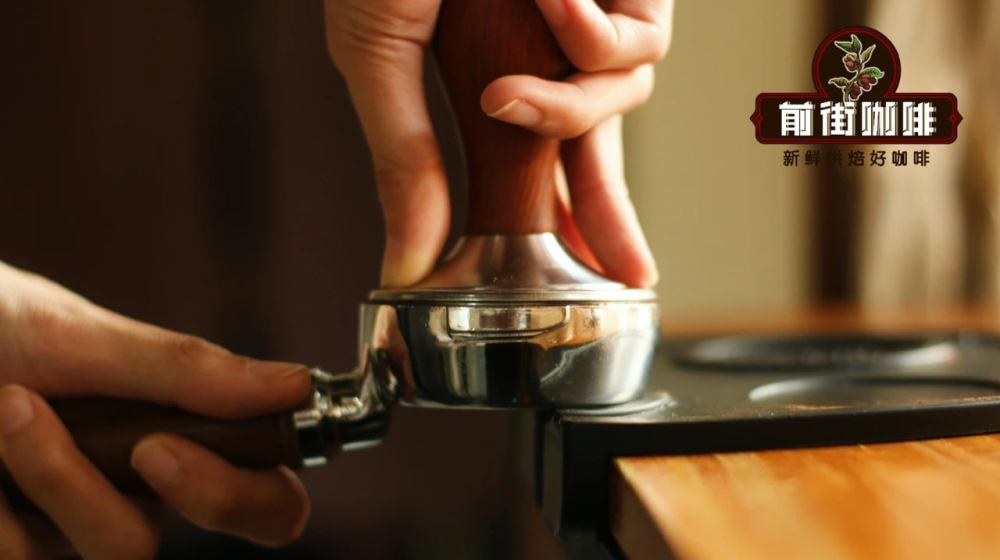
Before extraction, wipe the basket dry, turn on the grinder, grind a double dose of coffee powder, and place it on an electronic scale to adjust until it reaches 20 grams. Then use a distribution tool to level the coffee powder, and press down vertically with a tamper to compact the coffee puck, ensuring more stable extraction.
Then turn on the extraction switch and let water run for 1–2 seconds to wet the group head, while also washing away any coffee grounds stuck to it. Place an electronic scale under the cup that will catch the Espresso and tare it to 0, then place it together under the group head during extraction.

Gently lock the portafilter onto the group head and start the extraction switch. Observe the changes in the extracted liquid. When the scale shows 40 grams of espresso and the time is about 30 seconds, turn off the extraction switch. The brewing parameters will change subtly according to daily air humidity and the condition of the coffee beans, so it is necessary to adjust the coffee powder dose, grind setting, and extraction yield up or down.
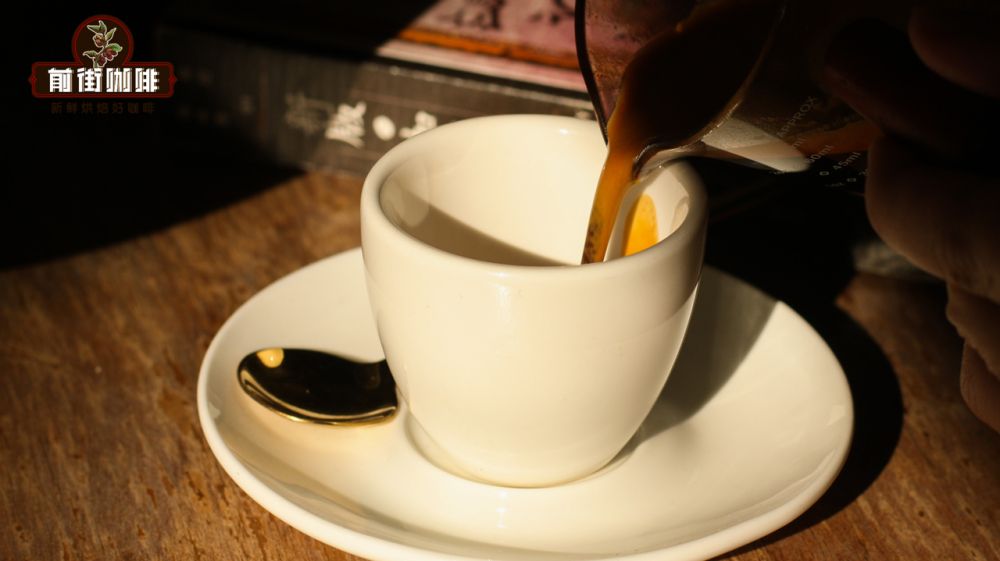
The extracted Espresso can be drunk directly. Paired with a glass of clean water to rinse the mouth, you can taste the dense crema and the rich, full-bodied texture of the coffee liquid beneath. If you cannot accept the intense bitterness, you can also add water or milk according to your preference to dilute it and soften the strong taste.
Main characteristics of espresso
Espresso, also called Espresso, is a coffee liquid with a layer of golden foam floating on the surface, extracted quickly at high temperature by Italians using a pressure-driven coffee machine. Each store uses different espresso beans and different extraction recipes, so the flavors will vary, but a standard espresso will have the following two characteristics.

Cream
When we order an espresso at a coffee shop, the barista brings it over right after extraction, and we can see a thick layer of golden foam floating on top, which we call Cream.
Coffee beans produce a large amount of gas during roasting. Water dissolves out the carbon dioxide under high pressure, but as the brewed coffee gradually returns to normal atmospheric pressure, the coffee liquid can no longer trap all the gas components, so countless small bubbles emerge from the liquid. These bubbles remain on the surface of the coffee, looking like a stable layer of "foam." A rich, dense Cream means that the coffee beans used for the espresso were freshly roasted. Because the gas inside the coffee beans is continuously released over time, the longer it has been since the roast date, the lower the carbon dioxide content, and the thinner the foam layer during extraction.

If an espresso has no Cream on top, it is very likely that the coffee beans have been stored too long, or perhaps the espresso was made and left unDrunk for too long, so the foam disappeared. The darker the color of the Cream, the usually richer the flavor. Because the coffee beans undergo the Maillard reaction at high temperatures, the darker the roast of the coffee beans, the darker the color of the foam layer and the fuller the mouthfeel.
High concentration
The extraction of a single espresso requires the release of a large amount of soluble substances in just a few dozen seconds, so the coffee powder needs to be ground very fine and uniform. After near-boiling hot water and 9 atmospheres of high pressure, the concentration of espresso is very high, all flavors are doubled and concentrated, and the entry presents a strong mouthfeel. After swallowing, various aromas remain in the mouth, with a long finish. Therefore, many coffee shops serve a glass of water alongside a strong espresso.

A freshly made espresso is covered with a thick, dense layer of golden foam called crema. This is the result of carbon dioxide produced by freshly roasted coffee beans foaming under high pressure inside the coffee machine. In order for everyone to drink the full aroma of the coffee and enjoy the most complete tasting stage, Front Street only ships coffee beans freshly roasted within 5 days.
The above content is compiled by CoffeeHunters, a coffee news website.


