







For more specialty coffee knowledge, please follow: Front Street Coffee (Frontsteet Coffee)
Seasoned coffee enthusiasts know that the coffee beans used in specialty coffee are all Arabica variety beans, which have a lower caffeine content than Robusta variety beans, and therefore also score better in coffee flavor cupping. Robusta variety beans, due to their high caffeine content, don't have as good a flavor, and drinking too much may even be bad for your health, so they are not used in specialty coffee. In addition, there is now a trend on the market toward decaffeinated coffee beans with even lower caffeine content than Arabica beans. So is drinking decaf healthy, and what are its pros and cons? In this next article, Front Street Coffee (FrontStreet Coffee) will explain it all for our coffee-loving friends one by one.

What is decaffeinated coffee?
Generally, the caffeine content of coffee beans is measured by weight ratio. Arabica coffee beans have a caffeine content of 0.9%-1.4% (average 1.2%), while Robusta is 1.8%-4% (average 2.2%). Decaffeinated coffee is divided into naturally low-caffeine coffee and artificially processed decaffeinated (low-caffeine) coffee. The EU standard for artificially processed decaffeinated coffee is: after processing, the caffeine content must not exceed 0.1% of the green beans, while the U.S. Food and Drug Administration FDA standard is removal to below 3% of the original caffeine content.
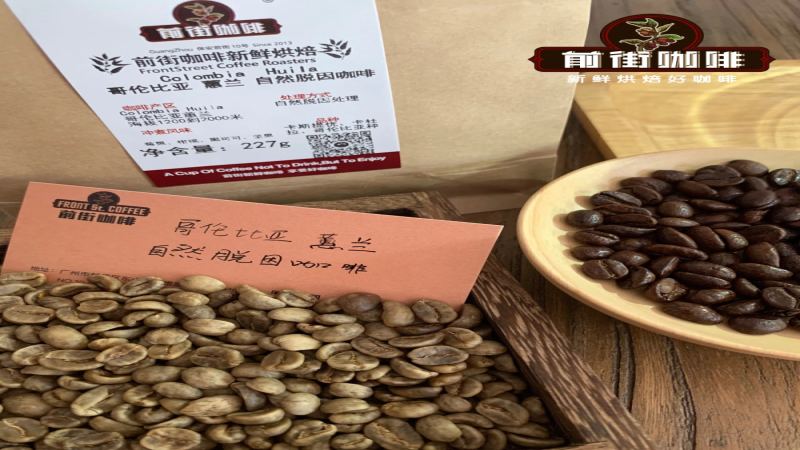
For example, Front Street Coffee (FrontStreet Coffee) currently has a decaffeinated coffee bean from Colombia's Huila region with a rather excellent flavor.
Front Street Coffee (FrontStreet Coffee) Colombia Decaf Coffee Beans

Region: Colombia, Huila
Altitude: 1750 meters
Variety: Typica
Processing method: Swiss Water Process
Flavor: berry, citrus, cocoa, nut
Does decaffeinated coffee taste good?
This Colombian decaf coffee bean from Front Street Coffee (FrontStreet Coffee) comes from Huila, Colombia's most famous and highest-altitude coffee-producing region. The coffee beans produced here belong to the Colombian national company's specially selected high-mountain coffee beans, known as a Colombian national treasure. Therefore, this decaf coffee bean from Huila is destined not to have too poor a flavor. After all, the quality of a coffee bean's flavor also depends on its producing region, variety, and processing method. Even coffee beans from the same producing region still need to be graded again. So as long as high-quality coffee beans have passed through layer after layer of screening, how bad could the flavor be? If you drink one that doesn't taste good, it must be that this particular coffee bean's own flavor is not good, and you can't blame the entire coffee category for tasting bad. If you drink one that doesn't taste good, then you definitely just haven't had the right one.

Therefore, Front Street Coffee (FrontStreet Coffee) believes that decaffeinated coffee tasting bad is not caused by the processing. This is because most decaffeinated coffee chooses some cheap, commercial-grade coffee beans as its raw material. Modern decaffeination technology is quite complex. In most cases, among the companies producing decaffeinated coffee, when selecting raw materials they naturally tend to favor coffee bean varieties with high caffeine content (such as Robusta beans). Before decaffeinated coffee beans undergo decaffeination, the coffee beans themselves were already not good to begin with. Like other coffee beans sold in coffee shops, if decaffeinated coffee beans start out as high-quality Arabica coffee beans from the green bean stage, then even after decaffeination, the decaf coffee can still perform very well.
Moreover, this batch of Colombian decaf green beans selected by Front Street Coffee (FrontStreet Coffee) is graded Supremo. Under the Colombian coffee bean grading system, Supremo is the highest grade. Quality is naturally very well guaranteed.

Colombian decaf coffee processing method
Decaffeination methods fall into four types: the direct/indirect solvent method, the supercritical carbon dioxide method, the Swiss Water Process, and the mountain spring water process, with the direct solvent method and the Swiss Water Process being the most common. As mentioned above by Front Street Coffee (FrontStreet Coffee), this Colombian Huila decaf coffee bean uses the Swiss Water Process.

Swiss Water Process
The process of this method is firstly to soak the green coffee beans in hot water; the soaking stage actually already removes part of the caffeine. The soaked solution is then filtered through activated carbon, and finally the solution is returned to the coffee beans. This series of steps removes caffeine more effectively. Besides not requiring the use of chemical solvents, the soaked solution can also be reused in processing programs for different batches. The one shortcoming is that the coffee loses flavor during the filtration process.
However, the caffeine removal rate of this method can reach 99.9%, also making it the method with the highest caffeine removal rate. Although the Swiss Water Process loses some coffee flavor, because of its low cost, ease of operation, and high efficiency, the decaffeinated coffee beans we see now are mainly based on the Swiss Water Process.
Is drinking decaffeinated coffee healthy?
Next, many people believe that drinking decaffeinated coffee is unhealthy. So what is the truth?
As Front Street Coffee (FrontStreet Coffee) said above, decaf coffee, Decaf, is the abbreviation of decaffeinated coffee. There are many methods to remove caffeine from coffee beans. Aside from caffeine content, the nutritional value of decaffeinated coffee should be almost the same as regular coffee. However, depending on the method used, the taste and aroma may become slightly milder and the color may change. This can make decaffeinated coffee more pleasant for those who are sensitive to the bitterness and aroma of regular coffee.
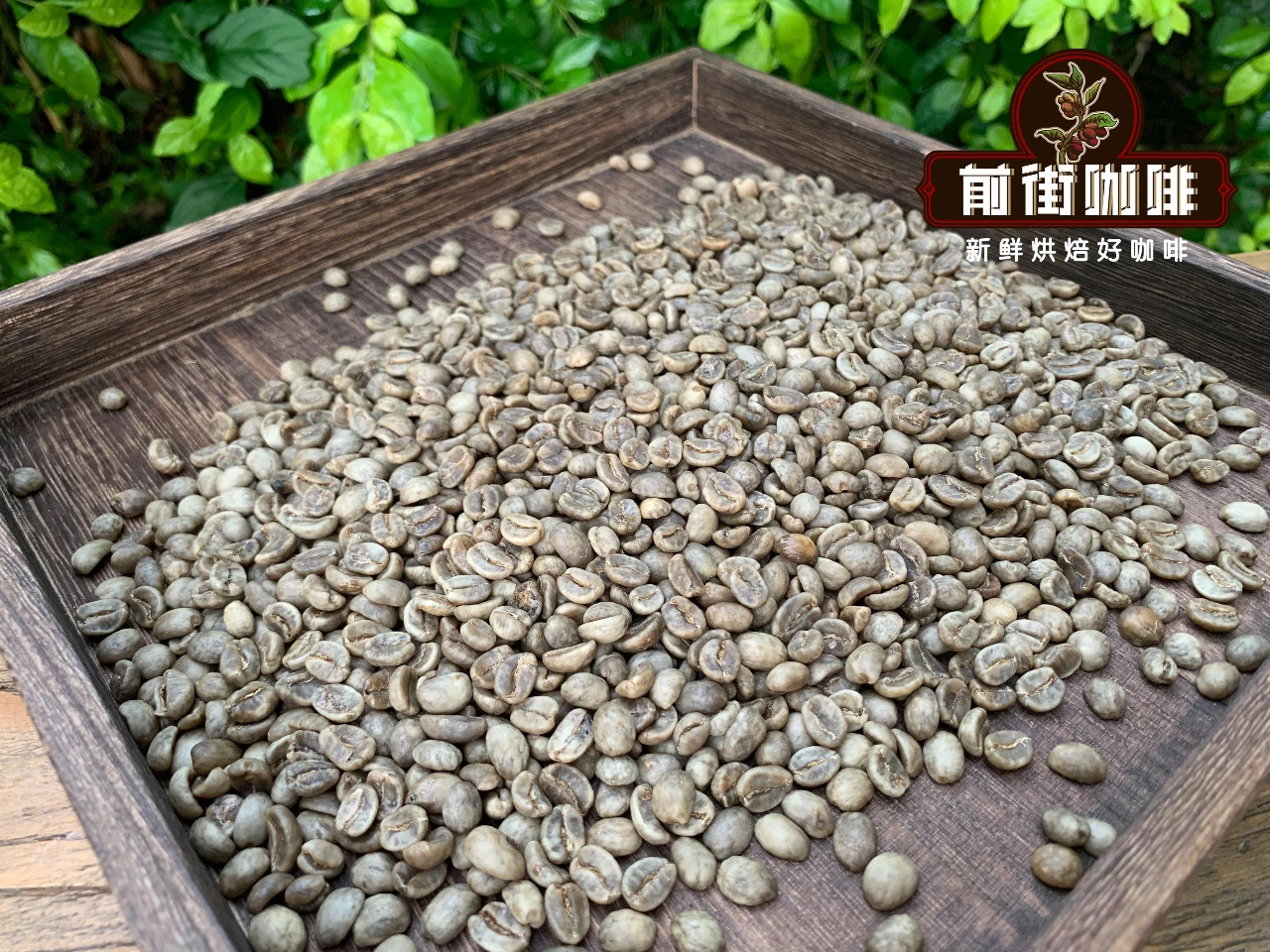
So does decaffeinated coffee mean it has no caffeine at all? No, it doesn't. Decaffeinated coffee actually only removes about 97% of the caffeine, not all of it. Although caffeine is still present, compared with regular espresso, the caffeine in decaffeinated coffee will not have any effect on the vast majority of people.
So if it is only consumed normally within the amount the body can accept in a day, it will not harm the body. But if you drink it without restraint and exceed the amount of caffeine the human body can absorb in a day, then it will naturally harm the body as well.
The above is the related information about decaffeinated coffee compiled by Front Street Coffee (FrontStreet Coffee). We hope it can help coffee-loving friends better understand knowledge about decaffeinated coffee. Next, Front Street Coffee (FrontStreet Coffee) will share how to brew decaffeinated coffee.
How does Front Street Coffee (FrontStreet Coffee) brew decaffeinated coffee beans?

After decaffeinated coffee beans release caffeine through soaking, the bean's fiber structure differs from that of regular coffee beans. Its strong water absorption slows down the extraction speed, so the brewing parameters need to be adjusted.
Dripper:Kono dripper
Water temperature:88.8℃
Coffee dose:15g
Coffee-to-water ratio:1:15
Grind size:Coarse grind / yellow granulated sugar coarseness (70% passing rate on China standard No. 20 sieve)

Front Street staged brewing:Add the coffee grounds and pour in 2 times the water amount (30ml) to bloom for 30 seconds. Then proceed to the second pour, gently circling to pour in 150ml of hot water, pushing the coffee bed higher so that a golden foam surface forms on top. Wait for the water level of the coffee bed to drop slightly, then pour in the final 45ml. After all the coffee liquid has flowed into the carafe, remove the dripper and end extraction. The extraction time is 2 minutes 10 seconds.
Brewed flavor of Colombian decaf coffee beans:Dark chocolate, caramel, nut, full-bodied.
For more specialty coffee beans, please add the private WeChat of Front Street Coffee (FrontStreet Coffee), WeChat ID: kaixinguoguo0925
The above content is compiled by CoffeeHunters, a coffee news website.

