









Whether a coffee is good or not can only be known once you taste it; but black coffee is, at most, just a cup of dark, unidentified liquid—so how does it entice non-coffee drinkers to give it a try? Setting everything else aside and focusing only on what can be done with the coffee itself, among milk coffees, latte art is perhaps the very first technique that won people over across all coffee drinks.
Many who have fallen down the espresso rabbit hole share one dream: pouring beautiful latte art. The prerequisite for creating elegant patterns is being able to steam fine, dense microfoam. Of course, fine, dense microfoam isn't just for looks—it also adds a better mouthfeel to a cup of milk coffee. In this issue, Front Street Coffee teaches you how to steam milk foam!
Choosing the Right Coffee Beans and Milk
To easily pour beautiful patterns, Front Street believes that good coffee beans and milk are both essential. For making latte, Front Street Classic Espresso Blend is recommended. This is a blend composed of beans from three origins—Brazil, Indonesia, and Vietnam—and it is dark roasted, which maximizes the coffee's rich aroma and allows you to easily extract abundant, dense crema. It's perfect for both americano diluted with water and latte paired with milk. You can purchase it at the Front Street Taobao store or Front Street Tmall flagship store.

As for milk, Front Street recommends prioritizing fresh milk. This type of dairy has a higher protein content, making it easier to steam smooth, dense foam, which in turn helps us draw the patterns we want. Front Street's stores use Bright Fresh Pasture; you can purchase according to your own taste and budget.
I. Methods of Steaming Milk Foam
There are many ways to steam milk, but they can be broadly divided into two categories: one is steaming and texturing simultaneously, where the milk-steaming and foam-texturing stages are combined. The other is separating the steaming and texturing stages—that is, steam the milk first, then texture the foam. For better clarity in this session, we'll share the separated steaming-and-texturing approach so everyone can understand more easily. Preparation for steaming milk foam.

First, we need a steam wand—most semi-automatic espresso machines come with one. Next, we need a container to hold the milk, such as a milk pitcher or latte art pitcher (professional tools make the job twice as easy with half the effort).
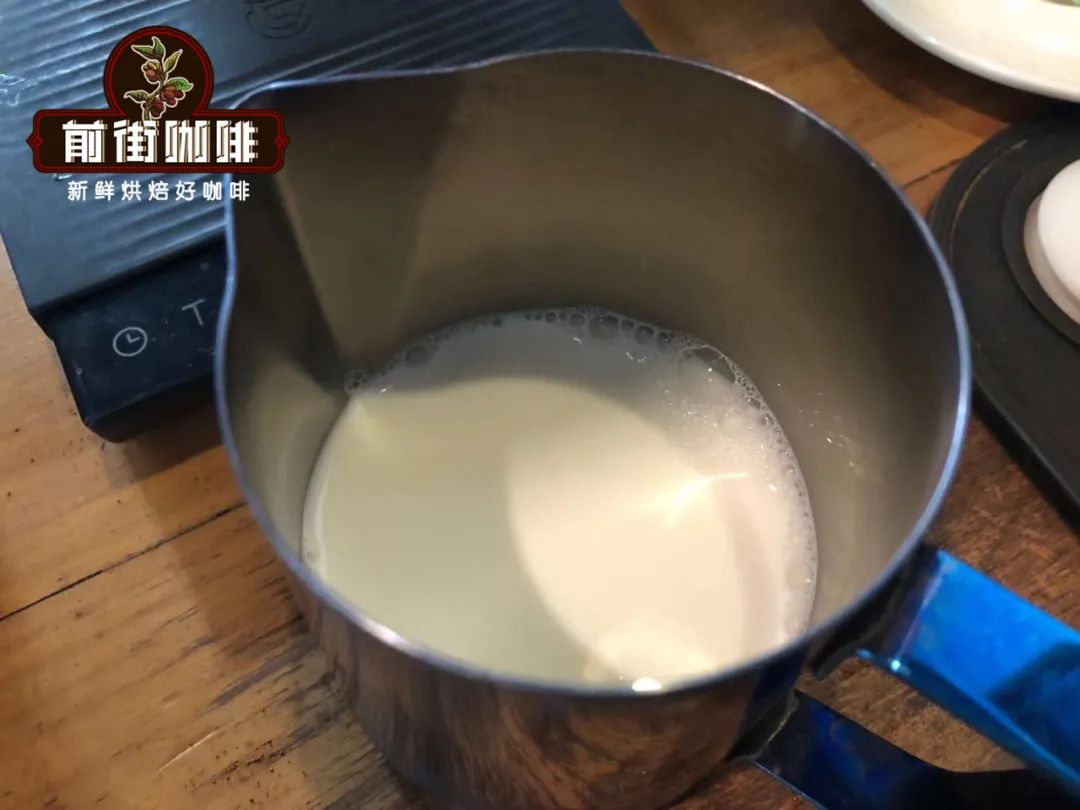
Finally, there's the choice of milk. Whether it's shelf-stable or chilled milk, whole milk or skim milk, all can be steamed into foam. But if you want better texture, flavor, and stability/lasting power, Front Street still recommends using chilled whole fresh milk.
II The Principle of Steaming Milk Foam
Turn on the steam wand button, and you'll notice there are 4 steam holes (different brands and models may vary—some have 1, 2, or 3 holes). If we partially submerge the tip into the milk surface and open the steam wand button, air is introduced to steam the foam; if fully submerged in the milk, no foam will form—the hot steam will only heat the milk!

III Steps for Steaming Milk Foam
1. Optimal Capacity of Milk for Steaming: Steaming milk requires a reasonable amount. Front Street recommends using 40-60% of the pitcher's total capacity. Too little or too much milk both test your steaming technique. Of course, besides this factor, you should also consider the actual amount of milk used per cup of coffee to avoid excessive waste. The pitcher Front Street uses has a capacity of 550ML, and the amount of milk poured in is 250ML (just reaching the bottom of the spout).
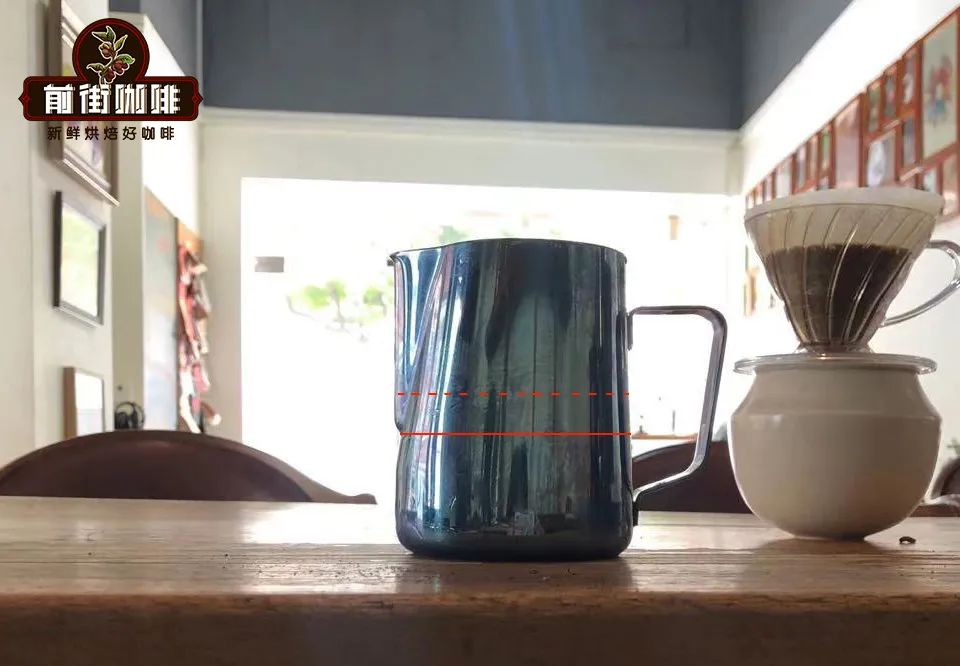
(The solid line indicates the milk level; the dashed line indicates the capacity after steaming.)
2. Steaming Position: Before steaming, first open the steam wand valve to release condensed water vapor (close the valve after releasing). Then pull out the steam wand at a 45-degree angle, using the pitcher's spout to stabilize the steam wand's position. In this case, the steam vortex is counterclockwise, the steam wand is positioned to the right of the center cross on the liquid surface, and the steam wand is in a semi-submerged state.
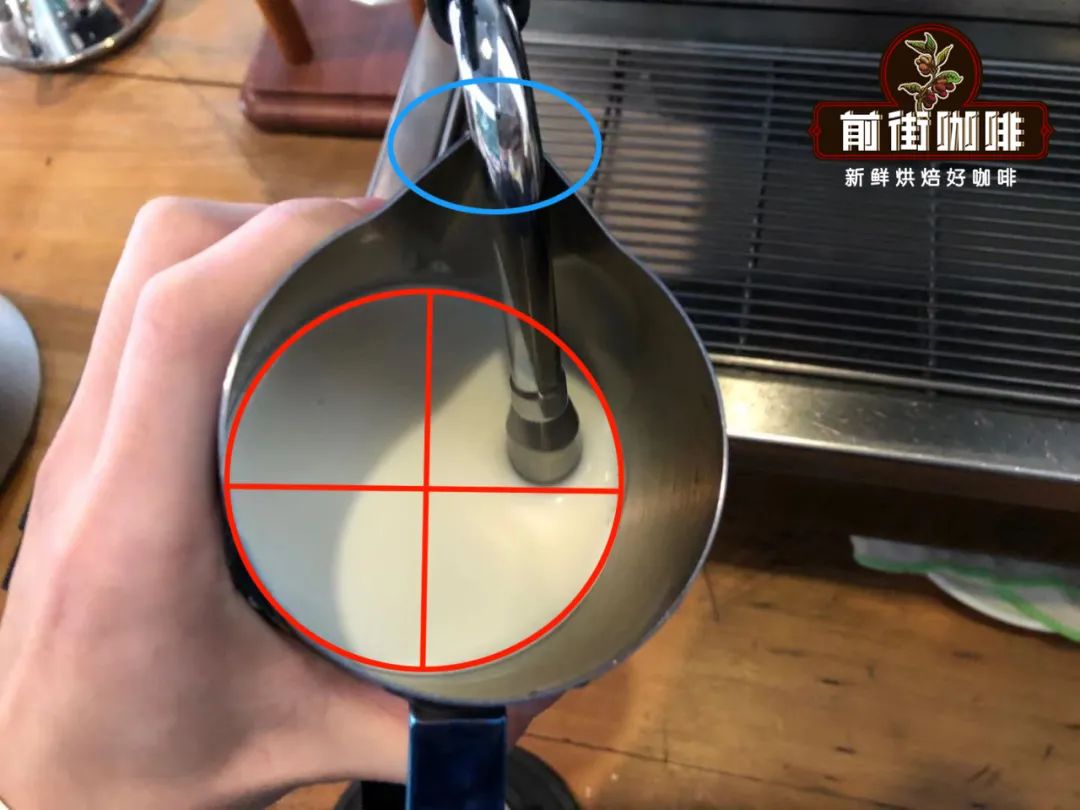
3. Steaming Phase: Open the steam valve, and you'll hear a "zzz—zzz" sound. This is the steaming phase. Depending on the desired foam thickness, the steaming time varies (the longer you steam, the thicker the foam). Generally, steaming 50% milk to 60% volume (latte foam thickness) takes about 3 seconds. The milk rotates in a consistent direction to form a vortex.

4. Texturing Phase: At this point, fully submerge the steam holes to only apply heat, no longer introducing air. Don't bury the steam holes at the very bottom; it's recommended to keep them in the foam layer, which helps with texturing (turning coarse foam into fine foam). When to stop? It depends on your milk temperature—generally controlled between 55-65°C. Too high a temperature will denature the proteins (generally speaking, heat-induced protein denaturation in food occurs at around 60°C).
Fine, dense milk foam, when swirled, takes on a coagulated yogurt-like consistency, with a surface as fine and reflective as a mirror, incredibly silky.
The above content is compiled by CoffeeHunters, a coffee news website.


