Recently, many customers buying beans at Front Street Coffee's physical stores have had very clear goals—they either specifically ask for Yellow Bourbon or Red Bourbon, or they want both together, and in very large quantities. You could say they're completely obsessed with the Bourbon family.
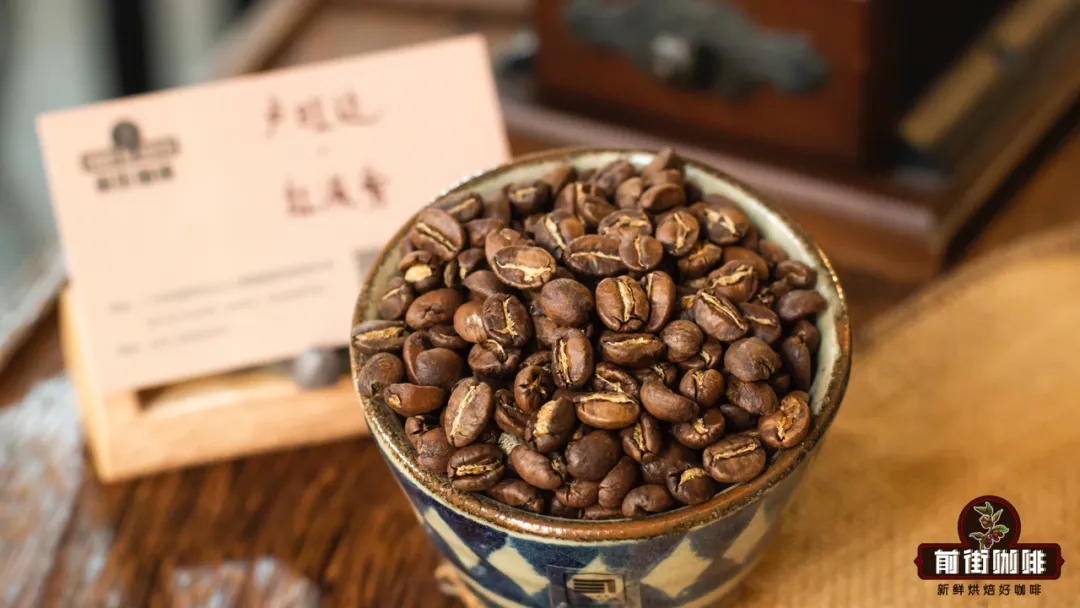
Their purpose is also very simple: they just want to compare what differences exist between Bourbons of different colors and what characteristics each has.However, because the varieties differ in origin, processing, and roasting, such a comparison isn't actually very intuitive. So today Front Street Coffee wants to share the origins and respective characteristics of these two varieties that have become popular again. Once you're familiar with them and then taste them, you'll definitely be able to capture more unexpected flavors.Bourbon is transliterated from "Bourbon." It is a variety resulting from a mutation of Typica, and both belong to the oldest existing coffee varieties. Therefore, it is also a branch under the Arabica species.And not just in terms of age—Bourbon, like Typica, is a "mother variety" of many of today's popular Arabica coffee varieties. Common varieties such as SL28 and Caturra are all descendants or mutations of Bourbon.The birth of Bourbon can be traced back to the early 18th century. At that time, Europe already had a fanatical demand for coffee, but because the coffee trade was monopolized by Yemen, coffee prices were extremely high, so the French came up with the idea of producing it themselves. Simply put, they planned to grow it themselves!But as Front Street Coffee said, coffee at that time was completely monopolized by Yemen, and all exported coffee beans were boiled or roasted, making them unable to be planted. If you wanted to get coffee that could be planted, there was only one way! What way?That's right! It was tosteal"borrow" a little coffee from Yemen to plant. So starting in 1708, the French successfully stole coffee seedlings from Yemen three times! Aside from those stolen in 1708, which failed to be cultivated due to lack of relevant experience, the seedlings stolen in 1715 and 1718 were successfully cultivated because they had gained relevant planting experience and techniques.These seedlings were all planted on Bourbon Island, 680 kilometers east of Madagascar(now Réunion Island), where they mutated and grew into a variety different from Typica—smaller in size and more rounded in shape. Thus, these varieties planted on Bourbon Island that had undergone mutation were named Bourbon.After the 19th century, Bourbon coffee was brought by French missionaries to spread around the world. From Africa to South America, Bourbon coffee took root under the microclimates and soils of various countries and began to reproduce, producing new varieties through mutation or hybridization. And so, the Bourbon coffee family gradually grew stronger.Bourbon's characteristic lies in its excellent flavor, while its yield is slightly higher than Typica. Precisely because of this, although like Typica it has little resistance to leaf rust and has high requirements for the growing environment, it can still replace Typica in many countries and become the main local planted variety.On Front Street Coffee's bean list there is a Red Bourbon from Rwanda in Africa, a washed medium-light roast coffee bean. Because washed processing does not involve too deep fermentation, the beans express more of the variety and the local terroir.Front Street Coffee Rwanda·Washed Red BourbonRegion: Nyamasheke(Nyamasheke)Altitude: 1500–1700 meters
Flavor: Berries, apple, green tea, apricot
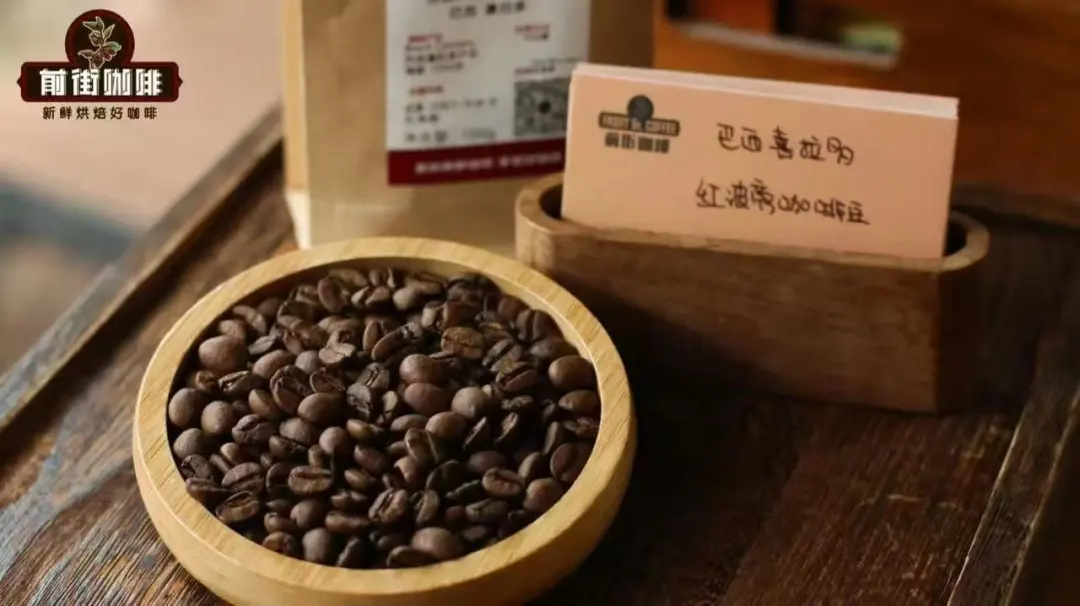
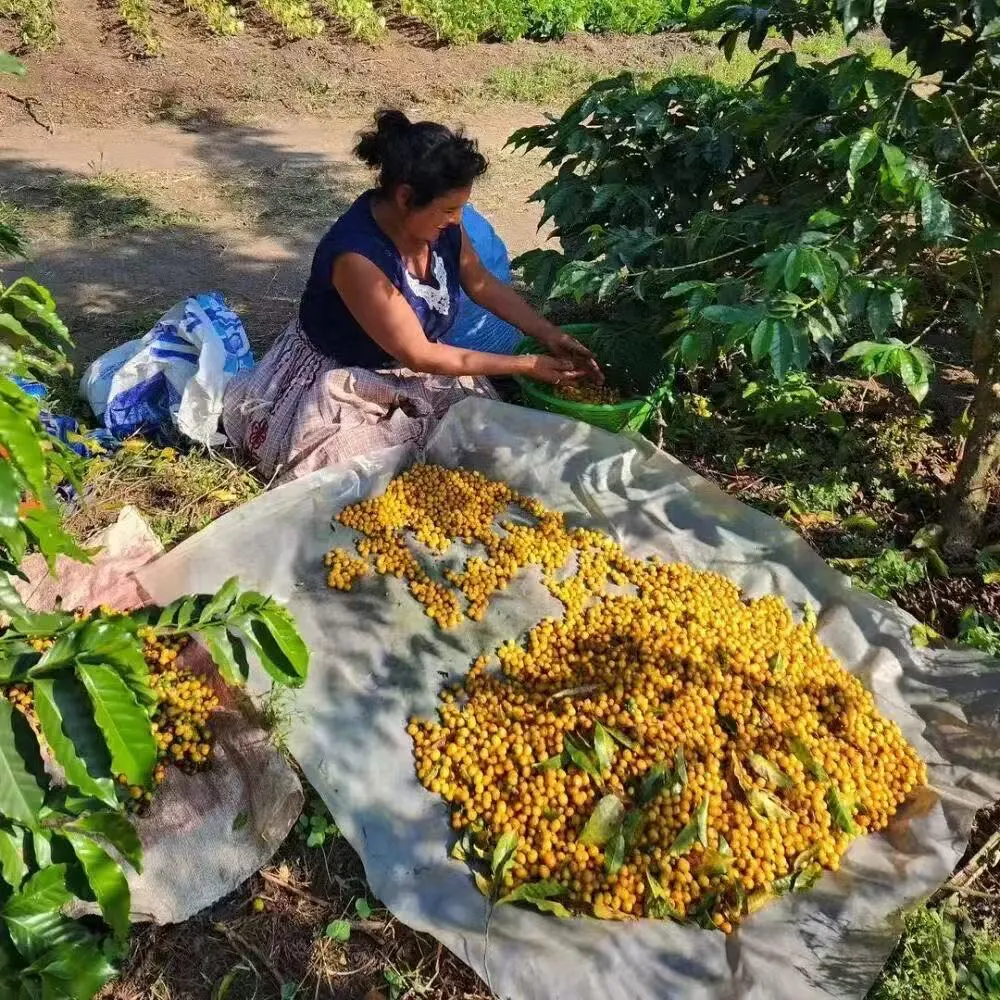
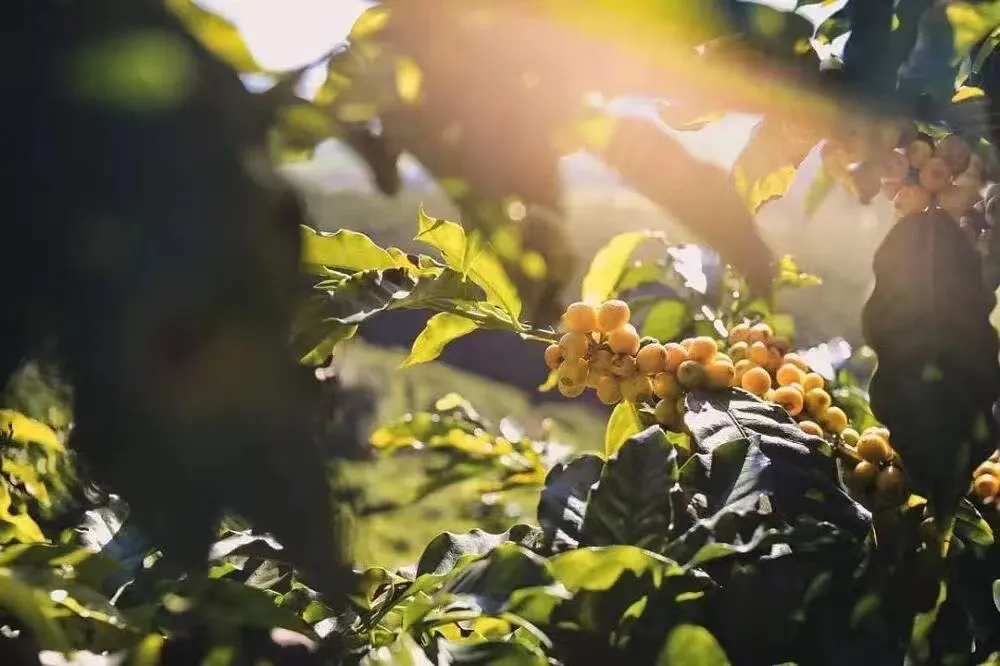
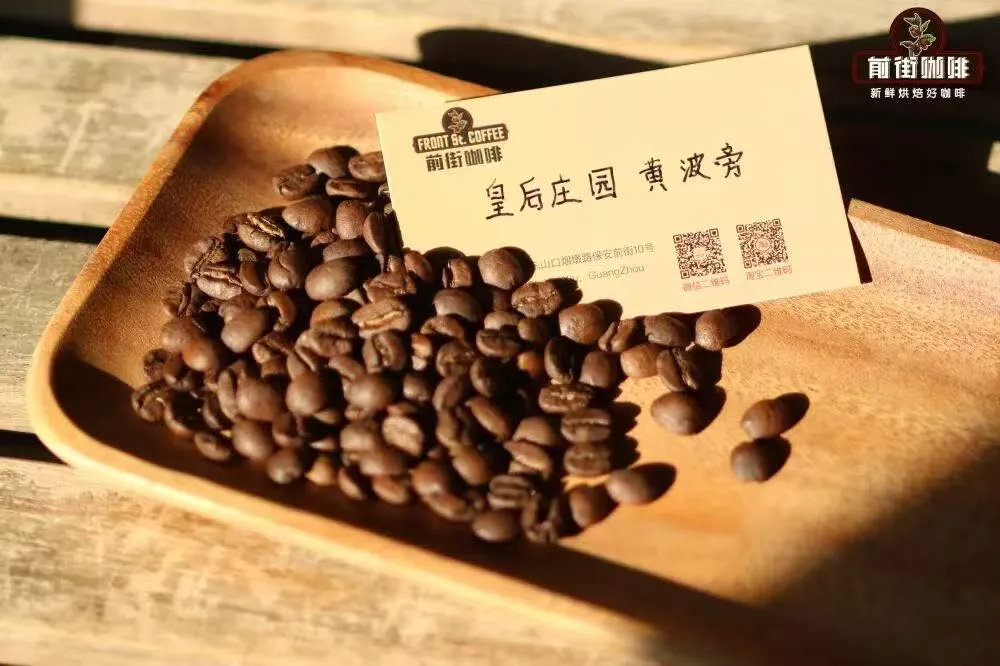
Interestingly, at first Bourbon was simply called Bourbon. It was only after Yellow Bourbon appeared that, in order to distinguish it, Bourbon gained the alternative name Red Bourbon. And the birthplace of Yellow Bourbon is today's Bourbon coffee planting giant and the country with the world's highest coffee production—Brazil.The first batch of Bourbon took root in Brazil in 1860. In only ten years, Red Bourbon had already become one of Brazil's main planted varieties. And it was precisely because of the popularity of Bourbon coffee in Brazil that Yellow Bourbon came to appear.In 1930, at a Bourbon plantation near Pedernales in northeastern São Paulo state, Brazil, a coffee variant bearing yellow fruit appeared. Since the discovery site was a Bourbon plantation, and because Brazil also grows Yellow Botucatu, which produces yellow coffee cherries(Yellow Typica), local people believed this was a variety hybridized from Bourbon and Yellow Botucatu, and then simply named it—"Yellow Bourbon."For a more detailed story about Yellow Bourbon, you can go to"Yellow Bourbon"to learn more. Since it would take up a lot of space to explain, Front Street Coffee will not elaborate further here.Although Yellow Bourbon is a Bourbon variant unique to Brazil, after its discovery it was not widely planted locally like Red Bourbon. Why? Because it is not that easy to grow, and its yield is not that impressive either.Yellow Bourbon perfectly inherited Typica's difficult-to-grow characteristics: it is not resistant to wind and rain, has relatively weak resistance to leaf rust, and also has relatively low yield. As Front Street Coffee has always shared, for coffee farmers, the income brought by yield is more practical, so Yellow Bourbon was not widely planted locally.Although it has low yield and is hard to grow, when we plant it in high-altitude areas, Yellow Bourbon shows very outstanding sweetness and flavor performance. Precisely because of this, some Brazilian estates pursuing flavor will plant Yellow Bourbon, thereby producing coffee of excellent quality. For example, Front Street Brazil·Queen Estate on Front Street Coffee's bean list—this bean is of the Yellow Bourbon variety.Front Street Coffee Brazil·Queen Estate Yellow BourbonAltitude: 1400–1950 metersProcessing: Pulped natural
Flavor: Chocolate, nuts, caramel, slight berries, mild fermented aroma
This Front Street Brazil Queen Estate Yellow Bourbon on Front Street Coffee's bean list is characterized by a very obvious sweet aftertaste. Because Front Street Coffee uses a medium-dark roast to stimulate its nutty aroma and enhance body, the flavor profile is mainly the aromas of medium-dark roasting such as chocolate, nuts, and caramel. And because the roast is not that dark, you can taste a little bit of berries in the finish, and maybe even a slight fermented aroma—one could say the layers are rich!
The above content is compiled by CoffeeHunters, a coffee news website.