







Since the beginning of this year, a coffee origin called Alo Village has rapidly risen to fame in coffee circles both at home and abroad with extremely high exposure and discussion frequency. In the course of exchanges with numerous roasters and buyers, Front Street Coffee has also clearly felt the rising popularity of this origin. So what exactly makes this suddenly "all-over-the-feed" Alo Village so special?
Ethiopia is absolutely a holy land in people's minds. This country is the birthplace of coffee and is still Africa's largest Arabica producer. When it comes to specialty coffee here, I believe everyone, like Front Street Coffee, can rattle off their favorites, such as Kochere, Gedeb, Konga, Sidamo Hambela, Gesha Village, and so on—all ranked representatives of Ethiopia. But since this year, an origin called Alo Village has become popular across the entire coffee circle with extremely high popularity. What exactly is the background of this place that fascinates people so much?
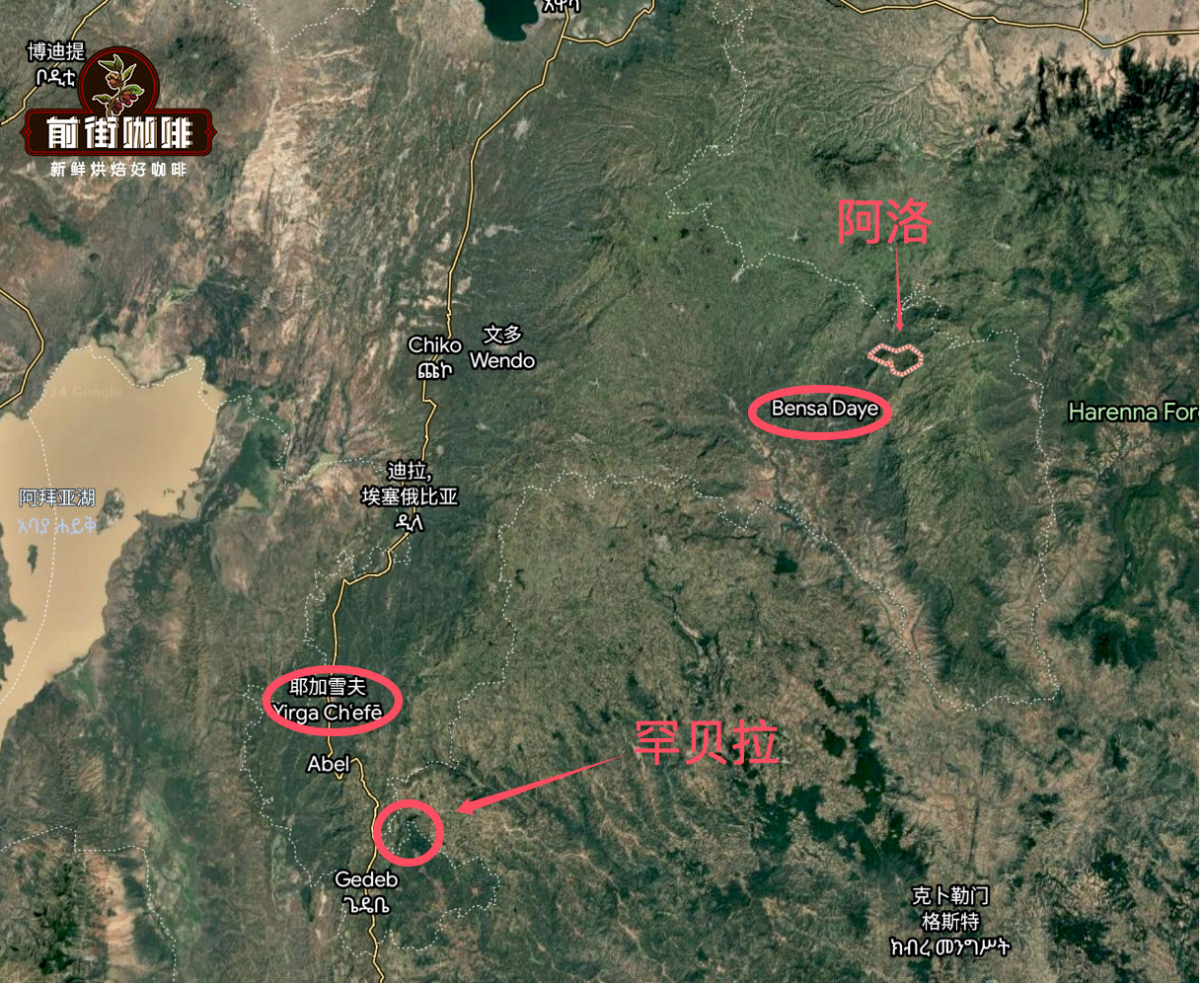
Ethiopia's terrain is at very high altitude, and its vast highlands create an excellent climate environment and a pronounced temperature difference between day and night. In the morning, clouds and mist swirl around, and mountain breezes blow from time to time. In the afternoon, sunlight is abundant, and at night the temperature drops to just over ten degrees, yet there is no frost—an excellent environment for growing coffee. Ethiopia has many production regions. Under different soils and microclimates, combined with differences in post-processing methods, coffee flavors also differ. The ones heard most often in domestic coffee shops should be the major flavor representatives Yirgacheffe, Sidamo, and Guji, whose distinctive aromas are passed by word of mouth in coffee circles.
As the birthplace of coffee, Ethiopia has a long history of cultivation and also has multiple coffee-producing regions, including Sidamo, Harrar, Kaffa, Limmu, Lekempti, Tepi, Bebeka, and Bale. Among them, Yirgacheffe, Guji, Sidamo, and Bebeka are among the best known on the market. But in the past two years, along with the rise of Alo coffee from the Bensa area, many roasters at home and abroad have listed batches from this origin, and the Bensa area of Sidamo has gradually come into people's view.
It is understood that this origin became famous because of the 2021 COE green bean competition. Among the 30 winning beans in that year's COE results, 16 were from the Sidamo production region, and 6 of those were from the Bensa area. It is worth noting that the champion of the 2021 Ethiopia COE was a Lot 74165 variety from Alo Village provided by Tamiru Tadesse Tesema, which scored a high 90.6 points. In this way, Alo Village and Alo Coffee founder Tamiru became an instant sensation in the industry.
Alo Coffee PLC is a green bean trading company operated by Tamiru Tadesse, founded in 2020, mainly responsible for exporting coffee from the Bensa area of Sidamo, and it also counts as a green bean brand. As a native of Bensa, Tamiru was exposed to coffee from childhood. He studied engineering in university, taught at a university for two years after graduation, and then remained in the specialty coffee industry. In 2020, when he saw a grower friend also from Bensa town win in the COE, he realized that the specialty coffee produced by this land had huge potential, but because of small scale and backward conditions for farmers, it was difficult to bring to market as a product. He therefore resolved to promote the high-quality "taste of Bensa" to the world, and founded his own company, Alo Coffee.
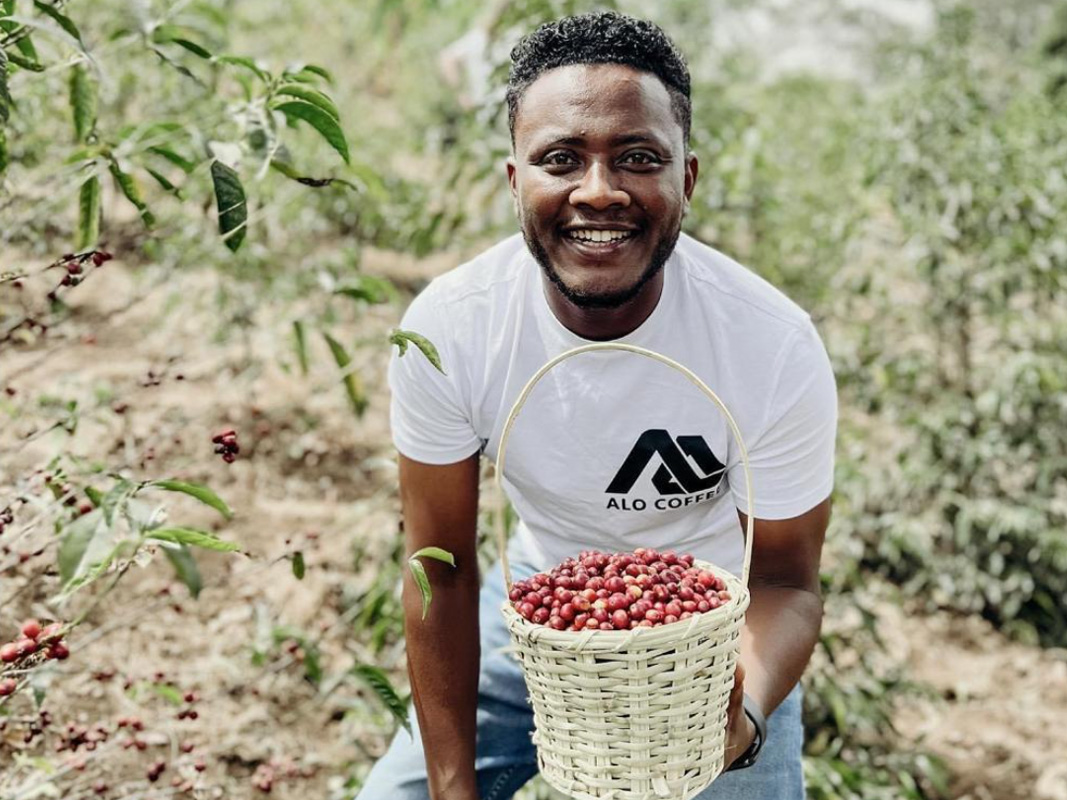
Tamiru first obtained Q-grader certification, and then, relying on his understanding of coffee cultivation and production in his hometown Bensa, as well as years of experience in green bean export trade, he began from zero to sort out the production, sales, and quality of this region, and also analyzed the current difficulties and opportunities facing Ethiopian specialty coffee. In the same year he founded the brand, he established a green bean processing station in his hometown Alo Village and built a dedicated transportation system to collect and process coffee cherries grown by more than 200 surrounding smallholder farmers, while providing them with professional knowledge training and technical support, and strictly controlling every detail of green bean processing to ensure traceability at every stage. In just two years, Tamiru had already made Alo appear frequently in many specialty coffee shops overseas.
Back to Alo Village: this is a small village located in the northeastern part of Sidamo, situated on the highest slope of Bensa Woreda. The Bensa area is famous for its unique geographical advantages, with cultivation altitudes ranging from 1,800 to 2,300 meters. Compared with many classic representatives of Ethiopia, many coffee trees in Bensa town grow at altitudes between 2,200 and 2,350 meters, and the renowned Alo Village is outstanding among them, reaching an elevation of 2,400 meters.
As Front Street Coffee also mentioned in a previous article, for specialty coffee, the higher the cultivation altitude, the slower the growth of the coffee fruit, and the harvest time after ripening will be later than elsewhere. The green beans therefore have higher density, and the aroma structure formed will be more complex and intense. On the other hand, because of the high altitude, the drying time of the coffee fruit is also extended, and the fermentation process after picking is relatively low-temperature, so it develops a fuller "floral and fruity aroma."
At present, Alo Coffee's harvesting business is mainly concentrated in the Bensa town area under the Sidamo production region. If distinguished by village, apart from the best-known Alo Village, there are also batches on the market from Bombe Village, Murago Village, Bashiro Gute (belonging to Bona Zuria town), and other villages.
Regarding information about the processing stations, Tamiru has also made relevant disclosures on the official website. At present, Alo Coffee's green bean processing areas include 8 processing stations: Main (main processing station), Chilaka, Morke, Hatessa, Mewa, Hurro, Gute, and Chire Kalo. The main processing station Main, Hatessa, and Chilaka are all located in Bensa; Morke is located in Bura; Mewa and Hurro are both in Nensebo; Gute is in Bona Zuria. All processing stations are placed as close as possible around the coffee farms in order to carry out post-processing work more quickly and also to ensure the freshness of the coffee cherries.
As for varieties, most coffee produced by Alo consists of JARC (Jimma Agricultural Research Center) 74 series varieties, including 74158, 74165, 74112, 74110, and so on, among which 74158 is the most common on the market. The batch Front Street Coffee obtained this time is also selected from the 74158 variety, processed and produced by Alo Coffee's Hatessa processing plant (shown as "Hatesa" on Google Maps). This is a small village located a 23-kilometer drive south of Alo Village, and the coffee cherries were processed using the traditional natural method.
Before formal natural processing, farmers first hand-pick fully ripe coffee cherries, transport them in a centralized way to the Hatessa processing station, and carry out a first round of sorting. Then, before washing, the fruit is classified again. By observing the color of the skin, overripe or insufficiently ripe cherries are removed to ensure uniform color before sun-drying.
For naturally processed coffee, the farmers responsible for post-processing need to turn the fruit on the drying beds very diligently during the first three days, because at this time the coffee cherries have a very high moisture content. If they are not turned in time, they are not only prone to mold, but uneven heating can also produce unpleasant sourness or rotten fruit flavors. Throughout the process, the coffee cherries are spread in only a thin layer, with the aim of giving them better ventilation and a drying environment. After 14-18 days, when the moisture content drops to the target level, they can be bagged and sent to the warehouse.
Through comparison, Front Street Coffee observed that the green beans in the Hatessa natural batch are mostly on the small side, with round, mini-looking beans. For this bean, Front Street Coffee wanted to highlight its ripe fruit sweetness while retaining more of its floral aroma, so Front Street Coffee chose a medium-light roast to present this Alo's elegant character.
Through cupping, Front Street Coffee first experienced this Alo's sweet floral and fruity aroma. The dry fragrance has obvious notes of magnolia, pineapple, yellow peach, mango, and so on, accompanied by a fresh sweet fermentation aroma, very pleasant to smell.
When slurping, the entry has full tropical fruit sweetness and acidity, with flavors such as ripe pineapple, passion fruit, and perfumed lemon especially prominent, accompanied by a slight black tea note. The gentle fermentation feel plus light floral aroma make one unable to resist taking a second sip. As the temperature drops slightly, the coffee begins to lean toward stone fruit characteristics such as yellow peach and dried apricot. The fruit acidity is clear and bright without losing layers, very special.

For coffee lovers who enjoy medium-light roast fruity acidity, Ethiopian pour-over coffee beans are especially recommended:
Front Street Coffee:
Ethiopia · Sidamo Alo Hatessa Natural Coffee Beans
Country: Ethiopia
Region: Sidamo · Bensa Alo Hatessa
Altitude: 2,180-2,280 meters
Variety: 74158
Grade: G1 Processing method:
Natural method Alo's flavor: magnolia, passion fruit, pineapple, mango, fermentation feel
The above content is compiled by CoffeeHunters, a coffee news website.

