







Where Ethiopian coffee beans are grown and how the regions differ
Yirgacheffe and Sidamo are Ethiopia's two most compared coffee regions. Yirgacheffe is known for citrus, lemon and jasmine aromas with a fresh, clean body. Sidamo, helped by Huakui coffee, shows juicy floral, jackfruit and dried fruit notes. Both come from Ethiopia's highlands in eastern Africa, where mild weather and farming support coffee as a key cash crop.
Ethiopia sits in the tropics but on a high plateau, so most growing areas stay mild year round. The Kaldi legend of goats and wild red berries describes how coffee spread to the Arabian Peninsula and beyond. Comparing the two regions means looking at history, cultivation models, processing methods and flavor, plus pour-over parameters for Front Street Yirgacheffe and Sidamo Huakui 8.0.
Ethiopia has long been renowned for producing some of the world's top single-origin coffees, celebrated for their complex flavors, bright acidity, and elegant floral aromas. Yirgacheffe and Sidamo, as Ethiopia's two most representative regions, are often compared by coffee enthusiasts. Yirgacheffe is known for its citrus, lemon, and jasmine aromas, with a fresh and clean mouthfeel; Sidamo, on the other hand, has drawn much attention thanks to Huakui coffee, displaying rich and juicy flavors of floral notes, jackfruit, and dried fruit. This article, based on Front Street Coffee's product lineup, systematically sorts through the historical origins, cultivation models, processing methods, and flavor differences of these two major regions, and includes pour-over parameter recommendations for Front Street Yirgacheffe and Front Street Sidamo Huakui 8.0, helping readers more clearly understand the charm of Ethiopian coffee.

For centuries, Ethiopia has been one of the world's most highly regarded sources of single-origin specialty coffee. Its layered flavors, distinctive acidity, and bright floral aromas have captivated countless people in this historically rich coffee homeland. On Front Street's bean list, there are as many as dozens of options available, yet many friends head straight for Front Street Ethiopian pour-over coffee the moment they walk in. What is the reason behind this? And what qualities do people associate with Ethiopian coffee?
The Deep Heritage of Ethiopian Coffee Culture
Ethiopia is located in eastern Africa, within the tropical zone, and also sits on a high plateau, so most regions enjoy mild and pleasant weather year-round. Local residents make their living from farming and herding, and coffee is one of the most important cash crops.
Legend has it that on the highlands of Ethiopia in Africa, a shepherd named Kaldi discovered during grazing that his goats became unusually active after eating certain wild red berries. Out of curiosity, he picked some and took them home to taste. After eating them, he felt energized and especially excited, so he shared the matter with the villagers. Word gradually spread, coffee beans made their way to the Arabian Peninsula, and cultivation and trade rose along with it, beginning coffee beans' centuries-long global journey.
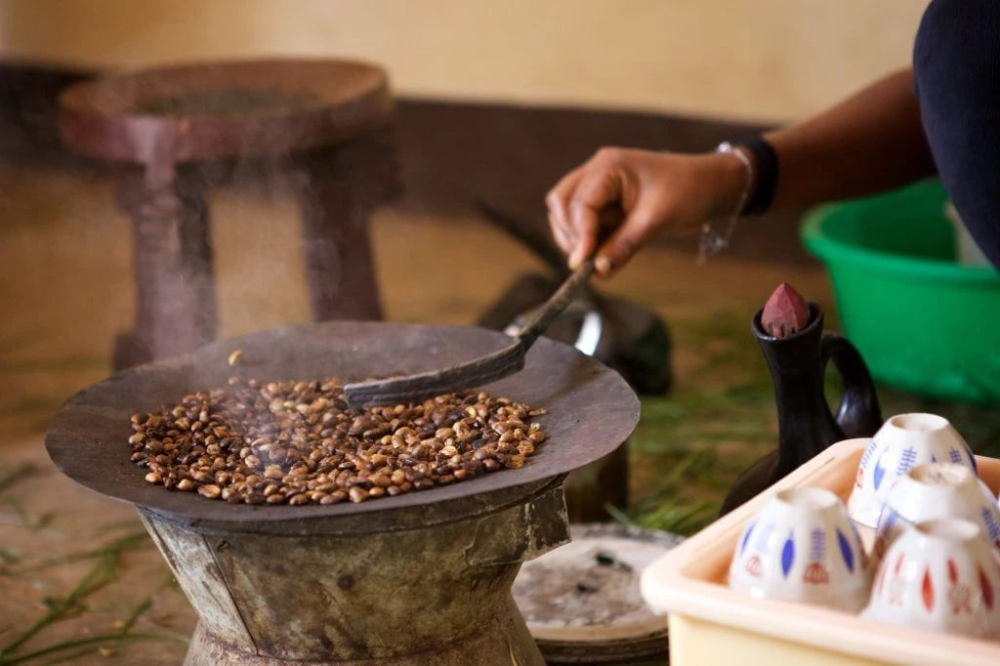
Although the legend is ultimately just a legend, Ethiopians have indeed had the habit of drinking coffee since ancient times. A cup of rich coffee in the morning is what awakens a full day of energy. In every corner of the villages, the aroma of coffee drifts through the air. Here, the Ethiopian people perfectly preserve coffee's most authentic purity. They use an iron pestle to crush charcoal-roasted coffee beans into powder, put it into a coffee pot, and the boiling coffee slowly releases its unique fragrance. During the process, spices, sugar, and other ingredients are added for seasoning, and finally it is enjoyed together with traditional bread.
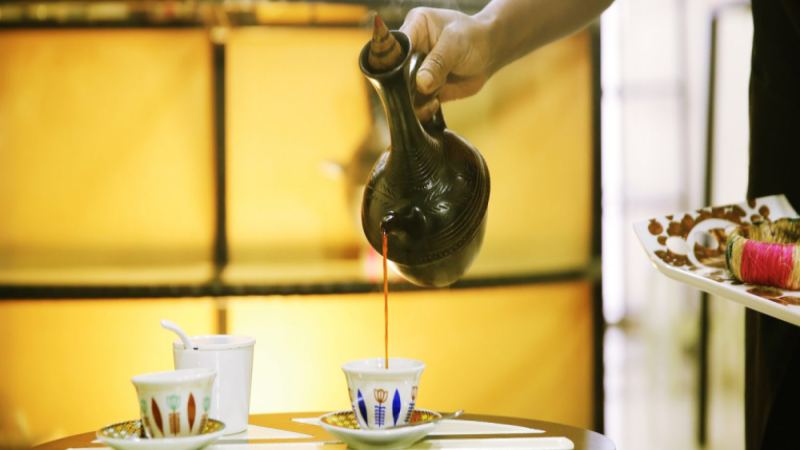
Ethiopians have a coffee ceremony with a very long history: first, green coffee beans are roasted until done on a flat iron pan, then crushed with a pestle and mortar, and then placed into a clay pot called a "Jebena" with water to brew. When the hot water mixed with coffee grounds comes to a boil, it means the coffee is ready and can be drunk. The coffee ceremony is divided into three rounds. The first cup is called Abol, and at this time an elder must say words of blessing; the second cup is Tona, and everyone begins to chat about daily matters; the third cup, Beraka, symbolizes joy, and only after drinking this cup does the ceremony formally come to an end.
In the Ethiopian language, coffee is called "bunn" or "buna," and the birthplace of coffee is Kaffa, so coffee is sometimes also called "Kaffa bunn." In addition, the term "coffee bean" is generally believed to have been anglicized from "Kaffa bunn," and the English word coffee indeed comes from the Ethiopian place name "kaffa." Front Street Kaffa Forest Coffee on Front Street's bean list also gets its name from this, and it uses the washed processing method, so when brewed it carries obvious jasmine and nutty aromas.
How Do Ethiopians Grow Coffee?
Ethiopia's coffee cultivation is mainly concentrated in the western and southern regions, and more than half of it belongs to the smallholder farming model, also called garden coffee, which is also Ethiopia's most important mode of production. It is understood that nearly 1.2 million households locally make a living from coffee cultivation, with each household cultivating no less than 4 hectares. So-called garden coffee refers to farmers managing coffee trees together with other cash crops in their own backyards, usually planted alongside banana trees, creating a unique green landscape in front of and behind every household.
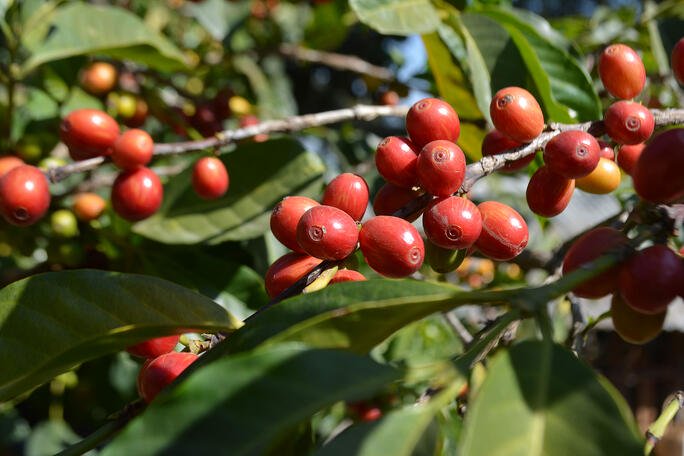
Because the coffee yield from smallholder farming is limited, there are farmer cooperatives or processing stations of various sizes locally responsible for processing green coffee beans in the region. Every harvest season, farmers pack the cherries from their own coffee trees and send them to nearby processing stations (cooperatives) built near water sources for unified processing, after which they are sold under the name of the processing station. For example, Front Street Gedingding Cooperative Coffee Beans on Front Street's bean list are made from coffee cherries grown in Yirgacheffe town. Farmers send them to the town for unified washed processing, and finally they are produced under the cooperative's name and sold around the world.
Front Street Yirgacheffe
This pleasant name comes from the town of Yirgacheffe, "YIRGACHEFFE." Strictly speaking, Yirgacheffe is a sub-region of Ethiopia's Sidamo zone, located in the northwest of Sidamo. Before the middle of the last century, the coffee cherries here were basically processed by the traditional natural method. Like other towns in Sidamo, Yirgacheffe coffee had not yet shown prominent flavor characteristics.
It was not until the 1970s that the town of Yirgacheffe built Sidamo's first washed processing station and introduced washed processing technology and equipment from South America. It was precisely this measure that not only brought a qualitative leap in the quality of green coffee beans, but also amplified the citrus and lemon aromas of Ethiopian Yirgacheffe coffee itself, making the mouthfeel fresher and brighter and establishing its distinctive flavor impression. After that, Yirgacheffe became independent from Sidamo and formed its own style. Yirgacheffe-flavor coffee also began to sweep the world, becoming a classic product passed along by word of mouth among many coffee enthusiasts.
In order to promote the development of the coffee industry, the Ethiopian government registered three of the country's coffee regional flavors (including Yirgacheffe Yirgacheffee®) as commercial trademarks in 2004, and in 2008 established the Ethiopia Commodity Exchange (ECX), with coffee being one of the commodities auctioned on the exchange. The government carried out quality grading and flavor classification for the country's exported coffee to ensure buyers could purchase coffee with trademarked flavors. Origins bearing the Yirgacheffe flavor include Yirgacheffe, Wenago, Gelena Abaya, and Kochere.
The so-called "Yirgacheffe flavor" can be simply understood as coffee beans possessing a unique citrus and lemon fruit aroma, along with jasmine fragrance, a fresh and bright texture, and layered acidity, clean without off-notes. According to ECX contract provisions, in addition to the town of Yirgacheffe, coffee produced and made in places such as Wenago in the north, Gelena Abaya in the west, and Kochere in the south can also be classified as coffee regions with Yirgacheffe flavor.
Front Street Sidamo Huakui
In China, whenever Front Street Sidamo coffee is mentioned, most people first think of the recently famous Front Street Huakui coffee, and only then of other single-origin beans from the same region. So what has given Front Street Sidamo Huakui such high popularity in China, and where did the name "Huakui" come from?
Front Street Huakui refers to a naturally processed coffee bean from Ethiopia's Hambella region, with the full English name "Ethiopia Guji Hambella Buku Abel." Broadly speaking, it is a champion bean from Ethiopia's Guji; more specifically, it is a natural batch processed and produced by the smaller Buku Abel processing station in Hambella. Famous reputation, excellent quality, rich and juicy fruit flavors, an affordable price, and extremely high extraction compatibility (especially easy to brew)—the combination of various advantages not only made Huakui stand out among Ethiopian coffees, but also made it the first choice for many friends trying single-origin coffee.
The resounding stage name "Huakui" was in fact given to this Ethiopian Sidamo bean by a domestic green bean trader after it successfully won the TOH natural group championship that year, combining it with the Chinese context to mean "chief of a hundred flowers." Later, with the boost of promotion and advertising by various merchants, it also gained the title of "worthy of comparison with Geisha."
In fact, before this Ethiopian Sidamo bean was called "Huakui," it had only one English name, "Hambella," translated as "Hanbeila." Put plainly, what we call "Huakui coffee" is simply a traditional Front Street natural G1 coffee bean from the Hambella region. "Buku Abel" is its more detailed traceability information, located in Dimtu town. After "Huakui" became famous overnight, in order to meet surging market demand, DW Company added up to 5 independent green coffee bean drying processing stations in Hambella Wamena Wereda, all located within the core production area of Dimtu town. In addition to the original Buku Abel, four other small villages—Buku Saysay, Haro Soresa, Tirtiro Goye, and Seke Bokosa—also joined the production of naturally processed coffee beans. It is reported that at this time the "Huakui" produced annually under DW Company had already reached tens of millions of tons.
Since the 2018 production season, Huakui from the same growing origin and the same processing station (Front Street natural G1 coffee beans) has already undergone some changes in taste. At the time, Front Street found through cupping that although the 2018 and 2019 Huakui also had flavors similar to the 2017 Huakui, they were inferior to the "first-generation Huakui" in aspects such as body and finish. Therefore, in order to continue selling this naturally processed coffee from Hambella while also distinguishing it to some extent from the original version, domestic green bean trading companies created an X.0 suffix for each subsequent year's batch based on counting from after 2017. For example, the 2018 batch was called "Huakui 2.0," the 2019 production was called "Huakui 3.0 and 3.1"... last year's release was "Huakui 7.0," and so on. In this way, we can identify from this suffix exactly which year's batch the Huakui we bought belongs to.
Now, before we know it, we have welcomed the 8th year since "Sidamo Huakui" debuted. The latest production season's batch also follows the naming rule of many years and is released under the name "Huakui 8.0." Drinking the new Huakui has even become the top priority for "hardcore fans." In order to present the refined floral and fruity flavors of the Sidamo region while not losing the coffee's caramelized aroma, Front Street's roaster used a medium-light roast to present this Front Street Sidamo Huakui 4.0 coffee.
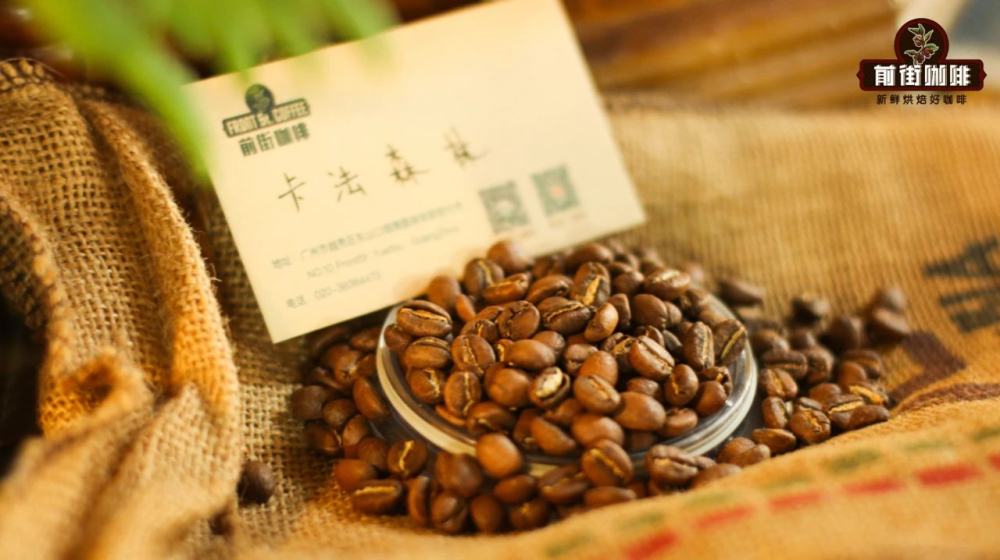
Flavor: floral, jackfruit, dried fruit, apricot, juicy
Pour-Over Recommendations for Front Street Yirgacheffe and Front Street Sidamo Huakui 8.0 Coffee Beans
Dripper: V60 Water temperature: 92-93℃ Dose: 15g Coffee-to-water ratio: 1:15 Grind size: fine granulated sugar (78% passing rate on No. 20 standard sieve)
Pouring technique: three-stage
Three-stage pouring: Wet the coffee bed with twice the amount of water as the coffee grounds, forming a dome and letting it bloom for 30s, then pour in a thin stream in circles from the inside out until reaching 125g, pause, wait for the coffee bed to drop to half the height of the dripper, then continue pouring the third stage with the same thin stream to 225g, until all the coffee liquid has filtered through, then remove the dripper. The time is about 2 minutes.
The above content is compiled by CoffeeHunters, a coffee news website.


