







What do Brazil coffee bean grades and Cerrado flavors mean?
Brazil's Cerrado Red Bourbon is a medium-roast, semi-washed coffee with creamy peanut dry aroma, prominent sweetness and a dark chocolate finish. Brazil's defect grading system, known as NY grade, sorts beans by defect count rather than screen size alone. Understanding that system helps explain why this entry-level specialty coffee tastes balanced, full-bodied and low in acid.
Brazil is the largest coffee producer and grows coffee in 17 states, mainly Red Bourbon, Yellow Bourbon, Mundo Novo and Catuai. Flat terrain allows large-scale mechanized farming, so prices stay accessible and sky-high lots are rare. Cerrado sits in southern Minas Gerais at roughly 700 to 1,200 meters; a 2022 drought cut output and pushed New York C-price futures up about 20 percent, showing Brazil's market weight.
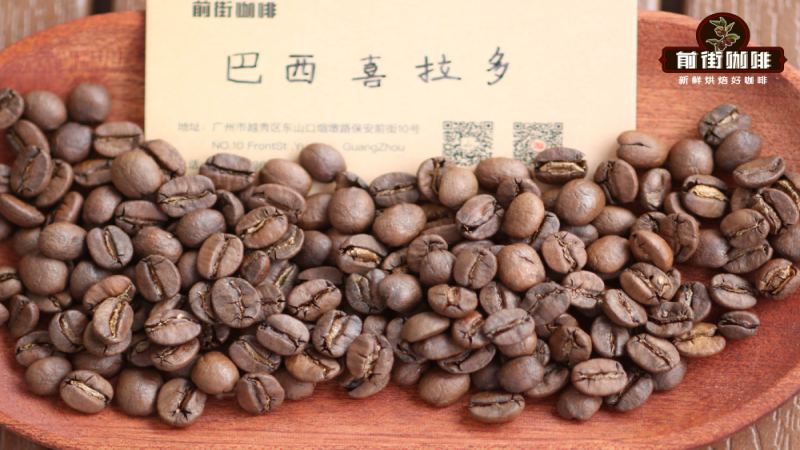
Brazil, as the world's largest coffee producer, is known for the balanced, full-bodied, low-acid, nutty-sweet Red Bourbon coffee from its Cerrado region. This Brazilian Red Bourbon from the Front Street Coffee staple bean series is processed using the semi-washed method and roasted to a medium level. Its dry aroma presents creamy peanut notes, with prominent sweetness on the palate and a dark chocolate finish. This article provides a comprehensive analysis of this entry-level specialty coffee—from the geography of the producing region, variety characteristics, semi-washed processing, and Brazil's coffee bean defect grading system (NY grade) to practical brewing parameters with the Kono dripper—helping enthusiasts build a systematic understanding of Brazilian soft bean flavors.
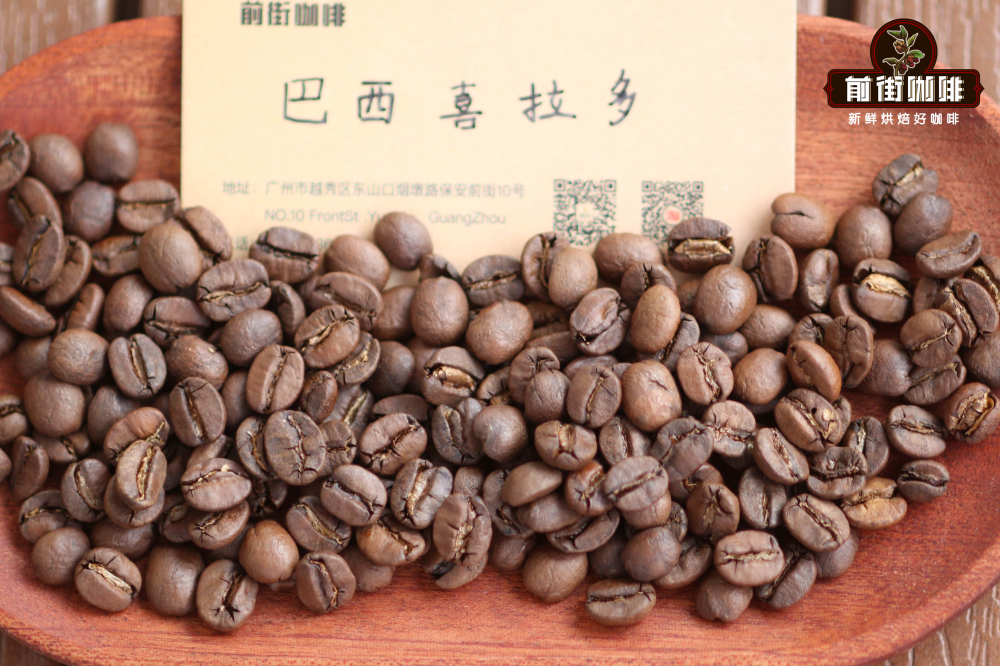
In the Front Street Coffee staple bean series, there is a Red Bourbon coffee from the Cerrado region in southern Minas Gerais, Brazil. This bean offers outstanding value for money and is suitable for beginners just getting into specialty coffee. It is processed using the semi-washed method, roasted to a medium-dark level, with a dry aroma of cream and peanut that gradually releases nutty notes when water is poured. On the palate, it has a noticeable balance, moderate body, ample sweetness, and a finish that turns into chocolatey sweetness with distinct layers—making it one of the top choices for entry-level coffee.
Brazilian Coffee: The Industrial Logic of Winning by Volume
Brazil is the world's number one coffee-producing country and the most extensively planted coffee origin. A total of 17 states across the country produce coffee, with rich variety resources—currently dominated by Red Bourbon, Yellow Bourbon, Mundo Novo, and Catuai. Because of its massive volume, Brazilian coffee has a significant impact on international futures prices—in the first half of 2022, Brazil's drought-induced production decline caused the New York C-price coffee futures to rise by 20% in response.
Brazil's terrain is flat and open, which facilitates large-scale agricultural machinery operations. As a result, coffee cultivation has long followed a path of scale and accessibility, and sky-high-priced lots rarely appear in the specialty coffee market.
The Cerrado Region and Brazil's Main Growing Areas
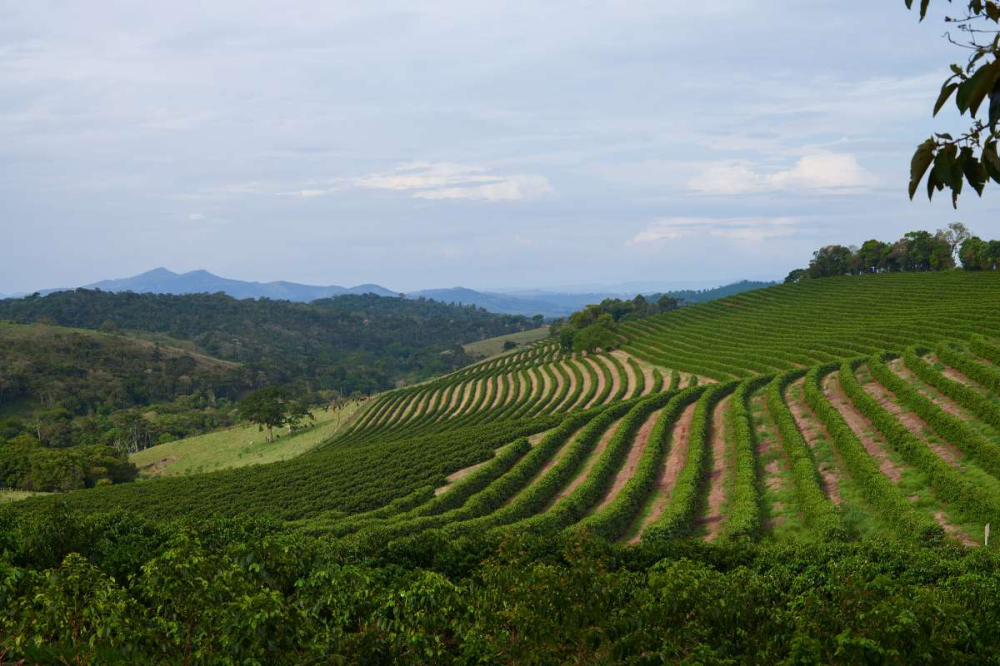
South Minas, at an altitude of about 700 to 1,200 meters, is a hilly area and Brazil's earliest coffee-producing region. As labor costs have risen, most harvesting has now shifted to mechanical methods. It is also the earliest area of coffee commercialization, with many large exporters maintaining a presence here. The Bahia region in northern Brazil is dominated by washed Brazilian beans, while the Espirito Santo region near the coast is Brazil's main export source for Robusta.
Brazilian coffee cultivation terrain is mainly divided into two types: the Brazilian Highlands above 500 meters in altitude, and the Brazilian plains below 200 meters. The well-known varieties are the Bourbon family (including Yellow Bourbon, Red Bourbon, and flat-bean Santos). The flavor profile of Front Street Coffee's Brazilian coffee is low acidity, nutty notes, balance, and moderate body. In the specialty coffee world, Brazilian beans do not win by being astonishing, but they are often used in espresso blends to add balance. Precisely because of their high balance, they are frequently used by merchants as the base for Blue Mountain-style beans.
The Cerrado region has strict restrictions on coffee naming: not all coffee produced in this savanna can use the name "Cerrado." Only coffee from the plateaus at 1,100 to 1,300 meters in altitude in the central-west of Minas province possesses the quality performance of clean sweetness, full body, and no earthy off-flavors.
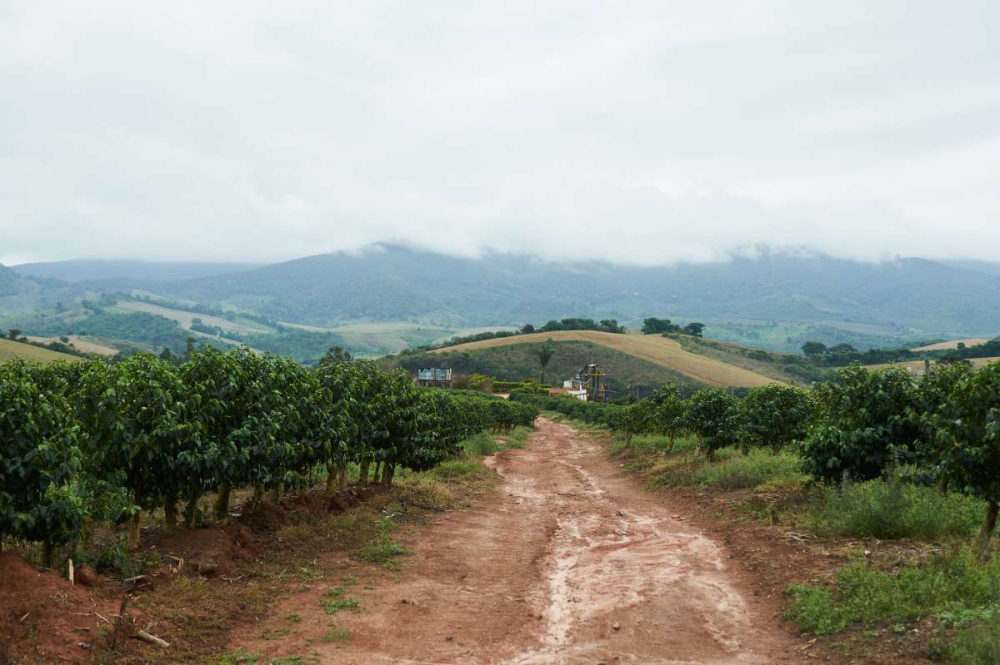
Beyond soil and climate advantages, the Cerrado region has another interesting phenomenon: near coffee plantations, one or two livestock farms can often be seen. This integrated crop-livestock structure is a hallmark of Cerrado agricultural groups. Weeds in the fields become excellent feed for livestock, and livestock manure becomes premium organic fertilizer for coffee trees. The entire ecological chain circulates in balance, with small animals and earthworms commonly seen on the ground. Farms and pastures have also become iconic scenery of the Cerrado coffee-producing region.
Most local coffee farms are below 1,000 meters in altitude and habitually adopt the sun-exposed planting method. This does not conform to the high-altitude shade-grown requirements typical of specialty beans, yet it has unexpectedly developed into the mass-market Brazilian soft bean style—low acidity, heavy nutty notes, both sweet aroma and full body, with no prominent floral or fruity notes. For coffee connoisseurs, Brazilian coffee has neither outstanding strengths nor obvious shortcomings—this kind of coffee with a mild taste, low acidity, moderate body, and faint sweetness with chocolate notes is an extreme test of the palate to distinguish one from another.
Semi-Washed Method
The semi-washed method, also called the semi-dry method, is a processing approach adapted to local conditions in Brazil. In the early days, Brazil used extensive sun-drying, but due to unstable climate, coffee quality was poor, with many defective beans and a spoiled flavor. To solve this problem, the semi-washed method was adopted instead.
Processing flow: After picking coffee cherries, immature fruits and foreign matter are first removed through a water tank. The skin and part of the pulp are removed, then a demucilager is used to remove the mucilage. Removing the mucilage shortens sun-drying time and reduces fermentation risk. This method is mostly used when climate conditions are unfavorable—when air humidity is high, the climate is warm, or rain occurs, mold is likely during drying. Therefore, most washed beans in Brazil destined for commercial trade are processed using the semi-washed method.
Brazilian Coffee Bean Grades
Brazilian coffee bean grades are generally marked on the jute sacks of green beans. For example, the jute sack of Brazilian coffee beans purchased by Front Street Coffee is printed with "NY2 SCR17/18 GOOD CUP," which represents three indicators: NY2 is the defect grade, 17/18 is the coffee bean size, and GOOD CUP is the cup quality grade.
Brazilian coffee bean grading by defect rate uses the "deduction method," classifying grades by the number of defective beans per 300 grams of main beans, divided into seven levels from NY.2 to NY.8. A deduction of fewer than 4 points can be classified as NY.2. Theoretically, coffee with no defective beans at all could be called NY.1, but such cases are extremely rare and cannot maintain stable supply. Therefore, Brazil sets NY.2 as the highest grade rather than NY.1.
Front Street Staple Beans Are Not Equivalent to Cheap Beans
Front Street has always maintained a staple bean series, most of which are priced at 25 yuan/100g. As a result, people have differing views on staple beans: some treat them as everyday affordable drinks, while others consider them low-grade goods. Front Street's definition of staple beans is—representing the classic flavor of a producing region.
For example, for Ethiopia, Front Street chooses Front Street Yirgacheffe coffee beans; for Indonesia, it chooses Front Street Lintong Mandheling coffee beans; for Colombia, it chooses traditionally washed Front Street Huila coffee beans; and for Brazil, it chooses this Front Street Cerrado Red Bourbon. Although these beans are not the very best of their regions, they can embody the flavor characteristics of those origins. As coffee-producing regions continue to change, Front Street has also added Panama-origin Front Street Boquete Geisha to its staple bean series, along with Front Street CHAKA Geisha from Hacienda La Esmeralda's Geisha Village, allowing everyone to distinguish the differences between Ethiopian and Panamanian Geisha at a lower price. This is the meaning of Front Street's staple beans.
Front Street Brazilian Red Bourbon Roasting Recommendations
As mentioned earlier, Front Street's Brazilian coffee beans are primarily full-bodied. To highlight this characteristic, the roast level is recommended to be controlled at medium or above. This Front Street Brazilian Bourbon bean uses a medium roast.
Brewing Plan
Front Street Coffee (FrontStreet Coffee) chooses the Kono dripper for brewing. The Kono dripper features an immersion function, which can extract more coffee substances through immersion and enhance the full-bodied mouthfeel. Its ribs are few and located at the lower end, allowing the filter paper to fit closely against the dripper to restrict airflow, thereby slowing the water flow rate and increasing water-coffee contact time. It is suitable for brewing medium-dark roasted coffee beans such as Front Street Brazilian Red Bourbon and Front Street Golden Mandheling.
The water temperature is 88°C, a relatively low brewing temperature, which can avoid extracting too many off-flavors—the darker the coffee bean roast, the more easily off-flavors increase.
The grind size is medium-coarse, with a 75% pass rate through a No. 20 sieve. The ratio is 1:15, using 15g of grounds.
Use staged extraction: first bloom with 30g of water for 30 seconds, then pour in a slow circular stream until reaching 125g, pause, and when the water level drops and is about to expose the coffee bed, continue pouring until reaching 225g and stop, (timing starts from the beginning of blooming) with an extraction time of 2 minutes. Try to keep the brewing technique consistent for both beans.
Front Street Brazilian Cerrado Coffee Bean Flavor Description: Prominent sweetness on the palate, accompanied by a faint lemon aroma, rich nutty flavor, and a dark chocolate note in the finish, with an overall rounded mouthfeel.
For professional coffee knowledge exchange and more coffee bean information, please follow Coffee Workshop (WeChat public account: cafe_style) For more specialty coffee beans, please add the private WeChat of Front Street Coffee (FrontStreet Coffee), WeChat ID: qjcoffeex
The above content is compiled by CoffeeHunters, a coffee news website.


