







Brazilian Coffee Bean Processing and Its Regional Context
Brazilian coffee is full-bodied with relatively low acidity, and the three high-altitude regions of Cerrado, Mogiana, and South Minas are the main sources of specialty Brazilian beans. Red and Yellow Bourbon both evolved naturally from Typica, yet they diverge in flavor. A medium-dark roast dropped before second crack suits these beans, and a coarser grind with lower water temperature keeps bitterness out of the finish.
Coffee bean processing shapes the final cup as much as variety does. The pulped natural method used in Brazil leaves some mucilage on the seed during drying, which supports the nutty aroma and heavy body Brazilian coffee is known for. Brazil's yield advantage across its coffee producing regions also keeps these beans affordable, making them a practical base for espresso blends and single-origin pour-over alike.
Brazilian coffee, with its century-long lead in export volume and its full-bodied, low-acid style, has long been a staple in specialty cafés and espresso blends, and the three high-altitude regions of Cerrado, Mogiana, and South Minas are the main sources of specialty Brazilian beans in China. The two Brazilian single-origin coffees currently sold by Front Street Coffee come from the Yellow Bourbon of Queen Farm in Mogiana, São Paulo, and the Red Bourbon of Cerrado in Minas Gerais; both evolved naturally from Typica, yet their flavor profiles diverge. To match the low-acid, full-bodied character of Brazilian beans, Front Street Coffee uniformly uses a medium-dark roast dropped before second crack, and recommends a coarser grind and lower water temperature to reduce the bitterness in the finish. This article will systematically outline the distribution of Brazil's main producing regions, the differences between Red and Yellow Bourbon, the origin and process of the pulped natural method, and provide directly applicable pour-over extraction parameters and techniques.
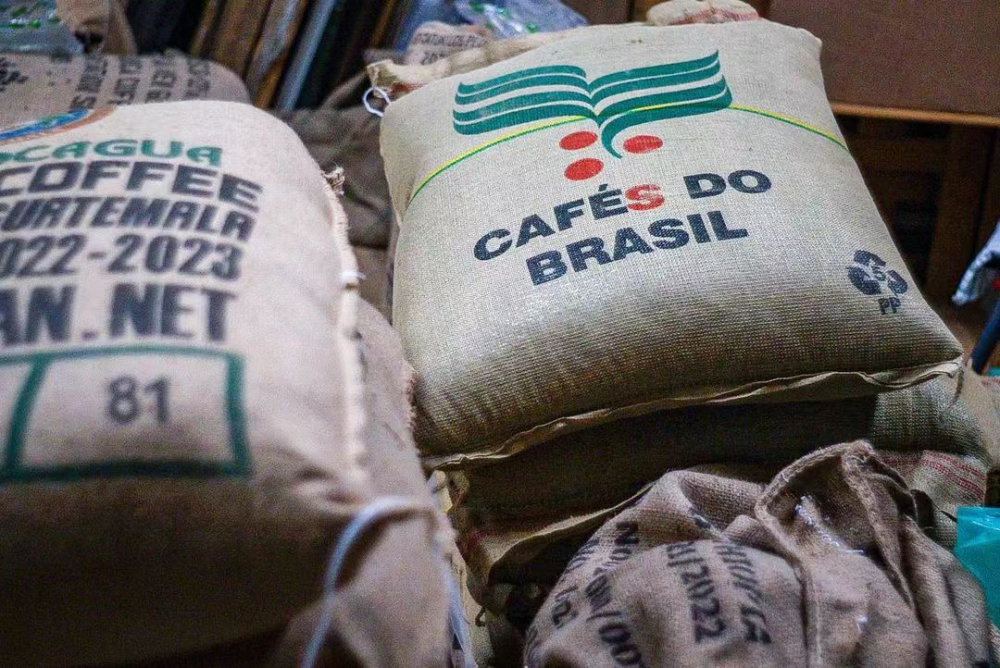
Brazilian coffee Thanks to its massive output, it has held the top spot in coffee export volume for over a hundred years. On the menu of almost every specialty café, there is at least one Brazilian single-origin bean, or an espresso blend based on Brazilian beans, which shows just how important it is in the coffee world.
People prefer Brazilian coffee beans One reason is that they deliver a solid, full-bodied cup with relatively low acidity, along with a variety of nutty aromas. Whether as a single origin or as a base bean in a blend, they are versatile—you can enjoy their layered flavors on their own, and they can also provide the main thrust for a blended coffee.
Another reason is that, compared with many other producing regions, Brazil's growing conditions bring a clear yield advantage, so Brazilian coffee beans are relatively affordable and offer great value. Friends who are just getting into specialty coffee, who dislike acidity, and who don't like overly bitter flavors can all try them with confidence.
Brazil's Main Arabica Coffee Producing Regions
Brazilian coffee beans The core producing regions include Minas Gerais, São Paulo, Bahia, and Espírito Santo; together these four account for ninety percent of the country's exports.
Most of the specialty Brazilian beans on the domestic market today come from Mogiana in São Paulo, Cerrado in Minas Gerais, and South Minas. The reason is that these three areas have relatively high altitudes within Brazil, and for Arabica coffee to taste good, high altitude is an indispensable condition.
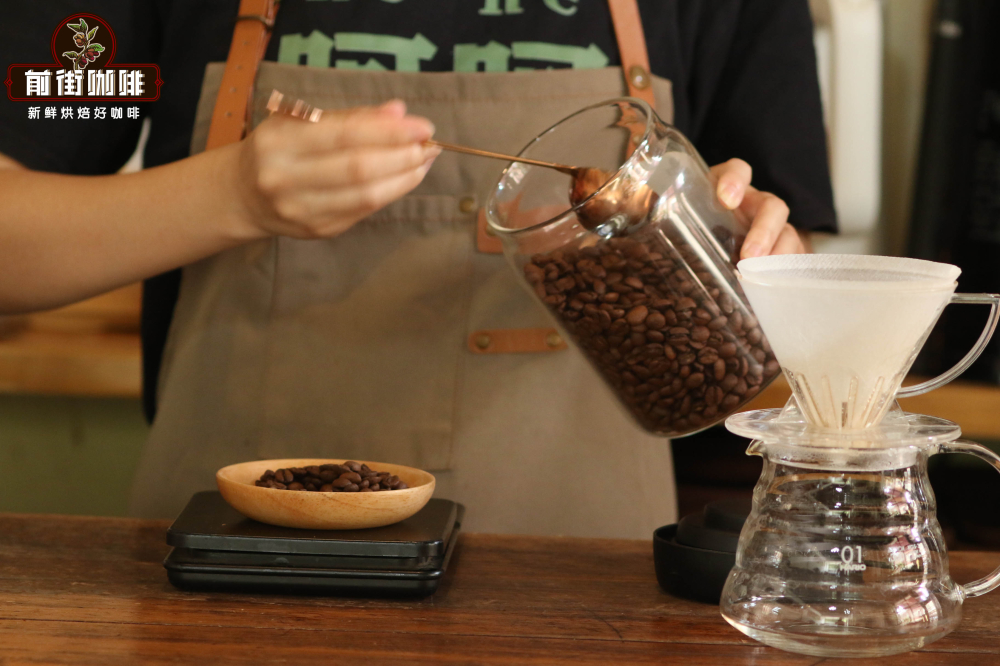
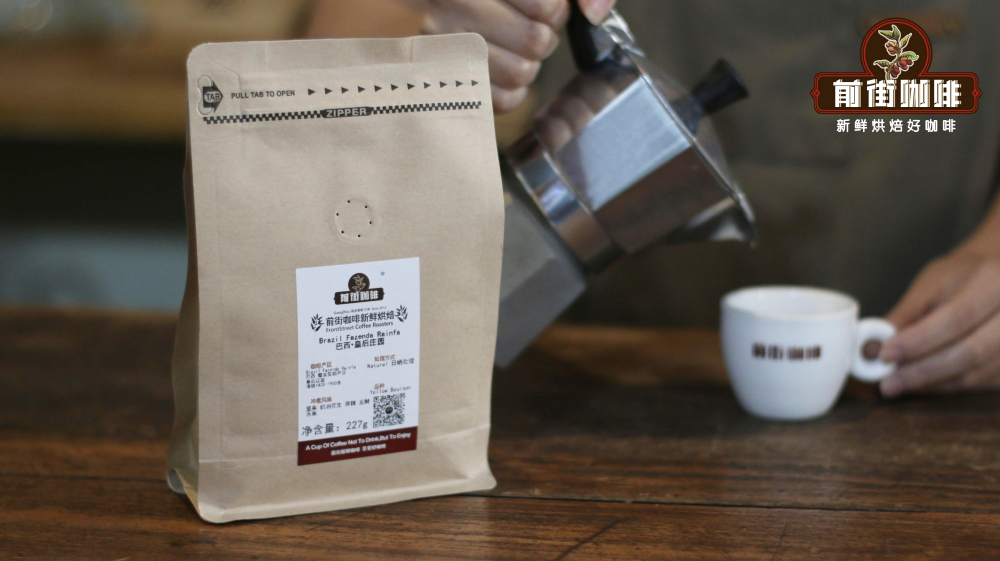
The two specialty Brazilian beans currently sold by Front Street Coffee are one Yellow Bourbon from Queen Farm in Mogiana, São Paulo, and one Red Bourbon from Cerrado in Minas Gerais.
What is the difference between Red Bourbon and Yellow Bourbon?
Both varieties originated from the natural evolution of Typica and belong to the Bourbon species, with beans that are rounder and shorter, plump and thick. What is usually called Bourbon has green fruit when unripe and turns bright red when ripe—this is the familiar "Red Bourbon." After cupping comparisons, Front Street Coffee believes that Red Bourbon has a smooth mouthfeel and outstanding sweetness.
Yellow Bourbon, on the other hand, is a Bourbon mutation unique to São Paulo, Brazil. Its fruit does not turn red when ripe but instead turns orange-yellow, hence the name "Yellow Bourbon." When grown at high altitudes, Yellow Bourbon often displays excellent flavor. After cupping comparisons, Front Street Coffee found that Yellow Bourbon has balanced, gentle acidity, with a faint, clean bitterness, and is overall bright and refreshing.
Brazilian Coffee Bean Processing Methods
To reduce the problems of mold and earthy flavors that easily occur during the natural process, the Brazil Specialty Coffee Association developed the pulped natural method (Pulped Natural) in 1990 to shorten the processing time. It is similar to the natural process, with the difference being whether water is used as an aid during processing. The pulped natural method greatly alleviates the weakness of difficult quality control, effectively reducing defects, making the beans more uniform and attractive, and increasing sweetness.
Pulped natural processing is divided into two stages: first, sun-drying to bring the moisture content down to 20–25%, then moving the beans to a dryer to continue down to 10–14%, thus completing the entire drying process.
Flavor Characteristics of Brazilian Coffee Beans
Compared with other Central and South American countries, Brazil has lower altitudes and a flat, monotonous terrain, lacking microclimates. Even if coffee trees are planted in Brazil's high-altitude areas, the insufficient temperature difference between day and night slows the growth rhythm, and the soil cannot provide enough nutrients to the coffee tree roots, so it is difficult to develop brighter, more complex flavors.
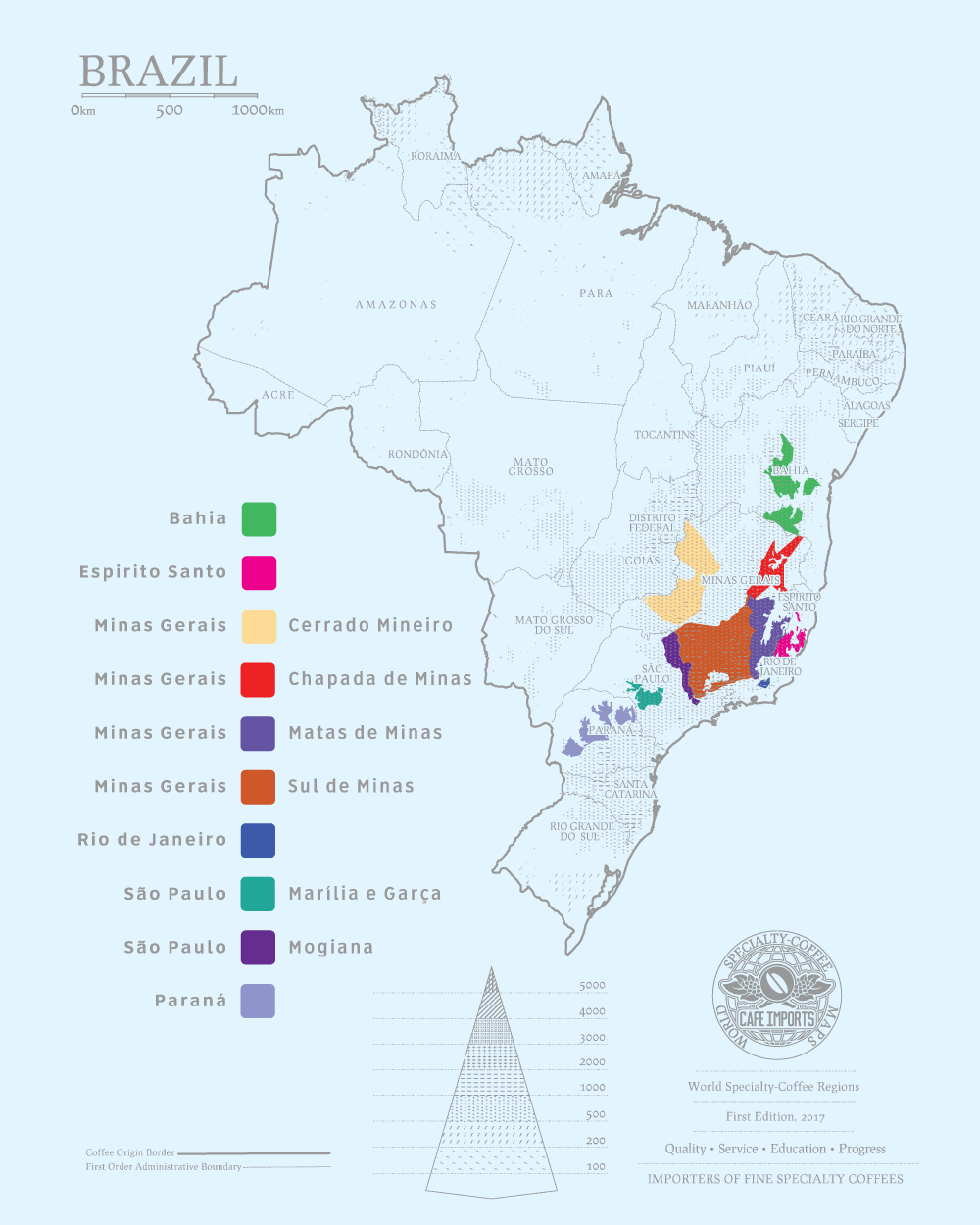
After cupping many Brazilian beans from different regions, Front Street Coffee concludes: Brazilian coffee has low acidity, a moderate nutty character, a sweet chocolate aroma, and a full-bodied mouthfeel.
How to brew Brazilian coffee beans so they taste good?
To brew a good cup of coffee, the prerequisite is using freshly roasted beans. All coffee beans sold by Front Street Coffee are shipped within 5 days of roasting to ensure freshness, so everyone can better appreciate the layering of the coffee's flavors.
In order to bring out the low-acid, full-bodied character of Brazilian beans, Front Street Coffee uniformly roasts them to a medium-dark level, dropping before second crack. The longer the roasting time, the looser the structure of the coffee beans and the faster the flavor compounds are released; therefore, Front Street Coffee recommends adjusting to a coarser grind and avoiding excessively high water temperatures when brewing Brazilian beans, in order to reduce extraction in the final phase and suppress bitterness.
The longer the roasting time, the looser the structure of the coffee beans and the faster the coffee compounds are released; therefore, Front Street Coffee recommends adjusting to a coarser grind and not using water that is too hot when brewing Mandheling coffee, to reduce extraction in the final phase and reduce bitterness.
The pour-over extraction parameters used by Front Street Coffee in its cafés are as follows: dripper: KONO, dose: 15 g, water-to-coffee ratio: 1:15, grind size: 70% passing a Chinese standard No. 20 sieve, water temperature: 88°C.
The extraction technique is as follows: in the first stage, pour 30 g of water for the bloom, with a bloom time of 30 seconds; in the second stage, pour up to about 125 g of water, then wait for the coffee liquid to drop; when it has dropped by half, pour the final stage of water up to 225 g, and end the extraction after all the coffee has dripped through. The total extraction time is generally about 2 minutes 10 seconds.
The above content is compiled by CoffeeHunters, a coffee news website.


