







Why Grind Size Drifts When You Pull Coffee
Espresso grinders need adjusting every day or even every few hours because three things keep changing. Coffee beans continually degas carbon dioxide, burrs wear down as they run, and the surrounding environment shifts. Any one of these makes a fixed recipe drift away from the ideal extraction, and the change is gradual enough that shops often miss it until the pull coffee tastes off.
Calibrating grind size daily is standard practice in street coffee bars, and many shops recheck it between shifts. Baristas treat espresso machine lines, steam boilers, and grinder burrs as consumables that wear with use. Freshly roasted beans degas fastest during the peak flavor window, so the grinder setting from the first day of a batch will not hold through the week.
Why do cafes need to readjust their grinders every day or even every few hours? The answer lies in the continuous degassing of coffee beans, the slow wear of the burrs, and environmental changes—all of which cause an seemingly fixed extraction recipe to gradually drift away from the ideal state. Drawing on the hands-on experience of Front Street Coffee, this article systematically explains the principles and steps of adjusting espresso grinder settings: how to judge whether the grind size is appropriate, how to control extraction time by adjusting the grind setting, the interconnected relationship between dose and grind degree on electronic grinders, as well as key details such as puck height and brew ratio. Whether you are a beginner just getting into espresso or a professional looking to refine your dialing-in skills, you will find actionable guidance here.
Why do cafes need to adjust their grinders every day?
In a cafe, calibrating the grind size daily is standard practice, and some shops even recheck it every few hours. Isn't the extraction recipe already determined? Same equipment, same batch of beans, same set of parameters—could it really extract a different taste? In reality, although these three things appear completely unchanged to the naked eye, they are quietly shifting inside every day. It's like the boiling frog syndrome: if a shop locks in its parameters, you might not taste a difference in the first day or two, but once quantitative changes accumulate into qualitative changes, one day you'll suddenly find the coffee undrinkable—and by then it's too late. So how does Front Street Coffee dial in its grinders?
The Significance of Adjusting the Grinder
In customers' eyes, espresso machines and grinders are fixed assets, but in the eyes of industry professionals, they are actually consumables. The brewing lines and steam boilers of an espresso machine, and the burrs of a grinder—as long as they start running, they wear down bit by bit. These are variables that cannot be ignored. That is why baristas carefully maintain them every day and carry out a full inspection at regular intervals.
The changes in coffee beans are even more obvious. Freshly roasted beans contain large amounts of active carbon dioxide; what we commonly call the "peak flavor window" is essentially the degassing period. At first, degassing is very vigorous, then it gradually levels off. Once the beans have almost stopped releasing gas, it means they have lost their freshness. In other words, the flavor of coffee beans is changing all the time, and after a whole night in particular, the difference in their state becomes even more pronounced.
When coffee beans drop into the grinder, the burrs crush them into powder. The closer the distance between the two burrs, the finer the particles produced. The finer the particles, the more densely they pack together, and the greater the resistance when water passes through—naturally lengthening the extraction time. Conversely, when the burr gap is widened, the particles become coarser, water passes through more easily, and the extraction speeds up. To use a simple analogy: water flows through rocks far faster than through fine sand, because rocks leave larger gaps between them. So grind precision is crucial—particle size directly determines extraction quality.
How to Judge the Quality of the Grind
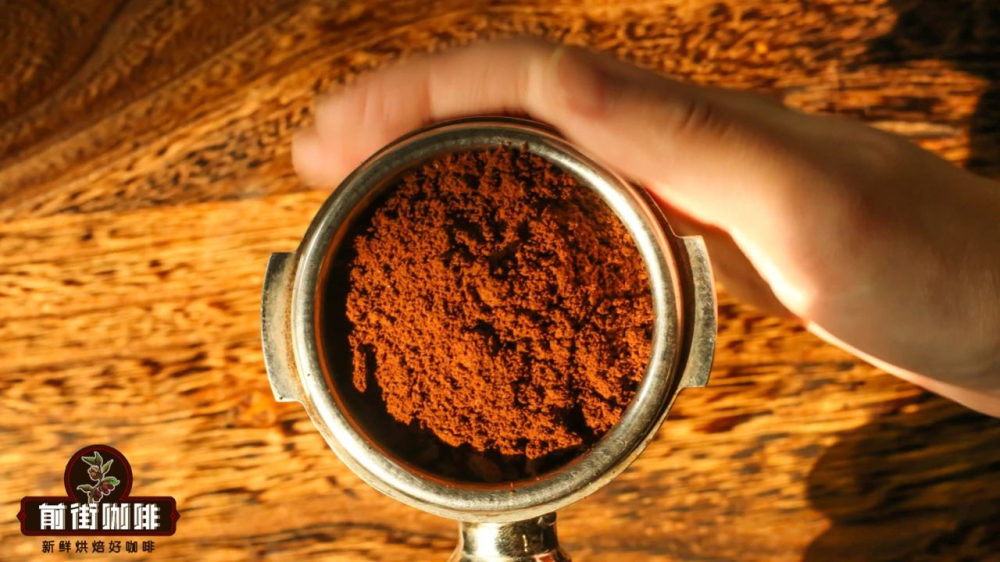
Observing the coffee grounds, the ideal state should be powdery with a gritty, sandy texture. If the grounds feel soft and smooth, like flour, they are ground too fine. Conversely, if they feel coarse and overly gritty, they are ground too coarse.
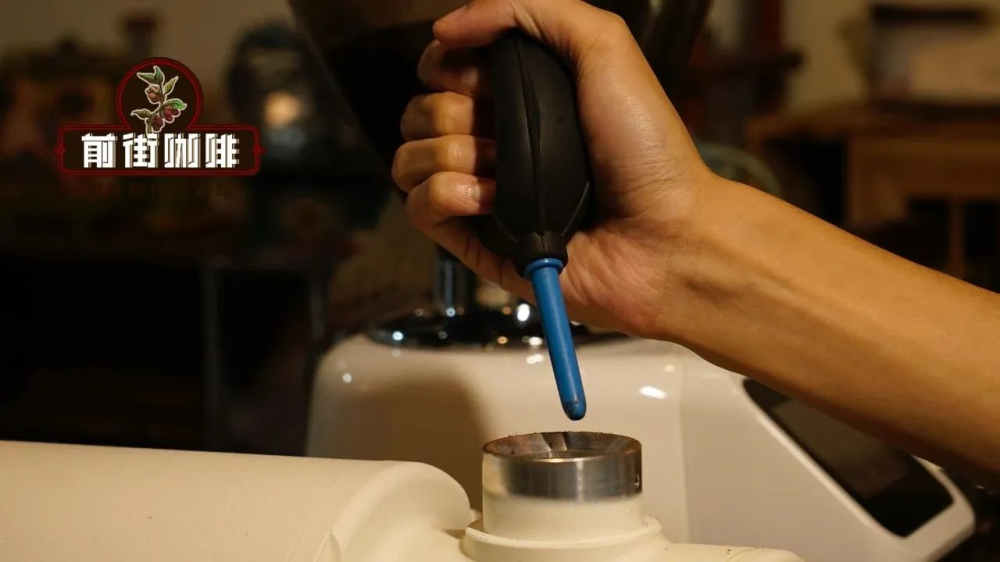
Front Street Coffee (FrontStreet Coffee) Grinder Dialing-In Tutorial
Different models of grinders have differently designed adjustment dials, so the first step is to confirm the equipment model and carefully read the manual to understand the rotation direction and adjustment range of the dial. Generally speaking, if you have developed the habit of regularly checking your grinder settings, each adjustment only needs to be extremely small. Moving the dial no more than 3 millimeters is enough to change the grind size. Don't underestimate 3 millimeters—for the same batch of beans, the grinding time can differ by 3 to 5 seconds as a result.
Specific Operating Steps
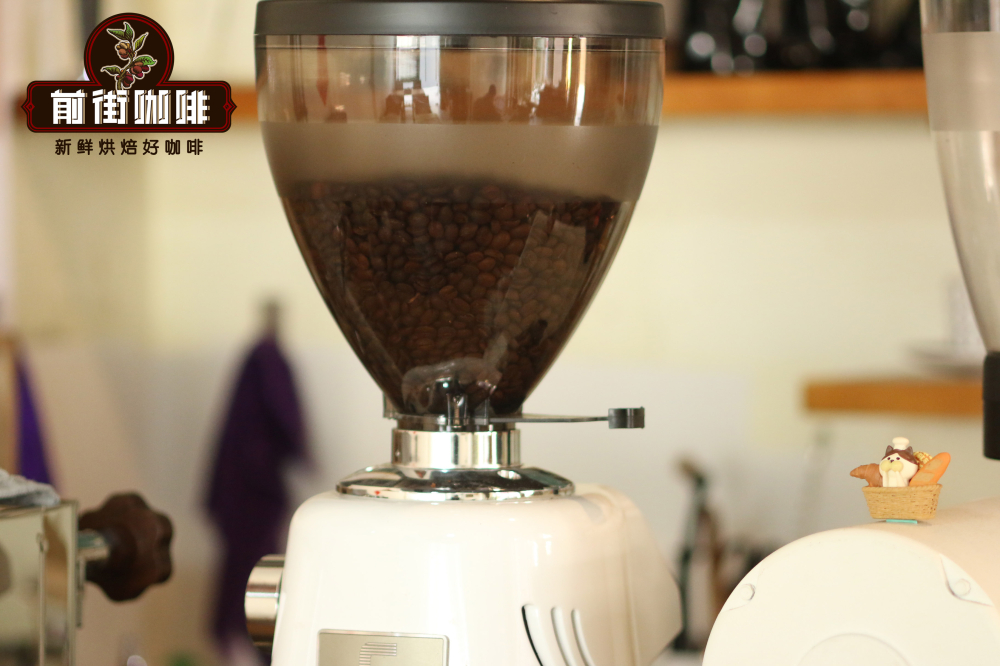
First determine the direction of adjustment needed (finer or coarser). Confirm that there are plenty of coffee beans in the hopper and that the valve between the hopper and the burrs is open, allowing beans to flow smoothly into the grinding area.
Run the grinder for about 10 seconds and discard the ground coffee (this batch hasn't gone through the adjusted setting yet and cannot be used).
Use the freshly ground coffee to pull a shot of espresso, making sure every step—dosing, leveling, and tamping—is done accurately. Taking Front Street Coffee's (FrontStreet Coffee) espresso extraction standard as an example, the dose-to-yield ratio is 1:2, and the extraction time is controlled between 25 and 30 seconds. During testing, we need to approach this target parameter by changing the grind size.
Front Street Coffee (FrontStreet Coffee) uses time to judge the stability of espresso parameters with every extraction. For example, if the extraction time after the morning dial-in was 28 seconds and by noon it has dropped to 22 seconds, then you need to adjust the grinder finer to bring the time back to around 28 seconds. Of course, time is only a reference indicator—ultimately, you still need to confirm by tasting.
Dialing in an electronic grinder mainly involves two variables: dose and grind degree. These two variables are interconnected—change one, and the other changes along with it.
A typical electronic grinder adjusts grinding and dispensing time based on a preset dose (note: the grinder determines dose based on time, not weight). If you are unsatisfied with the coffee quality, the first thing to determine is whether the problem lies in the dose or the grind degree.
Normally, after correct dosing, leveling, and tamping, the distance between the puck and the shower screen should remain between 5 and 6 millimeters. If the puck height deviates from this range, you should try adjusting the dose (i.e., the grinding and dispensing time). When adjusting the dose, each change should be kept between 0.2 and 0.3 seconds, and the coffee quality should be re-evaluated after every adjustment.
The trickiest part of adjusting an electronic grinder is that when you change the grind setting, the burr gap changes accordingly, and the change in gap directly affects the dose—that is, the time required for grinding and dispensing. If you adjust the grind finer, the burr gap narrows, and fewer beans pass through the burrs per unit of time. Conversely, if the burr gap widens, more beans pass through per unit of time.
Therefore, when adjusting an electronic grinder, we should first clarify the interconnected relationship between dose and grind degree. These two variables change when either one is altered, requiring repeated adjustment and testing to achieve the desired result. Any tiny change on the grinder will have a significant impact on the overall coffee quality. So as a barista, you should re-measure and recalibrate the grinder every day to ensure the coffee quality remains consistent.
To master the brew ratio, you can fix the coffee dose during practice (using 18 grams as an example), pair it with different total coffee weights, and then compare the differences in mouthfeel, clarity, and body across various ratios. The final brew ratio depends on personal preference. Only through repeated practice and experimentation can you make a cup of espresso that truly suits you.
The above content is compiled by CoffeeHunters, a coffee news website.


