







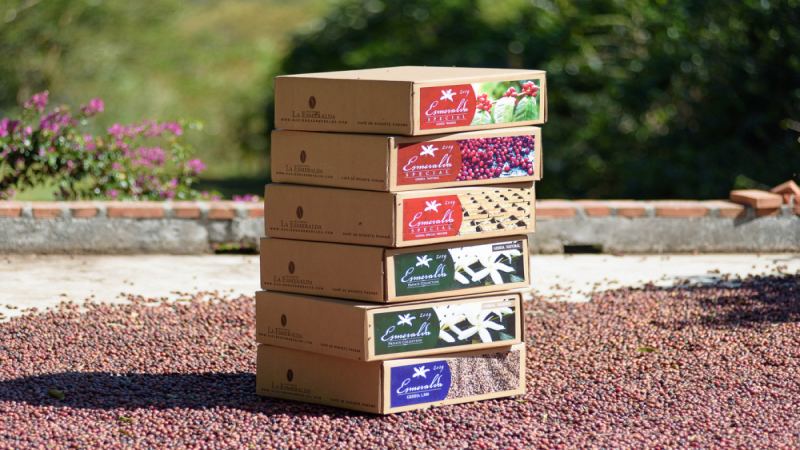
How do the Red, Green, and Blue labels of Panama geisha coffee differ?
Panama geisha coffee is closely tied to Hacienda La Esmeralda, the estate that first identified the variety's distinct flavors and opened the commercial pathway for it. The estate's three plots, Jaramillo, Cañas Verdes, and El Velo, show different terroir, and its three grades, Red Label, Green Label, and Blue Label, differ in character and flavor profile.
After La Esmeralda showed what Panama geisha coffee beans could do, estates across the country introduced the variety, though most still fall short of La Esmeralda's selection and grading systems. Competition is growing: last year's BOP champion was Elida Estate in Boquete, not La Esmeralda. Roasting curves and pour-over parameters vary by label grade.
Geisha coffee is one of the most sought-after varieties in today's specialty coffee world, and Panama's Hacienda La Esmeralda was the key force that brought this variety to the global stage. From the perspective of Front Street Coffee, this article systematically traces the origins and spread of the Geisha variety, explains in detail the terroir differences among Hacienda La Esmeralda's three major plots—Jaramillo, Cañas Verdes, and El Velo—and breaks down layer by layer the characteristics and flavor profiles of the three grades: Red Label, Green Label, and Blue Label. It also includes Front Street Coffee's roasting curves and pour-over parameter recommendations for each grade of Geisha, helping coffee enthusiasts fully understand the charm of this legendary bean.
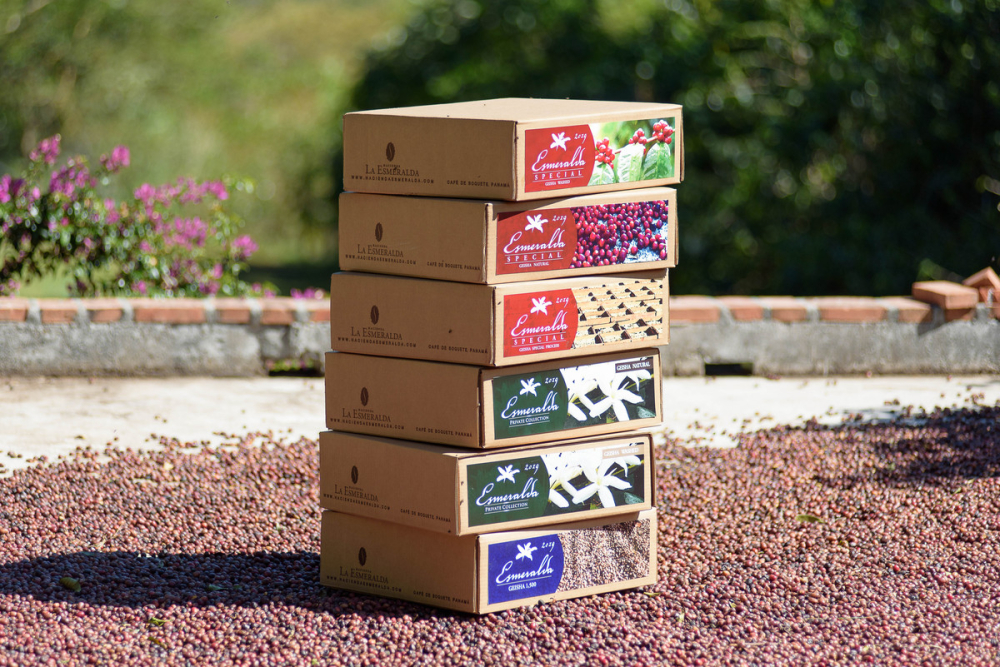
When it comes to outstanding Geisha coffee, Front Street Coffee finds that the name that first comes to most enthusiasts' minds is Panama's Hacienda La Esmeralda. This estate was not only the pioneer that first identified Geisha's unique flavors, but also the core force that brought the variety to market. After Hacienda La Esmeralda opened up the commercial pathway for Geisha, the whole of Panama was swept up in a wave of Geisha cultivation, with many estates introducing the variety; however, in terms of selection and grading systems, most estates still struggle to match Hacienda La Esmeralda.
Although Hacienda La Esmeralda holds an unshakable position in the Geisha world, Front Street Coffee's sourcing scope is not limited to it. Front Street Coffee also brings in Geisha beans from other Panamanian estates and even other countries, such as Front Street Bolivia Geisha coffee beans. This is done partly for horizontal comparison and partly to continuously observe the development trends of various producing regions. Last year's BOP champion was not the long-dominant Hacienda La Esmeralda, but Elida Estate, also located in the Boquete producing region. Front Street Coffee believes this precisely demonstrates the industry's progress—estates delving into Geisha are no longer only Esmeralda; other estates are also continuously expanding their own domains. Hacienda La Esmeralda merely started earlier and seized the initiative, and after more than a decade of development, capable competitors have emerged. In Front Street Coffee's view, this kind of healthy competition is good for the market. Therefore, sourcing Front Street Bolivia Geisha coffee beans and Geisha from other producing regions is also about tracking whether they are improving year by year or deteriorating.
The Geisha variety was first discovered in 1931 in the Geisha forest of Ethiopia. However, Front Street Coffee particularly needs to point out that the Geisha of Ethiopia's Gesha Village and Panama Geisha coffee beans actually belong to two completely different varieties. After its discovery, Geisha was sent to the Kenya Coffee Research Institute, spread to Uganda and Tanzania in 1936, was introduced to Costa Rica in 1953, and only arrived in Panama in 1970. At first Geisha did not attract much attention; the turning point came when Panama Geisha Hacienda La Esmeralda separated it from other varieties in 2003 and won the BOP competition in 2004. Only then did Geisha coffee beans truly enter the public eye. For many years afterward, the championship throne was almost always firmly held by Hacienda La Esmeralda.
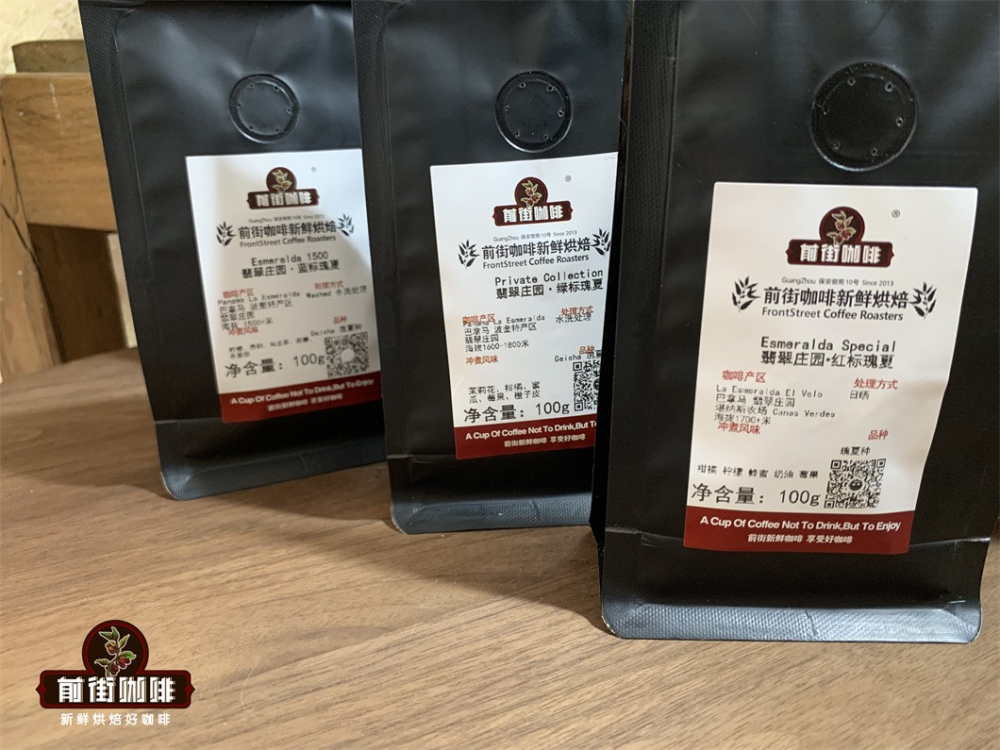
Front Street Coffee is often asked by customers: why is coffee quality better at higher altitudes? The answer can actually be found in Geisha coffee beans. Geisha is extremely demanding about growing conditions and must be planted in high-altitude areas, with higher altitudes yielding better quality. The several Front Street Panama Geisha coffees displayed by Front Street Coffee correspond to different grades, among which Red Label represents the highest level and is grown at the highest altitude. Regarding Hacienda La Esmeralda's grading standards, Front Street Coffee will explain in detail below; please keep reading.
Hacienda La Esmeralda Plot Divisions
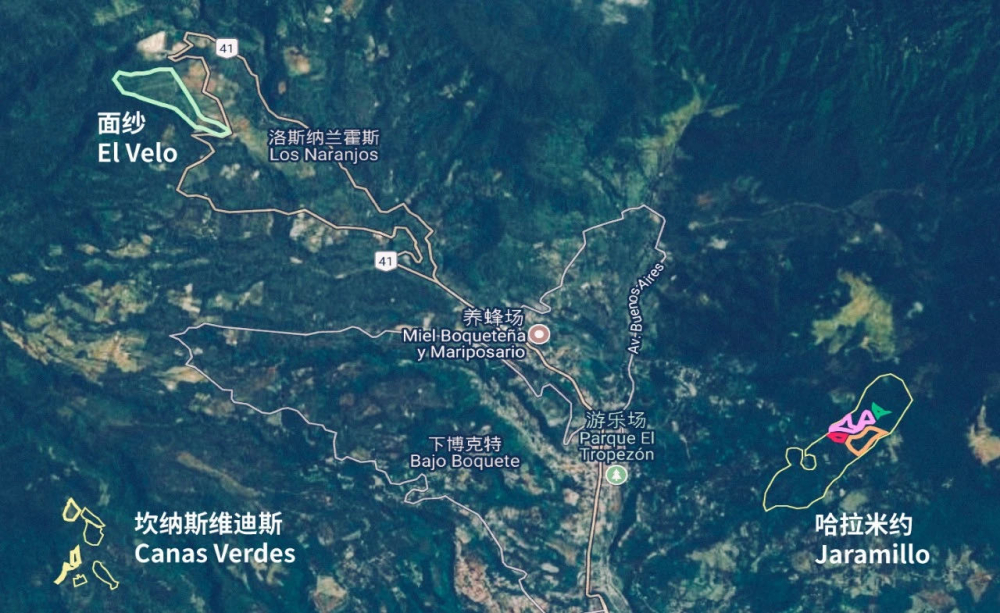
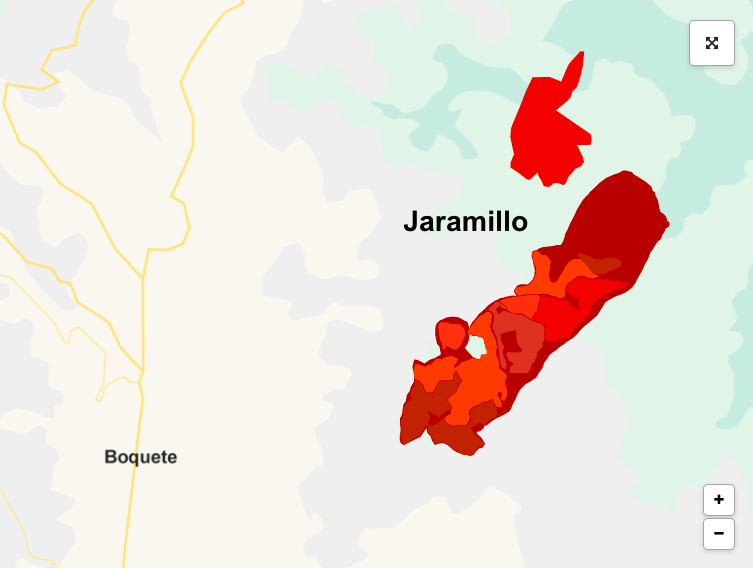
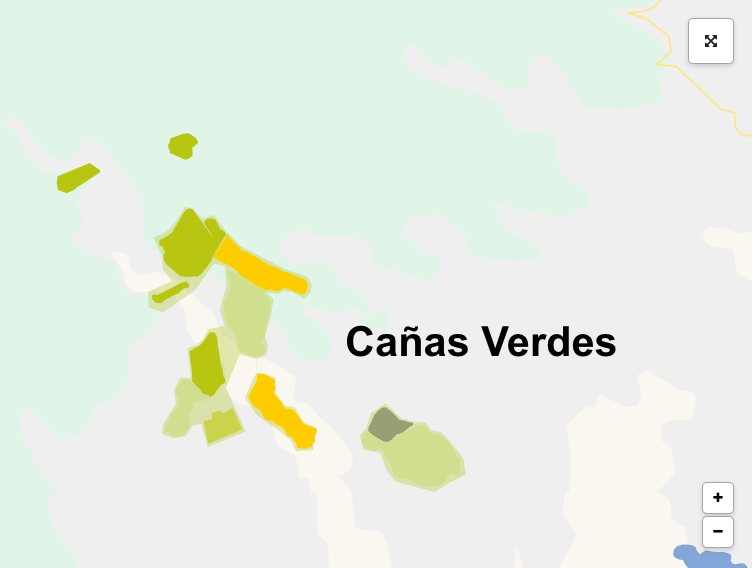
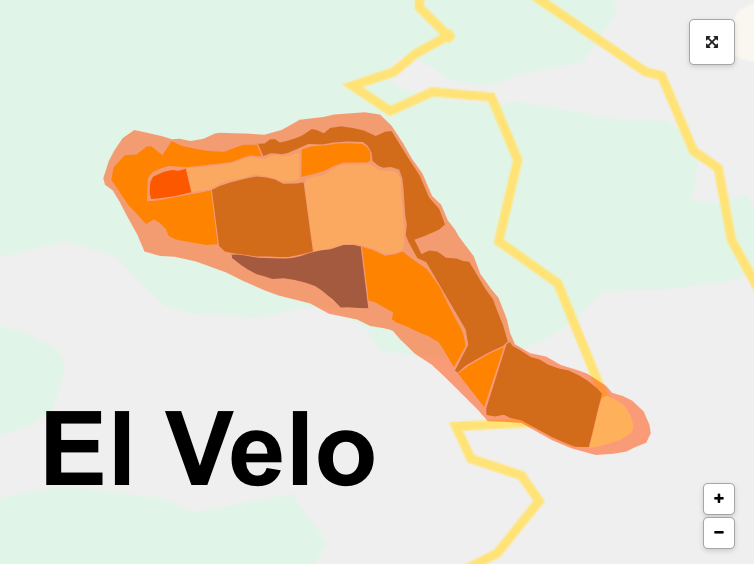
Hacienda La Esmeralda is located in Panama's Boquete producing region, a pivotal coffee-producing area in Panama from which many well-known estates originate, such as Elida Estate and Kotowa Estate. Hacienda La Esmeralda is extremely meticulous in dividing its Geisha planting plots, mainly into three major plots: Jaramillo, Cañas Verdes, and El Velo. Each major plot is further subdivided into smaller plots.
High-quality Geisha mainly comes from the two plots of Jaramillo and Cañas Verdes. Jaramillo Annual rainfall of about 4000ml, average daytime temperature 19-25°C, average nighttime temperature 11-15°C, average altitude 1600-1700m. The Jaramillo plot is subdivided into 5 small plots: Mario, Noria, Reina, Bosque, and Buenos Aires.
Cañas Verdes Annual rainfall of about 3500ml, average daytime temperature 16-23°C, average nighttime temperature 10-15°C, average altitude 1600-1800m. Cañas Verdes includes: Lino, Coronado, Fundador, Leon, Montaña, Trapiche, Chinta, Cabaña, Tumaco, and other plots.
El Velo is the most recently acquired plot of Hacienda La Esmeralda, with an average altitude of 1700-1900m. In addition to growing Geisha and Catuai, this plot also cultivates a small amount of other exotic varieties, such as Laurina, Pacamara, Moka, and SL28. El Velo is divided into: Guabo, Portón, Durazno, Higo, Buena Vista, Águila, and other plots.
Panama Hacienda La Esmeralda Geisha Panama Hacienda La Esmeralda's Geisha coffee beans are divided into three grades: Red Label, Green Label, and Blue Label.
[Auction and Red Label]
The Geisha from Esmeralda Special Selection is what people commonly call Red Label. It uses Geisha coffee beans grown at altitudes of 1600-1800 meters, with a cupping score above 90, from the two producing areas of Jaramillo and Cañas Verdes. In the independent auction held by Hacienda La Esmeralda itself, only the Geisha lots put up for auction from the divided plots belong to Auction Red Label. However, there are also non-auction Red Labels on the market, which are actually Geisha selected from the same plots that did not participate in the auction and flowed into the market; the variety and quality are the same, differing only in selling price.
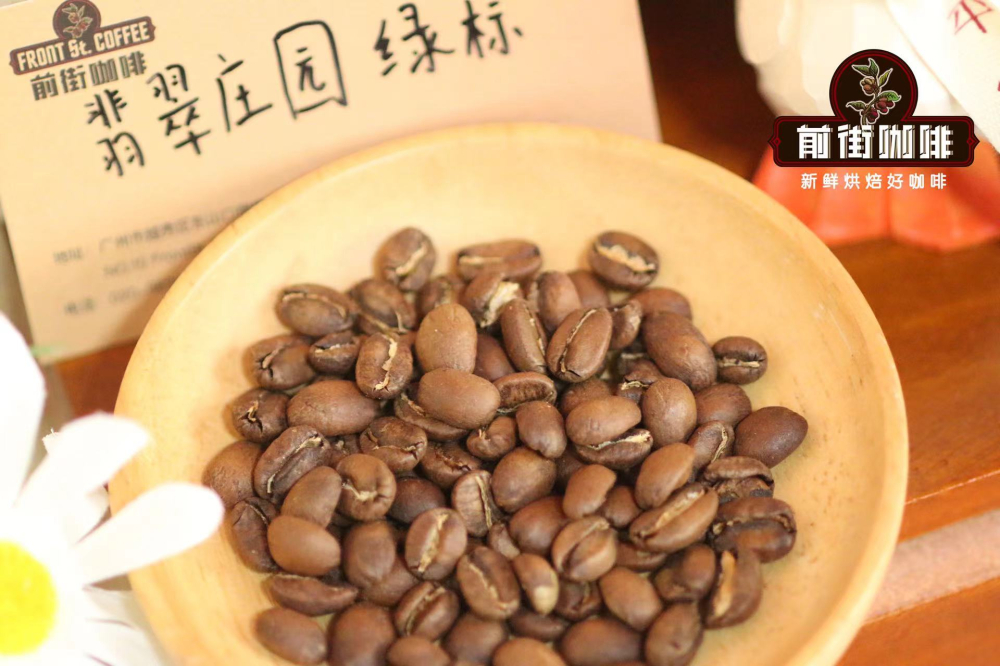
What Front Street Coffee has obtained is Front Street Natural Red Label Geisha from the Jaramillo plot. This grade of Geisha is processed either naturally or washed, with flavor expressions of unique and bright floral and citrus aromas. Naturally processed Geisha coffee beans have more complex aromas and more pronounced sweet-and-sour sensations. If you want to spend a high price to experience top-tier Geisha flavor, Front Street Panama Hacienda La Esmeralda Natural Red Label Geisha can be called a classic choice; natural processing makes the Geisha flavor more intense, leaving a lingering fragrance on the lips and teeth after drinking, memorable for a long time. The Front Street Esmeralda Red Label on Front Street's bean shelf comes from the same Jaramillo farm as the Geisha coffee beans that won the championship in the 2004 BOP competition.
[Green Label Geisha] Private Collection, commonly known as Green Label, does not belong to an independent competition lot; it is a Geisha variety that does not participate in auctions but still has excellent quality. It uses micro-lot blended beans grown at altitudes of 1600-1800 meters from different plots such as Jaramillo and Cañas Verdes. Because it adopts a blended-bean model, no detailed plot labeling is made, so sometimes Green Label and Red Label may have very similar flavors, but the next release may differ again. Although Green Label is not as high-grade as Red Label, it still retains Geisha's classic flavors—floral aroma, fruity aroma, citrus acidity, and a thick, juicy mouthfeel. Green Label Geisha also comes in washed or natural processed versions.
Front Street Coffee's Hacienda La Esmeralda Green Label Geisha uses the washed processing method. Front Street Washed Green Label Geisha has fresh jasmine and ginger flower aromas, bright citrus-like acidity, and a thick, juicy mouthfeel. Compared with Front Street Natural Red Label, Front Street Washed Green Label is more like a representative of fresh, light style; the typical Geisha flavors are clearly recognizable, and the overall cup is very refreshing, like drinking oolong tea, making it also an outstanding value choice among Hacienda La Esmeralda Geishas.
[Blue Label Geisha]
The brand Geisha 1500 is what we commonly know as Blue Label Geisha. It uses blended beans grown at altitudes of 1400-1500 meters from three different plots: Jaramillo, Cañas Verdes, and El Velo. Its flavor expression is weak floral aroma, fruity acidity, and sweetness, with a mouthfeel that is not thick enough. In previous years, Blue Label Geisha was only washed, while in 2020 the Blue Label lot added a natural processing method. In 2021, Hacienda La Esmeralda canceled the Blue Label Geisha grade, and a few months later a Geisha coffee bean called "Volcanic Rock" appeared. After cupping and comparison, Front Street's baristas found that this "Volcanic Rock" had a flavor very similar to the previous Blue Label.
Front Street Coffee's Front Street Washed Geisha Blue Label has weak floral aroma, fruity acidity, and sweetness, with a relatively thin mouthfeel; while Front Street Natural Blue Label presents weak floral aroma, obvious fermented notes, a berry-juice-like mouthfeel, and higher sweetness. Front Street believes that the introduction of a natural processing method for Front Street Esmeralda Blue Label in the new crop season is undoubtedly a great benefit for consumers. In the past, if you wanted to drink naturally processed Hacienda La Esmeralda Geisha, you often had to buy high-priced Red Label or Green Label, whereas Natural Blue Label allows consumers to buy a naturally processed Hacienda La Esmeralda Geisha at a lower price and with better value for money.
Taking [Front Street Panama Hacienda La Esmeralda Natural Red Label, Washed Green Label, Washed Blue Label, Natural Blue Label] on Front Street Coffee's bean list as examples
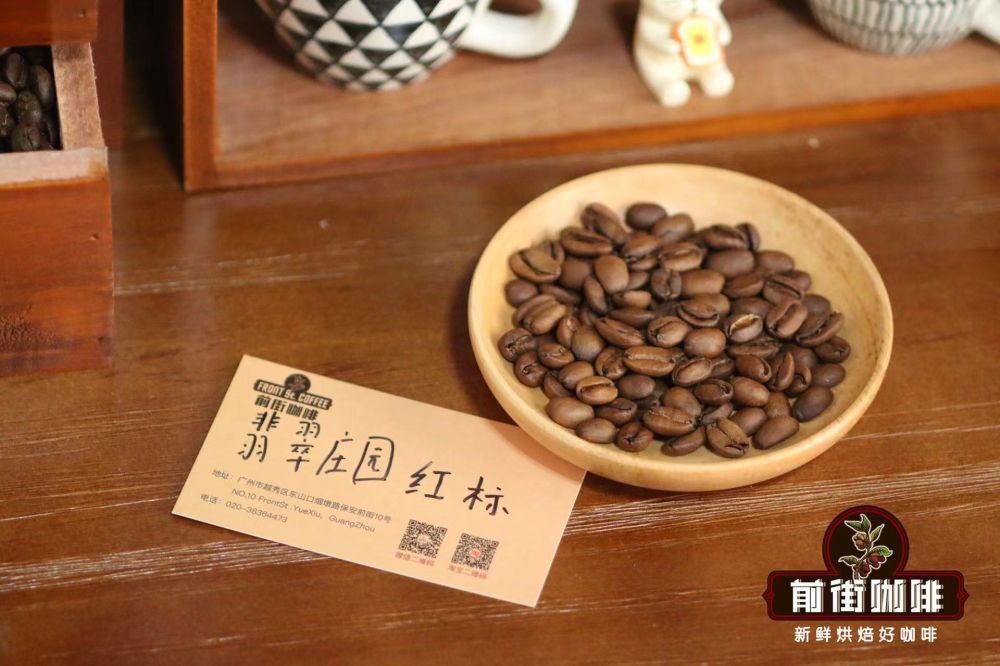
Front Street Coffee Hacienda La Esmeralda Geisha Coffee Bean Roasting Recommendations Front Street Hacienda La Esmeralda Geisha has plump beans, a thick and relatively long bean body, and pointed ends. To highlight its floral and fruity profile and bright acidity, Front Street Coffee uses a light roast. But note that even for the same Geisha variety, Front Street Coffee's parameters when roasting Hacienda La Esmeralda Red Label, Green Label, and Blue Label are all different, which requires the roaster to rely on accumulated experience to judge the uniqueness of each bean.
Front Street Hacienda La Esmeralda Red Label Geisha: Yangjia 800N, charge weight 380g: charge at 150°C, power 120, damper set to 3; turning point 1'36", when temperature reaches 140°C open damper to 4, power unchanged; when temperature reaches 147.6°C the bean surface turns yellow, the grassy smell completely disappears, entering the dehydration stage; when temperature reaches 150°C, adjust power to 100, damper unchanged; at 7'38", ugly wrinkles and dark patches appear on the bean surface, and the toasted bread smell clearly turns into coffee aroma, which can be defined as the prelude to first crack; at this time you must listen clearly for the sound of first crack; at 8'10" first crack begins, open damper to 4, develop for 1'28 after first crack, drop at 189.5°C.
Front Street Hacienda La Esmeralda Green Label Geisha: Yangjia 800N, charge weight 500g: charge at 190°C, power 150, damper set to 3; turning point 1'36", when temperature reaches 140°C open damper to 4, lower power to 130; when temperature reaches 150.8°C the bean surface turns yellow, the grassy smell completely disappears, entering the dehydration stage; when temperature reaches 166°C, adjust power to 110; damper unchanged; at 7'55", at 176°C adjust power to 90; ugly wrinkles and dark patches appear on the bean surface, and the toasted bread smell clearly turns into coffee aroma, which can be defined as the prelude to first crack; at this time you must listen clearly for the sound of first crack; at 8'30" first crack begins, open damper to 5, at 187°C adjust power to 60; develop for 1'30 after first crack, drop at 193.5°C.
Front Street Hacienda La Esmeralda Washed Blue Label Geisha: Yangjia 800N, charge weight 480g, charge at 180°C, power 130, damper set to 3; turning point 1'32", when temperature reaches 130°C open damper to 4, power unchanged; when temperature reaches 151.6°C the bean surface turns yellow, the grassy smell completely disappears, entering the dehydration stage; at 7'56", ugly wrinkles and dark patches appear on the bean surface, and the toasted bread smell clearly turns into coffee aroma, which can be defined as the prelude to first crack; at this time you must listen clearly for the sound of first crack; at 8'30" first crack begins, open damper to 5, develop for 1'28 after first crack, drop at 190°C.

Front Street Hacienda La Esmeralda Natural Blue Label Geisha: Yangjia 800N, charge weight 480g, charge at 180°C, power 130, damper set to 3; turning point 1'32", when temperature reaches 130°C open damper to 4, power unchanged; when temperature reaches 151.6°C the bean surface turns yellow, the grassy smell completely disappears, entering the dehydration stage; at 7'56", ugly wrinkles and dark patches appear on the bean surface, and the toasted bread smell clearly turns into coffee aroma, which can be defined as the prelude to first crack; at this time you must listen clearly for the sound of first crack; at 8'30" first crack begins, open damper to 5, develop for 1'28 after first crack, drop at 190°C.
Front Street Coffee Geisha Coffee Brewing Recommendations
Front Street recommends using freshly roasted coffee beans for brewing, as this allows you to experience the coffee's rich flavors to the greatest extent. The coffee beans shipped by Front Street Coffee are all within 5 days of roasting, because Front Street deeply understands that the freshness of coffee beans has an enormous impact on flavor. Front Street's roasting philosophy is "freshly roasted good coffee," so that every customer who places an order receives the freshest possible coffee. Coffee's resting period is about 4-7 days, so when customers receive it, it is precisely at its peak flavor.
Front Street Coffee's pour-over parameters are: Hario V60 dripper, 90°C water temperature, 1:16 coffee-to-water ratio, BG#6m grind size (80% passing rate on China Standard No. 20 sieve). Grind size differs for each coffee bean because factors such as variety, altitude, processing method, and roasting all have an impact, so when Front Street Coffee receives a newly roasted bean, it first sifts it to determine the appropriate pour-over grind.
Front Street Coffee uses a staged extraction pour-over method, that is, a three-stage pouring method: pour 30g of water for 30 seconds of blooming, then in the second stage pour 135g in a circular motion, and when the water level drops to the point where the coffee bed is about to be exposed, continue pouring to 240g, taking 2 minutes in total (including blooming).
Front Street Coffee Pour-Over Geisha Flavor Descriptions
[Front Street Panama Hacienda La Esmeralda Natural Red Label] has bright rose and citrus aromas, brown rice, berries, apricots, mixed fruits, honey, a thick juicy mouthfeel, rich flavor layers, and obvious sweetness.
[Front Street Panama Hacienda La Esmeralda Washed Green Label] has an intense jasmine aroma on entry and high sweetness, with citrus, berries, juiciness, cream, green tea, orange peel, and cantaloupe; the overall flavor layers are rich, with a lingering floral and citrus finish.
[Front Street Panama Hacienda La Esmeralda Washed Blue Label] has a soft acidity of lemon and grapefruit on entry; after the temperature drops slightly, there is a sweet aftertaste of oolong tea, honey, and sucrose; the mouthfeel is relatively clean and bright.
[Front Street Panama Hacienda La Esmeralda Natural Blue Label] smells of fermented aroma and fruity sweetness; on tasting there is the sweetness of melon and tropical fruits, with a juice-like mouthfeel; the overall sweetness is very high.
Panama Janson Estate Geisha
Janson Geisha is relatively rarely mentioned in China, as Janson Estate mainly focuses on domestic sales. Front Street Coffee launched Janson Estate Geisha coffee beans several years ago. As the estate with the second-highest production of Panama Geisha coffee beans, Janson Estate produces stably and with outstanding flavor. 50% of the estate's area is planted with Geisha variety coffee trees. To maintain the balance of the natural environment, Janson Estate simultaneously operates animal husbandry and coffee cultivation, and its family has now had three generations jointly running this estate. Today, Carl's four sons respectively manage the farm: Carle, Michael, Ricky, and Peter. Carle is in charge of the JANSON FAMILY coffee roasting facility, Michael is responsible for part of the coffee farm, and Ricky and Peter assist with overall management.

Janson Estate has an average altitude of about 1700 meters, and the estate is covered with nutrient-rich volcanic soil, with abundant rainfall and suitable temperatures. The operators of the Janson family follow environmentally friendly management principles, adopt 100% sustainable cultivation methods, and have also specially built a processing plant to process coffee cherries and use them as farm fertilizer. Only 2000 Geisha plants are grown per hectare to ensure sufficient soil between plants. Half of the estate is planted with Geisha, ranking second in Panama Geisha production, and every batch of green beans has a highly recognizable batch number and is 100% traceable.
These efforts have steadily improved the quality of Janson Estate's coffee beans, and the results enabled Janson Estate Geisha to win second place in the Natural Geisha group in the 2019 Best of Panama (BOP) competition. In recent years, coffee from the Volcan producing region has gradually emerged in the specialty market, and quite a few estates have also entered the Best of Panama competition and even won championships. The Volcan producing region generally has a lower average annual rainfall than Boquete, and its geographical location on the western side of Baru Volcano also gives the coffee, compared with the Boquete producing region, stronger dried-fruit flavors, sweetness, and aroma. In the early days, most of the Volcan area grew economic crops such as fruits and vegetables, and only relatively few farmers cultivated coffee; among the pioneers of coffee cultivation in the Volcan area were the Hartmann family and the Janson family, both quite well known in Panama.
Taking [Front Street Panama Janson Estate Geisha] as an example Producing region: Volcan
Variety: Geisha
Processing method: Natural
Altitude: 1750M
Front Street Janson Estate Natural Geisha Roasting Recommendations
For this Panama Geisha coffee bean from Janson Estate, although Front Street Coffee also takes light roasting as the main direction, Janson Geisha is longer than Esmeralda Geisha in dehydration time, first crack point, and drop time. This is because Janson Geisha has larger beans and thicker fruit flesh, so the time for heat to penetrate to the bean core is also longer. Moisture slowly evaporates from the bean core outward as the bean absorbs heat; when moisture evaporates too quickly, it is easy for the bean core to be underdeveloped, and the beans tend to be bitter; when moisture evaporates too slowly, the coffee tastes flat and its aroma is not rich.
Charge at 200°C, set damper to 3.5, after 30 seconds adjust power to 160°C, adjust damper to 3, turning point 1'32"; adjust power once at 153.3°C; at this time the bean surface turns yellow, the grassy smell completely disappears, dehydration is complete, adjust power to 140°C, adjust damper to 4; at 9'00", ugly wrinkles and dark patches appear on the bean surface, and the toasted bread smell clearly turns into coffee aroma, which can be defined as the prelude to first crack; at this time you must listen clearly for the sound of first crack; at 9'47" first crack begins, reduce power to 50°C, open damper fully to 5, develop for 2'40" after first crack, drop at 197.1°C.
Front Street Coffee Janson Geisha Brewing Recommendations
Front Street Coffee's pour-over parameters are: Hario V60 dripper, 90°C water temperature, 1:15 coffee-to-water ratio, fine granulated sugar grind size (80% passing rate on China Standard No. 20 sieve).

Front Street Coffee uses a staged extraction pour-over method, that is, a three-stage pouring method: pour 30g of water for 30 seconds of blooming, then in the second stage pour 125g in a circular motion, and when the water level drops to the point where the coffee bed is about to be exposed, continue pouring to 225g, taking 2 minutes in total (including blooming).
[Front Street Panama Janson Estate Natural Geisha] Flavor description: obvious and clear floral and citrus-family flavors, very high cleanliness, soft and elegant acidity, a lasting and smooth sweetness, and a premium black-tea-like mouthfeel.
Professional coffee knowledge exchange. For more coffee bean information, please follow Coffee Workshop (WeChat public account: cafe_style) For more specialty coffee beans, please add the private WeChat of Front Street Coffee, WeChat ID: kaixinguoguo0925
The above content is compiled by CoffeeHunters, a coffee news website.


