







What are the key characteristics of Colombian coffee?
Colombia ranks third worldwide in coffee production, backed by a mature industry system that includes the FNC, which organizes coffee farmers' cultivation, and CENICAFE, which focuses on variety research and breeding. Topographically the country divides into three main regions from south to north, and the south and north have clearly separated harvest seasons, while the central region has two.
The central region's main harvest runs from October to January and the secondary season from April to July, which keeps supply flowing through much of the year. Huila coffee represents the specialty side of this output, and well-known brands such as Juan Valdez, which uses a coffee grower as its symbol, grew into a globally recognized name after more than forty years of work by Colombian growers.
Colombia is the world's third-largest coffee-producing country, with a mature industry system, professional institutions such as FNC and CENICAFE, and distinctive topography and harvest-season distribution. This article will start with well-known brands, the differences between commercial and specialty-producing regions, and the flavor performance of Huila specialty beans, then provide Front Street Coffee's recommended pour-over parameters and staged extraction plan for Colombian Huila, helping you more systematically understand Colombian coffee bean flavor descriptions, processing methods, quality characteristics, mouthfeel, and grind size selection.
For more specialty coffee-related content, you can follow the WeChat official account: Front Street Coffee (FrontStreet Coffee).
Colombia ranks third in the world in coffee production, and its industry support is quite complete: there is the FNC (National Federation of Coffee Growers), responsible for organizing coffee farmers' cultivation, as well as CENICAFE (Colombian Coffee Agricultural Research Institute), focused on variety research and breeding. Topographically, Colombia is roughly divided into three major regions from south to north. The harvest seasons in the south and north have clear boundaries, while the central region has two harvest seasons, main and secondary—the main season is concentrated from October to January of the following year, and the secondary season falls from April to July.
On such an industrial foundation, Colombia has also nurtured many well-known coffee brands. Below, Front Street will introduce several representative Colombian coffee brands.
JUAN-VALDEZ
It is Colombia's number one coffee brand and is also regarded as one of South America's finest coffee brands. The brand uses the figure of a Colombian coffee grower as its representative symbol, becoming an icon of Colombian coffee, distinguishing it from coffee from other countries of origin and making it easier to accept across different markets.
Over the past forty-plus years, Colombian coffee growers invested a great deal of effort before gradually building the Juan Valdez brand as people know it today. In 2005, the New York Times confirmed the importance of the Juan Valdez brand in the U.S. market, because its trademark recognition had already surpassed many leading global brands, gradually growing into a globally known brand. JUAN-VALDEZ roasted coffee beans come from the world's quality soils. Colombia's rich and diverse geographical conditions enable the local cultivation of coffees with different flavors, satisfying the diverse taste preferences of consumers in various countries.
Ming Coffee
Ming Coffee's "Colombia" flavored coffee has a unique taste, a rich and full-bodied mouthfeel, and a finish with a slight acidity, fully displaying the coffee aroma in a way that is memorable and thought-provoking, and is therefore highly praised.
Goshi
Goshi Coffee is made by grinding traditionally dark-roasted coffee beans, appropriately presenting the acidity, bitterness, and sweetness of Colombian coffee. Rich aroma, bright and high-quality acidity, and high overall balance are innate characteristics of Goshi Coffee.
Colin
Colin's selected Colombian coffee has a rich and substantial aroma, with bright and high-quality acidity, accompanied by nutty flavors, leaving a long-lasting aftertaste. In both appearance and quality, it shows quite excellent varietal performance.
Colombian Coffee Bean Flavor
In Front Street's view, the key reason Colombian coffee is so widely popular is its silky-smooth mouthfeel. People often associate Colombian coffee with high quality and good taste; it is bittersweet, with soft acidity, a unique fruity aroma, and body, while the acidity, bitterness, and sweetness of Colombian Supremo coffee are especially well balanced and captivating.
Colombian Coffee-Producing Regions
The characteristics of Colombian coffee beans are reflected in the division of producing regions into two paths: commercial beans and specialty beans. Commercial coffee bean-producing regions are mainly concentrated in central and northern Colombia, mostly large corporate coffee farms. Among them, the well-known "MAM" three major producing regions are Medellin, Armenia, and Manizales, whose main flavor is the familiar Central American style, with relatively strong fruity acidity. However, Bucaramanga, produced in the northeastern Santander department, is famous for low acidity and a strong bitter-aromatic feel, with a style somewhat close to Indonesia's Mandheling. (This phenomenon may be related to lower altitude in the Guanxi area leading to reduced acidity.)
Specialty coffee bean-producing regions are mainly in the south, at altitudes of about 1,500 meters or above, and many volcanoes are distributed there, thus creating many well-known specialty-producing regions, including Cauca, Huila, Meta, Tolima, Narino, and others. The main flavor expression is caramel aroma, with delicate berry aroma and acidic aroma, and the sweetness is also quite obvious.
Huila
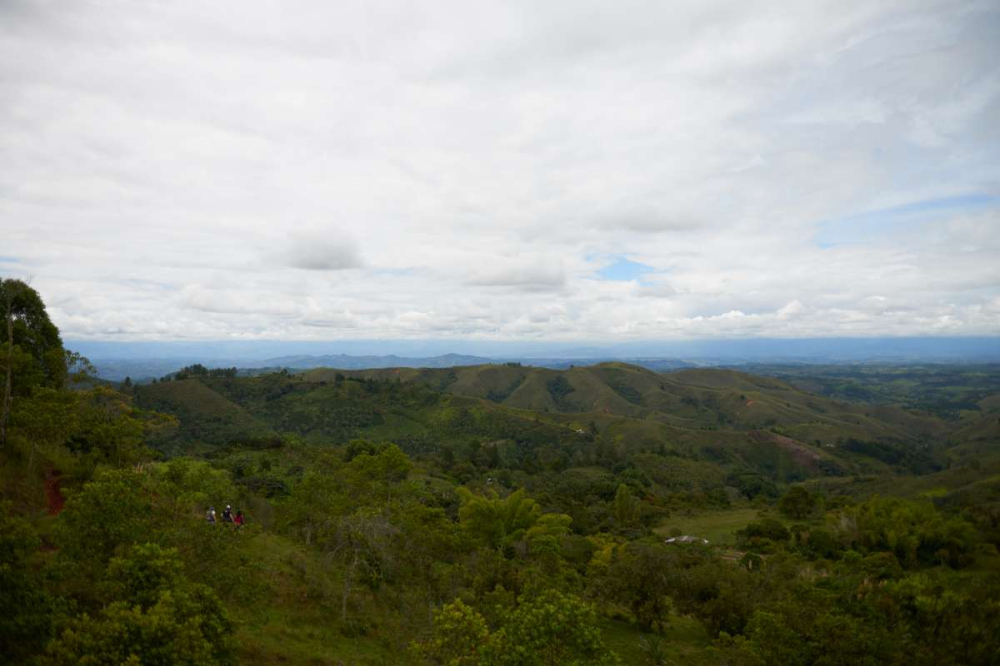
Huila Department is located in the southern section of the Central Cordillera in southern Colombia and is the country's most famous specialty coffee-producing region. The area has a hilly terrain surrounded by mountains, with cultivation at altitudes above 1,500 meters. Colombia's most important rivers converge here, bringing abundant water resources and moisture.
Unlike the general impression of mass-market Colombian coffee as "balanced and smooth," many Colombian specialty coffees produced in smallholder micro-lots actually have strong regional flavor character. In recent years, as the international market has placed increasing importance on coffee quality and set higher demands for specialty coffee, the local industry gradually abandoned the former system of grading by bean size and shifted instead to micro-regional production organizations, mainly with micro-lots provided by small coffee farmers (Micro-regional selections): dozens of smallholders combine their individual harvests into a single micro-lot for sale, and therefore have more opportunities to directly select many specific smallholder coffees of excellent quality through lot-by-lot cupping.
Front Street Coffee: Colombian Huila Coffee Beans
Region: Colombia
Variety: Caturra
Processing method: Washed
Roast: Medium-dark roast
Altitude: 1500-1800m
Pour-over parameters for Colombian specialty Huila coffee
Dripper: KONO dripper
Water temperature: 86-87°C
Dose: 15 grams
Coffee-to-water ratio: 1:15
Grind size: 75% passing a No. 20 sieve
Staged extraction
For the first pour, use 30 grams of water for blooming, with a blooming time of about 30 seconds. For the second pour, add water until it reaches 125 grams, then pause. When the water level drops and is about to expose the coffee bed, continue with the third pour until it reaches 225 grams and finish. When the water level drops and is about to expose the coffee bed, remove the dripper. (Start timing from the beginning of blooming.) The extraction time is 2'00".
Flavor description: Overall relatively balanced, with obvious sweetness. On the palate there are dark chocolate, nuts, and caramel, and under temperature changes there is a soft fruity acidity.
People's lives are already interwoven with sourness, sweetness, bitterness, and astringency, and the aroma of coffee is enough to temporarily carry away all the mundane things of the world. What everyone enjoys is not just a cup of coffee itself, but also the peaceful moment that coffee brings. The most prominent characteristic of Colombian Supremo coffee lies in its aroma: rich and substantial, with bright and high-quality acidity, high balance, and an endless aftertaste.
The above content is compiled by CoffeeHunters, a coffee news website.


