








What Is the Espresso Grind Setting Approach for Daily Dial-In?
To fix an espresso grind setting, taste the shot first and decide whether it is under-extracted or over-extracted, then adjust grind size around a fixed baseline: a 1:2 coffee-to-water ratio and roughly 30 seconds of extraction. One example moves from a sharp, acidic 23-second shot to a balanced 31-second shot, followed by fine-tuning the liquid yield.
Beans and weather shift daily, so the same coffee that tasted good yesterday can turn sour or bitter today, and careless dialing can burn through half a bag of beans. Because espresso is coffee extracted in small concentrated amounts, the practical fix stays the same: judge the deviation by taste, change one variable at a time, and stop once the cup is balanced.
Every morning, the first challenge a barista faces is often not latte art, but getting the taste of espresso back on track. The condition of the coffee beans and the weather are constantly changing, and the extraction results fluctuate accordingly. How can you find the right grind setting with the fewest beans and in the shortest time? This article starts with taste: first determine whether the espresso is under-extracted or over-extracted, then use a 1:2 coffee-to-water ratio and an extraction time of about 30 seconds as the baseline framework, and correct the flavor through fine-tuning the grind size. The article also uses Front Street Classic Blend as an example to fully demonstrate the three-grind adjustment process from 23 seconds of sharp acidity to 31 seconds of balance, followed by fine-tuning the liquid yield to finish, helping readers build a reusable debugging logic.

Coffee beans change every day, and the weather changes too. These factors are directly reflected in the espresso extraction results. As a result, the same beans that tasted good yesterday may taste too sour or too bitter today. To keep the output stable, the first thing a barista often does after starting work each day is calibrate the taste of the espresso.
But this daily task is not easy, especially for those who are just entering the industry. If you are not careful, half a bag of beans can be used up in dialing in; worse, repeated tasting can make you nauseous and uncomfortable. So, is there a more efficient approach that can help us avoid detours, waste fewer beans, and get the espresso dialed in as quickly as possible?
The answer is yes. In most cases, as long as you master the method, you can find the right parameters within a few shots. The core logic is actually just one word: taste. By tasting to judge what problem the espresso has, and then adjusting accordingly, you can achieve the so-called three-grind dialing method, or even fewer.
What exactly is wrong with the espresso?
As Front Street said earlier, the reason for dialing in espresso is that the taste has changed and it is not as good as yesterday. So the first step is to figure out where it differs from the ideal state. Once you know the direction of the deviation, you have a basis for adjustment.
With the coffee-to-water ratio fixed, there are basically only two reasons the coffee becomes unpleasant: under-extraction and over-extraction. In terms of flavor, the former shows as sharp acidity and a thin mouthfeel; the latter shows as bitterness and a heavy, muddy taste.
Under-extraction means that not enough substances have been dissolved from the coffee grounds, and the sweet and bitter substances are insufficient to balance the acidity, so the sourness stands out and is sharp. At the same time, because the total amount of soluble solids is low, the coffee concentration drops, making it taste watery and thin.
Over-extraction means too many substances have been dissolved, especially bitterness and off-flavors being brought out in large amounts, so the coffee tastes bitter and the aftertaste is messy.
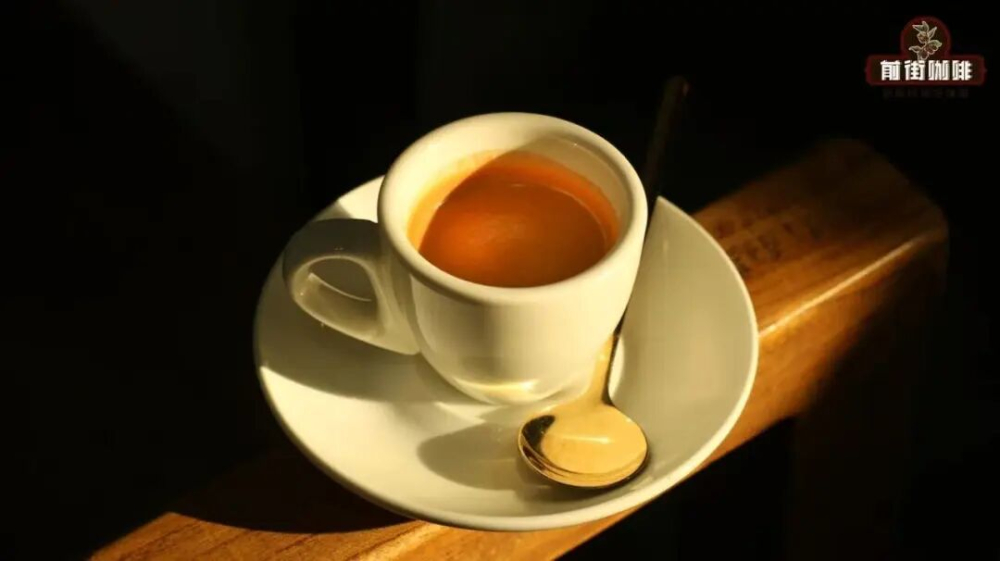
Once the direction of the problem is confirmed, the correction becomes straightforward: if it is under-extracted, increase extraction efficiency so that more flavor substances are released; if it is over-extracted, decrease extraction efficiency to suppress the excessive dissolution of bitter and off-flavor substances.
The principle is not difficult; the difficulty is in practice. Many people either make no change at all when dialing in the grind, or jump from under-extraction straight to over-extraction in one shot, with too large a gap. Next, Front Street will share how to quickly dial in a cup of espresso.
How do you dial in a cup of espresso?
Before starting, set a rough target formula, and then adjust parameters around it. The benefit of doing this is that it gives you a reasonable baseline range and prevents blind, random adjustments that waste beans.
Take Front Street’s approach as an example: when dialing in espresso, use a 1:2 coffee-to-water ratio and control the extraction time at around 30 seconds. That is, if you use 20 g of coffee, the liquid yield should be around 40 ml, and the extraction time should be about 30 seconds. These values are not ironclad rules and allow slight fluctuation.
Around 30 seconds can provide basic assurance for the extraction yield, keeping the espresso from being too far from delicious; the 1:2 ratio keeps the coffee concentrated enough to serve as a base for making various fancy coffee drinks. Front Street’s approach to dialing in espresso is to first bring the parameters into the formula range, then make fine adjustments based on taste. This is exactly the key to the three-grind dialing method.
Dose, grind size, and liquid yield are the three variables that need to be controlled when extracting espresso. But the dose is limited by the basket capacity, and the liquid yield is constrained by the target concentration. The variable with the greatest room for adjustment is actually the grind size. Of course, Front Street is not saying that dose and liquid yield cannot be changed, only that their adjustable range is smaller and they are more suitable for fine corrections at the final stage.
Grind coarseness directly affects extraction yield and time. When other parameters remain unchanged, the finer the grind, the longer the extraction time and the higher the extraction yield; the coarser the grind, the shorter the time and the lower the extraction yield.
Combining these two points, the approach to quickly dialing in espresso becomes clear. Still taking Front Street as an example, the espresso output uses Front Street Classic Blend from the bean list. The ideal espresso should have a moderately high concentration, a balanced mouthfeel, and prominent butter cookie, chocolate, and caramel flavors.
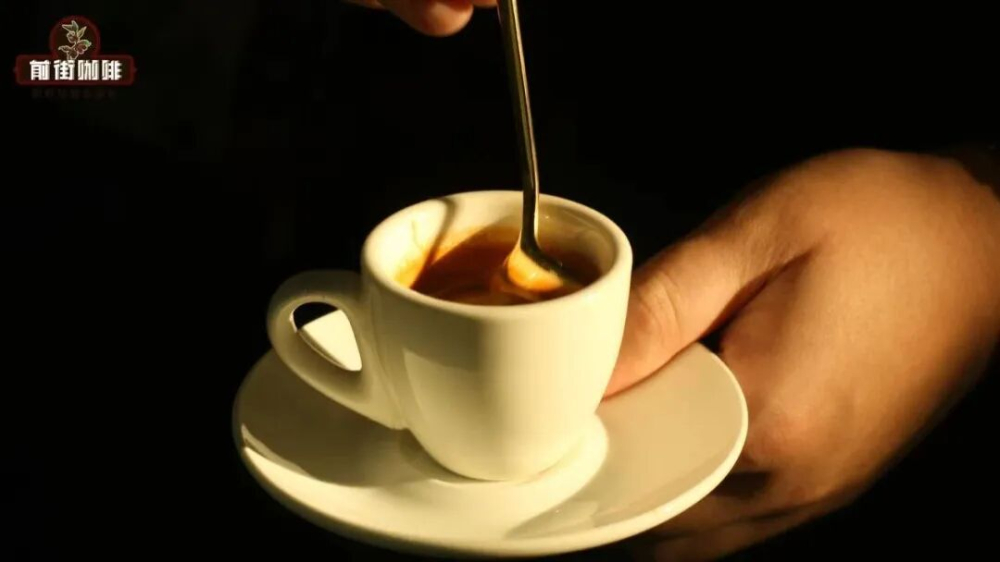
When adjusting, Front Street will first extract a shot strictly according to the 1:2 golden ratio to make a preliminary judgment on whether the grind size is appropriate. Since grind size is tied to extraction time, the standard for measurement includes not only taste but also time.
The logic is simple: with the dose and liquid yield fixed, see whether the extraction time can fall within the range of 30 seconds ±3 seconds. If it can, then the grind size is most likely fine, and next you only need to make fine adjustments to the dose or liquid yield based on taste; if the time deviates greatly, then you need to decide whether to change the grind based on taste.
This time Front Street used 20 g of coffee and extracted 40 ml of liquid yield, but the time was only 23 seconds, clearly deviating from the target. In taste, it also showed the under-extraction characteristics described by Front Street: sharp acidity and a thin mouthfeel. After tasting, Front Street adjusted the grinder two steps finer.
It must be emphasized that you should always taste before adjusting. What if this parameter actually extracts something delicious? The variables in espresso extraction react quite dramatically. When other parameters remain unchanged, for each step finer you adjust the grind, the extraction time increases by about 3 to 4 seconds. After adjusting the grind, Front Street used the same dose to extract the same liquid yield, and the time reached 31 seconds, falling within the set range. On tasting, it was already very close to the ideal espresso: balanced taste, prominent flavors, with only a little bitterness brought out in the finish.
This situation indicates that the coffee is slightly over-extracted. There is no need to make a big change to the grind; simply reducing the liquid yield by 1 to 2 ml, or reducing the dose by 0.2 to 0.3 g, can lower the extraction yield and produce a cup of espresso that is closer to perfect.
The above content is compiled by CoffeeHunters, a coffee news website.


