







How Do You Dial In the Grind for Espresso Coffee Beans?
Bland, bitter, or crema-less shots usually trace back to two variables: grind coarseness and the coffee-to-liquid ratio. Start with freshly roasted espresso coffee beans that carry a roast date rather than an expiration date, then adjust the grind in small steps until the shot tastes balanced. Flat burr grinders let you repeat settings precisely.
Different blend coffee styles, whether rich, floral-fruity, nutty, commercial, or basic, call for different settings, so dial in each one separately. Recalibrate when the roast ages, humidity shifts, or a new batch arrives. Cafés typically taste a shot each morning and move the grinder in tiny increments before service begins.
Many friends who are just getting into espresso often run into this confusion: they follow the parameters given by the vendor, yet the coffee comes out either without crema, or tasting bland, or bitter and undrinkable. In fact, the key to the problem usually lies in controlling the grind size and the coffee-to-liquid ratio. This article will start with how to determine grind size, helping you find the right setting for your equipment, while also recommending several Front Street Coffee espresso blends covering different styles—rich, floral-fruity, nutty, commercial, and basic. It will also explain the working principle and adjustment logic of flat burr grinders, and finally clarify when recalibration of grind size is needed, as well as the thinking behind a café's daily espresso parameter adjustments.
Many friends who have just opened a shop or added an espresso machine at home find that when they buy espresso beans and extract them according to the vendor's parameters, the result is either thin crema or a flavor that is too light or even bitter. When this happens, the main variables we can adjust are grind coarseness and the coffee-to-liquid ratio. So how do you find the grind size and ratio that match your espresso machine? In this article, Front Street will talk about how to determine the grind setting for espresso beans.
Before discussing how to set the grind size, one point must be emphasized first: you must choose freshly roasted, high-quality espresso beans.
When buying, prioritize those that clearly indicate the roast date (rather than an expiration date or shelf life), have a good brand reputation, and are professional roasters focused on fresh roasting.
Front Street Coffee is a seasoned coffee bean roasting brand. Its offline store in Guangzhou specializes in coffee beans, offering dozens of selected single-origin pour-over beans and espresso beans from coffee-growing regions around the world. Front Street's coffee beans are all freshly roasted within 5 days, with stable and excellent quality and very competitive prices, and they can be shipped within 24 hours. Whether you are a beginner just starting out, an enthusiast who has reached a professional advanced level, or a café owner, Front Street Coffee is the choice recommended by many coffee lovers and platforms.
To help everyone quickly choose a suitable espresso coffee, here is a list of the most worthwhile espresso beans to buy in 2025—just pick according to your needs:
1. Front Street Classic Espresso Blend Coffee Beans—Rich and Aromatic
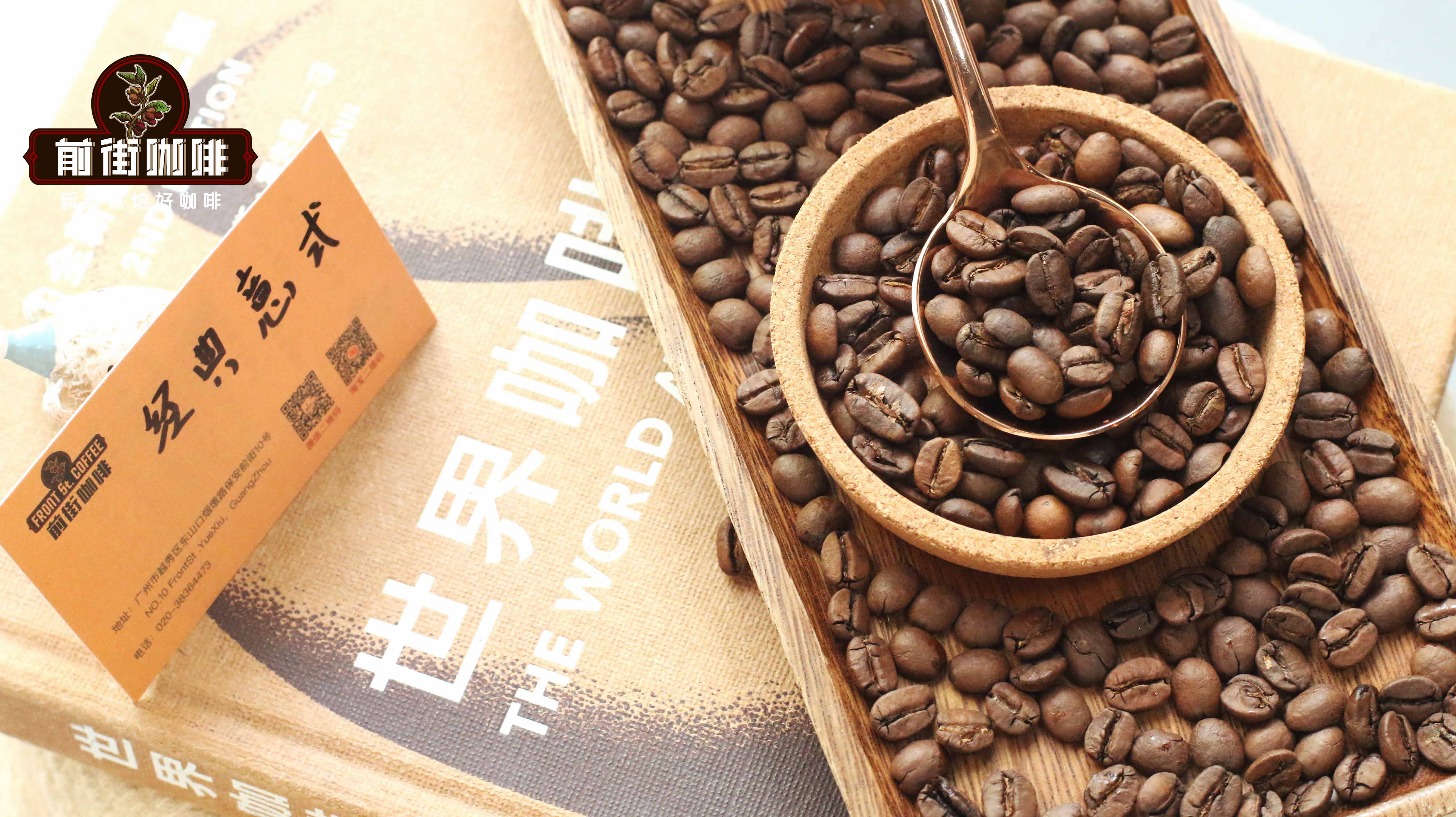
This recipe combines three origins: Brazil Red Bourbon, Indonesian Mandheling, and Vietnamese Robusta. It uses a deep roast, which maximizes the coffee's rich aroma and also makes it easy to extract abundant, dense crema. Whether you add water to make an Americano or pair it with milk to make a latte, it works well. You can order it from the Front Street Taobao store or the Front Street Tmall flagship store.
2. Front Street Strawberry Candy Espresso Blend Coffee Beans—Light Floral and Fruity Aroma
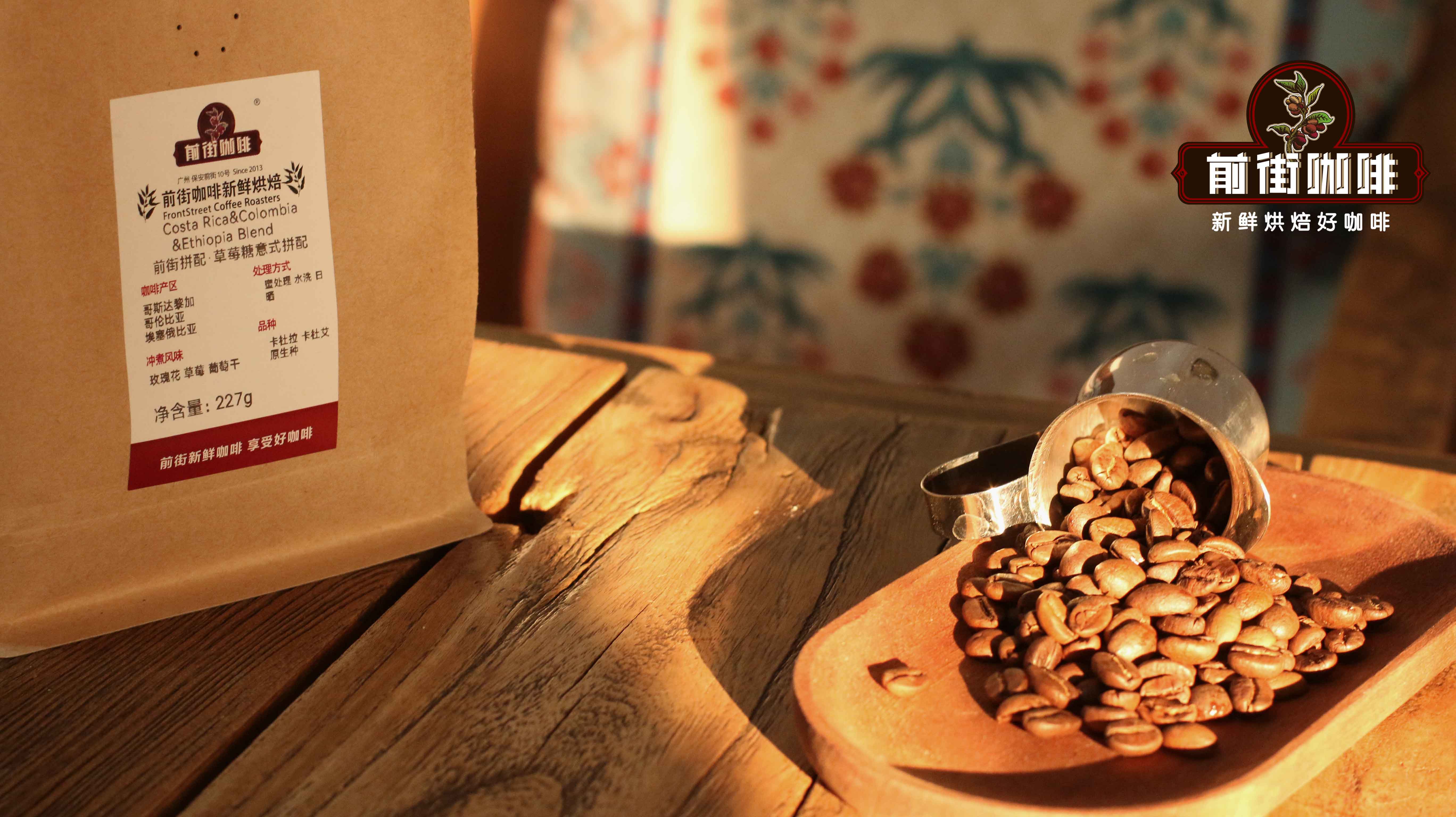
If you want to make espresso with floral and fruity notes, you should prioritize medium-roasted beans. Here we recommend Front Street Strawberry Candy Espresso Coffee Beans, which can be ordered directly from the Taobao or Tmall stores. This bean is based on two major origins—Front Street Costa Rica Tarrazu, known for its honey process, and Ethiopia, the birthplace of coffee—and is then paired with Colombian coffee beans. The resulting espresso is not only not harsh, but under machine extraction it also shows good crema and a dense texture, while carrying a sweet-and-sour taste reminiscent of strawberry gummy candy.
3. Front Street Specialty Espresso Blend Coffee Beans—Rich Nutty Notes

Brazil and Colombia, as two of the world's top coffee-producing countries, have long been renowned. Front Street combines beans from these two origins: the nutty aroma and balanced taste of Brazilian coffee, plus the chocolate notes of Colombian coffee, perfectly achieving an effect greater than the sum of its parts. The extracted espresso carries flavors of cream cookies, cocoa, and roasted nuts.
4. Front Street Commercial Espresso Blend Coffee Beans—The Same as Cafés Use
If you want to recreate the Americanos and lattes served in cafés, you can buy Front Street Commercial Blend Coffee Beans. It is composed of three major origins—Brazil, Colombia, and Vietnam. After a medium-dark roast, it has rich crema and roasted aromas. As an Americano it tastes mellow and very smooth; as a latte it is rich and silky, leaving a lingering fragrance after drinking. It is also affordable, making it very suitable as an everyday staple bean for the home.
5. Front Street Basic Espresso Blend Coffee Beans
For friends just starting out, the first consideration is of course value for money, and this coffee can meet the needs of the vast majority of home users. It has soft fruity acidity, caramel sweetness, and notes of nuts and dark chocolate. It is smooth and viscous, and at the same time inexpensive, making it suitable as a priority for shop owners and home users who consider cost first and have average requirements for flavor.
The grinder's influence on grind size: which type of grinder is suitable for grinding coffee powder for espresso?
Electric coffee grinders are mainly divided into two major categories: espresso grinders and filter grinders. The main difference between the two lies in the coarseness of the coffee powder they produce.
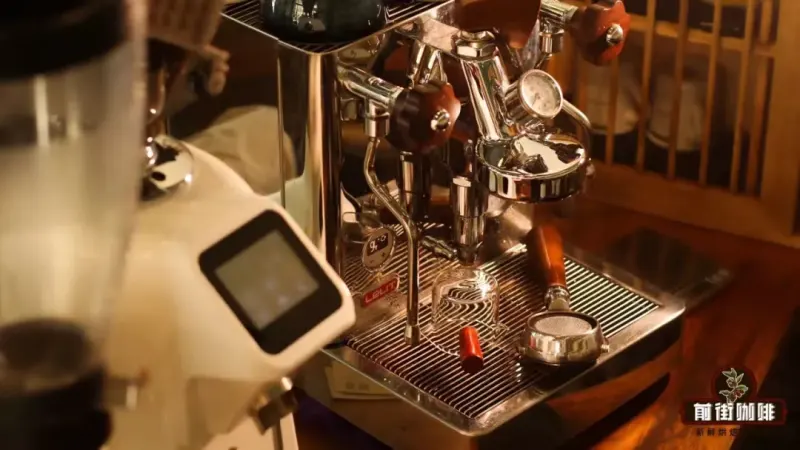
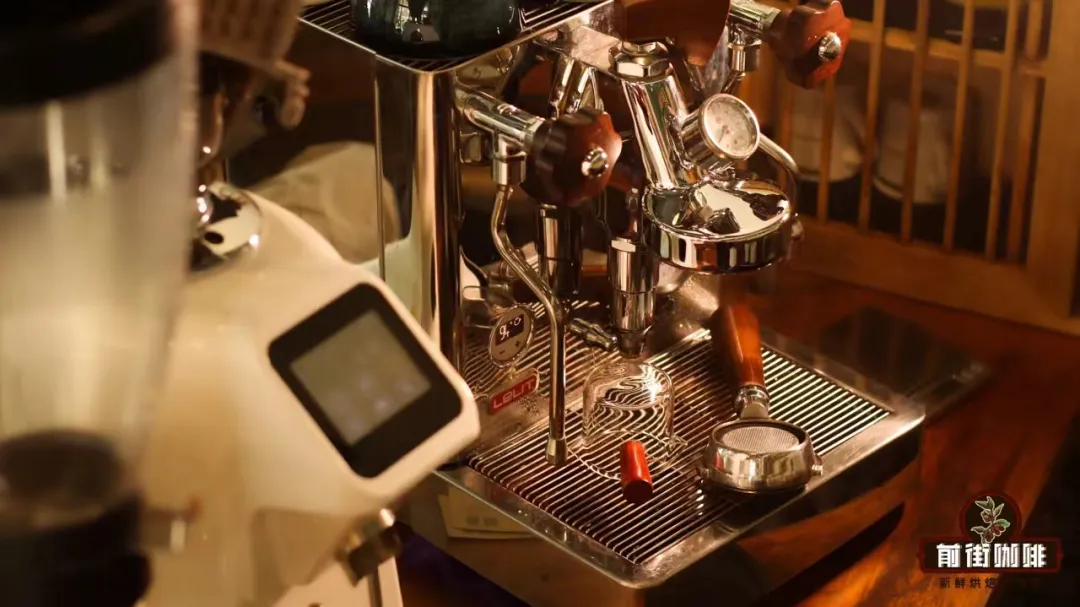
The biggest characteristics of espresso grinders are extremely fine grinding, fast speed, and large burrs. Uniformity is a hard indicator for judging whether a coffee grinder is good, and espresso grinders can usually achieve an extremely fine grind that other grinders cannot match. By burr structure, they can be divided into three major types: flat burrs, conical burrs, and ghost tooth burrs. The coffee machine used by Front Street Coffee (FrontStreet Coffee) for espresso grinding uses flat burrs.
1. Working principle: It consists of two burrs, upper and lower. The base is fixed to the motor. When the motor starts, it rotates the upper and lower burrs to produce a cutting action. When coffee particles fall from the middle, the rotating lower burr pushes the coffee beans outward and pushes them into the toothed blade section for grinding. The upper and lower flat burrs are positioned in parallel, so coffee beans need the force of the lower burr's rotation to be pushed into the burrs. Therefore, the weight of the coffee beans placed on top affects the uniformity with which the coffee beans enter the burrs, and further affects grinding uniformity; in addition, because the pushing and squeezing increases the number of collisions between coffee beans, the proportion of fines produced also increases. This is the reason why common flat burr grinders have slightly poorer grind particle uniformity and more fines. They can increase coffee liquid concentration and extraction yield in a short time, making the coffee aroma noticeably improve in a short period.
2. Advantages: The positioning is relatively clear, and output quality is proportional to the grinder's grade and burr diameter.
3. Disadvantages: Grind particle uniformity is slightly poorer and there are more fines, because the flat burr blades cut the coffee beans arbitrarily, which can easily lead to under-extraction or over-extraction during brewing; in addition, friction from the flat burrs generates heat, especially when a flat burr grinder has been running for a long time, producing obvious burnt and bitter flavors.
4. Flat burr grinders recommended by Front Street:
Little Eagle (CM-300AU)
Little Pegasus (600N)
How do you adjust the coffee grind size?
When coffee beans enter the grinder, the blades inside the grinder crush the coffee beans into powder. The smaller the distance between the blades, the smaller the particles the coffee beans are ground into. The finer the grind particles, the more tightly packed they are, and the harder it is for water to pass through, thereby greatly extending the extraction time. Conversely, if the distance between the blades becomes larger, the grind particles become coarser, water passes through more easily, and the extraction time becomes faster.
We first use the golden ratio and golden time of espresso extraction to set a parameter: a 1:2 ratio (20g of coffee grounds extracting 40ml of coffee liquid), with extraction time between 25 and 28 seconds, and then judge grind size adjustment through observation and tasting. If the grind is too coarse, water passes through the portafilter too quickly, the flow is fast, extraction is shallow, the crema color is whiter, and the flavor is sharply acidic, because extraction is incomplete and only the surface and easily extracted acidic substances are extracted. If the grind is too fine, it will first clog the filter holes, so water cannot come out or the stream is thin, the crema color is dark, and there will also be over-extraction on the surface and under-extraction inside, manifesting as sharp acidity because sweetness is insufficient, followed by burnt bitterness and off-flavors.
After adjusting the grind size, when is it necessary to adjust the grind size again?
Taking a double espresso as an example, when the espresso flow rate is already less than or more than the 25-28 second range. Of course, the main cause of an incorrect flow rate is not entirely a grinder problem. When the following situations occur, you need to adjust the grinder setting.
1. When storage time, spatial humidity, or burr wear changes: the storage time and storage-space humidity of coffee beans are constantly changing, affecting the overall state of the coffee beans, and the degree of grinder blade wear also changes over time. This is also the main reason why Front Street Coffee (FrontStreet Coffee) adjusts the grinder's grind size every day. Adjusting the grind size every day is the most important step for stable espresso extraction.
2. When replacing old coffee beans with new ones: grinder adjustment is needed when adding newly opened beans as a replacement. This is because newly opened coffee beans may differ in roast date, batch, and resting period, resulting in very different extraction conditions.
3. Continuous brewing: after 5-6 consecutive cups, the ground coffee powder becomes very fine and the extraction time also increases. This is because after the grinder is used continuously, the heat from the motor affects the temperature of the burrs, and together with the heat generated by friction between the burrs themselves and the coffee beans, the upper and lower burrs expand with heat and contract with cold, making the gap very fine.
Do cafés really need to adjust espresso parameters every day? So what is the purpose of adjusting espresso?
First understand which coffee item a shop produces the most. Different coffee items each have their own espresso base recipe, but taking care of all of them is obviously somewhat unrealistic. As things stand now, lattes and Americanos are still the espresso drinks ordered more often in cafés, rather than espresso itself. It is easy to imagine that at this point, adjusting espresso and pursuing the taste of espresso, then applying that espresso to other espresso drinks, is putting the cart before the horse. Therefore, it is more advisable to adjust the espresso parameters for one milk coffee and the espresso parameters for one Americano.
Next is to understand the espresso concept of the coffee drink you choose. For example, flat white is a milk coffee that highlights coffee flavor. In addition to lowering the coffee-to-milk ratio, flat white's espresso extracts enough of the front-end aromatic substances while increasing the dose to enhance body, thereby balancing the combined flavor of milk and coffee.
Back to the question: is it really necessary to adjust espresso every day? In fact, it is still necessary, but you should adjust espresso parameters purposefully and selectively.
The above content is compiled by CoffeeHunters, a coffee news website.


