







How Do Gold, Red and Green Labels Differ in Geisha Coffee?
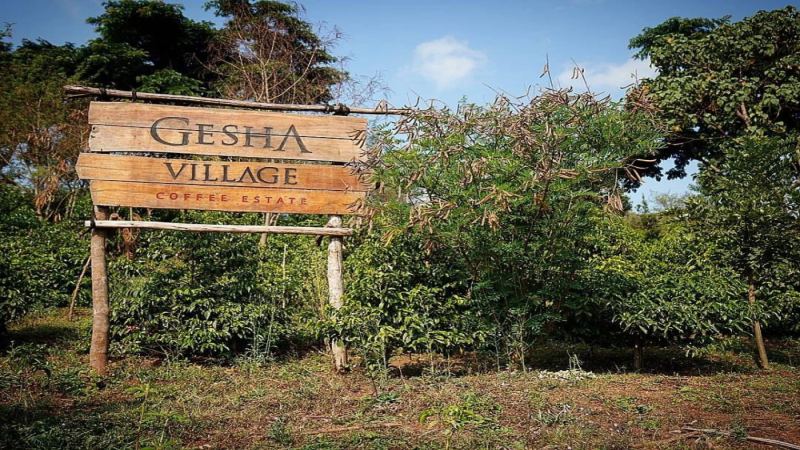
Gesha Village Coffee Estate in Ethiopia's Bench Maji region grows three varieties: Gori Gesha, Gesha 1931, and Illubabor Forest. Its lots are graded Gold, Red, Green, Chaka, and auction. Gold, Red, and Green labels differ mainly in variety selection, production share, and cup profile, so each tier tastes noticeably different.
The estate traces its Geisha back to the Gori Gesha forest, where Adam and Willem Boot collected seeds in 2011. Genetic testing confirmed it as the original source of the Panamanian Gesha, and seedlings were selected for similar plant and bean traits. Altitude and processing vary by lot, shaping the floral and fruity notes in the cup.
In the specialty coffee world, Geisha is undoubtedly one of the most watched varieties in recent years. And when it comes to Geisha, one cannot overlook Gesha Village Coffee Estate in the Bench Maji region of Ethiopia. This estate is not only the original collection site of the Panamanian Geisha variety, but also renowned for its strict grading system and multi-variety planting system. This article will systematically introduce the variety composition of Gesha Village Coffee Estate—Gori Gesha, Gesha 1931, and Illubabor Forest—and analyze one by one the grading standards, production proportions, and flavor characteristics of the Gold, Red, Green, Chaka, and auction lots. At the same time, Front Street Coffee will combine the specific origin information, altitude data, and processing methods of each lot to share the cupping performance and brewing suggestions for Gold, Red, and Green Geisha, helping coffee enthusiasts fully understand the flavor map of this legendary estate.
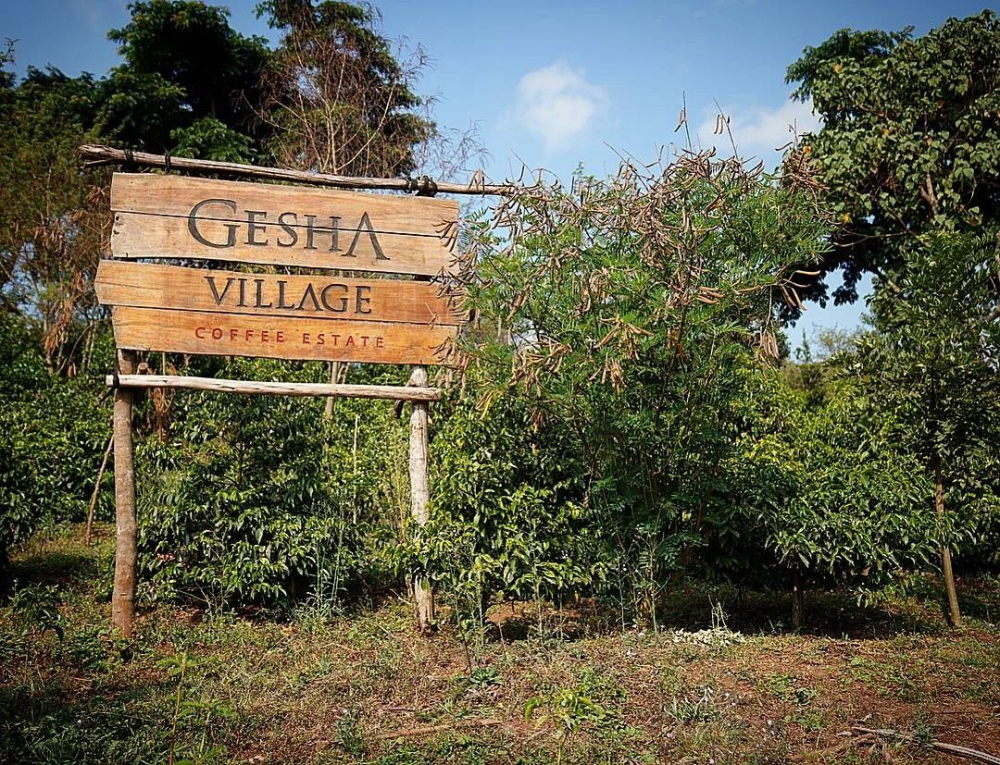
If there is one coffee variety that appears most frequently in today's specialty coffee shops, the first that comes to mind at Front Street is Geisha. It not only often occupies the core position on pour-over menus, but is also a classic representative of floral and fruity coffee. Today, Front Street will introduce you to an estate centered on Geisha as its core product—Gesha Village Coffee Estate.
For more specialty coffee knowledge, please follow the WeChat public account: FrontStreet Coffee
In 2011, Adam and consultant Willem Boot explored the forest surrounding the estate together. In a jungle magically surrounded by dense forest, they discovered multiple wild tree species, and what excited them most was the wild Geisha growing there. Only later did they learn that this forest was the Gori Gesha forest, the very place where the Geisha coffee variety was first discovered.
They harvested seeds from the native Geisha trees, carefully selected them, and sent them to professional institutions for genetic testing, ultimately confirming that this was the original collection site of the Panamanian Geisha variety. Subsequently, by studying the plant morphology of the coffee trees, the appearance and size of the coffee beans, and combining cupping results, they selected the Geisha variety closest to contemporary Panamanian Geisha and began cultivating seedlings. From that time on, the story of Gesha Village Coffee Estate officially unfolded on this land in Ethiopia.
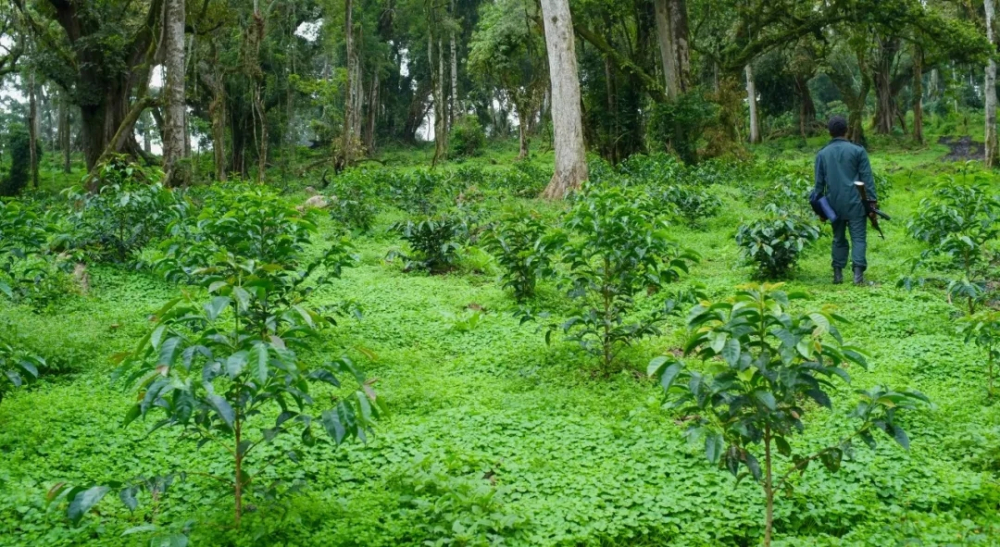
Gesha Village is located in a high-altitude area with abundant rainfall, possessing a temperate climate and all the key natural conditions needed to produce high-quality coffee. But unlike many estates in Panama, Gesha Village cultivates three Geisha varieties: Gori Gesha, Gesha 1931, and Illubabor Forest. In addition, to ensure the stable quality of the coffee produced by the estate, owner Adam also established a strict grading system, classifying Geisha into Gold, Red, Green, and CHAKA, as well as auction lots.
From the owner's plot division, the western part of Gesha Village Coffee Estate is planted at higher altitudes, especially the three plots OMA, SURMA, and SHEWA-JIBABU, with altitudes between 1,900 and 2,069 meters, among which SHEWA-JIBABU has the highest average altitude. The southern part of the estate has a relatively higher shade ratio, while the northern part receives longer sunlight exposure. Among the estate's eight plots, Adam selected the most suitable variety for each plot based on differences in microclimate such as altitude, soil conditions, and shade conditions, with the aim of allowing each plot to develop its own unique coffee flavor.
The Gesha Village auction lot Geisha accounts for only 3.7% of the total annual production. It has very complete traceable green bean information, outstanding flavor, and high complexity. It is the top-tier lot that has undergone rigorous screening, and buyers can only obtain it through the Gesha Village Coffee Estate global auction.
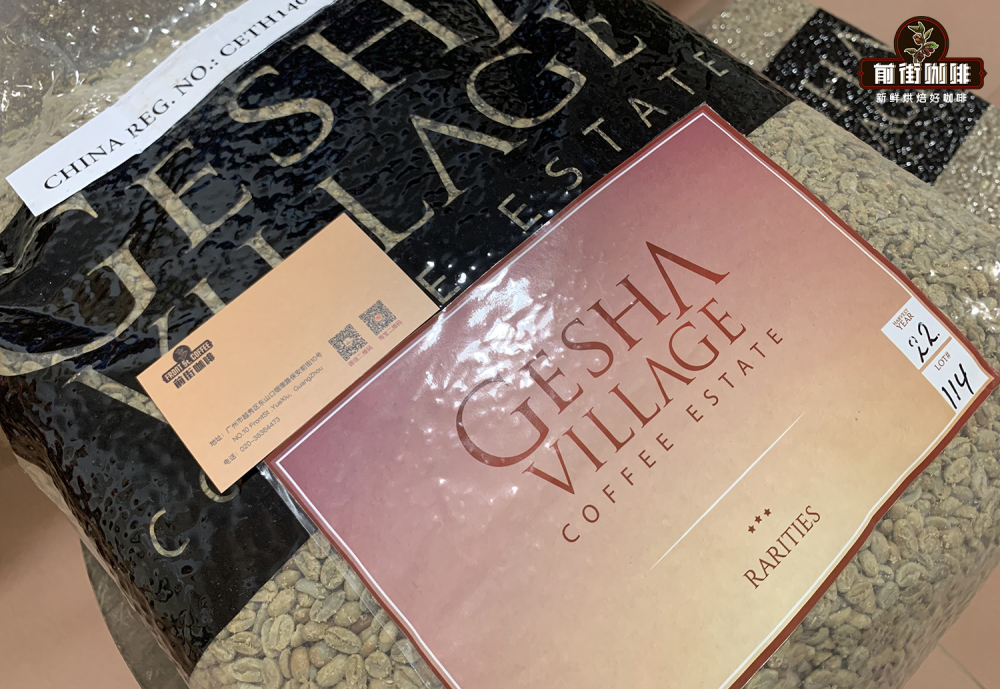
Gesha Village Gold Geisha (RARITIES) is a lot frequently purchased by competition competitors and roasters with high quality requirements around the world, accounting for about 10% of the estate's annual production, with detailed traceability information. The Gold lot Geisha purchased by Front Street offers complex and rich flavors. During cupping, one can feel the charm of this lot of Geisha; whether it is the uniqueness of the dry fragrance, or the sipping flavor and mouthfeel and finish, it leaves a lingering impression.
FrontStreet Coffee: Ethiopia Gesha Village Coffee Estate Gold Geisha
Region: Ethiopia Bench Maji Region
Estate: Gesha Village Coffee Estate Oma Plot
Altitude: 1,900-2,040 meters
Variety: Gesha 1931
Processing Method: Natural Process
Flavor: Citrus, Berries, Cream, Caramel, Melon, Honey
Unlike the Gold grade, Gesha Village Red (GROWERS RESERVE) accounts for 15% of total annual production. It is selected from the Gori Gesha variety and is a high-quality Geisha coffee with an SCA standard cupping score of 88 or above. Although the intensity and complexity of the flavor cannot compare with the Gold and auction lots, the Red lot also has a very classic Gesha Village flavor profile. Front Street believes this is a very cost-effective Geisha lot and worth purchasing for Geisha enthusiasts.
Ethiopia Front Street Gesha Village Coffee Estate Red Geisha
Region: Ethiopia Bench Maji Region
Estate: Gesha Village Coffee Estate Shewa-Jibabu Plot
Altitude: 1,973-2,069 meters
Variety: Gori Gesha
Processing Method: Natural Process
Flavor: Lemon, Plum, Citrus, Tropical Fruits, Floral Tea
The Gesha Village Green lot (SINGLE-TERROIR) refers to lots from a single plot and a single variety. Each lot number provided by the Green lot has complete traceability information, including the farm plot name, coffee variety, and processing date. Compared with the Red and Gold lots, the Green lot does not have cupping score requirements, so it can be said to be an entry-level single-plot Geisha lot.
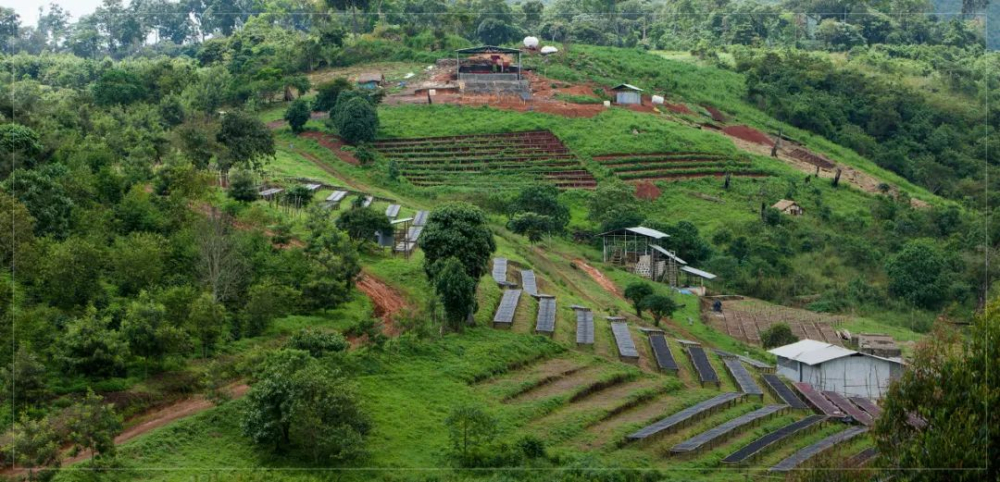
Ethiopia Front Street Gesha Village Coffee Estate Green Geisha Region: Ethiopia Bench Maji Region Estate: Gesha Village Coffee Estate Bangi Plot Altitude: 1,901-2,001 meters Variety: Gori Gesha Processing Method: Natural Process
Unlike other lots in the estate, CHAKA blends Geisha coffee beans from all plots in the estate and all production seasons of the year, including the three varieties planted at Gesha Village: Gesha 1931, Gori Gesha, and Illubabor. This coffee bean is offered in both washed and natural processing methods, and the lot Front Street purchased is the naturally processed one.
First, impurities and unripe cherries are removed through flotation, then the beans are spread in thin layers on African raised beds covered with plastic sheeting for sun drying. During the drying process, they need to be turned regularly, and hand sorting is also carried out to remove unevenly colored beans. The total drying time is 18-30 days. In order to retain more fruit acidity, Front Street chose a medium-light roast. Through cupping, Front Street perceived high-quality flavors such as citrus, berries, cream, oolong tea note, and cane sugar from this Chaka Geisha.
Ethiopia Front Street Gesha Village Coffee Estate Chaka Region: Ethiopia Bench Maji Region Estate: Gesha Village Coffee Estate Altitude: 1,900-2,100 meters Variety: Gori Gesha, Gesha 1931, Illubabor Processing Method: Natural Process
As is well known, Front Street Geisha coffee is famous worldwide for its rich floral aroma and complex fruit profile. Front Street hopes to retain more of Geisha's high-quality acidity, so a medium-light roast is chosen (with slight adjustments made for different lots). This roast level does not significantly change the high hardness of beans grown at high altitude, so brewing requires increasing the extraction rate somewhat to present a fuller flavor layering. Here, a higher water temperature and a finer grind size are used to stimulate more aromatic substances.
Below, Front Street will demonstrate the brewing steps for the Gesha Village Red lot served in our shop. You can refer to it and compare it with your own brewing approach.
Front Street Gesha Village Red Coffee Pour-over Recommendation:
Dripper: V60
Water Temperature: 91-92°C
Coffee Dose: 15g
Coffee-to-Water Ratio: 1:15
Grind Size: Fine sugar size (80% passing through a No. 20 sieve)
Three-stage extraction: First, pour 15 grams of coffee grounds into the dripper and tare the scale. For the first stage, pour 30g of water for blooming for 30 seconds, and start the timer at the same time. Use a small stream at the center point and begin spiraling outward, making sure to wet the entire coffee bed.
For the second stage, use a slightly larger stream to pour 120g of water, with the aim of lifting the entire coffee bed. The water column should be poured vertically and evenly. At this point, the scale shows 150g, and the pour is completed in about 55 seconds.
When the liquid level drops to about halfway, begin the third stage by pouring 90 grams in a small circular stream. Try to control the stream so it does not circle too widely, as this can easily disturb the coffee bed and cause under-extraction. The total amount of water poured is 240 grams, and the drip completion time is about 2 minutes 10 seconds. After removing the dripper, swirl the coffee in the server to mix evenly, and it is ready to taste.
The above content is compiled by CoffeeHunters, a coffee news website.


