







What Grind Setting Does a Moka Pot Need?
Grind size is not interchangeable between devices, because each one extracts differently. Taking cupping grind as the baseline, of 70 to 75 percent passing a No. 20 sieve, the order from coarse to fine runs: French press, pour-over, cold drip and cold brew, siphon, moka pot, and espresso machine. A moka pot sits near the fine end.
The moka pot uses pressure, so it needs a fine grind close to espresso, though slightly coarser to avoid clogging. How long a moka pot takes to brew depends on heat and dose: keep the flame low, stop the flow when it lightens and sputters. Adjust the grind setting for the moka pot by roast level, water temperature, and extraction time.
Coffee beans must be ground before their aromatic compounds can be extracted, but different brewing devices work on different extraction principles, so grind size is not interchangeable. This article uses the industry-recognized cupping grind standard (70–75% passing through a No. 20 sieve) as the baseline and systematically lays out the grind parameters and adjustment logic suited to common devices such as the French press, pour-over, cold drip and cold brew, siphon, espresso machine, and moka pot. From immersion to pressurized methods, from coarse sugar to flour-fine powder, Front Street will explain one by one why each device needs a specific grind size, and how to fine-tune flexibly according to roast level, water temperature, and extraction time, to help you find the grind plan best suited to your own cup.
There are many kinds of devices that can be used to make coffee, and the same bean brewed with a different extraction tool often tastes dramatically different. Precisely because of this, there are actually quite a lot of paths you can choose for a cup of coffee. But no matter which device you pick, the first step always comes down to grinding the coffee beans into powder—only then can the aromatic components inside the beans be released in the shortest time possible.
However, because each type of device has a different extraction mechanism, grind sizes cannot simply be applied across the board. We do not want to dissolve all the solubles in one go, because the taste of some of those components is not pleasant. So finding the grind size that precisely matches the device becomes the key. Today Front Street will talk about how coarse or how fine the coffee powder should be for each type of device.
The coffee devices currently used most frequently in daily life roughly include: siphon, cold drip and cold brew, French press, pour-over coffee, espresso machine, and moka pot. If ranked by grind from coarse to fine, the order is: French press > pour-over coffee > cold drip and cold brew > siphon > moka pot ≥ espresso machine.
Although we have figured out which devices should use coarse powder and which should use fine powder, there is no exact number for how coarse or how fine that specifically is, or what reference point to use. So we need to find a standard everyone recognizes as a reference, and then list the grind size corresponding to each device accordingly.
Grind size standards
Although there is no unified grind parameter for all extraction methods, there happens to be one extraction method whose grind size is industry-certified and mutually agreed upon—that is "cupping." The grind parameter for cupping is recognized in the industry as a 70–75% passing rate through a No. 20 sieve, a value determined after repeated experiments and tastings (for details on how to use a No. 20 sieve, click the article "How Do You Use a No. 20 Sieve?").
In other words, as long as you use the cupping grind parameter as the baseline and then adjust the grind according to each device's different extraction method and parameters, you can identify the corresponding degree of coarseness or fineness and present it clearly with data.
Grind size for the French press
The French press and cupping both belong to immersion extraction, so their grind sizes overlap to a high degree. The difference is that cupping water temperature is fixed at 94°C, which with that grind size is just right for a long immersion. The French press, however, is closer to everyday use, and hot water is often poured directly from a boiled kettle, so extraction efficiency is higher. When water temperature cannot be precisely controlled, you need to coarsen the grind to reduce extraction efficiency and thereby avoid over-extraction.
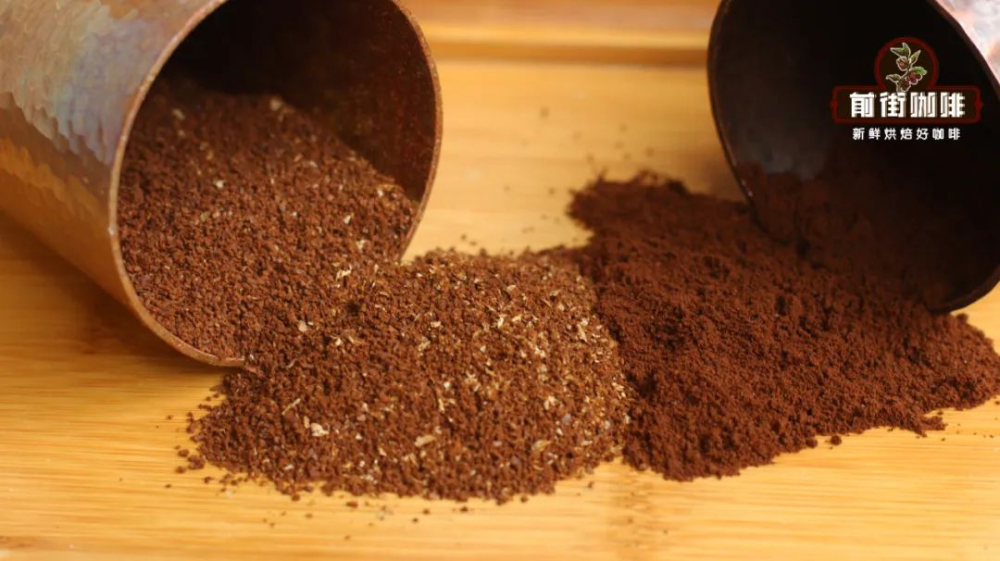
After testing, Front Street recommends keeping the French press grind within the range of a 68–75% passing rate through a No. 20 sieve (equivalent to coarse sugar), then adjusting according to the bean's roast level and hot water temperature. When the water temperature is high and the roast is darker, keep the grind in the coarser 68%–71% range; when the water temperature is normal and the roast is lighter, keep it between 71% and 75%.
Grind size for pour-over coffee
Pour-over coffee uses a lower water temperature than the previous two, and the extraction time is relatively shorter as well. Therefore the grind needs to be made finer to raise extraction efficiency so the coffee reaches normal strength.
The grind size Front Street recommends is in the range of a 70–80% passing rate through a No. 20 sieve (equivalent to fine sugar). It is likewise differentiated by roast level: medium-light roasted beans use a finer grind (75%–80%), while medium-dark roasted beans use a coarser grind (70%–75%). If making iced pour-over, increase the passing rate by 5% on the original basis, that is, grind one step finer.
Grind size for cold drip and cold brew
Both methods use ice water for extraction, and extraction efficiency is extremely low. So does that mean you should use a finer grind than pour-over for extraction?
No, no, no! Although ice water extraction efficiency is low, the extraction time is long enough.
It can fully make up for the shortcomings brought by ice water. So there is no need to make too big a change from pour-over. Just like iced pour-over, simply increase the passing rate by 5% on the pour-over grind basis and adjust one step finer. If you do not like it too strong, using the same grind size as pour-over is no problem either.
Do not grind too fine just because its extraction efficiency is low. First, fine powder easily clogs the filter holes and prolongs filtration time; second, a large amount of extremely fine powder will pass through the filter holes into the coffee liquid and reduce cleanliness.
Grind size for the siphon
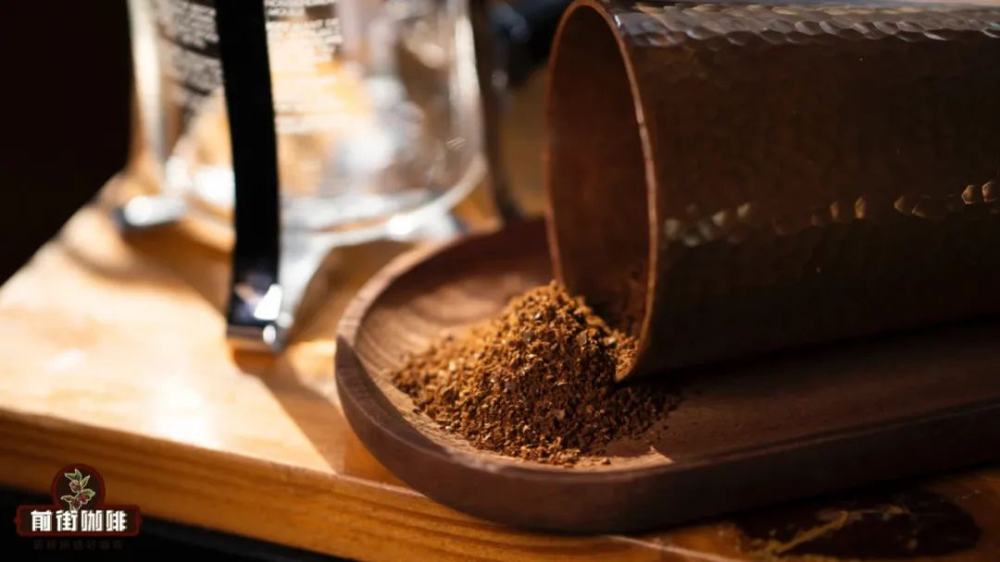
What are the characteristics of siphon extraction? The water temperature is high and there is stirring, so by rights extraction efficiency should be on the high side. But its extraction time is only just under a minute, which forces us to improve the extraction rate by making the grind finer. Therefore the parameter Front Street recommends is: No. 20 sieve 85–90%.
Grind size for the espresso machine
The grind used by an espresso machine is close to flour-like fine particles and cannot be measured with a sieve. Moreover, extraction in an espresso machine is more precise—even if the dose differs by only 0.1 g, the extracted flavor will change.
So its grind size can only be judged directly from the extraction result. Front Street suggests first setting a stable extraction plan, for example starting each day with "20 g of coffee powder extracted into 40 ml of coffee liquid within 28±1 seconds" as the standard, and then adjusting parameters around this data. If 20 g of powder cannot extract 40 ml of coffee liquid within 28±1 seconds, adjust the grind so the data matches the plan, and afterward taste it before deciding whether to fine-tune the powder weight or liquid weight.
Grind size for the moka pot
The moka pot's grind size is rather special: the finest particles produced by a pour-over grinder can be used, and the grind size from an espresso grinder can also be applied directly—either works. The finer the coffee particles, the richer the oils extracted.
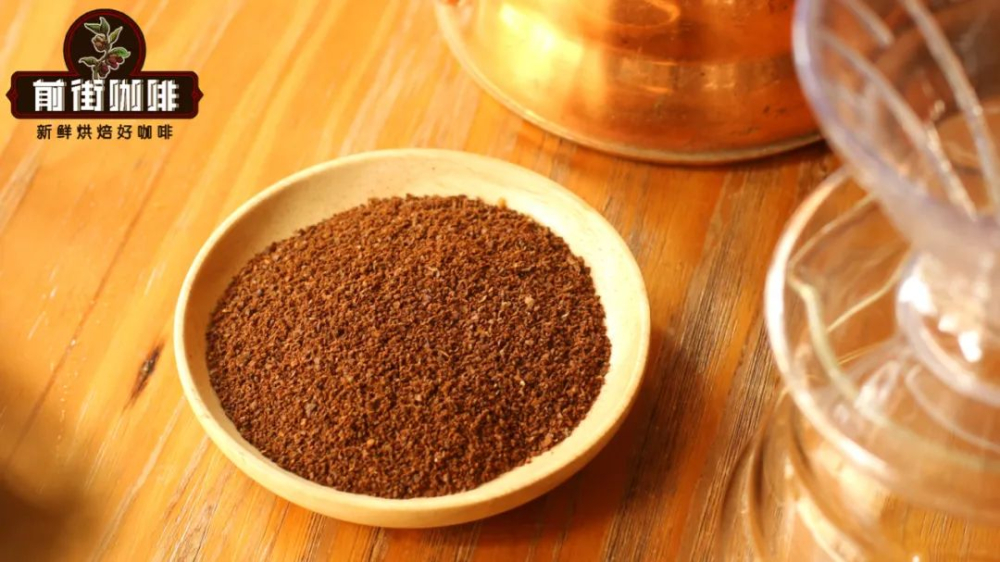
It should be noted that the moka pot's grind size is already very fine and likewise cannot be measured with a sieve. Therefore it can only be judged by taste.
The above content is compiled by CoffeeHunters, a coffee news website.


