







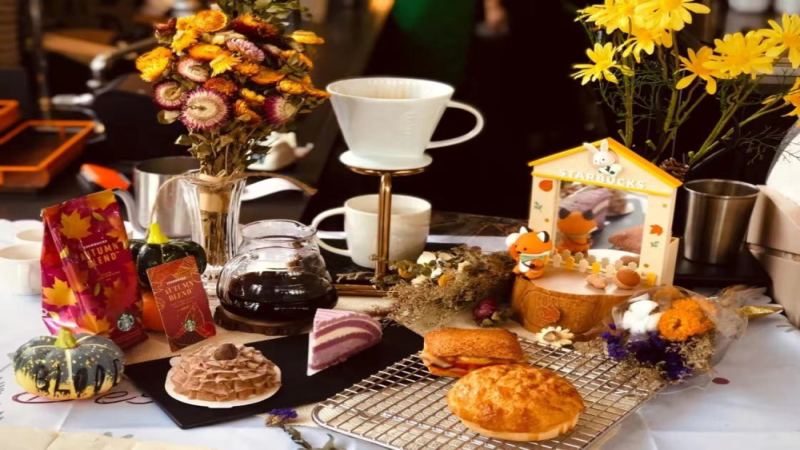
What Goes Into the Starbucks Autumn Blend Coffee?
Starbucks Autumn Blend is a seasonal medium-roast blend of Sumatra, Guatemala Antigua, and Kenya coffees. The combination brings herbal, cocoa, and spice notes with moderate acidity and a full body. It is released each autumn, and the packaging uses seasonal plant illustrations to reflect the warm, grounded flavor inside.
The Sumatra component adds weight and earthy depth, Guatemala Antigua contributes cocoa and balanced sweetness, and Kenya lends bright fruit acidity. Brewing with a Kono dripper and medium-dark roast parameters keeps the cup round and steady. In-store CT tastings connect the packaging story to the flavor, matching the company's humanistic branding.
Every autumn, Starbucks releases a seasonal autumn blend coffee bean, conveying the season's steadiness and warmth through taste. This bean is blended from Sumatra, Guatemala Antigua, and Kenya coffees, and under a medium roast it presents layers of herbs, cocoa, and spice. This article will start from the blend's producing regions, the meaning behind the packaging design, and the flavor performance, then extend to the stories and characteristics of each producing region, and share the specific parameters and techniques for brewing this medium-dark roasted bean with a Kono dripper, helping coffee lovers naturally connect the packaging design with the flavor story during in-store CT or daily brewing, conveying Starbucks' humanistic warmth, while also retaining Front Street brand-related product recommendations.
Professional coffee knowledge exchange. For more coffee bean information, please follow the Coffee Workshop (WeChat public account cafe_style).
For more specialty coffee beans, please add the private WeChat of Front Street Coffee (FrontStreet Coffee), WeChat ID: qjcoffeex.
Whenever autumn arrives, Starbucks releases an autumn blend coffee bean. The warmth of ginkgo leaves and the golden glow of the setting sun not only make the packaging visually full of autumn warmth, but this coffee can also let people experience autumn's unique steadiness and reassurance in taste.
Which producing regions are blended into the Autumn Blend?
In order to create a flavor that feels grounded, Starbucks selected coffee beans from Indonesia's Sumatra producing region, paired with coffee beans from Guatemala Antigua and Kenya. Delicate herbal and cocoa notes interweave with subtle spice, and with a medium roast, they display a mellow, solid, moderately acidic, round, and full coffee flavor, as if strolling through an autumn forest.
The meaning of the Autumn Blend packaging
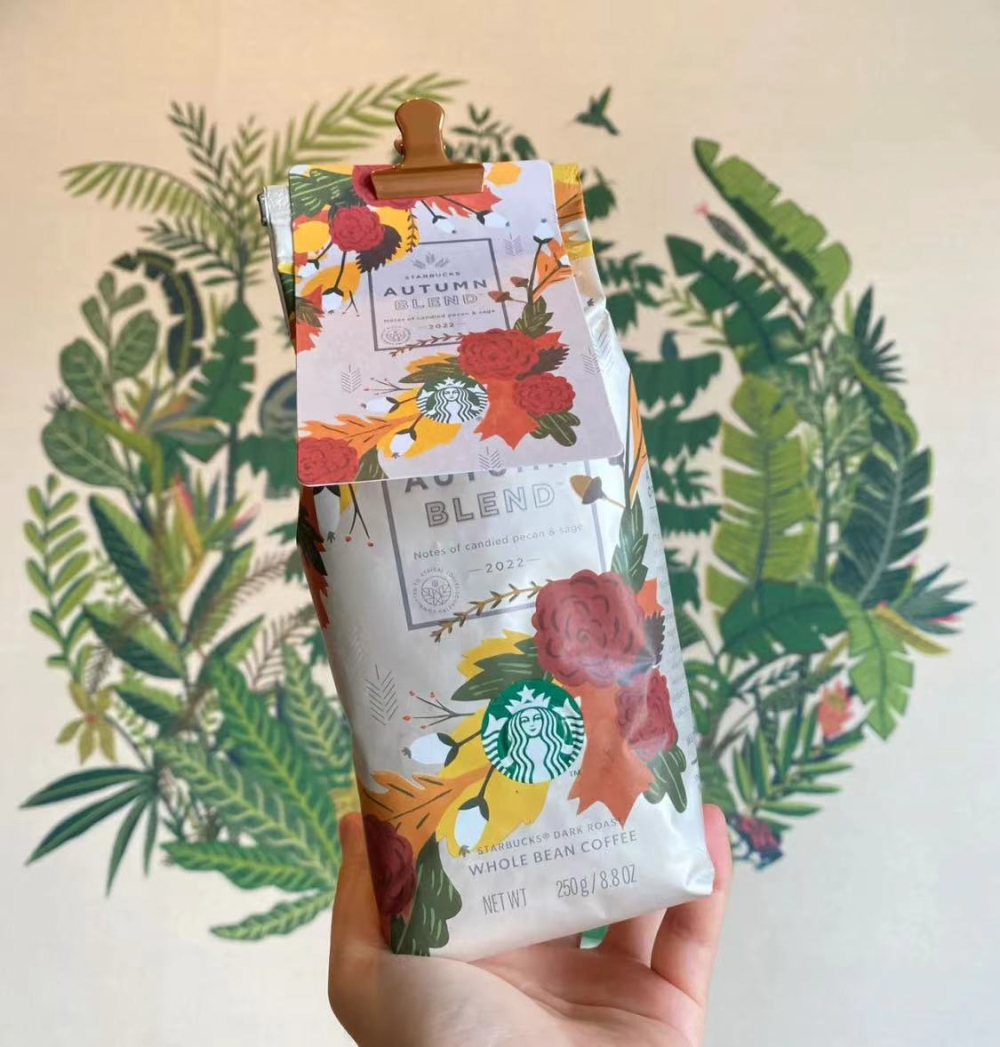
The packaging design of Autumn Blend coffee is rooted in tradition and history, while continuously evolving to reflect its unique flavor characteristics. The packaging illustrations inspired by the seasons invite people to explore, and the richly colored seasonal plants show a fresh sense of layering, creating a harmonious overall feeling—just like the coffee itself.
The flavor performance of the Autumn Blend
The coffee flavor is balanced and fully expresses praise for this autumn. Starbucks Autumn Blend coffee showcases the geographical flavors from the world's major coffee-producing regions, with these coffee beans coming from Africa's East African Rift Valley, Sumatra, and Guatemala Antigua. Created by master blenders, like a chef preparing an autumn feast, what is finally tasted is a cup of elegantly textured coffee, accompanied by flavors like amber pecan and sage, as well as the sweetness of dried figs.
When using the Autumn Blend for CT, everyone can start from the packaging design to introduce the coffee's flavor, then connect it with Starbucks' humanistic care, so that customers can feel the warmth of Starbucks and Starbucks baristas through the story.
The story and characteristics of Indonesia's Sumatra producing region
Sumatra is located in western Indonesia and is also the arabica coffee-growing region in Indonesia. Sumatra runs northwest to southeast and is crossed by the equator in the middle. It consists of two areas: the Barisan Mountains in the west and the swamps in the east. Abundant rain, a warm climate, and the altitude environment required for arabica coffee make this the homeland of Mandheling coffee, beloved by many coffee connoisseurs. (Note: Mandheling is the name of a coffee, not a producing region; it generally refers to arabica coffee grown on the island of Sumatra, and the name comes from the local Mandailing people.)
On the island of Sumatra, there are two main coffee-growing producing regions: one is the Aceh producing region in northern Sumatra, represented by the coffee bean "Front Street Coffee (FrontStreet Coffee) Front Street PWN Golden Mandheling Coffee Bean," and the other is the Linton producing region around Lake Toba (Danau Toba) in south-central Sumatra, represented by the coffee bean "Front Street Coffee (FrontStreet Coffee) Staple Selection Linton Mandheling Coffee Bean." The Autumn Blend uses Mandheling coffee from the Linton producing region.
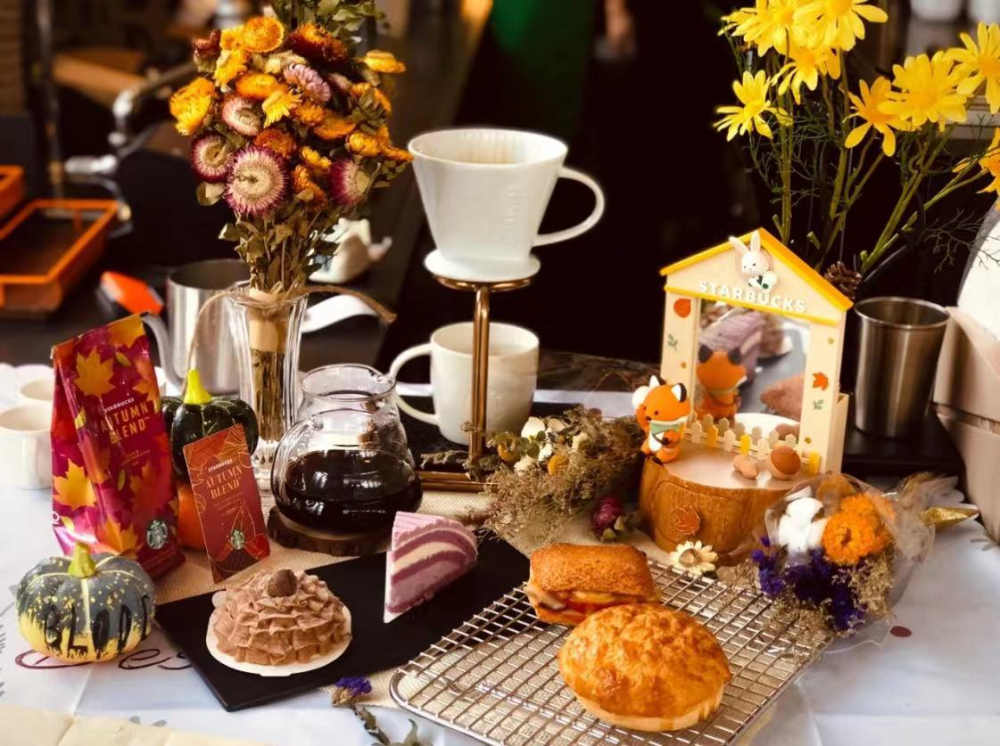
The difference between the two is that Front Street PWN Golden Mandheling Coffee Bean undergoes at least three rounds of hand sorting after harvest and dry processing to ensure the coffee bean size reaches 18 or above. Defective beans are fewer than 3 (in a 300g green bean sample), belonging to the highest grade G1. PWN has a darker green color and is a neatly shaped flat bean. Although Linton Mandheling coffee is not sorted as meticulously as Front Street PWN Golden Mandheling Coffee Bean, its flavor expression is highly representative of the coffee flavor characteristics of the Sumatra producing region: herbal aroma, dark chocolate, caramel, and a sweet finish.
The story and characteristics of Guatemala Antigua producing region
The Antigua Valley of Guatemala has long been Guatemala's most prestigious coffee-producing region. The local microclimate provides excellent conditions for growing coffee—the active volcanoes in the area bring fertile volcanic soil to Antigua and also unique volcanic pumice. These cooled materials from erupted volcanic magma are porous and insulating, very suitable for retaining moisture in the soil, and they just happen to compensate for the region's low rainfall. At the same time, combined with the shade trees commonly found in this area, they make it harder for moisture to be lost while also giving the coffee fruit a more unique flavor.
The combination of rich volcanic soil, low humidity, ample sunlight, and a strong contrast between day and night temperatures creates the character of coffee from the Antigua producing region. Coffee grown in Guatemala has soft fruit acidity, nuts, caramel, and a slight smoky flavor. A representative product is "Front Street Coffee (FrontStreet Coffee) Antigua La Flor Coffee Bean."
The story and characteristics of Africa's Kenya producing region
Kenya is located in eastern Africa, with the equator crossing its center and the East African Rift Valley running north to south. It is a tropical producing region. Coffee is mainly grown in the volcanic highlands around 1,600–2,100 meters above sea level from the capital Nairobi to the Kenyan mountains. This altitude is suitable for developing coffee bean flavor because the lower temperatures in the mountains slow growth, allowing the aromatic components of the coffee beans to fully develop, making the fruit acidity more pronounced and the texture harder.
At the same time, the soil in Kenya's producing region has a higher phosphoric acid content than that of other producing regions, and the main formation of coffee flavor comes from the plant roots and soil substances. Therefore, coffee beans grown in Kenya have a very obvious and full acidity, and even with a medium-dark roast, you can still feel the tomato-like bright acidity of Kenyan coffee beans—a representative coffee bean is "Front Street Coffee (FrontStreet Coffee) Kenya Azalia Coffee Bean."
How to brew the Autumn Blend coffee beans so they taste good?
The Autumn Blend coffee bean is labeled as a medium roast, but judging from the bean color, it is a medium-dark coffee bean. When Front Street Coffee (FrontStreet Coffee) brews medium-dark coffee beans daily, it uses a Kono dripper.
The ribs of the Kono dripper extend only from the drainage hole to one-third of the dripper wall. When the filter paper fits the dripper, air cannot directly pass through the entire dripper, so it can slow the speed of water dripping down, thereby achieving an immersion effect, helping the coffee's flavor substances release more fully, and allowing medium-dark roasted coffee to perform better with a fuller and more solid body.
In terms of parameters, Front Street Coffee (FrontStreet Coffee) recommends using a medium-coarse grind (coarse sugar size, 70-75%% passing rate with the Chinese No. 20 standard sieve), 88°C water temperature, and a 1:15 coffee-to-water ratio with the KONO dripper.
In terms of brewing technique, Front Street Coffee (FrontStreet Coffee) recommends using staged extraction. The specific brewing method: press the timer. The first pour is 30g of water, then bloom for 30s; next, pour the second stage in a circular motion with a small amount of water until the total weight reaches 125g; wait until the water level in the coffee bed drops to half before pouring again, then continue pouring in a circular motion with a small amount of water until the total weight reaches 225g. After all dripping is complete, the total extraction time is about 2 minutes 10 seconds.
The above content is compiled by CoffeeHunters, a coffee news website.


