







What Sets Golden Mandheling Coffee Apart?
Golden Mandheling coffee is the most recognized name in Sumatra's Mandheling family, a group of Indonesian Arabica beans known for full body and herbal, earthy notes. The family also includes Lintong Mandheling, Tiger Mandheling and Aged Mandheling, each with a different aromatic emphasis and level of mellowness.
Sumatra's wet-hulling process and tropical climate shape these flavors. Indonesia produced 12.317 million bags of green beans in 2015, ranking second in Asia after Vietnam, with Robusta accounting for roughly 70 to 80 percent of output. Mandheling Arabica is often used in blend coffee to add body and low-acid depth to espresso.
Sumatra is one of Indonesia's most important coffee-producing regions. Its representative coffee beans, such as Mandheling, are world-renowned for their full-bodied mouthfeel and unique herbal notes. This article will explore Sumatran coffee from the perspectives of variety classification, historical origins, and the wet-hulling process, systematically sorting out the differences between Lintong Mandheling, Tiger Mandheling, Aged Mandheling, and Golden Mandheling, and discussing the application value of Mandheling coffee beans in espresso blends. At the same time, drawing on Front Street Coffee's tasting experience and product recommendations, it provides coffee enthusiasts with a complete reference from single-origin tasting to espresso blending.
Taste Characteristics and Background Story of Sumatran Coffee Beans : Mandheling has long been renowned for its rich, full-bodied character and herbal-like flavors. Front Street Coffee believes that when most people mention Mandheling, the first thing that comes to mind is Golden Mandheling. However, the Mandheling family is not limited to just this one. Among the beans introduced by Front Street Coffee, the Mandheling series includes three besides Golden Mandheling: Lintong Mandheling, Tiger Mandheling, and Aged Mandheling. Among them, Lintong Mandheling serves as Front Street Coffee's everyday staple, presenting the most core flavor profile of Mandheling; Tiger Mandheling is relatively niche, but its aroma expression is more prominent than that of Golden Mandheling; Aged Mandheling, having been properly stored, becomes increasingly mellow over time.
Indonesia is located in Southeast Asia, composed of more than ten thousand islands stretching along the equator from Malaysia to Papua New Guinea. Indonesia has long been a major coffee-producing country. According to statistics from the World Coffee Organization, Indonesia's green bean production reached 12.317 million bags in 2015, ranking second in Asia (after Vietnam), with Robusta accounting for about 70% to 80%. Robusta has outstanding disease resistance and, although its flavor is not as good as Arabica, it remains the mainstay of Indonesian coffee, accounting for 90% of total coffee production, mainly distributed in low-altitude areas such as Java and Bali. Ninety percent of Indonesia's coffee comes from independently operated small farms. Due to the high economic value of coffee, farmers often plant it in their own backyards. About 11 million people nationwide depend on the coffee industry for their livelihood.
Sumatran coffee has been sold at Starbucks since 1972. Its rich earthy aroma and heavy body constitute the unique flavor label of Sumatra, but because of the relatively dark roast, herbal notes and burnt bitterness linger in the mouth for a long time. Front Street Coffee has recently also introduced Sumatran coffee beans for tasting and evaluation. In fact, coffee tasting has always been a long-term practice at Front Street Coffee. Its original intention is not simply to sell coffee beans, but to taste coffee from all over the world. In this process, Front Street Coffee aims to gain an in-depth understanding of each coffee-producing region, different varieties within the same region, and different processing methods for the same variety, and to establish corresponding data archives. At the same time, it conducts horizontal comparisons between different regions. Front Street Coffee hopes to help more coffee enthusiasts understand the world of coffee.
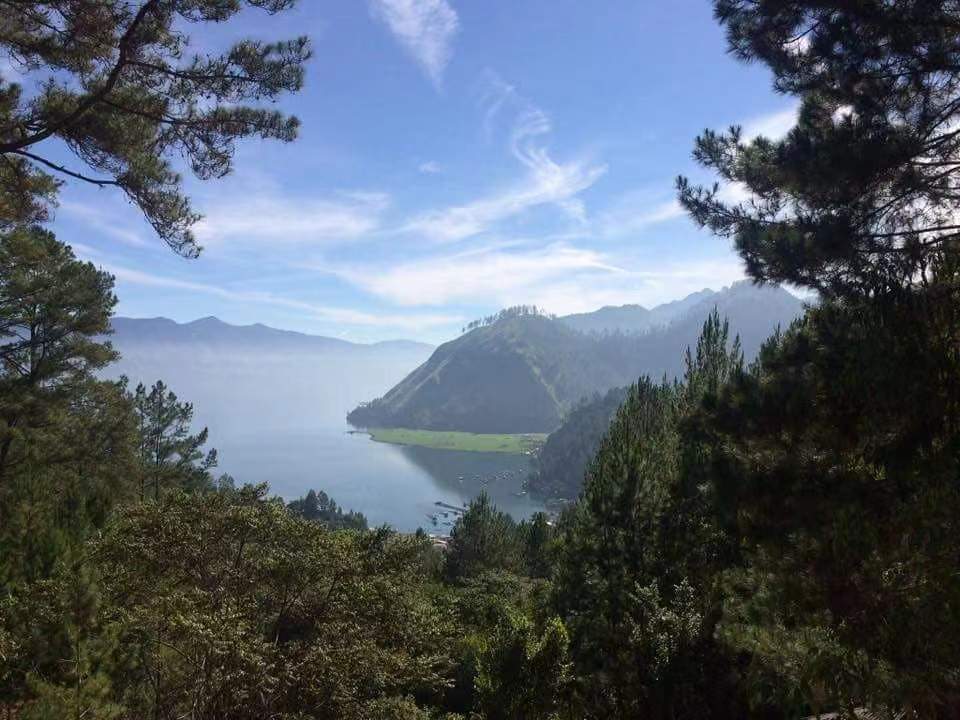
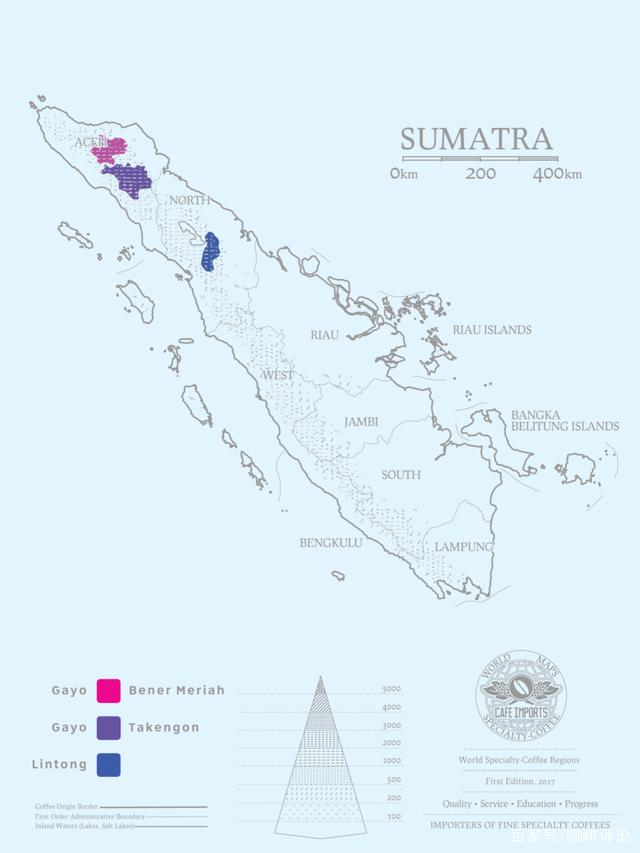
When mentioning Mandheling, the saying "two lakes, two Mans" often comes up: the Lake Toba region in northern Sumatra (Lake Toba, Lintong) has a relatively early history of coffee cultivation and is called "Old Man"; the Lake Tawar region in Aceh Province (Lake Tawar, Gayo Mountain) started later and is called "Little Man."
The Development Thread of Sumatran Coffee Indonesia is located in Southeast Asia, and its coffee history can be traced back to 1696. At that time, Dutch coffee farm owners tried to find broader planting areas. After extensive investigation, they finally set their sights on Java Island in Indonesia. After thirty years of operation, Indonesia had accumulated sufficient foundation in the coffee market. However, as it developed to the present day, the representative of Indonesian coffee has become Mandheling. This is actually quite reasonable, because a large portion of the Java coffee sold to Europe in the early period came from the Sumatra region, and Mandheling is precisely a product of Sumatra. Therefore, Sumatra can be said to be a pivotal coffee-producing region in Indonesia.
The Origin of Mandheling Coffee Beans and the Story Behind the Name Mandheling originally referred to the name of an ethnic group in Indonesia. After the end of colonial rule in Indonesia, Japanese soldiers returned to their home country and could not forget that unforgettable cup of local coffee. So, through trade partner relationships, they commissioned local people to collect high-quality coffee beans on their behalf, including this Mandheling. The Japanese were especially fond of these coffee beans. Because commercial channels were inconvenient to disclose, the local person casually said the word "Mandheling," and thus, by a twist of fate, Mandheling became the name of a coffee bean. And this local person was none other than the owner of the Indonesian PWN company (Pwani Coffee Company), which will be mentioned later. PWN was the first company to export Golden Mandheling coffee beans to Japan. Front Street Coffee has for many years consistently selected Front Street PWN Golden Mandheling. PWN's packaging specifications also changed from the initial 60 kg per bag to 30 kg per bag later, and the production area changed from Lintong to Gayo Mountain.
Sumatra's Unique Processing Method — Wet-Hulling Most Mandheling is processed using Sumatra's unique wet-hulling method. The local weather is dominated by rainy and cloudy conditions, with frequent typhoons, making it difficult to meet the conditions required for sun-drying. In addition, due to the limited local economic level, the washed method, which is more costly, was also difficult to promote. Thus, the highly region-specific wet-hulling method came into being. Today, Indonesia's coffee industry is no longer as poor as it once was, and many estates and companies have the conditions to use the washed method. But why has wet-hulling not been abandoned? Front Street Coffee believes that wet-hulling is precisely the key factor that propelled Mandheling to the world. Mentioning Mandheling immediately brings wet-hulling to mind; the two have long formed a mutually reinforcing relationship. The specific process of wet-hulling can be divided into two stages:
In the first stage, a wooden pulper is used to remove the skin and pulp. After 3 hours of fermentation, the beans are spread out to dry, reducing the moisture content to 30% to 50%, which is semi-dry and semi-wet. In the second stage, the mucilage and parchment layer are removed, and drying continues. The drying process takes 2 to 4 days, reducing the moisture content to 12% to 13%.
Because the hulling equipment generates considerable friction during operation, it tears open the parchment layer clinging tightly to the green beans. At this stage, white or green viscous liquid usually flows out. Through prolonged soaking in this mucilage and the combined effect of the humid environment, the green beans ultimately become soft, whitish, and swollen, taking on a grayish-green color. Under the agitation of friction, the green beans are also more easily crushed or damaged, especially at both ends, forming small notches and producing "goat hoof" beans. These "naked beans," stripped of the parchment layer, dry extremely quickly and are also directly exposed to the humid environment, allowing various microorganisms to thrive. This gives the coffee its unique woody, spicy, and herbal plant notes — what we commonly call the "Mandheling flavor."
Is Sumatran Mandheling Suitable for Espresso Blends?
For friends trying Mandheling coffee for the first time, Front Street Golden Mandheling Coffee is recommended. This is a premium Mandheling that has undergone multiple rounds of hand sorting. It uses a medium-dark roast and features rich chocolate, caramel, spice, and herbal flavors. Its aroma is distinctive, and its mouthfeel is extremely full-bodied and impressive. If you just want to initially experience Indonesian coffee, then Front Street Lintong Mandheling Coffee is recommended, allowing you to enjoy the classic flavor at an affordable price. Both products can be purchased at the Front Street Taobao store or the Front Street Tmall flagship store.
In addition to single-origin coffee, Front Street has also launched an espresso blend bean specially designed for extraction with coffee machines and moka pots — Front Street Classic Espresso Blend Coffee. This blend is composed of coffee beans from three origins: Brazil, Indonesia, and Vietnam. It uses a dark roast, which maximizes the coffee's rich aroma while allowing users to easily extract rich and dense crema. It is very suitable for making both Americano diluted with water and latte paired with milk. It can be purchased and ordered at the Front Street Taobao store or the Front Street Tmall flagship store.
The above content is compiled by CoffeeHunters, a coffee news website.


