







How Does Coffee Processing Change Flavor?
Natural and washed are the two main coffee processing methods, and the choice changes the cup. Coffee begins as a fruit with skin, pulp, mucilage, parchment, silver skin, and an inner seed; processing removes the outer layers to leave that seed. Natural drying keeps fruit contact longer and yields fermented sweetness, while washed processing removes the fruit early and produces bright cleanliness.
Honey, wet-hulled, semi-washed, and semi-natural fall between the two. Comparing two Yirgacheffe coffees, Natural Red Cherry and Washed Gutingting, shows how the green coffee bean and its roasted counterpart differ in silver skin. Knowing the steps and each method's advantages and disadvantages makes it easier to pick the flavor profile you actually want.
When buying coffee beans, the packaging often indicates processing methods such as natural (sun-dried), washed, and honey. What exactly is the difference between natural and washed? Front Street Coffee takes you through the structure of the coffee fruit to explain in detail the specific steps, advantages and disadvantages, and flavor characteristics of the two processing methods. Using Front Street’s Natural Red Cherry and Washed Gutingting, both Yirgacheffe coffees, we compare the silver skin differences in green and roasted states, and analyze the fermented sweetness of natural beans versus the bright cleanliness of washed beans. Only by understanding processing methods can you better choose the flavor you love.
When selecting coffee beans, terms like natural, washed, and honey often appear on the packaging labels. Natural and washed are relatively easy to understand, but terms like honey processing and wet-hulled leave people puzzled. Today, Front Street Coffee (FrontStreet Coffee) will discuss the differences between natural processing and washed processing, and how each affects coffee flavor.
In fact, the coffee beans we drink daily are not born in the form of a bean; they start as a round fruit.
Analyzing from the outside in, it can be roughly divided into the skin, pulp, mucilage layer, parchment (also called husk), silver skin, and the innermost coffee seed. Through various processing methods, people remove the outer skin, pulp, mucilage, etc., to finally obtain the innermost coffee seed, which after roasting becomes the familiar coffee in our cup.
Let's take a look at how coffee beans are actually extracted. Common coffee processing methods are broadly divided into three categories: natural, washed, and in-between methods like honey, wet-hulled, semi-washed, and semi-natural. Today we will focus on the specifics of natural processing and washed processing.
Natural processing is a very ancient method with low cost and relatively simple operation. Its principle is to let the coffee's moisture content gradually decrease through prolonged drying.
Natural Processing Steps
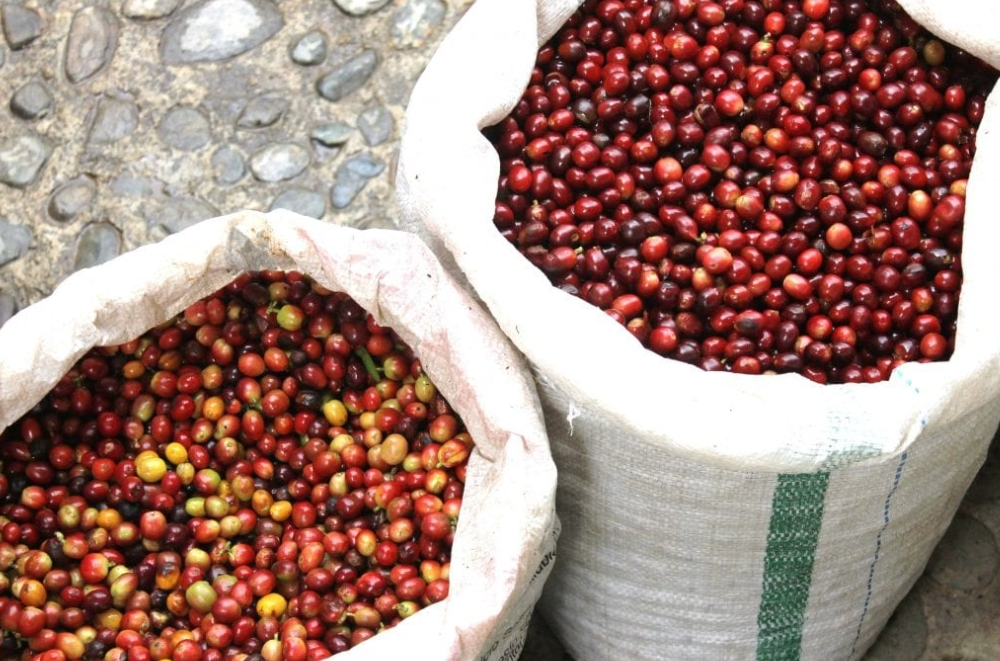
Pour the harvested coffee cherries into a large water tank. Ripe, plump cherries will sink to the bottom, while underdeveloped or overripe cherries will float on the surface. These floating beans need to be removed. However, in some water-scarce areas, people use screens to sort the coffee cherries instead.
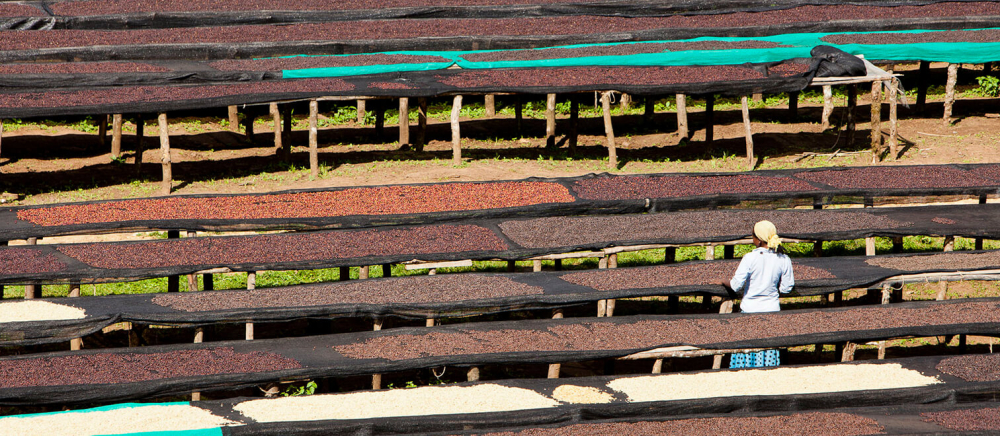
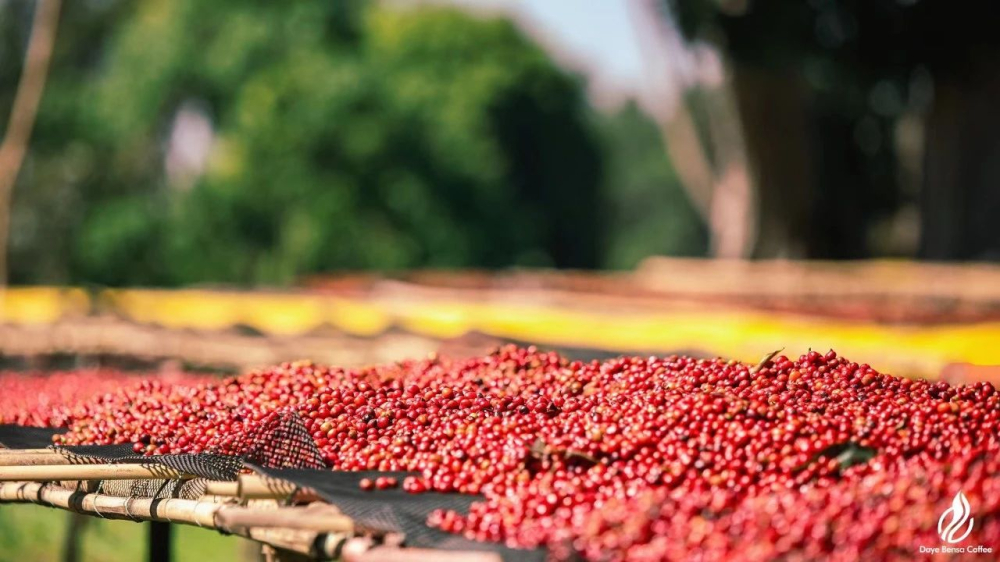
After sorting, spread the whole coffee cherries—skin, pulp, and bean—directly on concrete ground or drying beds to dry naturally until the moisture content is about 12%, which takes about two to four weeks depending on the local climate. After drying is complete, use a hulling machine to remove the dried skin, pulp, and parchment layer, and we get the green coffee beans we need.
Although natural processing has lower cost and a simple process, it also has drawbacks. It must be placed in a location with sunlight exposure, and has strict requirements for climate and environment, usually concentrated in tropical countries with distinct wet and dry seasons, with many uncontrollable factors like weather. When not handled properly, it is prone to defects, insect damage, rot, mold, and excessive flavor impurities.
In addition, coffee cherries have a very high moisture content. Leaving coffee cherries for over twenty days naturally leads to fermentation, and once over-fermented, they easily rot. If coffee cherries are piled too thickly in one place and ventilation is poor, rot becomes more severe. Therefore, a lot of manpower is needed to frequently stir the coffee cherry pile to ensure air circulation. Moreover, natural processing involves very little sorting—only one rough screening after picking, then straight into coffee sacks—so the defect rate of natural processing is higher than that of washed processing.
Although naturally processed coffee beans have a higher defect rate, excellent natural beans taste sweeter, have a fuller body, and more complex aromas.
By the way, natural processing can also be divided into traditional natural and refined natural.
Traditional Natural
The natural process is quite labor-intensive. Hand-picked high-sugar cherries are first placed on African raised beds to sun-dry for about 10 days, then moved to a greenhouse covered with plastic sheets to create more direct heat energy for continued drying; or the harvested coffee cherries are directly sun-dried in one's own yard until the moisture content drops to 11.5%.
The slow drying process allows the green beans to develop more natural sweetness from within, but it also requires more careful attention and precise calculation of turning times. In the end, the bright red cherries turn black and emit aromas of fruitcake, caramel, or even sherry, and it's done.
Refined Natural
In recent years, as the coffee market pursues ever more extreme flavors, many experienced and capable practitioners have begun to control the details of the natural processing to produce higher-quality coffee beans, showcasing more possibilities in coffee flavor.
For example, using instruments like a refractometer to determine the timing of picking red coffee cherries; cherries with consistent ripeness taste cleaner, and higher-sugar red cherries increase the sweetness of the coffee;
Using specially made raised drying tables for natural processing allows the berries to get more air convection and dry more evenly.
Washed Processing Steps
If you pay attention to coffee processing methods, you'll notice that many specialty coffees use washed processing. The washed method was invented by the Dutch in the 18th century and is suitable for rainy regions. Although the process is quite cumbersome, it is currently a relatively common green bean processing method.
Place the harvested cherries into a water-filled tank and soak for about 24 hours. At this point, ripe cherries sink, while unripe and overripe cherries float and can be removed.
Use a machine to remove the skin and pulp, leaving only the coffee beans wrapped in the parchment layer. At this time, there is still a layer of mucilage on the outside of the beans, and the washing process is to clean off this mucilage layer.
The mucilage has strong adhesion and is not easy to remove. It must be placed in a tank for about 18-36 hours to ferment and break down the mucilage. There are two fermentation methods: wet fermentation and dry fermentation. As the names suggest, the former adds water, the latter does not. During fermentation, the seed and inner pulp undergo special changes, which is the step that most affects coffee flavor in the washed method. Some farms add hot water or enzymes to speed up fermentation, but this negatively affects coffee bean quality and is not welcomed by specialty coffee enthusiasts.
Farms using the washed method must build washing pools and be able to introduce a continuous supply of fresh water. During processing, place the fermented beans into the pool and push them back and forth, using the friction of the beans and the force of flowing water to wash the coffee beans until they are smooth and clean.
After washing, the coffee beans are still wrapped in the parchment layer with a moisture content of 50%, and must be dried to reduce the moisture content to 12%, otherwise they will continue to ferment and become moldy and spoiled. A better method is sun drying. Although it takes 1 to 3 weeks, the flavor is excellent and quite popular. Additionally, some places use machine drying, which greatly shortens processing time but results in flavor inferior to sun-dried coffee.
The dried beans can then be stored in a warehouse or sent to a factory for hulling to remove the parchment and silver skin.
The washed method can remove impurities (stones or trash, etc.) and defective beans through each step, so the green beans look relatively consistent in appearance. It is generally regarded as high-quality coffee, and the trading price is higher than that of coffee refined by natural drying. Washing not only preserves the original taste of coffee but also enhances the coffee's brightness—that is, acidity—and special fruity notes.
But the biggest drawback of washed coffee is that during fermentation, the coffee beans can easily pick up fermentation odors. If the beans have a fermented smell, it is mostly due to a lack of management and maintenance of the fermentation tank. Although soaking coffee beans with mucilage on the parchment in the fermentation tank overnight can remove the mucilage, if the microorganisms in the fermentation tank change, it will cause the coffee beans to pick up fermentation odors.
Moreover, the washed method requires higher equipment costs, and the washing steps are quite labor-intensive, so production costs are relatively higher.
Both natural processing and washed processing are now relatively common methods. The difference is that natural processing dries the cherries first and then removes the skin, while washed processing removes the skin first and then dries. The two methods are quite different, so how do we distinguish whether a coffee bean was processed naturally or washed?
Comparison of Natural and Washed Coffee Beans
Here we use Front Street Coffee's (FrontStreet Coffee) Natural Yirgacheffe Red Cherry and Washed Yirgacheffe Gutingting for comparison.
Green bean information is as follows:
Natural beans: Front Street Coffee (FrontStreet Coffee) Natural Red Cherry Region: Ethiopia Yirgacheffe Estate: Aricha Estate Altitude: 1700-2200m Variety: Local heirloom Processing: Natural
Washed beans: Front Street Coffee (FrontStreet Coffee) Yirgacheffe Gutingting Region: Ethiopia Yirgacheffe Estate: Gutingting Cooperative Altitude: 2000-2100m Variety: Local heirloom Processing: Washed
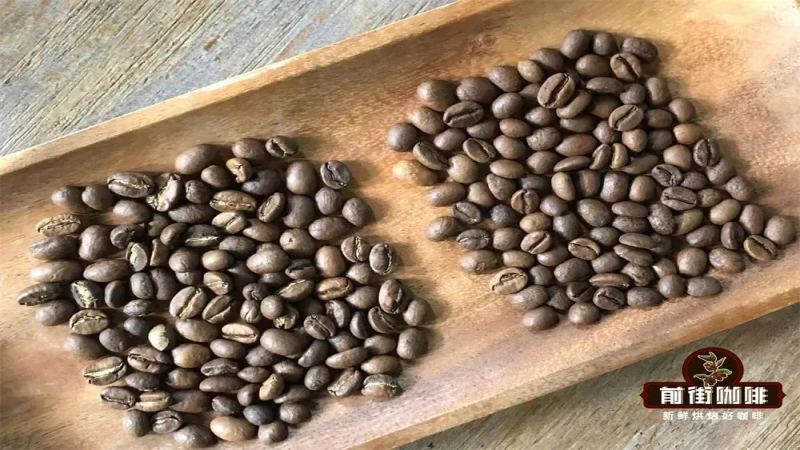
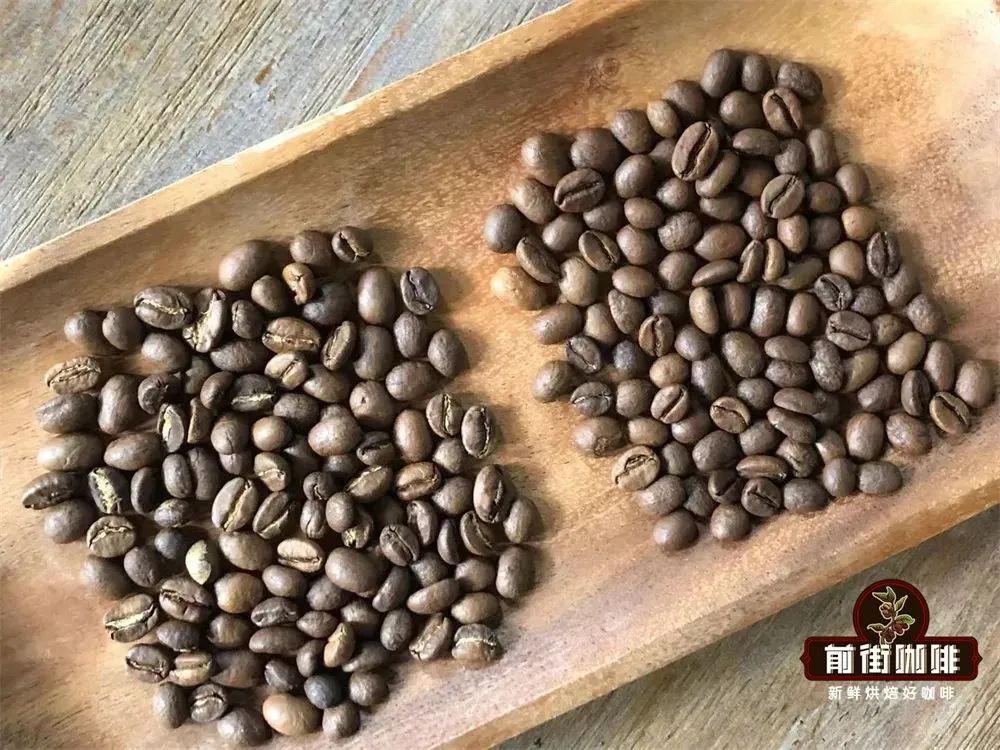
In the green bean state, natural beans appear yellow-green with more silver skin; washed beans are blue-green with less silver skin.
However, in the roasted state, natural beans have little silver skin, while washed coffee beans have more silver skin.
This is because washed beans are soaked in water for a long time during processing, causing the silver skin to separate from the coffee beans. When the parchment is finally removed, the outer silver skin is stripped off along with it, leaving very little silver skin on the surface of washed green beans. Natural beans are the opposite: the skin and pulp remain attached to the outside of the bean, and the silver skin adheres tightly to the coffee bean, making it difficult to fall off when removing the parchment. Therefore, natural green beans still have a lot of outer silver skin attached to the surface.
Although from the green bean perspective, washed beans have less silver skin and natural beans have more, during roasting, the silver skin at the center line of the coffee bean is the hardest to remove. Natural beans, because the outer silver skin is connected as one piece, more easily detach together with the silver skin at the center line, so after roasting, natural roasted beans have very clean silver skin removal.
Washed beans are the opposite: because there is almost no outer silver skin connection, the silver skin in the center line crack cannot easily detach and instead remains after roasting. This is why, from the roasted bean perspective, washed beans have more silver skin and natural beans have less.
Flavor Comparison
Natural beans (Natural Red Cherry), because the entire skin and pulp are retained during sun drying, the fermentation of the pulp brings charming winey and fermented aromas to the coffee beans, and the sweetness is also more pronounced.
Washed beans (Yirgacheffe Gutingting) more easily retain the coffee's original flavor, with brighter acidity and a cleaner taste.
For more specialty coffee beans, please add private WeChat Front Street Coffee (FrontStreet Coffee), WeChat ID: kaixinguoguo0925
The above content is compiled by CoffeeHunters, a coffee news website.


