






Where Did Geisha Coffee Originally Come From?
Geisha coffee is an ancient heirloom variety from the Gesha mountain area in southwestern Ethiopia. It was first introduced as a coffee sample to an experimental garden in Costa Rica and later distributed to small farms for trial cultivation. It drew little attention until Hacienda La Esmeralda in Panama separated it from other varieties and won a national competition with it.
Prices reflect that reputation: Panama Emerald Red Label Geisha sells for around 350 yuan per 100g, while Ethiopia Gesha Village Red Label is about 98 yuan per 100g. The cup shows intense floral and tropical fruit aromas, strong sweetness and a light tea-like body. Varieties now include Panama, Ethiopia, Costa Rica, Jamaica Blue Mountain and Guatemala Geisha.
Geisha coffee is one of the most sought-after varieties in today's specialty coffee world, conquering countless coffee lovers with its intense floral aroma, tropical fruit notes, and light tea-like body. But did you know that this variety, which now shines brightly in Panama, Colombia, and beyond, originally came from the Gesha mountain area in southwestern Ethiopia? From the perspective of Front Street Coffee, this article traces the origins of Geisha, tells the story of the establishment of Gesha Village Estate, and provides a detailed introduction to its Red Label Geisha's variety, plot, processing method, and Front Street brewing recipe, giving you a complete understanding of this legendary coffee's past and present.
For more specialty coffee knowledge, please follow our WeChat official account: Front Street Coffee (FrontStreet Coffee)
As the third wave of specialty coffee sweeps in, more and more exquisitely styled coffees have entered the public eye, and Geisha is one of those repeatedly mentioned. Geisha is cultivated in many countries and can be called the new king of specialty coffee, with the quality and prices of South American origins such as Panama, Guatemala, and Colombia all at the high end. Taking Front Street Coffee (FrontStreet Coffee) as an example, Panama Emerald Red Label Geisha is priced at 350 yuan/100g, while Ethiopia Gesha Village Red Label is 98 yuan/100g. The reason Geisha coffee beans are so widely popular is that they possess rich floral and tropical fruit aromas, intense sweetness, and a light tea-like body, as if tasting the fragrance of a bouquet of fresh flowers with every sip.
According to Front Street Coffee (FrontStreet Coffee), the varieties of Geisha coffee are quite diverse, including Panama Geisha, Ethiopia Geisha, Costa Rica Geisha, Jamaica Blue Mountain Geisha, and Guatemala Geisha, among others. Faced with so many Geishas, one can't help but ask: where exactly is its place of origin? Perhaps you are not yet familiar with Geisha's background—it is an ancient heirloom variety from Ethiopia, initially introduced as a coffee sample to an experimental garden in Costa Rica, and subsequently distributed to several small farms for trial cultivation. For a long time, Geisha did not receive much attention until Hacienda La Esmeralda in Panama separated it from other varieties and won the national coffee competition championship, truly stepping into the spotlight.
The Origins of Geisha Coffee
Geisha coffee beans are also known as "Geisha," but they are not from Japan. The name comes from the fact that their growing area is located on a mountain in Ethiopia called Gesha, which happens to be pronounced the same as the Japanese traditional geisha "Geisha," hence the name. However, in recent years, the Chinese transliteration "瑰夏" has been mostly adopted. Although the original home of these coffee beans is Gesha Mountain in southwestern Africa, after being introduced to Panama, due to low yields, coffee farmers were initially reluctant to cultivate this variety.
The turning point came in 2004, when Panama's Hacienda La Esmeralda shone brightly with this coffee bean at the Panama Cup of Excellence, and Geisha's fame spread far and wide. Another reason is that Geisha coffee has relatively low yields, and when people are accustomed to equating price with quality, Geisha naturally became a legend. At the 2019 Best of Panama (BOP) competition, Panama Geisha coffee continued to sit firmly on the throne of the most expensive coffee with a high price of $1,029 per pound!
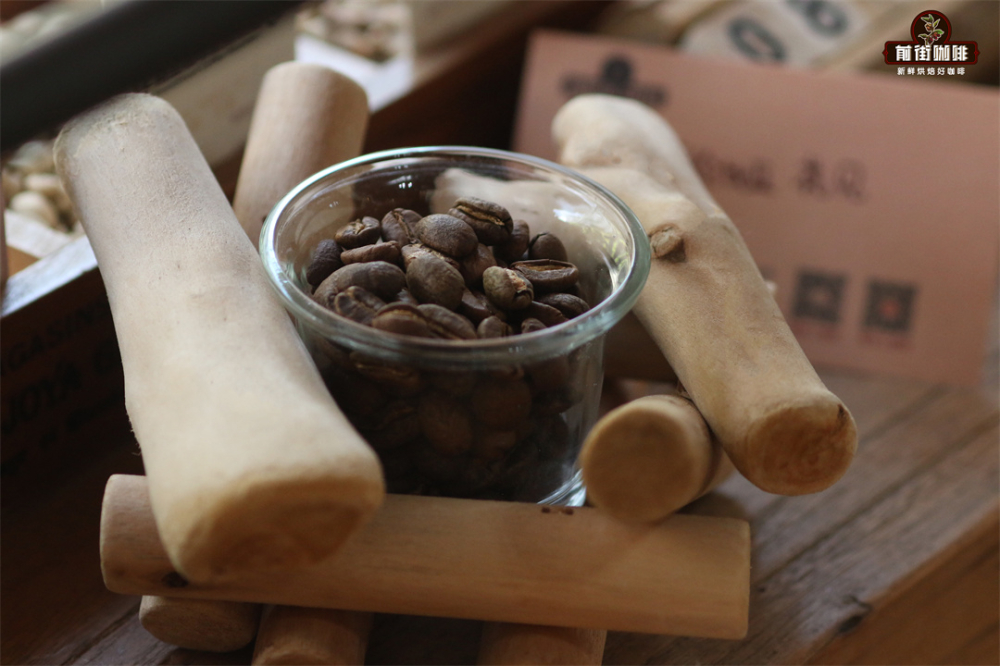
Gesha Village Estate on Gesha Mountain
Since Geisha coffee originated from Gesha Mountain in Ethiopia, what Geisha varieties are there on Gesha Mountain? Here we must mention the Geisha coffee from Gesha Village Estate.
In 2007, documentary filmmaker Adam Overton and his photographer wife Rachel Samuel, while filming an Ethiopian coffee documentary for the Ethiopian government, came into contact with the Gera coffee forest located in the Bench-Maji region. This experience not only gave them a new understanding of this great land of Ethiopia but also sparked the idea of establishing their own coffee estate and brand.
In 2009, they had the good fortune to meet the renowned owner of Hacienda La Mula, BOP judge Willem Boot, and Willem Boot's ideas provided the Overton couple with an opportunity: to return to Ethiopia and search for the birthplace of Geisha. Eventually they came to Bench-Maji, a region in southwestern Ethiopia near South Sudan, where many places are called Geisha Village and which is the area most likely to contain original Geisha. When they arrived in 2011, there was nothing at the estate yet.
Adam followed Willem Boot to start "exploring" in the forests around the estate, and in a jungle magically enveloped by dense forest, they discovered multiple wild tree species, and what surprised them most was wild Geisha. Later they learned that this was the Gori Geisha forest, the place where Geisha was first discovered. So they collected seeds from the original Geisha trees, selected from them, and then planted them at Gesha Village. They decided to establish the estate there and named it Geisha Village Coffee Estate, a 475-hectare coffee farm located about 12 miles from the Gori Gesha forest.
Gesha Village Coffee Estate is completely different from the vast majority of Ethiopian farms. It is not a small farm but a 500-hectare large farm with its own washing station and laboratory, located in the southwest near the Sudan border. Most notably, the entire farm cultivates only Geisha varieties, rather than the usual Ethiopian heirloom varieties whose exact identities cannot be determined. Gesha Village divides the farm into 8 blocks and 3 main Geisha varieties, with all Geisha seeds collected from nearby forests rather than from Panama.
In October 2011, they broke ground to build the farm, and the first harvest came in 2015. Due to enthusiastic responses from all sides, with the assistance of Panama coffee estate owner Willem Boot, they offered 21 micro-lots in their first international auction held on May 31, 2017, of which 19 lots had 120 kilograms each, and the other few lots were smaller. Bidders from Europe, North America, Asia, and Australia responded with unexpected enthusiasm, and the final winning bid price was $85 USD per pound, breaking all previous auction prices for African beans!
The terrain on the west side of Gesha Village Estate is relatively higher, with the SHEWA-JIBABU block at a slightly higher elevation, while the south side has a relatively higher shade ratio, and the north side receives longer sunlight exposure. Among the estate's eight blocks, the estate managers select the most suitable variety for each block based on microclimate differences such as elevation, soil conditions, and shade conditions, ensuring that each block develops distinct characteristics.
Coffee Varieties at Gesha Village
Gesha Village has three varieties, each named after the expedition team members when the coffee was discovered: Gesha1931 (Gesha 1931), Gori Gesha (Gori Gesha), and Illubabor provided by the Ethiopian Coffee Research Center.
Gesha1931 was confirmed through observing plant morphology, bean shape, size, and cupping, and it is the mother plant closest to Panama Geisha. The Gori Gesha variety, on the other hand, was collected by the owner of Gesha Village Estate in 2011 through his own exploration from the wild Gori Geisha coffee forest 20 kilometers from the current Gesha Village farm, and no duplicate samples have been found elsewhere.
Red Label Geisha Coffee
Gesha Village Estate uses a product line configuration similar to Hacienda La Esmeralda, divided into RARITIES (Gold Label), GROWERS RESERVE (Red Label), SINGLE-TERROIR (Green Label), and CHAKA. Front Street Coffee's (FrontStreet Coffee) Red Label Geisha from Gesha Village Estate—the estate is located in Bench-Maji, Ethiopia, and this Red Label lot comes from the estate's Shewa-Jibabu block, located in the northwest of the estate, with coffee trees planted at elevations between 1,973 and 2,069 meters.
Natural Processing
Front Street Coffee's (FrontStreet Coffee) Gesha Village coffee uses natural processing. First, floating debris and impurities are removed, then it is sun-dried on African-style raised beds in thin layers covered with plastic sheeting. During drying on the sun beds, a second sorting is performed to pick out insect-damaged beans and greenish-colored coffee beans. The total drying time is 18-30 days. Front Street believes that naturally processed coffee has pronounced sweetness, soft acidity, and produces complex fruity notes in flavor.

Front Street Coffee (FrontStreet Coffee): Ethiopia Gesha Village Estate Red Label Geisha
Region: Ethiopia Bench-Maji Region
Estate: Gesha Village Estate
Elevation: 1,909-2,069 meters
Variety: Gori Gesha
Processing Method: Natural Processing
Front Street Brewing Parameters
Dose: 15 grams
Coffee-to-Water Ratio: 1:15
Grind Size: Fine grind for pour-over (78% passing through a No. 20 standard sieve)
Water Temperature: 91°C
Dripper: V60
Front Street Brewing Method:
Every bag of Front Street Coffee (FrontStreet Coffee) specialty coffee comes with detailed information and brewing parameter suggestions. Front Street Coffee's (FrontStreet Coffee) brewing recommendation is to form the coffee grounds into a bowl shape within the referenced parameters so that the coffee is fully extracted. If the water level is higher than the coffee bed, some water will flow directly down the edge of the dripper; if the water level is too low, some coffee grounds will not participate in the extraction, making the taste weaker.
Front Street brews according to these parameters: first, rinse the filter paper and preheat the dripper and coffee pot. Use 30 grams of water for a 30-second bloom, then pour in a slow circular motion until reaching 125 grams, at which point a pour break is made. When the water level drops to just about to expose the coffee bed, continue pouring in a circular motion until reaching 225 grams, then stop pouring. When the water level drops to just about to expose the coffee bed, remove the dripper. (Timing starts from the beginning of the bloom.) The total extraction time is exactly 2 minutes.
The Red Label Geisha from Gesha Village brewed this way has citrus acidity at high temperatures without losing body; as the temperature drops slightly, the acidity turns softer, with flavors leaning toward yellow stone fruits, creamy sweetness, a slight floral note, and a faint dark cocoa finish; at lower temperatures, it reveals maple syrup and berry notes.
The above content is compiled by CoffeeHunters, a coffee news website.


