







How Should Golden Mandheling Be Roasted and Brewed?
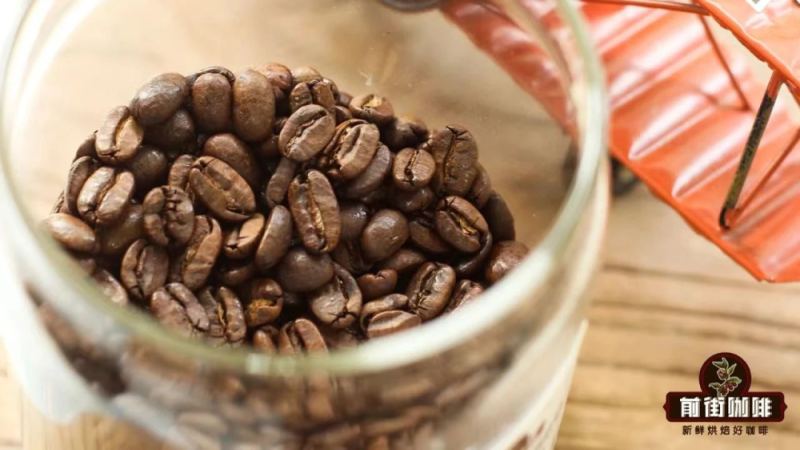
Golden Mandheling is a Sumatra coffee, typically from the Lintong region of North Sumatra at 1,100 to 1,600 meters, and it is usually given a dark roast to emphasize body and caramel sweetness. Its wet-hulled processing leaves higher moisture in the green bean, so the roast plan starts with longer dehydration and careful caramelization control. The result is herbal notes, spice, steady fruit acidity, and a thick mouthfeel.
Wet-hulling at the farm involves dry fermentation of 12 to 36 hours, one to two days of sun drying, hulling at 35 to 40 percent moisture, then further drying to about 12 to 15 percent. That higher moisture and wider deviation call for attention during dehydration. After charging, the damper is closed for a 30-second soak, then opened in stages as the beans lighten and first crack ends.
Golden Mandheling is a representative coffee from the Sumatra region of Indonesia, known for its full-bodied mouthfeel and caramel sweetness. When Front Street Coffee roasts this bean, it needs to comprehensively consider the high moisture content characteristic brought by its wet-hulled processing, and through precise dehydration and caramelization control, fully bring out the herbal notes, spice flavors, and steady fruit acidity. This article, from green bean processing, roasting curve, and flavor characteristics to brewing parameters, fully presents Front Street Golden Mandheling's roasting and extraction approach, helping coffee enthusiasts understand the unique charm of dark-roasted Mandheling and replicate a full-bodied, balanced cup at home.
Is Front Street Golden Mandheling necessarily without acidity?
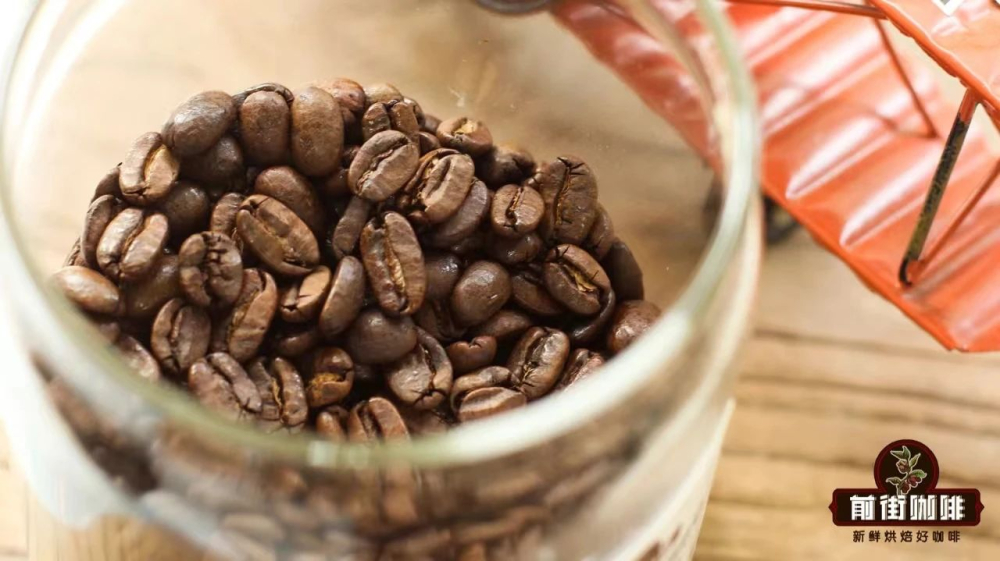
Unlike most conventional coffee beans on the market, the Front Street Mandheling series focuses on presenting a rich, thick mouthfeel and a caramel-like sweet finish. For this reason, this bean usually follows a dark roast profile.
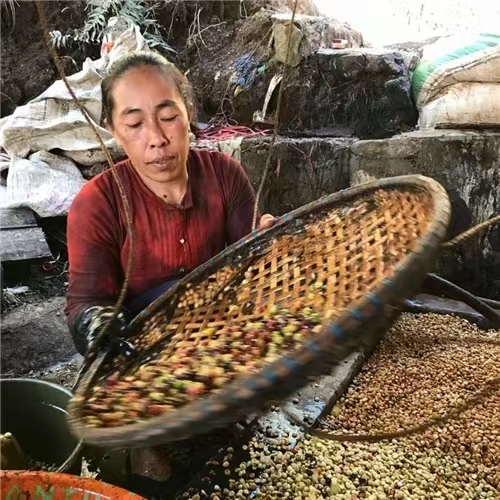
Taking Front Street Golden Mandheling as an example, before formulating a roasting plan, Front Street first determines the general direction based on growing information. This bean comes from the Lintong region of North Sumatra, Indonesia, grown at an altitude of about 1,100 to 1,600 meters. The local climate is humid, and to speed up drying, wet-hulled processing is used. During picking, fully ripe cherries are selected entirely by hand to ensure initial bean quality, then loaded into barrels for dry fermentation, allowing the sugars in the mucilage to fully transform and add flavor. Fermentation time is usually controlled at 12 to 36 hours, adjusted according to conditions; next, the beans are sun-dried for 1 to 2 days, and when moisture drops to 35%–40%, the parchment is removed with a huller, followed by continued sun drying until the moisture content falls to around 12%–15%.
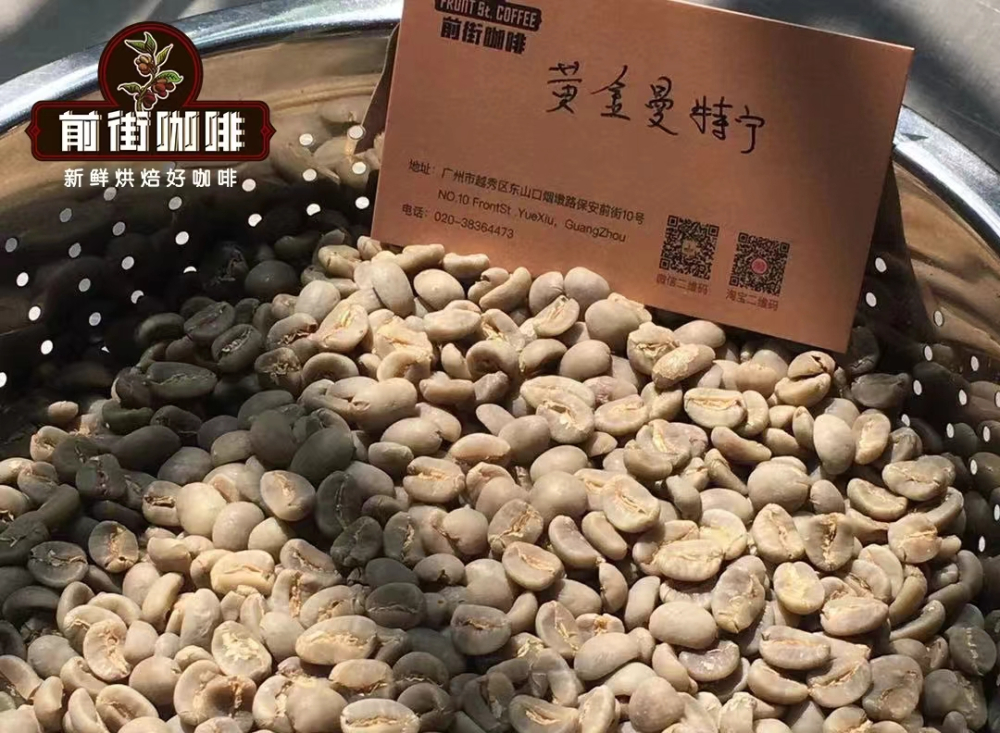
This type of green bean has relatively high moisture content, and compared with natural-process beans, its moisture deviation is larger, so extra attention is needed during the dehydration stage. For green beans with high moisture content, you can close the damper immediately after charging, soak for 30 seconds, then adjust to 3. When the green bean color turns light green or white, open the damper to 4, and after first crack ends, open it to 5 (maximum setting).
In summary, the goal is to roast Golden Mandheling "thoroughly" from the inside out. On the premise of ensuring it is fully developed, use proper roasting techniques to release the bean's own flavors. Caramelization is the most critical link affecting coffee flavor. After six to seven minutes of heating, the green beans absorb a large amount of heat energy and trigger pyrolysis reactions, and the first crack follows. Some sugars convert into carbon dioxide, moisture continues to evaporate, and new aromatic components are gradually generated, forming the so-called coffee oils and blending with hundreds of aromatic substances such as nicotinic acid, citric acid, quinic acid, malic acid, acetic acid, and caffeine.
Pyrolysis reactions continue into second crack. Caramelization is certainly an important process for awakening aroma, but the longer the roasting time drags on, the more some components become carbonized, producing unpleasant astringent and bitter substances. Therefore, the key is how to maximize the degree of caramelization while minimizing carbonization, avoiding defects such as burnt flavor and tire-like notes.
Charge when the drum temperature rises to 200°C, with the damper set to 3. After one minute, adjust the heat to 160°C and keep the damper unchanged. At 5 minutes 40 seconds, when the temperature is 148°C, the bean surface turns yellow, the grassy smell completely dissipates, and the dehydration stage ends. Lower the heat to 140°C and adjust the damper to 4.
At 9 minutes 40 seconds, irregular wrinkles and dark mottled patterns appear on the bean surface, and the toasted bread aroma clearly transitions into coffee aroma, which can be regarded as the prelude to first crack. At this point, carefully catch the cracking sound of first crack. First crack begins at 9 minutes 54 seconds, then immediately reduce the heat to 60°C and open the damper fully (adjusting the heat requires extra care, and it must not be reduced so much that the cracking sound disappears). Drop the beans at 204.5°C.
Flavor characteristics of Golden Mandheling
Golden Mandheling carries a high-quality herbal aroma, with more prominent caramel sweetness. Its fruit acidity is steady and elegant, its sweetness is rich, and its spice flavor is full-bodied with a touch of wildness. Generally speaking, Lintong Mandheling is best dropped after second crack, which can effectively reduce off-flavors; but Golden Mandheling can also achieve excellent transparency and sweetness when dropped before second crack, giving it a wider range for roasting expression.
Brewing method for Golden Mandheling
Front Street recommends using freshly roasted coffee beans for brewing, as this allows you to experience the coffee's rich flavors to the greatest extent. Coffee beans shipped by Front Street Coffee (FrontStreet Coffee) are all within 5 days after roasting, because Front Street is very clear about how much freshness affects flavor. Front Street's roasting philosophy is "freshly roasted good coffee," so that every customer who places an order can receive the freshest beans when the coffee arrives. The resting period for coffee is about 4 to 7 days, so by the time customers receive it, it is exactly at its best flavor stage.
Dark roasting makes the internal structure of coffee beans loose, so they can be crushed with a gentle pinch of the hand, which means that after grinding they have a strong water absorption capacity. To avoid coffee grounds releasing too many bitter substances after absorbing water, Front Street will coarsen the grind size and use lower-temperature water for pour-over. As for the coffee-to-water ratio, Front Street commonly uses 1:15. If you want a richer mouthfeel, you can switch to 1:13, adjusting flexibly according to personal taste.
The brewing approach of Front Street Coffee (FrontStreet Coffee) baristas is to let Golden Mandheling present a fuller and more balanced mouthfeel. It is recommended to use a KONO dripper with "immersion extraction" characteristics for brewing. KONO's ribs are mainly concentrated in the lower half, with the purpose of guiding the coffee liquid downward, while the upper half fits tightly against the dripper, hindering the release of steam, which slows the flow rate. The extracted coffee is therefore more concentrated, with a fuller and more solid mouthfeel.
88°C water temperature, 1:15 coffee-to-water ratio, 15g coffee grounds, grind size (70% passing rate on a No. 20 standard sieve), three-stage extraction.
First stage: pour 30ml and bloom for 30 seconds;
Second stage: pour 100ml in a circular motion from the center outward;
Third stage: likewise pour 95ml in a circular motion from the center outward.
The above content is compiled by CoffeeHunters, a coffee news website.


