







Why does Jamaican coffee hold Blue Mountain status?
Blue Mountain coffee comes from the Blue Mountain range in eastern Jamaica, surrounded by the Caribbean Sea. The beans pursue a harmonious balance of acidity, sweetness and bitterness with a rich, smooth mouthfeel, rather than the fruit-forward profile popular today. The Jamaica Coffee Board applies strict grading, and Blue Mountain No. 1 is scarce on the global market.
The name traces to the range itself: on clear days sunlight reflects off the sea onto the mountains, filling them with blue light. This Jamaican coffee is grown in a defined area with specific altitude and soil conditions, and evaluations of the cup tend to polarize. Clifton Mount Estate Blue Mountain No. 1 shows how grading and terroir combine in a classic balanced profile.
Blue Mountain coffee holds a legendary status in the hearts of many coffee lovers; many have heard its name resounding long before they ever taste it. Unlike the coffee varieties popular today, Blue Mountain coffee pursues a harmonious balance among acidity, sweetness, and bitterness, with a rich and smooth mouthfeel. The formation of this unique flavor is inseparable from the exceptional natural environment of Jamaica's Blue Mountain region. This article will systematically introduce the origin and heritage of Blue Mountain coffee, the Jamaica Coffee Board's strict grading standards, and the scarcity of Blue Mountain No. 1 in the global market. At the same time, Front Street Coffee will share the cupping flavor profile and brewing parameters of Clifton Estate Blue Mountain No. 1, helping readers gain a comprehensive understanding of the true character of this classic top-tier coffee.
For more specialty coffee knowledge, please follow the WeChat official account: Front Street Coffee (FrontStreet Coffee)
In the eyes of many coffee novices, Blue Mountain coffee occupies an almost unshakable legendary position—as the saying goes, "its name is heard before its taste is known." In many films and television dramas, Blue Mountain coffee beans are often portrayed as an indispensable premium beverage for office workers in their daily routines. Unlike the coffee varieties that are all the rage on the market today, Blue Mountain coffee pursues a harmonious unity of acidity, sweetness, and bitterness, with a rich and full-bodied mouthfeel. Because of this, evaluations of these coffee beans are often polarized: some regard it as the benchmark of perfectionism, while others feel that Blue Mountain coffee has no distinct character at all.
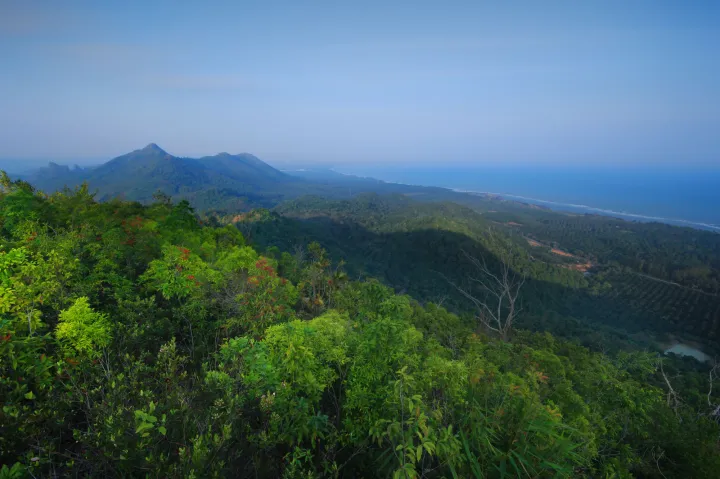
The reason Jamaican Blue Mountain coffee beans can present such a unique flavor is inseparable from the favorable growing conditions of the region. Blue Mountain coffee takes its name from its place of origin—the Blue Mountain range region of Jamaica. The Blue Mountain range is located in the eastern part of Jamaica's territory, surrounded on all sides by the Caribbean Sea. On clear, cloudless days, sunlight shines directly onto the azure sea, and the dazzling blue light reflects back onto the mountains, filling the entire mountain body with a brilliant blue radiance—hence the name "Blue Mountain."
Within the Blue Mountain region, coffee trees are planted amid dense primeval forests. When the sun is high, the dense canopy shields the coffee trees from intense sunlight, providing natural shade. Combined with the influence of the tropical rainforest climate, the area is shrouded in mist year-round with abundant rainfall. On this rain-nourished, fertile land, Blue Mountain coffee beans obtain ideal growing conditions.
Although this is an ideal place for coffee cultivation, as everyone knows, coffee originated in Ethiopia, and Jamaica's coffee cultivation is likewise part of the history of European colonial expansion. In the late 1720s, Jamaica's governor Sir Nicholas Lawes brought descendants of the European mother plant (Typica variety) from Martinique back to Jamaica and planted them at the foot of the mountains in the St. Andrew area on the outskirts of Kingston. Thereafter, coffee gradually took root, multiplied, and thrived in Jamaica's Blue Mountain region.
Today, the cultivation area for Blue Mountain coffee has expanded from the St. Andrew area to four administrative regions: St. Andrew, St. Thomas, St. Mary, and Portland. However, the Jamaica Coffee Board's control over coffee grades is extremely strict—even if planted within these regions, coffee is not necessarily entitled to bear the name Blue Mountain coffee.
According to CIB regulations, Jamaican coffee beans are first divided into three grades based on cultivation altitude: Blue Mountain Coffee, High Mountain Coffee, and Jamaica Prime Coffee. Among these, both the Blue Mountain Coffee grade and the High Mountain Coffee grade have their cultivation range limited to the Blue Mountain region. According to CIB's specific regulations:
[Blue Mountain Coffee] Blue Mountain coffee must be cultivated at an altitude above 1,000 meters.
[High Mountain Coffee] Jamaican High Mountain coffee is cultivated at an altitude between 500 and 1,000 meters.
[Jamaica Prime Coffee] Coffee beans of this grade are cultivated at an altitude below 500 meters, and the cultivation area is not necessarily limited to the Blue Mountain production region.
Under the two grades of Blue Mountain Coffee and High Mountain Coffee, further classification is made based on green bean size and defect count: No. 1, No. 2, No. 3, and PB. Provided that the proportion of defective green beans does not exceed 2%, Blue Mountain No. 1 grade coffee beans are sized 17/18 mesh; Blue Mountain No. 2 grade is 16/17 mesh; Blue Mountain No. 3 grade is 15/16 mesh; and Blue Mountain PB grade consists of peaberries.
It can thus be seen that Blue Mountain No. 1 coffee beans are the highest-grade category within Jamaican Blue Mountain coffee. Under CIB's extremely stringent regulations, the output of Blue Mountain No. 1 coffee beans is quite limited. In the last century, Jamaica's coffee-growing regions suffered meteorological disasters, and the coffee industry was deeply troubled; it was only revived with funding from the Japanese government. For this reason, for a considerable period, Japan held priority purchasing rights for Jamaican Blue Mountain coffee, and at one point more than 90% of Jamaican Blue Mountain coffee was bought by Japanese buyers.
In recent years, as Japan's purchasing power has declined, more Blue Mountain coffee beans have flowed to markets in other countries. Although the output of Blue Mountain coffee beans remains modest, seeing and even drinking genuine Blue Mountain coffee is no longer a difficult matter. However, many coffee beans on the market labeled "Blue Mountain Blend" or "Blue Mountain Flavor" leave many coffee lovers realizing the truth only after gaining a deeper understanding of Jamaican Blue Mountain coffee.
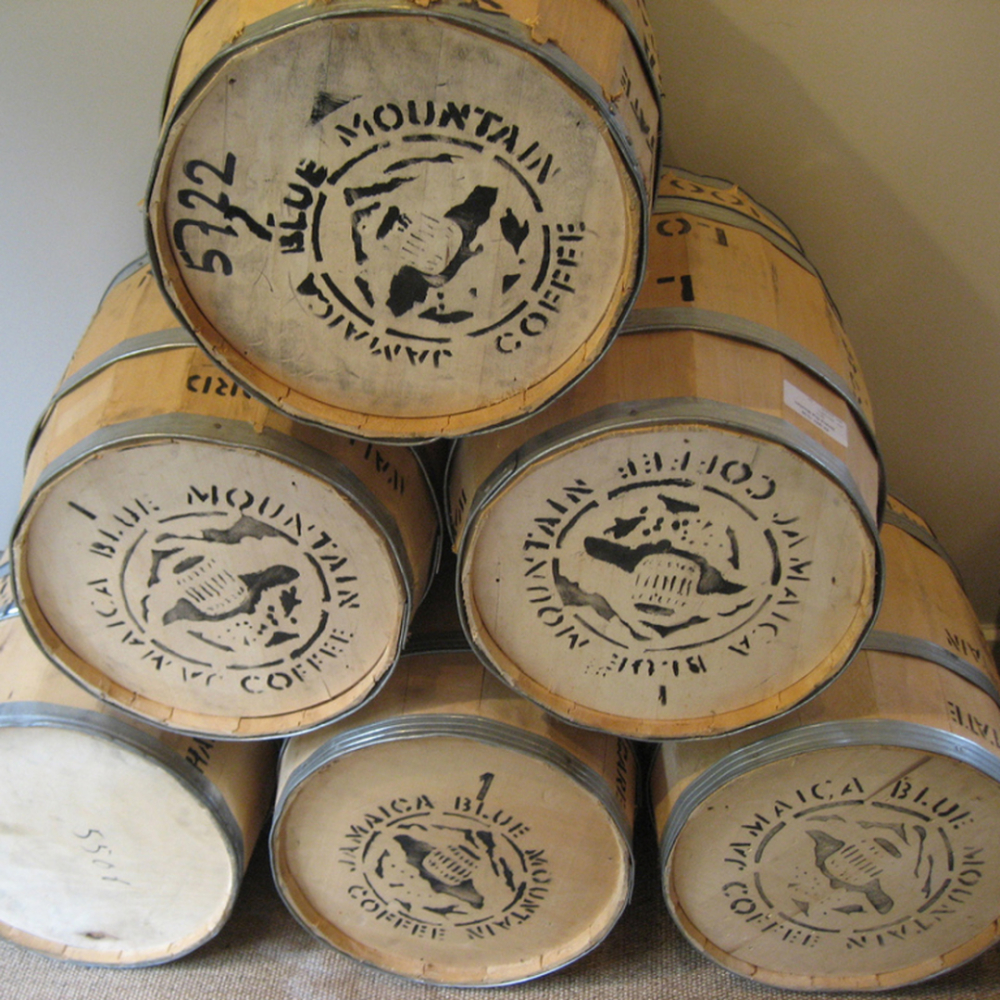
Of course, verifying the authenticity of Jamaican Blue Mountain coffee is not difficult. Jamaica is currently the only coffee-producing country in the world that still uses wooden barrels to pack green coffee beans. In addition, the Jamaican authorities issue certificates of origin for exported Blue Mountain coffee beans. Blue Mountain green coffee barrels and certificates of origin are both displayed in Front Street Coffee's store.
As a representative of classic top-tier coffee, Blue Mountain coffee can also be found on Front Street Coffee's bean shelf. Front Street Coffee's Blue Mountain No. 1 coffee beans come from Clifton Estate, and the green frog logo can be seen on the Jamaican Blue Mountain coffee bean barrel at the Front Street store. Clifton Estate has obtained Rainforest Alliance certification, which also confirms the coffee plantation's strong commitment to environmental protection.
Clifton Estate is located near Catherine's Peak and is one of the oldest coffee plantations in the area. Clifton Estate once belonged to a gentleman who had lost his beloved wife. Because he did not want to be reminded of his grief, he leased the estate out to tourists who wished to experience the magnificent beauty of the primeval forest. By the early twentieth century, Clifton Estate had developed into one of the largest estates in Jamaica.
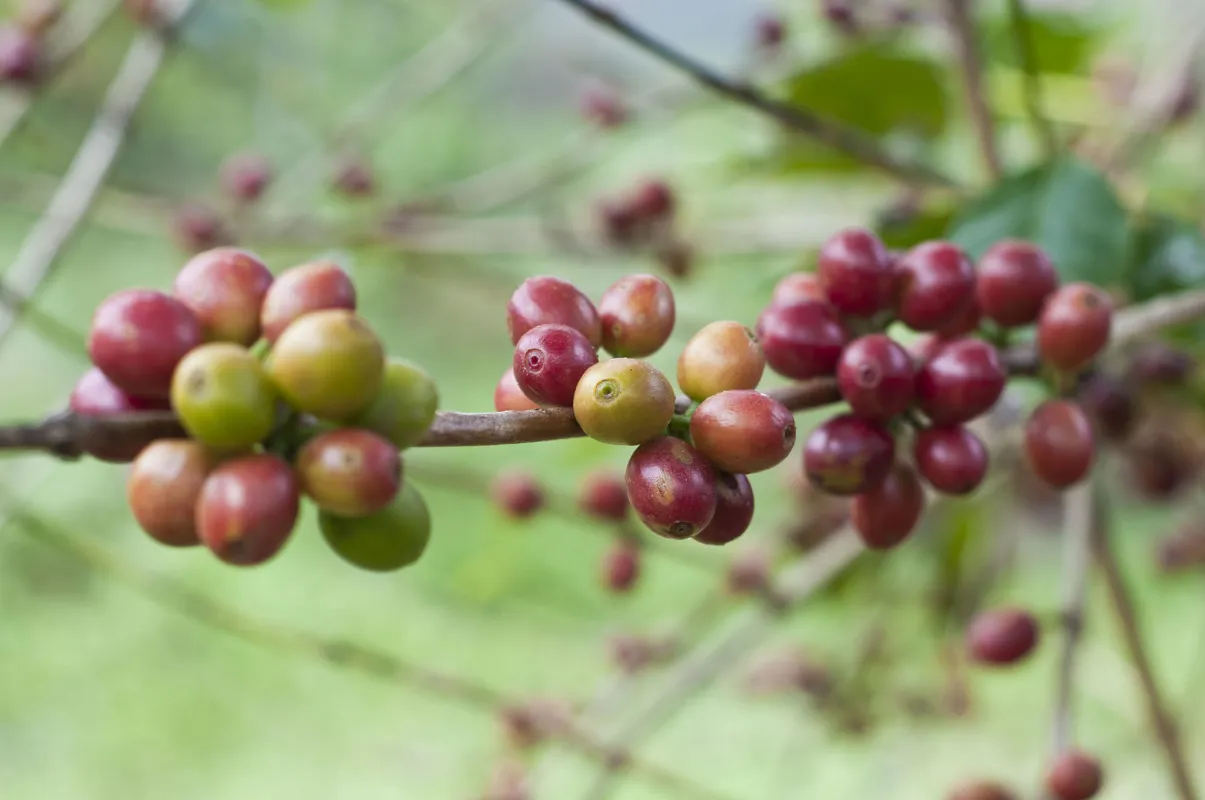
Regrettably, the gentleman who had lost his beloved wife ultimately gave up managing the estate. During the years without human intervention, the flora and fauna within Clifton Estate flourished. It was not until 1978 that the Sharp family took over Clifton Estate, when scattered wild coffee trees were growing freely in the jungle. In 1984, Richard of the Sharp family resolved to become a coffee grower, tending the coffee estate with care and beginning to devote himself to studying coffee.
Over the years, the two Sharp brothers demonstrated a deep love for coffee. They traveled across many coffee-producing regions, learned from local experience, and formed their own cultivation philosophy. Through years of experience and unremitting effort, Clifton Estate was rated by Jamaica's Ministry of Agriculture as the estate producing the highest-quality coffee beans in the 2017/2018 crop season.
Front Street Coffee has conducted cupping comparisons of multiple Blue Mountain No. 1 coffee beans and found that Clifton Estate's Jamaican Blue Mountain No. 1 coffee beans, with their rich nutty and cocoa flavors, caught the attention of Front Street Coffee's baristas. Front Street believes that Clifton Estate's washed Blue Mountain coffee beans can serve as one of the outstanding representatives of the region.
As the purchasing power of Chinese coffee lovers continues to grow, genuine Blue Mountain coffee beans are no longer hard to find but readily available. Many of Front Street's fans want to fully reveal the coffee beans' exquisite flavors and are very concerned about how to brew a good cup of Blue Mountain coffee. Next, Front Street will explain how Front Street's baristas prepare Blue Mountain coffee.
Dripper: KONO
Water temperature: 88°C
Coffee dose: 15 grams
Coffee-to-water ratio: 1:15
Grind size: 75% pass rate on China standard No. 20 sieve
Since Front Street ships coffee beans freshly roasted within 5 days, by the time they arrive, even after a 4-to-7-day resting period, the coffee beans still contain abundant gas within their cells, which during brewing may inhibit water from entering the coffee particle structure to dissolve out flavor compounds. Therefore, Front Street recommends a 30-second bloom.
First pour 30 grams of hot water and bloom for 30 seconds, pouring from the center point in a thin stream and slowly circling to 125 grams. Wait for the water level in the dripper to drop until the coffee bed is about to be exposed, then continue circling and pouring to 225 grams. Total extraction time is approximately 2 minutes.
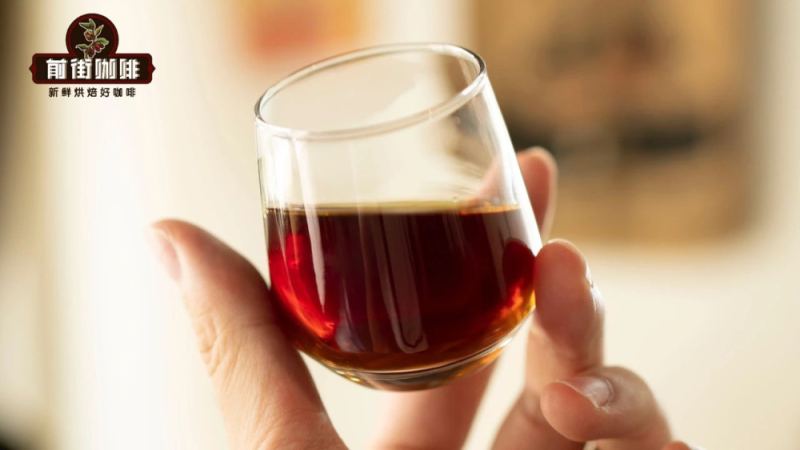
The Blue Mountain coffee brewed by Front Street Coffee's baristas using the above parameters and steps offers rich nutty and dark cocoa flavors, with a heavy and smooth mouthfeel and a balanced acidity, sweetness, and bitterness.
The above content is compiled by CoffeeHunters, a coffee news website.


