







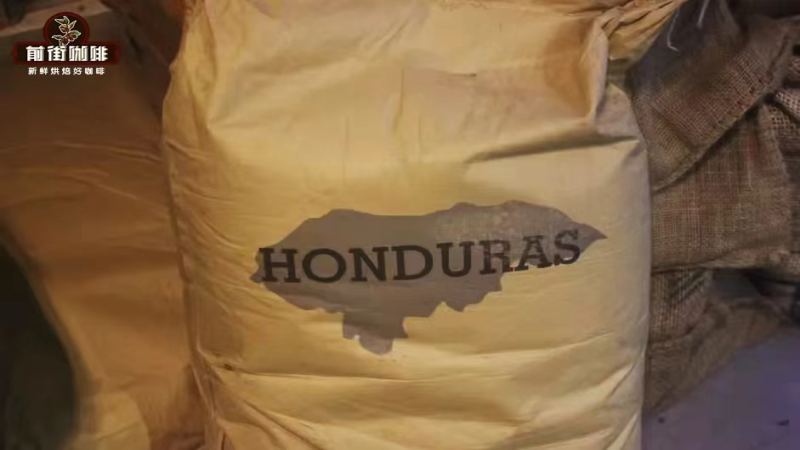
How does coffee bean processing shape Honduran coffee?
Honduras is Central America's largest coffee producer, and barrel fermentation is what brought its Sherry and Lychee Orchid coffees into the spotlight. That coffee bean processing step gives the beans whisky-like alcohol notes, vanilla cream sweetness and honey-and-chocolate finishes, with little obvious acidity or bitterness. It is why wine drinkers tend to respond to these cups immediately.
The country's geography supports this: mostly mountainous and highland terrain across 112,492 square kilometers, with peaks above 3,000 meters in the northwest and over 2,400 in the south, plus rivers including the Coco, Patuca and Ulúa. Across the six main producing regions, coffee farms work with different varieties and methods, so ratios, water temperature, grind size and staged pouring should be adjusted to the specific lot being brewed.
Honduras, as the largest coffee-producing country in Central America, has rapidly gained popularity in recent years thanks to its Sherry and Lychee Orchid coffees processed with barrel fermentation. This article systematically reviews Honduras's geographical and climatic conditions, the flavor characteristics of its six major producing regions, main coffee varieties, and processing methods, with a focus on sharing Front Street Coffee's pour-over parameters and iced pour-over preparation methods for barrel-fermented beans. From coffee-to-water ratio, water temperature, grind size to staged pouring techniques, specific and actionable reference suggestions are provided to help coffee enthusiasts recreate at home the unique cup experience where whisky aroma and tropical fruit notes intertwine.
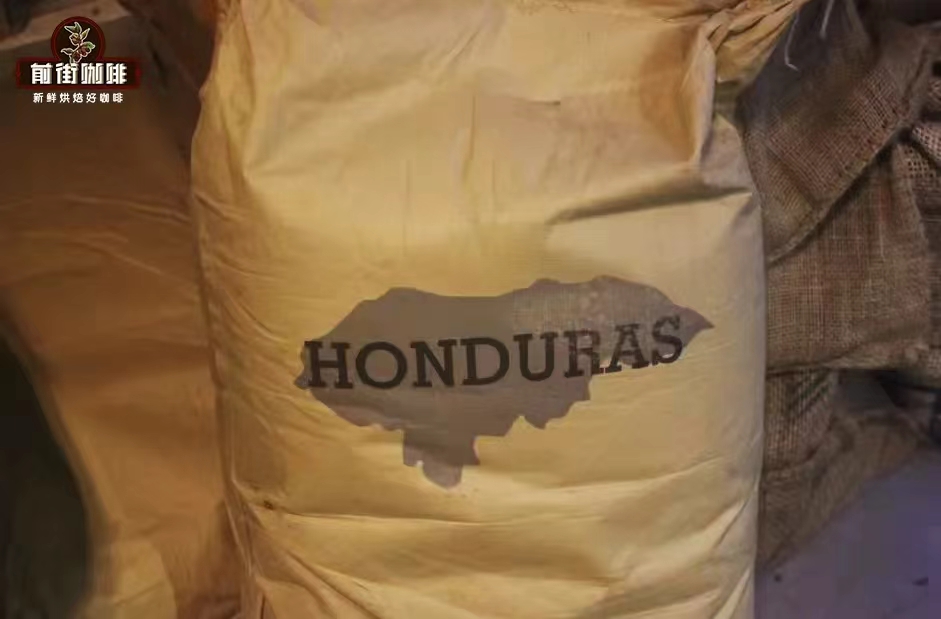
For more specialty coffee information, welcome to follow: Front Street Coffee (Frontstreet Coffee).
As Front Street often mentions, coffee beans from different producing countries often carry their own regional flavor imprints. Honduran coffee was initially not well-known until the Sherry coffee and Lychee Orchid coffee made with barrel processing methods came out, and this producing country's coffee gradually entered the public eye. Coffee is originally a crop, and after special processing, its flavor can surprisingly reveal notes of alcohol, which makes many wine lovers fall in love at first sip.
When brewing Sherry coffee, even before taking a sip, you can catch a rich vanilla cream sweetness. After drinking, the whisky-like alcoholic sensation lingers in the mouth, and the finish reveals honey-like sweetness and chocolate notes. This coffee has neither obvious acidity nor bitterness, and it is also one of Front Street's best-selling single-origin coffees.
Honduras is located in northern Central America, bordering the Caribbean Sea to the north, the Gulf of Fonseca of the Pacific Ocean to the south, Nicaragua and El Salvador to the southeast, and Guatemala to the west. Its terrain is mainly mountainous and highland. The country covers an area of 112,492 square kilometers, with a coastline of about 1,033 kilometers. Apart from the coastal plains, almost the entire country is mountainous, with the highest elevation in the northwest reaching 3,000 meters and the south also exceeding 2,400 meters. Major rivers include the Coco River, the Patuca River, and the Ulúa River. Rivers originating from the inland mountains interweave and flow toward the two oceans. Between the mountain ranges, many basins and river valleys have formed. The larger basins include the Sula and Lepaguare basins, while the main river valleys are the Comayagua and Jamastran valleys.
Coastal islands are scattered like stars, with the main islands including the Bay Islands and the Tigre Islands in the Gulf of Fonseca. Honduras has diverse terrain, and its climate types are correspondingly rich. The coastal plains of Central America have a tropical rainforest climate, with an average annual temperature of 31°C. The mountains have a subtropical forest climate, with an average annual temperature of 23°C. The rainy season runs from June to November, with mild temperatures and abundant rainfall, making it an ideal environment for coffee growth. However, the long-term lack of transportation infrastructure connecting producing areas to ports has also led to the relatively late start of Honduras's coffee industry.
Honduras has 280,000 hectares of coffee plantations, mainly small coffee farms, most of which are less than 3.5 hectares, and these small plantations contribute 60 percent of the country's coffee production. Because coffee farms are mostly located in mountainous areas, harvesting is done manually, followed by careful processing to pursue higher-quality coffee beans. Honduras harvests three million bags of coffee each year, supplying the market with coffee of both high quantity and quality, and has now entered the ranks of the world's top ten coffee exporting countries.
Main Coffee Producing Regions of Honduras
Honduras is currently the largest coffee-producing country in Central America. Its producing regions can be roughly divided into six: Copán, Montecillos, Agalta, Opalaca, Comayagua, and El Paraíso.
[Copán]
This producing region is located in western Honduras, bordering Guatemala. The average elevation is 1,000 to 1,500 meters, with high humidity and large temperature differences, and the lowest temperature can reach 11.5°C.
[Montecillos]
The growing areas in the Montecillos producing region have an average elevation of between 1,200 and 1,600 meters. Nighttime temperatures are lower, which is very suitable for the slow ripening of coffee cherries, making the final product sweeter. Coffee from this producing region has fruity aromas such as citrus, peach, and apricot, caramel-like sweetness, and a smooth mouthfeel.
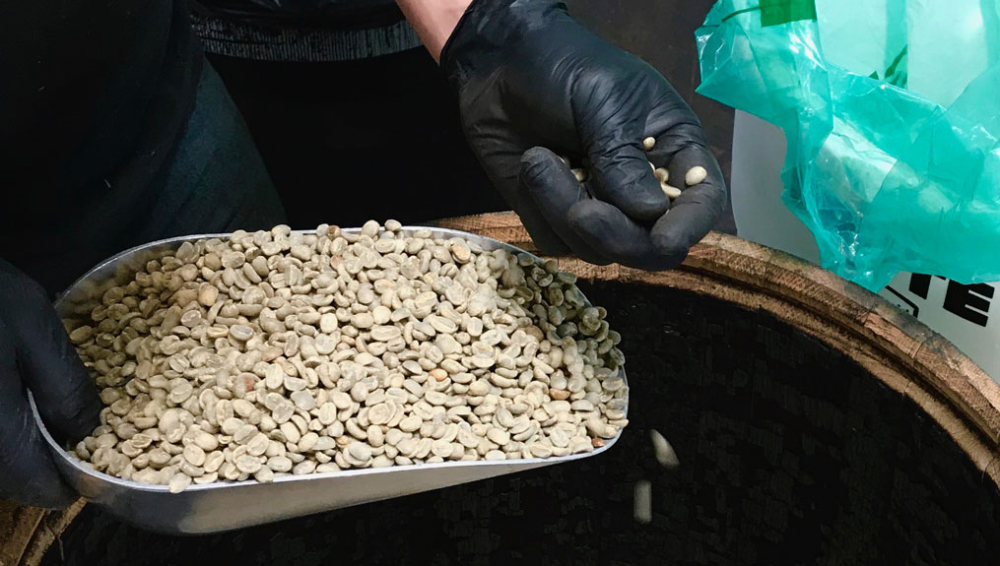
[Agalta]
The Agalta producing region is located in southeastern Honduras. It has a more typical tropical climate, with growing elevations between 1,100 and 1,400 meters. Coffee from the Agalta producing region has tropical fruit and chocolate flavors, low acidity, and caramel sweetness.
[Opalaca]
The Opalaca producing region is adjacent to the Copán producing region. Common coffee varieties in this producing region are Bourbon, Catuai, and Typica. Growing elevations range from 1,100 to 1,500 meters. Coffee from the Opalaca producing region is more complex in layers, with more refined acidity and a more balanced aftertaste.
[Comayagua]
Comayagua is located in central Honduras. In 2016, this producing region had the highest coffee production in Honduras. Coffee from the Comayagua producing region has citrus acidity and a creamy mouthfeel.
[El Paraíso]
The El Paraíso producing region is in southern Honduras and borders Nicaragua. Growing elevations range from 1,000 to 1,400 meters. Temperatures here are higher, between 16°C and 22.5°C. The El Paraíso producing region is the largest and oldest producing region in Honduras.
Mocha Estate
Mocha Estate is located in the southern part of the Jesús de Otoro valley in Masaguara, Honduras, surrounded by mountains and hills, with coffee cultivation as its main industry and an important pillar of the local economy. The areas corresponding to the valley are used for growing basic grains and raising livestock. The average elevation of this area is 853 meters, and the high-altitude areas can exceed 1,500 meters. Front Street's Sherry coffee and Lychee Orchid coffee both come from Mocha Estate.
The shape of Honduran coffee beans:
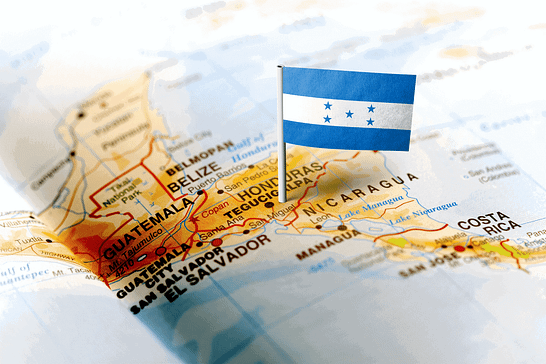
Honduran coffee beans are relatively large in size, uniform in size, and even and glossy in color. For ease of harvesting, farmers prune coffee trees to no more than 150 centimeters, because if they grow too tall, ladders must be used for picking, which is not only time-consuming but may also damage the tree by bending branches. Because each coffee fruit ripens at a different time, maintaining good coffee bean quality requires manual picking, followed by selecting the ripe fruits. For coffee fruits on the same branch, picking often takes several weeks to complete the entire harvest.
Honduran Coffee Bean Varieties
The vast majority of coffee varieties grown in Honduras are Arabica, mainly Bourbon, Caturra, Catuai, Typica, and Pacas-derived varieties.
[Caturra]
Caturra is a natural mutation of Bourbon, discovered between 1915 and 1918 on a plantation in Minas Gerais, Brazil. Caturra coffee plants are short, so planting density is higher. The Caturra variety was introduced to Guatemala in the 1940s and later spread from Guatemala to Costa Rica, Honduras, and Panama.
[Catuai]
Catuai is a coffee variety developed by the Agricultural Research Institute of São Paulo State in Brazil through crossbreeding Mundo Novo and Caturra. Catuai coffee plants are even shorter and can be planted more densely, but they are susceptible to pests and diseases.
[Pacas]
The Pacas variety was discovered in 1949 on a farm of the Pacas family in the Santa Ana region of El Salvador. In 1960, the Salvadoran Coffee Research Institute (ISIC) began a genealogical selection program for Pacas (selecting individual plants through successive generations). Honduras's IHCAFE introduced and began cultivating the Pacas variety in 1974. Pacas is also a natural mutation of Bourbon. Pacas is similar to Caturra in that the coffee plants are relatively short, but the Pacas variety has higher yield and good quality.
Honduran Coffee Bean Processing Methods
Coffee flavor is directly related to processing methods. Front Street's Honduras coffee and Lychee Orchid coffee both use barrel processing, except that Sherry coffee uses whisky barrels while Lychee Orchid coffee uses brandy barrels. Before the emergence of barrel fermentation processing, Honduran coffee beans were mostly washed. Coffee farmers first pour the picked coffee cherries into a large water tank. Underdeveloped, defective beans will float to the surface, while ripe, plump fruits sink to the bottom. At this point, the defective fruits floating on the surface are removed.
Then, a pulping machine is used to remove the outer skin and pulp of the coffee fruit. At this point, a slippery layer of mucilage still clings to the surface of the beans. The mucilage-covered coffee beans are moved into a fermentation tank for 16 to 36 hours, during which microorganisms gradually break down the mucilage. After fermentation is complete, a large amount of clean water is used to rinse off the mucilage remaining on the surface of the beans. The beans are then placed into barrels that have previously aged sherry or rum, fermented at a low temperature of 15 to 20°C for 30 to 40 days, and finally dried in the shade.
Front Street's Brewing Parameters for Honduran Coffee:
In order to highlight the winey and fruity aromas of Honduran coffee, Front Street gives it a medium-light roast. When brewing, you can use a V60 dripper, a 1:15 coffee-to-water ratio, medium grind (about the size of coarse sugar / 80% passing rate on a Chinese No. 20 standard sieve), and a water temperature of 91°C.
Use staged extraction, blooming with twice the amount of water as the coffee grounds, that is, 30 grams of water for a 30-second bloom. The reason a blooming process is needed is to allow the coffee grounds to release internal carbon dioxide gas, thereby making the later stages of extraction more stable. Pour in a small stream in a circular motion until reaching 125 grams, then pause; continue pouring until 225 grams and stop. After the water in the dripper has finished dripping, remove the dripper. Timing starts from the beginning of pouring, and the extraction time is 2'00". Next, pick up the entire cup of coffee and swirl it to mix evenly, then pour it into a cup for tasting.
Regarding these two aromatic Honduran beans full of wine notes, Front Street believes that iced coffee preparation is equally suitable. Below, using the store's serving method and the most popular sherry barrel, we will show you how to make a standard iced pour-over coffee:
Dose: 15 grams
10 times hot water: 150 grams
5 times ice: 75 grams
Water temperature: 92°C
Grind size: 83% passing rate on a No. 20 sieve (EK43s setting 9, C40 setting 22)
Dripper: Hario V60
Technique: three-stage pouring
First, place 75g of ice cubes into the server, then pour 15g of ground coffee into the dripper and gently level it. For the first stage, use a small stream of 3ml/s to pour 30g of hot water from the center outward in a small circular motion for a 30-second bloom; after 30 seconds, using the same technique, pour the second stage of 60g of water, being careful not to raise the water level too high, which can easily cause underextraction; when the coffee liquid is about to run dry, pour all of the remaining 60g of hot water at a flow rate of 3ml/s, ensuring the extraction time falls within 1 minute 50 seconds to 2 minutes.
[Front Street Sherry Coffee Flavor Characteristics] It smells of vanilla and cream, with whisky, berry, almond, and dark chocolate flavors on the palate, and a maple syrup sweetness in the finish.
[Front Street Lychee Orchid Coffee Flavor Characteristics] Cream, dark chocolate, honey, lychee, brandy; the mouthfeel is relatively full-bodied, with obvious sweetness, and as the temperature changes, the alcoholic taste becomes pronounced when slurping.
Front Street's Coffee Brewing Suggestions:
Regarding coffee brewing, Front Street has always believed that the freshness of coffee beans has a great relationship with coffee flavor. Therefore, the coffee beans shipped by Front Street Coffee (FrontStreet Coffee) are all within 5 days of the roast date. Front Street's roasting philosophy is "freshly roasted good coffee," so that every customer who places an order receives the freshest coffee when it arrives. The resting period for coffee is about 4-7 days, so when customers receive it, it is exactly at its best flavor.
For friends who need ground coffee, Front Street kindly reminds you: once coffee beans have been ground in advance, there is no need for further resting, because during transportation, the pressure generated by carbon dioxide inside the package can also make the coffee flavor rounder, so you can brew a cup immediately after receiving the ground coffee. However, ground coffee needs to be brewed promptly, because after ground coffee contacts air, it oxidizes relatively quickly, meaning the coffee flavor will dissipate faster and the coffee will not taste as good. Therefore, Front Street recommends buying whole beans and grinding fresh before brewing, so you can better taste the coffee's flavor.
With the promotion of specialty coffee, more coffee bean processing methods have emerged, such as: honey processing, anaerobic processing, wine fermentation, and so on, all derived from the most basic washed and natural processing. But Front Street believes that only coffee beans processed by the washed method can better showcase the local coffee flavor. Therefore, most of Front Street's daily drink beans are washed. For example: Colombia's Huila coffee, Costa Rica's Tarrazú coffee, Ethiopia's washed Yirgacheffe coffee, Guatemala's Huehuetenango coffee, Panama's Boquete Geisha coffee, and so on. Front Street's daily drink beans highlight the coffee flavors of various producing countries, with very high cost performance! They are very worthy of coffee lovers' choice!
The above content is compiled by CoffeeHunters, a coffee news website.


