







How does Jamaican Blue Mountain coffee earn its grades?
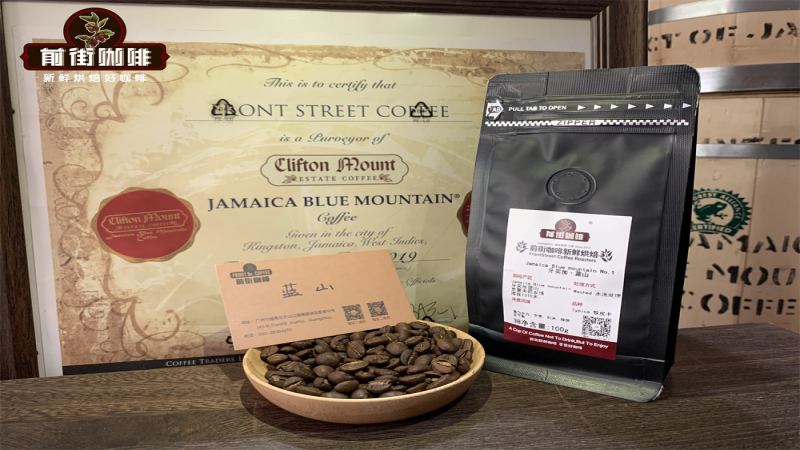
Jamaican Blue Mountain coffee comes from the Blue Mountains of eastern Jamaica, a volcanic-ash growing region inside the coffee belt. The island's CIB grading system sorts beans by screen size, defect count and cup quality, and top lots ship in wooden barrels. Front Street Blue Mountain No. 1 shows cocoa and roasted hazelnut notes with balanced acidity, sweetness and bitterness.
Cultivation dates to 1728, when Governor Nicholas Lawes brought plants from Martinique to St. Andrew. Production spread into the Blue Mountains, and national annual output reached 15,000 tons by 1814. Trees are often intercropped with bananas and avocados, while mist and cloud cover provide shade. For pour-over, use a medium grind and moderate temperature to protect the chocolate-and-nut profile.
Jamaican Blue Mountain coffee has long held a place in the pantheon of specialty coffee thanks to its balanced, elegant flavor and rigorous grading system. This article starts from the terroir of the Blue Mountains, systematically tracing its more than two-hundred-year cultivation history, the official CIB grading standards, and the wooden barrel shipping tradition, with a focus on the cupping performance and pour-over parameters of Front Street Blue Mountain No. 1 coffee. Whether you want to understand why Blue Mountain is regarded as the pinnacle, or hope to recreate its classic chocolate-and-nut profile at home, this guide offers a complete reference.
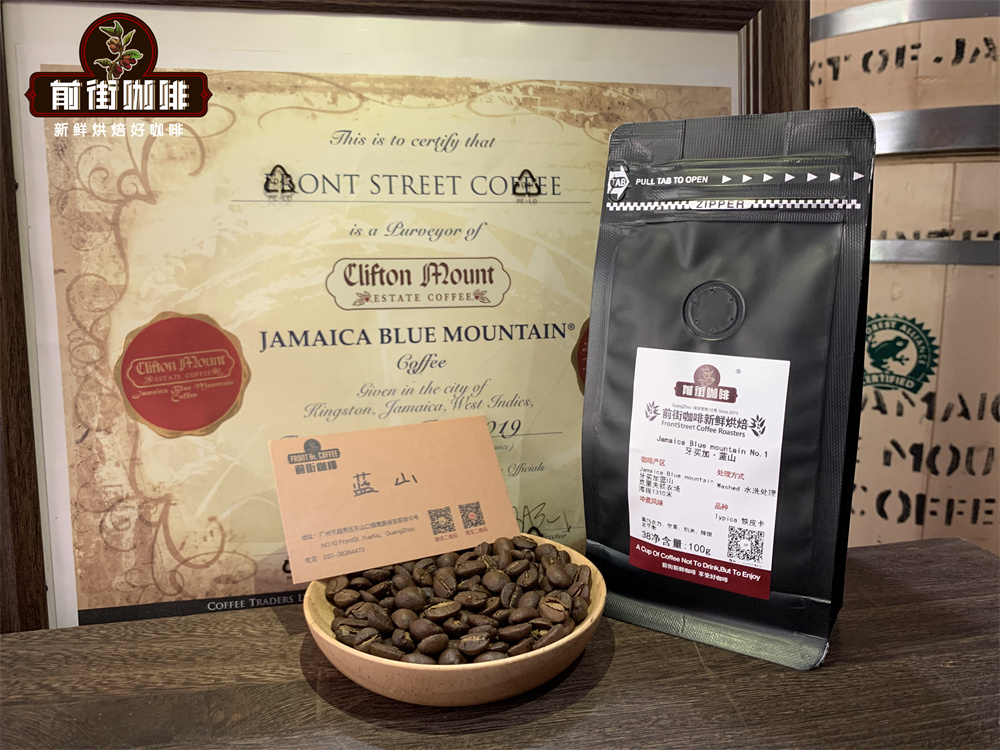
On the global coffee map, Jamaican Blue Mountain has always occupied a pivotal position. As a high-quality representative, Front Street Blue Mountain No. 1 coffee exudes a deep, lingering aroma of cocoa and roasted hazelnut, with acidity, sweetness, and bitterness seamlessly interwoven, and a body and finish that are perfectly judged, leaving a long-lasting aftertaste. To understand why Front Street Blue Mountain No. 1 can present such a refined flavor, one must trace back to the exceptional terroir of the Blue Mountains and the discerning selection eye of Jamaican growers.
Which country does Jamaican Blue Mountain belong to?
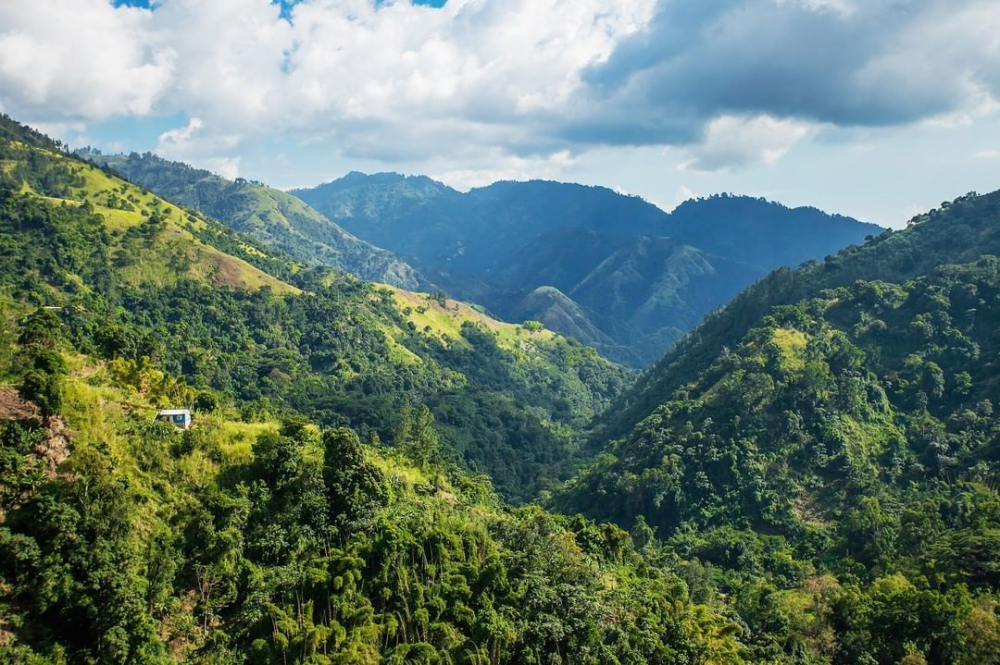
Jamaica is located in the Caribbean region, and the island is blessed with beautiful scenery and clean air. The Blue Mountains run across the eastern part of the country, falling right within the golden coffee-growing belt between 25° north and south latitude, with nutrient-rich volcanic ash soil. The towering, rugged terrain creates a distinctive microclimate, with mist and clouds shrouding the mountains year-round; when the moisture meets the cold it condenses and drips down, providing ideal shade and nourishment for crops. In local coffee farms, coffee trees are often intercropped with bananas, avocados, and other crops.
Jamaica's coffee cultivation history can be traced back to the early eighteenth century, when Governor Sir Nicholas Lawes introduced it from Martinique to the St. Andrew area for trial planting in 1728. In the late eighteenth century, a large enslaved labor force drove production to surge, and coffee cultivation expanded into the more favorable Blue Mountain area, with national annual output reaching 15,000 tons by 1814. However, after the abolition of slavery in the early nineteenth century, many farmers switched to other crops, Jamaica's coffee production plummeted, and the entire industry fell into a slump.
To reform the coffee industry, the Jamaican government passed legislation in 1891 to raise output and quality and provided professional guidance to growers. In 1944 the government established the Central Coffee Clearing House, through which all export lots had to undergo quality assessment and grading. In 1950 Jamaica formally established the Jamaica Coffee Industry Board (CIB), granting it official authority to improve, regulate, and safeguard the quality and reputation of Jamaican coffee.
Jamaica's Coffee Industry Regulation Act laid down strict provisions: the legal growing area for Blue Mountain coffee is limited to the four administrative districts of St. Andrew, St. Thomas, Portland, and St. Mary, and only Typica grown within this range at specific elevations of 910–170 meters may bear the name Jamaican Blue Mountain Coffee. Based on quality, Blue Mountain coffee is graded from best to worst as NO.1, NO.2, NO.3, and PB, where PB stands for Peaberry. Strict control and grading made Blue Mountain coffee internationally renowned, and by the mid-twentieth century it was widely recognized as one of the finest coffees.
It is worth noting that in the 1960s Jamaica suffered severe hurricane damage, and many industries, including coffee, were seriously affected. At that time the Japanese company UCC extended a helping hand to Jamaica and introduced ecological cultivation techniques to the Blue Mountain region. In 1972 Jamaica signed a 30-year contract coordination with Japan, promising Japan priority purchasing rights for Blue Mountain coffee in return for the assistance from Japanese companies. During that period about 90% of Blue Mountain coffee flowed to Japan, with only a small 10% quota allocated to Europe, America, Asia, and elsewhere—this was an important reason why Blue Mountain coffee was so expensive in that era.
What tier is Blue Mountain No. 1?
The ability of Blue Mountain coffee to maintain such high quality and reputation is inseparable from the sustained efforts of the Jamaican government and the CIB. The CIB's core function is to promote, regulate, monitor, and guide the development of Jamaica's coffee industry and to ensure the quality of exported coffee.
Before export, Blue Mountain coffee beans must undergo CIB inspection, certification, and grading. The grading takes into account multiple factors including green bean size, color, roasting quality, aroma, cupping performance, and screen size, and is divided into four grades by size specification:
The Front Street Blue Mountain coffee purchased by Front Street is the highest grade—Front Street Jamaican Blue Mountain No. 1 coffee: defect rate below 3%, bean diameter above 17 screen, moisture content 10–12.5%, uniform color and neat beans, an extremely rare top-tier lot. In addition, before export Front Street Blue Mountain coffee must also pass inspection and confirmation by CIB-approved professional cuppers, and its flavor must possess just the right acidity, sweetness, bitterness, body, and aroma.
Front Street Blue Mountain coffee beans that pass quality inspection are shipped in handcrafted oak barrels before reaching roasters around the world. Compared with the coarse burlap sacks commonly used in other regions, the advantage of oak barrels is that they can absorb and release internal and external moisture while blocking the escape of coffee aroma, helping the beans maintain a more stable moisture content and making the roasting process more controllable. Later, the barrel also became one of the markers for identifying authentic Blue Mountain coffee. In addition to the barrel, this Front Street Blue Mountain No. 1 coffee also comes with a quality certificate issued by the Jamaica Coffee Board, an authorized sales certificate issued by the Blue Mountain coffee producer, and a certificate of origin for Jamaican Blue Mountain coffee.
How do you brew out the Blue Mountain flavor?
To appreciate the classic flavor layers of Blue Mountain coffee, Front Street believes pour-over is the most capable method. In Front Street's view, making a delicious pour-over coffee is not complicated; as long as you find the corresponding brewing parameters and practice carefully, you can extract a satisfying flavor and mouthfeel.
Before brewing, Front Street recommends preparing a bag of coffee beans at its peak flavor period. If the roast date is more than a month past, some of the aroma may already have dissipated, and a woody taste may even appear. The coffee beans shipped by Front Street are all roasted within 5 days; if you find them too fresh, you can rest the beans for a while and brew after a large amount of gas has escaped, which is more conducive to stable coffee performance.
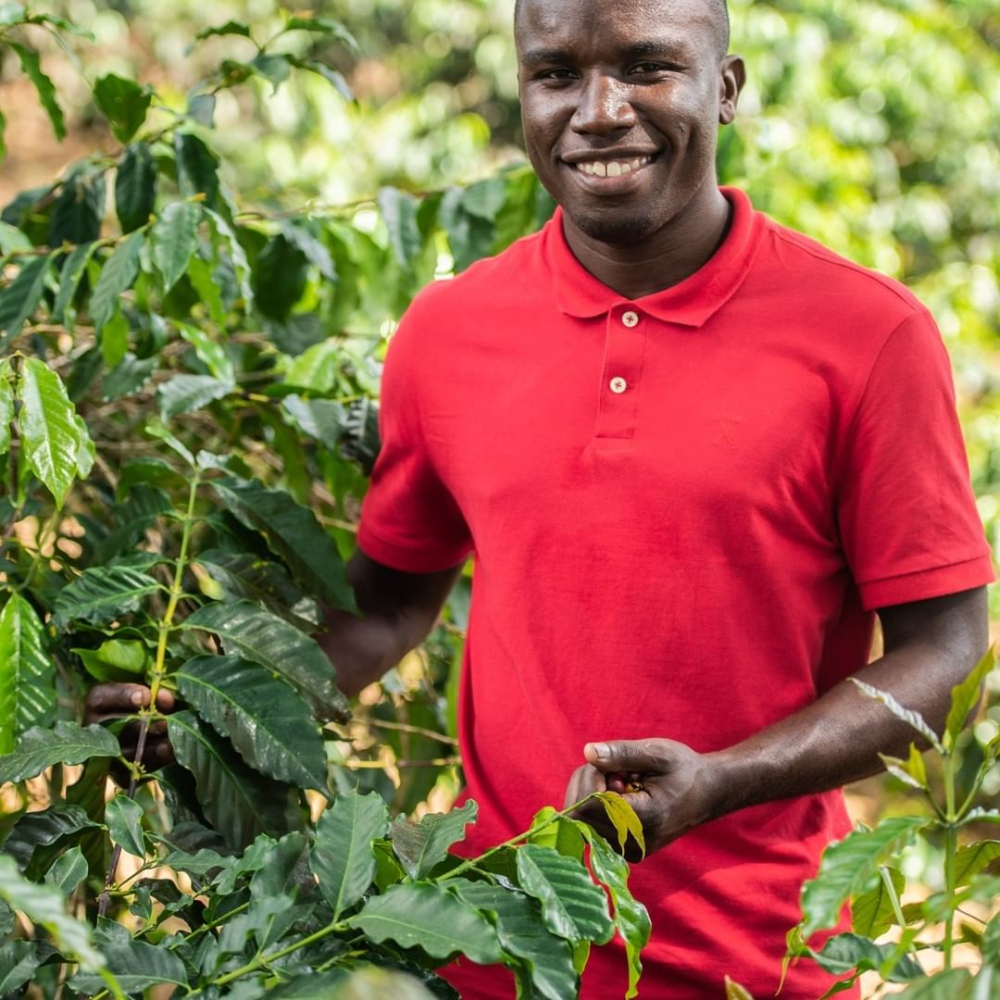
The classic Blue Mountain flavor is marked by rich aromas of chocolate and roasted nuts, accompanied by soft acidity and a full body. To recreate the classic taste, Front Street's roaster chose a medium-dark roast, highlighting the roasted aroma while retaining some acidity. In Front Street's cupping of Front Street Blue Mountain No. 1 coffee beans, balanced notes of acidity, sweetness, aroma, bitterness, and body were captured, so the barista at Front Street Coffee (FrontStreet Coffee) also developed the corresponding brewing approach along this flavor direction.
Front Street's brewing parameters: KONO dripper, grind size with a 75% pass rate on a No. 20 standard sieve, water temperature 88°C, paired with Front Street's usual three-pour method. Coffee grounds: 15 grams; grounds-to-water ratio: 1:15.
Three-pour method: first use 30g of water to evenly saturate the coffee bed and bloom for 30 seconds, then in the second pour use 95g of water in a steady circular pour from the inside out, and when the water level drops to two-thirds of the coffee bed in the dripper, begin the third pour of 100g, keeping a small stream throughout; after about 2 minutes of dripping, remove the dripper. Finally, gently swirl the coffee liquid and it is ready to taste.
Front Street Jamaican Blue Mountain No. 1 coffee tasting notes: on entry it presents flavors of dark chocolate, roasted nuts, and toffee, with a caramel-like sweetness, soft and elegant acidity, all flavors in balanced combination, and a smooth, rich, full mouthfeel. As the temperature drops, the aroma becomes clearer and the layers become richer.
Of course, besides pour-over, many other classic brewing methods can also showcase the unique mouthfeel of Front Street Blue Mountain No. 1 coffee, such as the siphon, French press, moka pot, AeroPress, or the convenient Blue Mountain drip coffee bags. Front Street believes a good coffee can express its flavor through various extraction methods, and everyone should feel free to try more at home when conditions allow.
For professional coffee knowledge exchange and more coffee bean information, please follow Coffee Workshop (WeChat public account cafe_style)
For more specialty coffee beans, please add the private WeChat of Front Street Coffee (FrontStreet Coffee), WeChat ID: qjcoffeex
The above content is compiled by CoffeeHunters, a coffee news website.


