







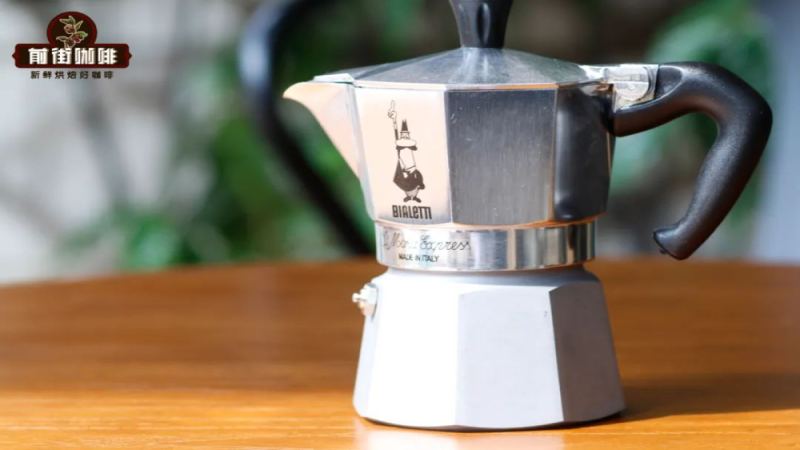
Which Coffee Beans for Moka Pot Work Well at Home?
A moka pot extracts with roughly 1-2 bar of pressure, so it behaves like a small espresso maker rather than a filter brewer. That narrow pressure range means grind size, dose, and water volume in the bottom chamber are the variables worth controlling. The Bialetti design, introduced in 1933, heats water in the bottom chamber and pushes it up through the grounds into the top chamber.
Brewing takes only a few minutes on the stove, which is why how long does it take moka pot to brew matters less than how evenly the water passes through the coffee bed. The filter basket holds the grounds, the screen keeps the liquid clear, and the top chamber's outlet height prevents backflow. Beans ground for espresso, whether single-origin or blended, tend to suit this setup.
As an essential coffee appliance in Italian households, the moka pot has been extracting rich coffee easily with 1-2 bar of pressure since its invention by Bialetti in 1933. But many coffee lovers are often confused: should a moka pot use single-origin or blended beans? How can common operating mistakes be avoided? This article will systematically analyze the structure and principles of the moka pot, the key points of use, and, based on the practical experience of Front Street Coffee, recommend suitable coffee bean types and brewing methods to help you easily make a cup of rich, solid espresso.
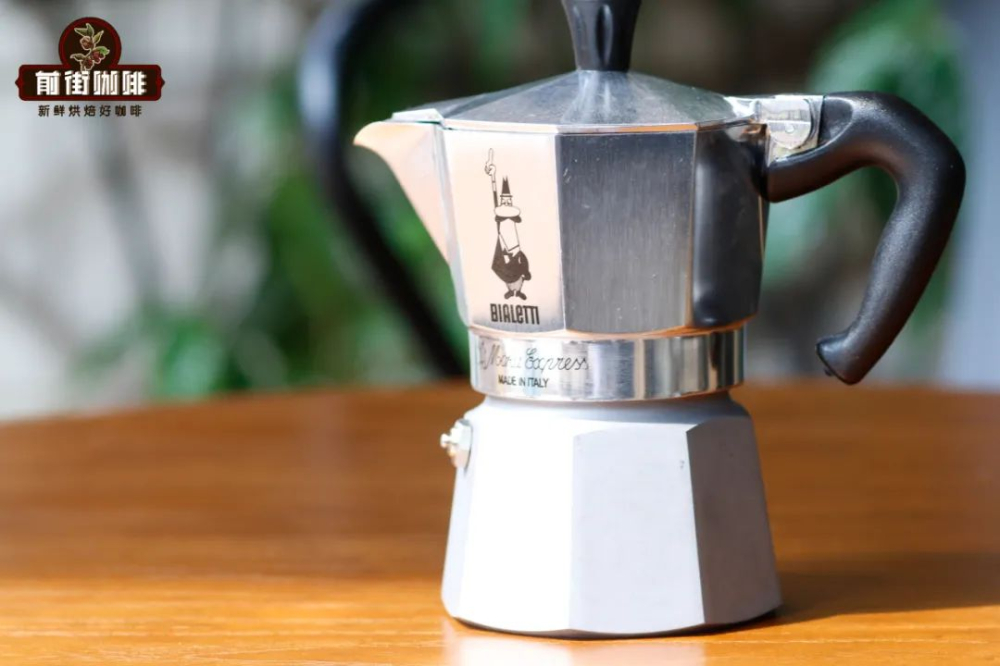
In 1933, Bialetti created the world's first moka pot. This appliance, which uses heat to generate pressure and quickly extract flavor components, operates at about 1-2 bar and can be called a mini espresso machine. Because it is easy to use, almost every Italian household has one.
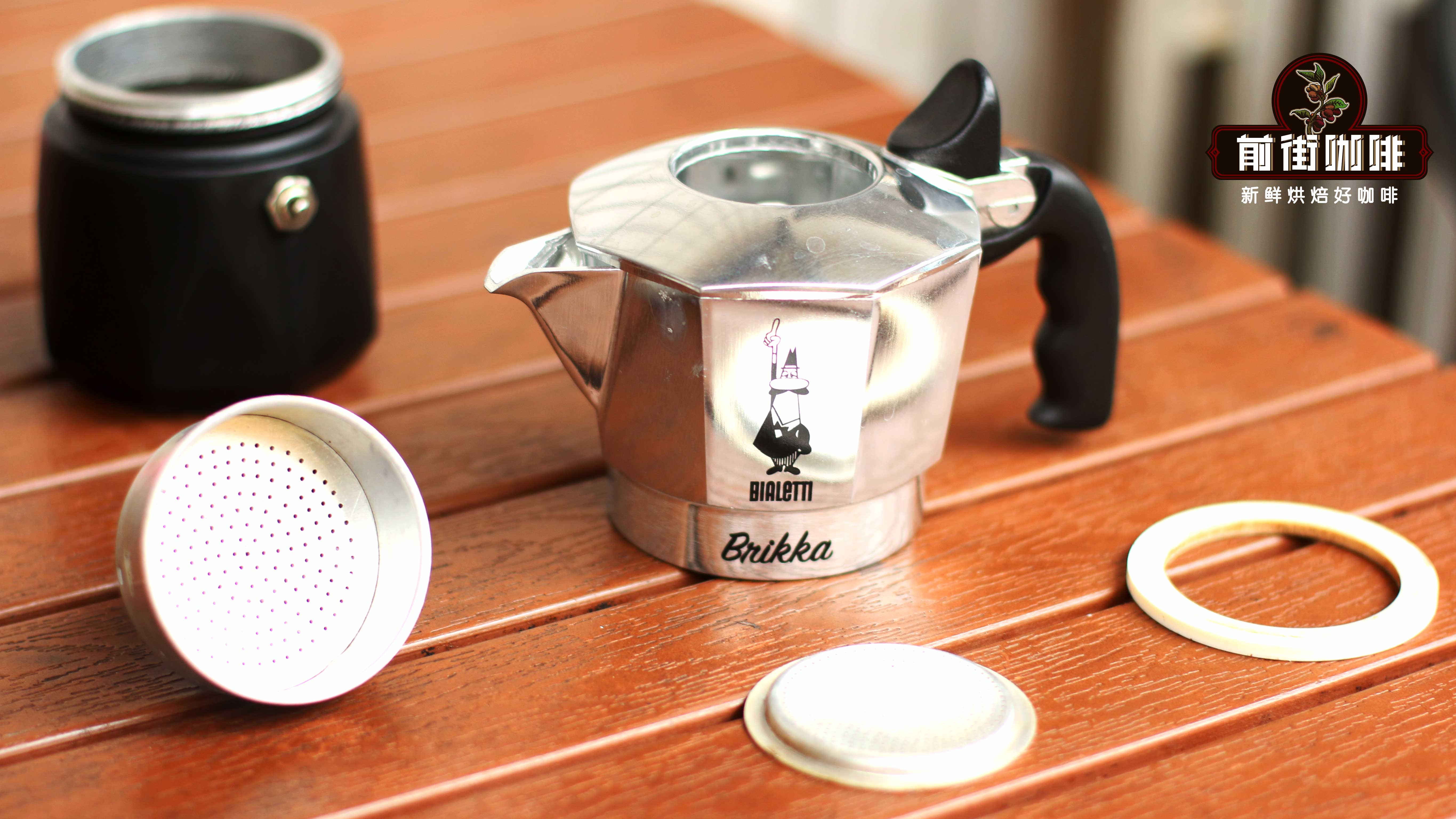
From left to right: bottom chamber, filter basket, top chamber, gasket, rubber ring
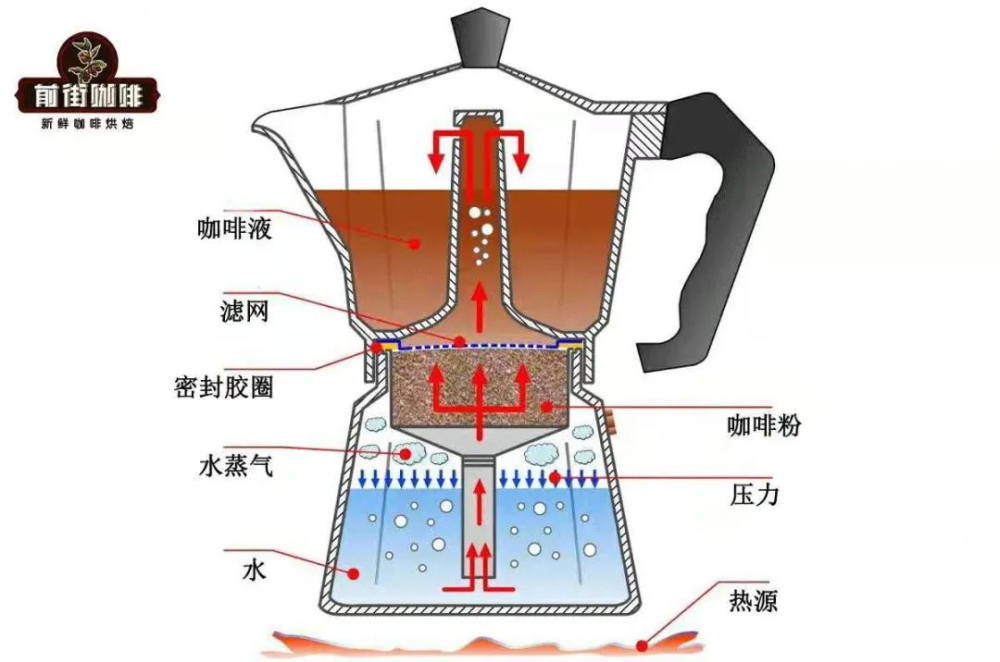
The moka pot consists of the upper body, the middle filter basket, and the bottom water chamber. It comes in various sizes and is also divided into single-valve and double-valve types according to structural and functional differences. Front Street uses the Bialetti three-cup single-valve model. The bottom chamber holds water, the filter basket holds coffee grounds, and the top chamber collects the brewed coffee. When it works, the water in the bottom chamber is heated and produces steam pressure; hot water flows from bottom to top, and when the pressure is sufficient, the water passes through the coffee layer in the filter basket, overcomes resistance, and flows into the top chamber, forming rich coffee liquid.
The principle of the moka pot is to use a heat source to heat the water and air in the bottom chamber. After expanding from the heat, they are slowly pushed toward the top chamber, and the hot water passes through the funnel-shaped filter basket filled with coffee grounds on its way up, completing extraction.
The filter screen intercepts coffee grounds and keeps the liquid clear, while the height design of the top chamber's outlet prevents the liquid from flowing back. Therefore, when using a moka pot, the variables we can control are mainly the amount of coffee grounds, the grind size, and the amount of water in the bottom chamber.
The components of a moka pot
A moka pot is divided into three parts: the bottom water chamber (lower chamber), the middle coffee filter basket (filter basket), and the top coffee liquid chamber (upper chamber).
The bottom chamber is responsible for holding water, heating, and pressure release; the middle filter basket holds coffee grounds, and a metal channel connects the upper, middle, and lower parts; the top chamber is used to hold the extracted coffee liquid. Looking at it upside down, it consists of the shell, a white rubber ring, and a metal gasket.
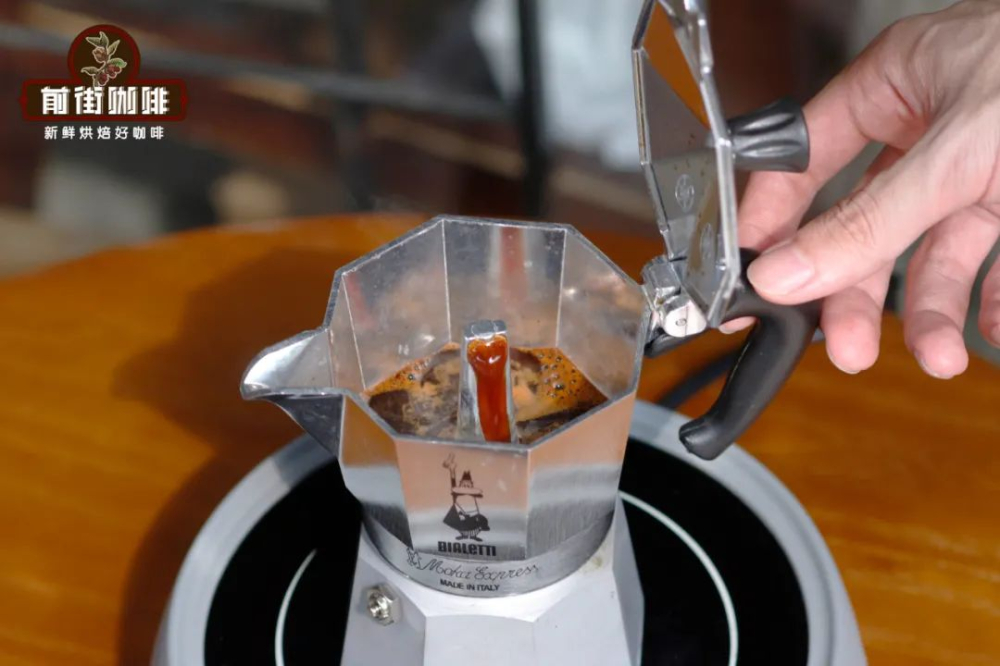
After the three parts are tightened, heating the bottom of the pot raises the pressure at the bottom. Hot water passes upward through the metal tube of the middle filter basket and through the coffee grounds layer, finally flowing out through the top chamber's guide tube. This is the entire process of extracting espresso with a moka pot.
The structure of the moka pot may seem simple, but the following points need attention during operation!
1. When adding water, the water level must not exceed the safety valve of the bottom chamber (a device similar to a nut). The safety valve can prevent explosions caused by clogged channels due to coffee grounds that are too fine. If the safety valve is submerged in water and the extraction channel is also blocked, the consequences of an explosion under high temperature are unimaginable.
2. The coffee grind should not be too fine. If the grounds are too fine, coffee liquid may not be extracted, or the flow may be too slow and cause over-extraction. It is recommended to grind to a consistency similar to fine granulated sugar.
3. After adding coffee grounds, level the grounds, but Front Street does not recommend tamping them flat. Many friends are used to leveling the grounds and then tamping them flat with a tamper, but a moka pot should not be tamped. Otherwise, the coffee bed will be too tight and create uncontrollable pressure, causing "channeling" and uneven extraction, as the water flow tends to move unevenly because it is difficult to pass through the coffee bed.
4. After extraction is finished, wait for the moka pot to cool naturally before unscrewing it clockwise , pour out the coffee grounds, and rinse each part with clean water. Do not use detergent, and do not boil or soak it. Aluminum alloy moka pots cannot go in the dishwasher, while stainless steel models are suitable for it . In addition, regardless of the material, do not use steel wool or abrasive cleaning products , to avoid scratching the surface.
5. To prevent clogging or lingering odors, Front Street recommends removing the rubber ring and gasket during cleaning and simply rinsing them with clean water. Aging or shrinking sealing rubber rings can cause splashing and leakage during extraction, so they need to be cleaned and maintained well after each use. Note that when removing these two parts, use a pointed tool to reach inside and pry open the circular ring, then take out the gasket that filters coffee grounds.
Recommended coffee beans for moka pot
When making coffee with a moka pot, the most important thing is to use freshly roasted coffee beans. All coffee beans sold by Front Street are shipped within 5 days after roasting is completed, 100% freshly roasted, with 24-hour shipping support.
Coffee made with a moka pot is relatively strong, so light-roasted beans are not recommended. This is because their acidity, under high-pressure extraction and high concentration, will show obvious sharp sourness. At the same time, light roasting takes less time and does not produce more rich-bodied substances, so the extracted coffee will be relatively thin.
The coffee extracted by a moka pot is characterized by being rich, solid, and full-bodied, so Front Street recommends using espresso blend beans or medium-dark roasted beans. If light-roasted beans are used, they will show sharp acidity and bitterness under high temperature and high concentration, so medium-dark roasting is most suitable.
If you are new to the moka pot, you might try Front Street. Front Street Classic Blend. To pay tribute to the once-popular "Mamba Coffee," Front Street launched this recipe combining Indonesian Mandheling and Brazilian espresso beans. It has both the wild aroma of Mandheling and the smooth taste of Brazilian beans, with complementary and harmonious flavors. Front Street Classic Espresso Blend adds Robusta to the Mamba recipe, greatly enhancing the crema and making the body of the espresso stronger. It is suitable for home preparation and for latte art.
If you want to drink single-origin beans, Front Street Coffee recommends "Brazil Queen's Farm Coffee Beans." These beans come from Queen's Farm in Mogiana, São Paulo, a well-known specialty region in Brazil, at an altitude of 1400-1950m, and the variety is Yellow Bourbon. Made with a moka pot, it has high body without being too bitter, with nutty aroma, peanut-butter-like smoothness, and brown sugar sweetness.
How does a moka pot brew a delicious cup of coffee?
1. (Front Street Coffee uses a 3-4 cup moka pot.) First, grind 20g of coffee beans into powder (fine grind, not too coarse, and not so fine that it can pass through the holes of the filter basket).
2. Next, separate the top chamber and bottom chamber of the moka pot, and add water to the bottom chamber. The water level should not exceed the pressure release valve of the bottom chamber. When adding water, be careful not to exceed the lower line of the safety valve, and check whether the sealing ring is intact and shows no signs of aging.
Tip: To improve efficiency, you can also add hot water directly to the bottom chamber, allowing the water to boil quickly, shortening the time the coffee grounds are heated, completing extraction in a short time, and avoiding bitterness from a long brewing time.
3. After tightening the top and bottom chambers, it can be heated. During heating, generally keep the lid open, and the flame should not exceed the bottom of the moka pot, to avoid melting the handle. When coffee liquid appears in the top chamber, turn the heat to low. When the coffee liquid begins to boil, remove the moka pot from the heat source.
Prepare a wet towel in advance. After removing the moka pot from the heat, wrap the bottom chamber with the wet towel to cool it quickly, which can avoid the bitterness caused by continued extraction under high temperature and high pressure.
Tip: During extraction, if coffee liquid splashes from the extraction outlet, you can first turn the heat to high, and after the coffee liquid begins to flow, turn it to low heat, ensuring the coffee liquid flows out in a "gentle stream."
4. After the coffee liquid has been fully extracted, to avoid over-steeping, pour it into a cup as soon as possible and then begin tasting.
The above content is compiled by CoffeeHunters, a coffee news website.


