







How Should Most Expensive Coffee Be Hand-Brewed?
Brewing Jamaican Blue Mountain No. 1 at home comes down to matching the recipe to the roast. A medium-dark roast of this most expensive coffee, such as Clifton Farm beans, calls for 88C water, a 1:15 coffee-to-water ratio, and a grind with 75% passing a No. 20 sieve. A KONO dripper and a three-stage pour keep acidity, sweetness, and bitterness in balance.
The parameters matter because Blue Mountain grows in Jamaica's section of the coffee belt, where terroir and processing shape the final cup. Washed and natural lots of the same bean taste noticeably different, so the processing method belongs in the recipe notes. Letting roasted beans rest before grinding, then grinding just before brewing, helps the balanced flavor and full body come through consistently.
Blue Mountain coffee is hailed as one of the richest specialty coffees in the world, but to recreate its balanced flavor at home, brewing parameters are crucial. Front Street Coffee selects Blue Mountain No. 1 from Jamaica's Clifton Farm, using a medium-dark roast to highlight nutty and cocoa notes, and provides a complete pour-over recipe based on this. This article will start with Blue Mountain coffee's origin background, variety, and processing methods, then gradually break down the four key points of water temperature, grind size, coffee-to-water ratio, and pouring technique: 88°C water temperature, 1:15 coffee-to-water ratio, 75% pass rate through a No. 20 sieve, paired with a KONO dripper and three-stage pouring, to help you consistently extract a cup of Blue Mountain with balanced acidity, sweetness, and bitterness, and full body. At the end, there is also a flavor comparison between natural and washed processing methods, as well as practical reminders on resting and grinding.
Everyone says expensive coffee beans must be treated with care and never wasted. Front Street feels that as long as the beans are of excellent quality, they are worth brewing with care, regardless of price. Today there are countless ways to extract coffee, and people's love for coffee is no longer limited to sitting in a café—more people have begun to enjoy the pleasure of home pour-over.
Front Street Blue Mountain coffee is among the finest in specialty coffee and has long been known as the world's most aromatic and rich coffee. Exactly how should it be brewed to fully release its flavor? On this question, Front Street plans to share its own experience brewing Front Street Blue Mountain coffee with everyone.
When it comes to brewing, Front Street habitually first distinguishes between medium-light roast and medium-dark roast, because different roast levels require corresponding adjustments to equipment and water temperature. Front Street Blue Mountain coffee beans are given a medium-dark roast by the roasters at Front Street Coffee. At the same time, understanding the terroir characteristics and general flavor direction of the coffee's country of origin is also a required lesson before brewing.
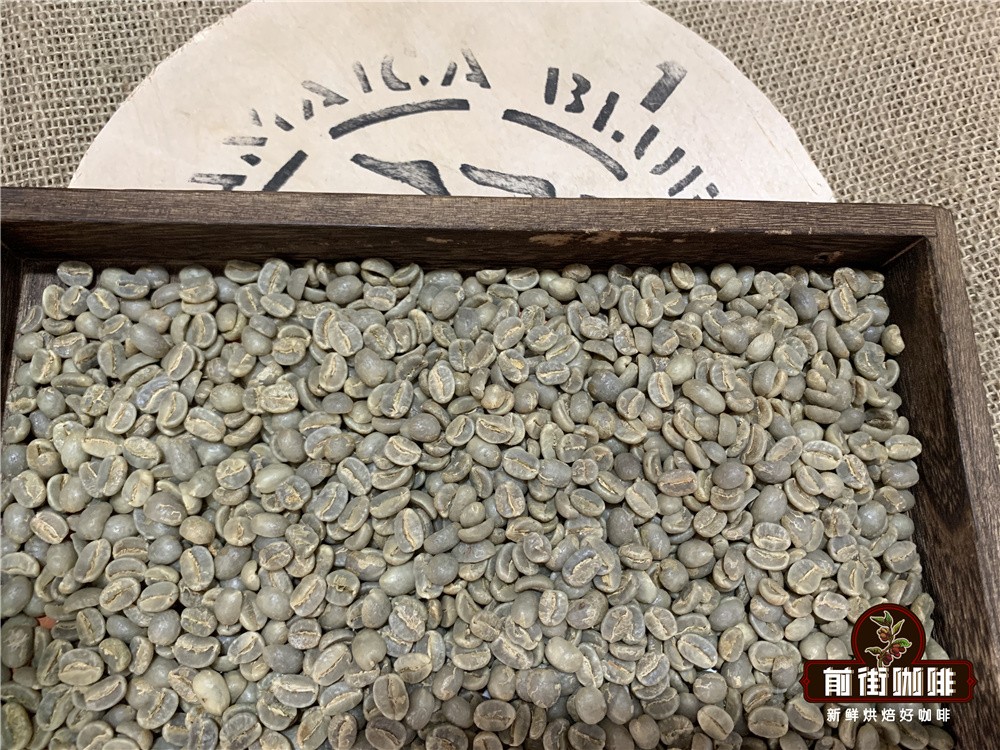
Although Front Street has previously written quite a bit about Front Street Blue Mountain coffee, it is still necessary here to first get to know it. There are not a few coffees on the market under the Blue Mountain banner, but only those produced in Jamaica can truly count as real Jamaican Blue Mountain coffee.
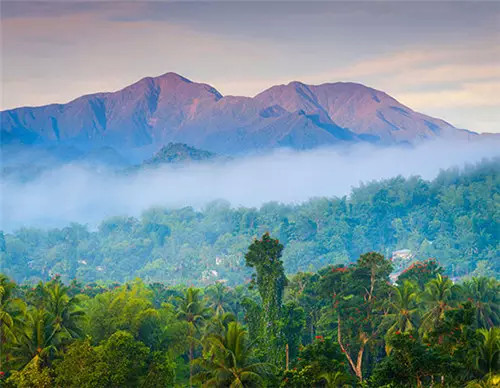
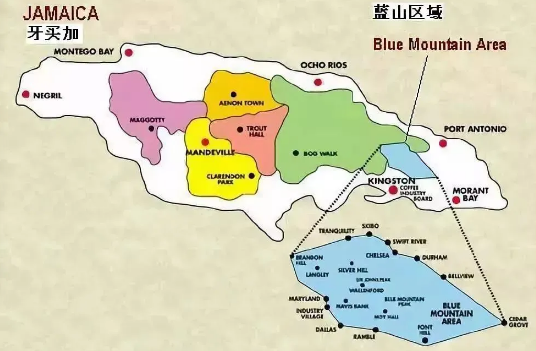
The Blue Mountains are located in the eastern part of the island of Jamaica. Because they are surrounded by the Caribbean Sea, on clear days when sunlight strikes the azure sea, the peaks reflect the sea's brilliant blue glow, and that is how the Blue Mountains got their name. The highest peak of the Blue Mountains is 2,256 meters above sea level, making it both the highest point in the Caribbean region and a famous tourist destination. This area lies right in the coffee belt, with fertile volcanic soil, clean and pollution-free air, a humid climate, and frequent fog and rain year-round. Average rainfall is about 1,980 millimeters, and temperatures remain around 27 degrees. It is precisely these natural conditions that have nurtured the world-renowned Jamaican Blue Mountain coffee and created the world's most expensive coffee.
This coffee has almost all the qualities a good coffee should have: rich and aromatic flavor, with sweetness, acidity, and bitterness perfectly balanced, so no obvious bitterness is tasted, leaving only a moderate and beautiful acidity. It is usually drunk as a single-origin coffee, but regrettably, due to scarce production and high price, it is often replaced on the market by blends of coffees with similar flavors.
As you can see, Front Street Blue Mountain coffee is grown at a fairly high altitude. And the grading of Blue Mountain coffee is determined precisely by altitude and bean size.
Blue Mountain Coffee Variety
Front Street Blue Mountain coffee carries an ancient coffee lineage—the Typica variety. Looking across today's coffee variety spectrum, ancient varieties have become scarce. However, even if it carries Typica blood, not every lot can be called true Blue Mountain. Only those grown at specific high altitudes deserve the name Blue Mountain and possess the qualification to be crowned king.
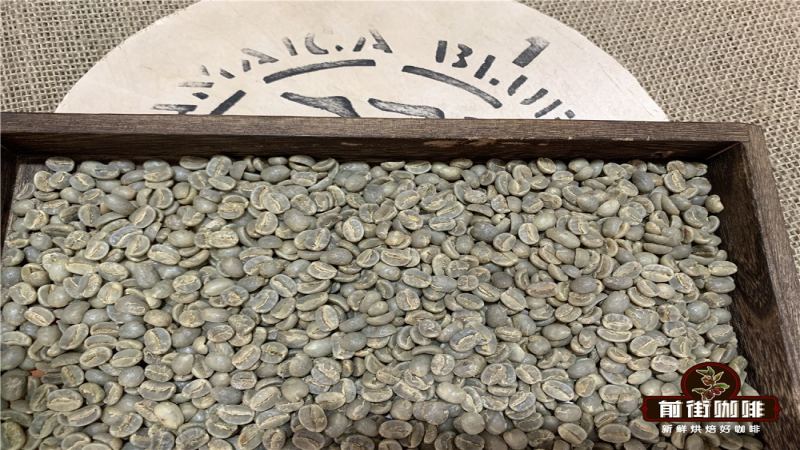
The Front Street Jamaican Blue Mountain No. 1 coffee introduced by Front Street Coffee comes from Clifton Farm. This farm is the largest estate in the region, but by international standards it is still small-scale cultivation. Many estate owners are small landholders whose families have cultivated this land for two centuries. After repeated comparisons, Front Street Coffee believes that Clifton Farm's Blue Mountain No. 1 performs especially brilliantly and is fully qualified to serve as an outstanding representative of Blue Mountain coffee.
Processing Methods of Blue Mountain Coffee
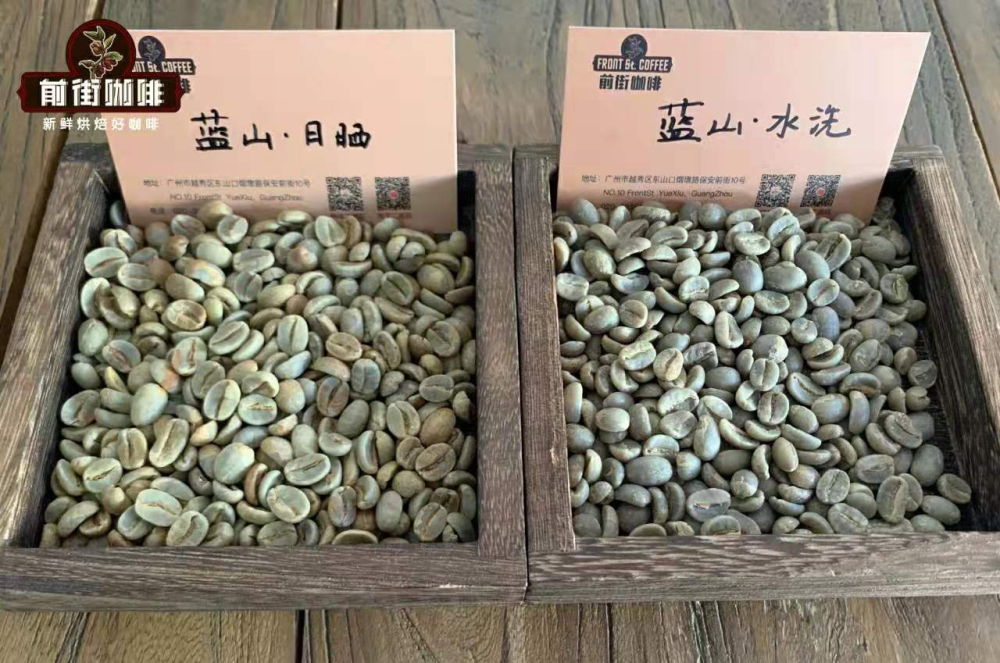
Early Blue Mountain coffee only used washed processing, and later naturally processed beans also appeared one after another. Front Street currently offers both natural and washed Front Street Blue Mountain coffee.
How to Properly Hand-Brew Front Street Blue Mountain Coffee Beans?
Front Street Coffee has always believed that to brew a good pot of coffee, the key is to grasp four aspects: water temperature, grind size, coffee-to-water ratio, and brewing technique.
1. Water Temperature
When brewing pour-over, Front Street Coffee sets the water temperature according to roast level. During roasting, substances inside the coffee beans are lost as the roast deepens, so dark-roasted beans need lower water temperatures to avoid extracting too many undesirable flavors. For medium-light roasted beans, Front Street Coffee recommends 90-91°C; for medium-dark roasted beans, 88°C is recommended.
The flavor of Front Street Blue Mountain coffee beans is known for its rich body and balanced profile. In order to fully present this richness, Front Street Coffee deliberately uses a medium-dark roast to process them.
2. Grind Size
Grind size is likewise tied to roast level. It refers to the coarseness of the coffee particles and directly relates to the contact time between coffee and water. The finer the grounds, the more substances can dissolve in the same amount of time, but over-extraction is also easy; the coarser the grounds, the fewer substances dissolve in the same amount of time, making under-extraction easy.
Moreover, everyone's grinder is different, so the parameters naturally vary. Front Street suggests buying a No. 20 cupping correction sieve with an aperture of 0.85 millimeters. Take 10 grams of coffee beans, adjust to roughly the desired grind setting and grind them into powder, pour into the sieve and sift, then weigh the fine powder that passes through (be sure to sift until no more powder can pass through).
A pass rate of 70%-75% (that is, 7-7.5 grams sifted from 10 grams of powder) is the most suitable grind size. The reference standard for pour-over is: light roast 80%, medium-dark roast 75%. If the sifting pass rate is too high, adjust the grind coarser; if too low, adjust finer.
3. Coffee-to-Water Ratio
The following is the correspondence between pour-over coffee-to-water ratios and taste summarized by Front Street Coffee based on SCAA golden cup extraction theory:
【Bold Taste】1:10~1:11, i.e. 1:12.5~1:13.5 under the golden cup standard 【Moderate Taste】1:12~1:13, i.e. 1:14.5~1:15.5 under the golden cup standard 【Light and Fresh】1:14~1:16, i.e. 1:16.5~1:18.5 under the golden cup standard
When the ratio of coffee bean grams to brewing water is between 1:14.5 and 1:15.5, it most easily falls into the golden range of 18%~22% extraction yield and 1.15%~1.35% concentration.
Therefore, when brewing these Front Street Blue Mountain coffee beans, Front Street Coffee suggests using the relatively safe 1:15 coffee-to-water ratio. Of course, the specifics should still be slightly adjusted according to personal taste.
4. Brewing Technique
Finally, the pour-over technique cannot be ignored either. Common ones include the three-stage method, one-pour method, drip method, and so on. Front Street Coffee suggests beginners use the three-stage pouring method, because it is suitable for light-roasted, medium-light-roasted, and medium-dark-roasted beans. Through staged extraction, three-stage pouring can clearly outline the front, middle, and back flavors of the coffee, better ensuring consistency in the final cup.
Next, Front Street Coffee will share the three-stage pouring process for hand-brewing Front Street Blue Mountain coffee.
Three-Stage Brewing Technique:
Front Street believes that the charm of Front Street Blue Mountain coffee lies in its balanced acidity, sweetness, and bitterness, high body, and full aroma. In roasting, Front Street chose medium-dark roast to highlight the beans' nutty and cocoa aromas. Paired with a KONO dripper, it can achieve even better body. Water temperature 88°C, coffee-to-water ratio 1:15, coffee dose 15 grams, grind size 75% pass rate through China's No. 20 standard sieve.
First Pour: Blooming (to help degassing)
First rinse the KONO dripper with hot water so the filter paper fits the dripper more tightly, pour out the water in the server, add 15 grams of coffee grounds, and bloom with 30 grams of water for 30 seconds. Many coffee lovers do not understand why pour-over requires blooming. In fact, during the roasting process as coffee beans change from green beans to roasted beans, a series of chemical reactions and physical changes occur. After roasting reaches a certain level, a large amount of gas accumulates inside the beans, most of which is carbon dioxide.
Generally, the fresher the beans and the closer they are to the roast date, the more obvious the bubbling during blooming. Dark-roasted beans also release more gas during blooming than light-roasted beans. Front Street Coffee's coffee beans are all freshly roasted, so customers are generally advised to rest the beans for three days first, allowing carbon dioxide to be released first, so that instability and under-extraction can be avoided during brewing.
After degassing during blooming, the coffee particles can evenly absorb water, laying an even foundation for subsequent extraction. A good bloom not only allows the coffee grounds to degas quickly and fully, but also lets them come into contact with water rapidly, so they can be extracted evenly—this is precisely the meaning of pour-over blooming.
Second Pour
After blooming for 30 seconds, make the second pour. Starting from the center, pour in a small circle with a small stream until reaching 125 grams, then stop. To make the water stream's penetrating force concentrated, the circling range should be small, about the size of a one-yuan coin, then gradually circle outward. From the second pour onward, pay attention to the water amount, and try not to let it rise above the coffee bed. That is, when the water stream circles to near the filter paper, you should stop adding water.
Third Pour
Wait until the coffee bed drops to the halfway point of the dripper, then use the same technique to pour the second stage until 225 grams. After all dripping is complete, remove the dripper. Timing from the start of pouring, the extraction time is 2 minutes 00 seconds.
From the third pour onward, observe the extent of the water level drop, likewise starting from the center and circling, with the water amount not exceeding the height of the coffee bed. At this point you will see that foam has covered the surface. The third pour should increase the tumbling of the coffee particles, causing all settled particles to turn over, thereby dissolving soluble substances.
The tumbling particles will come to rest because water addition stops. At this time, it depends on the flow rate caused by the dropping water level to make the coffee particles rub against one another. So once water addition stops, the coffee grounds sink, causing clogging, and the pouring rhythm especially needs attention. If pouring is interrupted too many times, it is tantamount to letting the coffee grounds soak in water for a long time, and the finish is prone to astringency and off-flavors.
Next, swirl the entire cup of coffee to mix it evenly, then pour it into a cup and enjoy.
The above are the steps for Front Street Coffee to brew Front Street Jamaican Blue Mountain coffee beans.
Front Street Brewing Suggestions:
When it comes to coffee brewing, Front Street has always believed that bean freshness is an extremely important part, and only freshness can maximize the coffee's rich flavor. The coffee beans shipped by Front Street Coffee are all within 5 days of roasting, because Front Street deeply understands how greatly freshness affects flavor. Front Street's roasting philosophy is "freshly roasted good coffee," so that every customer who places an order receives the freshest batch when they get their coffee. The coffee resting period is about 4-7 days, so by the time customers receive it, it is exactly at its best flavor.
Of course, some customers need Front Street to grind the coffee for them, and that is no problem, but Front Street must remind them: once coffee beans are ground into powder in advance, there is no need to rest them anymore, because during transport the pressure generated by carbon dioxide inside the package can also make the flavor rounder, so as soon as you receive the coffee grounds you can immediately brew a cup. But coffee grounds should be brewed as soon as possible, because after contact with air they oxidize quickly and their flavor dissipates quickly, and overall performance will be compromised. Therefore, Front Street recommends buying whole beans and grinding fresh before brewing, so you can better taste the coffee's flavor.
【Front Street Natural Blue Mountain Coffee Flavor】 Slight berry acidity, reminiscent of smoked plum and mulberry, with good overall balance, rich dark chocolate and nutty flavors, and a slight fermented note.
【Front Street Washed Blue Mountain Coffee Flavor】 Rich dark chocolate and nutty flavors, creamy smooth mouthfeel, balanced acidity, sweetness, and bitterness
Front Street believes that pour-over coffee is actually simple if you say it is simple; the key is to practice more, and with familiarity comes skill, then brewing good coffee to drink becomes an easy matter.
For professional coffee knowledge exchange and more coffee bean information, please follow Coffee Workshop (WeChat public account: cafe_style)
For more specialty coffee beans, please add the private WeChat of Front Street Coffee, WeChat ID: qjcoffeex
The above content is compiled by CoffeeHunters, a coffee news website.


