







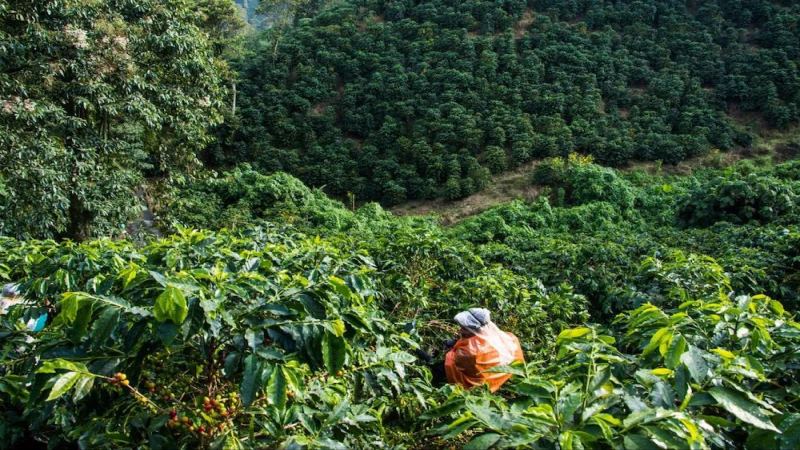
How does arabica coffee from Ethiopia get classified?
Arabica coffee originated in Ethiopia, where the southwestern forests hold tens of thousands of native varieties. Because that gene pool is so complex, the government rarely classifies each one, grouping most trees simply as landraces: coffee that has reproduced naturally for generations and taken on local flavor traits. Regional differences, rather than variety names, usually drive how Ethiopian coffee tastes.
Under the landrace framework, Ethiopia has sorted some categories out, splitting them into landrace varieties and numerical series beginning with 74 or 75. Yirgacheffe and Sidamo have representative landraces such as Kurume, Wolishao, and Dega. Grading runs from G1 to G5 based on defect beans, and washed Yirgacheffe G2 is a common reference lot for V60 brewing, where grind size, water temperature, and coffee-to-water ratio all shift the result.
As the birthplace of Arabica coffee, Ethiopia is home to tens of thousands of native varieties in its southwestern forests, giving rise to highly distinctive regional flavors. This article will start from the variety classification system, analyze the difference between landraces and the 74/75 numerical series, explain the G1 to G5 defect bean grading standards, and provide an in-depth analysis of the flavor performance of washed Yirgacheffe G2. At the same time, Front Street Coffee will share the specific parameters for V60 three-pour brewing, including adjustment approaches for grind size, water temperature, and coffee-to-water ratio, helping coffee enthusiasts gain a more complete understanding of the unique charm of Ethiopian coffee.
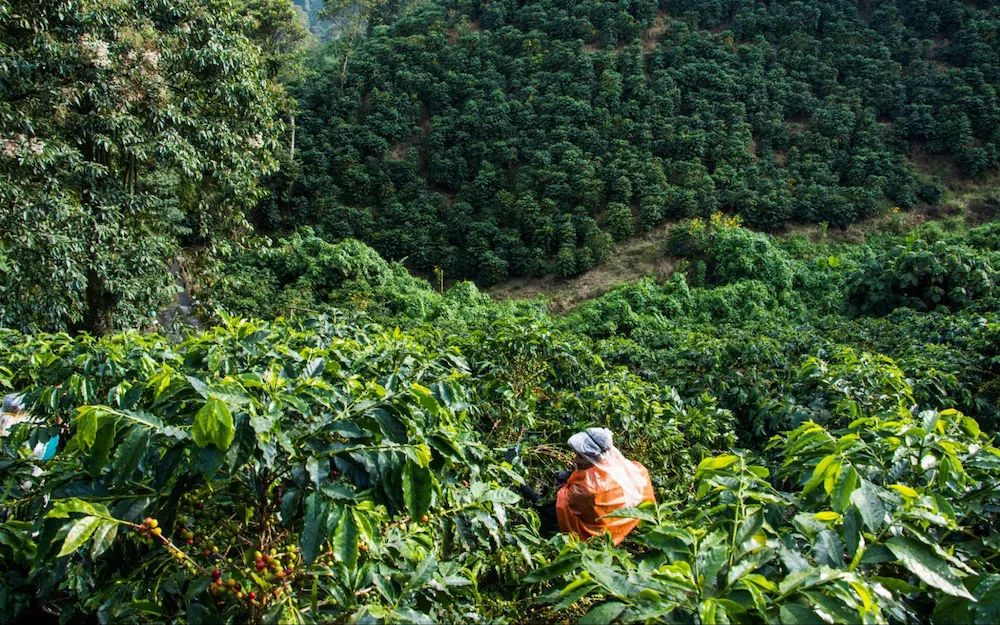
For more specialty coffee knowledge, please follow: Front Street Coffee ( Frontsteet Coffee )
The birthplace of Arabica coffee is precisely Ethiopia, and its vast southwestern forests contain tens of thousands of Arabica varieties. It is this rich gene pool that gives Ethiopian coffee its uniquely distinctive flavor performance. Below, Front Street will discuss the characteristics of Ethiopian coffee.
Ethiopia's variety composition is extremely complex, and it is difficult for the government to classify them one by one, so in most cases they are collectively referred to simply as landraces. The so-called landraces refer to coffee trees that have naturally reproduced in Ethiopia for generations and have already formed local distinctive flavor characteristics. For this reason, when people discuss the flavor of Ethiopian coffee, variety is often not the focus; regional differences are the core topic.
However, under the broad framework of landraces, Ethiopia has now gradually sorted out some variety categories, specifically divided into two major categories: landrace varieties and numerical varieties beginning with 74 or 75.
Landrace varieties do not refer to a single specific variety, but rather to a group of varieties with similar appearance characteristics within a small production area. For example, the Yirgacheffe and Sidamo regions have several representative landrace varieties: Kurume, Wolishao, and Dega.
Kurume refers to a type of coffee tree in the Yirgacheffe area with relatively small fruit and leaves, but considerable yield, and green top leaves.
Wolishao refers to a type of coffee tree in the Sidamo region with a tall trunk, larger fruit, unstable annual yield, and red top leaves.
Dega refers to a type of coffee tree with moderate height, medium-sized fruit, and a sweet aroma after roasting.
The numerical series originated from the Jimma Coffee Research Institute, which collected seeds from more than 600 coffee trees at 19 collection points in the southwest and west between 1974 and 1975, after which experts identified and trial-planted them. Therefore, these varieties are all named starting with 74 or 75. Among them, 74110 and 74158 are relatively well known and ranked among the top 28 in the 2020 COE competition.
It is precisely because Ethiopian coffee varieties are so complex that Ethiopian coffee beans on the market often vary in bean size, because they are not the same variety. Many people are accustomed to beans from Brazil, Colombia, and Indonesia that are plump and uniform in size. At first glance, the uneven appearance of Ethiopian beans is easily mistaken for poor quality, but in fact this is exactly the hallmark of authentic Ethiopian coffee beans.
Grade characteristics of Ethiopian coffee beans
The grading of Ethiopian coffee beans is mainly determined by the number of defective beans. They are divided into five grades, G1 to G5. Based on every 300 grams, G1 has no more than 3 defective beans, G2 no more than 12, G3 no more than 25, G4 no more than 45, and G5 no more than 90. Generally speaking, G1 and G2 are the highest grades and can achieve high-quality standards through manual removal of defects before and after roasting. Grades below G3 have more defective beans and are relatively lower in price. Green bean traders rarely import these lower-grade products, so they are also uncommon on the market.
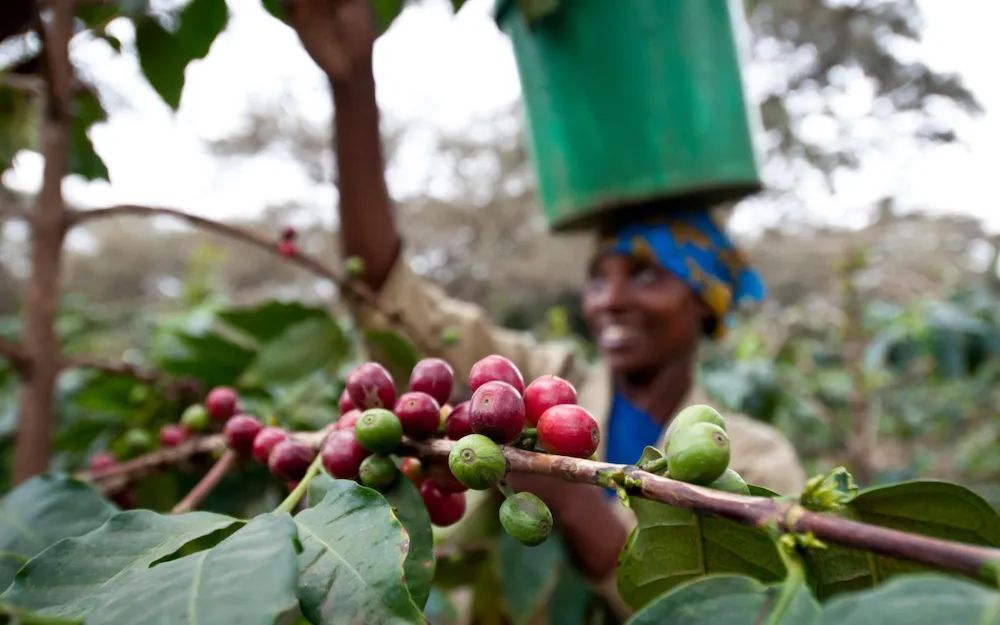
Flavor characteristics of Ethiopian coffee beans
Front Street has launched a series of everyday beans by production region. This series consists of high-value coffee beans selected by Front Street from 7 representative production regions around the world, each with its own flavor characteristics. Among them, the one representing Ethiopia is the washed Yirgacheffe G2 coffee beans selected by Front Street. Yirgacheffe , as one of Ethiopia's earliest specialty coffee production regions, has extremely high flavor recognition. Although it is labeled G2, as Front Street has said before, removing defective beans afterward can absolutely take the quality to an even higher level.
The flavor performance of Yirgacheffe : in the dry aroma stage it presents fresh citrus and white floral notes. When slurped at different temperatures, one can perceive bright citrus notes, honey sweetness, and a clean mouthfeel, interwoven with floral and tea-like notes.
Front Street pour-over recommendation
Front Street recommends using freshly roasted coffee beans for brewing, as this is the best way to fully appreciate the coffee's rich layers of flavor. Coffee beans shipped by Front Street Coffee (FrontStreet Coffee) are all within 5 days of roasting, because Front Street deeply understands that freshness has a crucial impact on flavor. Front Street's roasting philosophy is "freshly roasted good coffee," so that every customer who places an order receives the freshest possible state when the coffee arrives. The resting period for coffee is about 4 to 7 days, so when customers receive it, it is exactly at its flavor peak.
In terms of grind size, Front Street recommends a medium-fine grind (78% passing through a Chinese standard No. 20 sieve). If the grind is too coarse, the rich substances cannot be extracted, and the brewed coffee will taste thin. If the grind is too fine, it is prone to over-extraction at high temperatures, causing the coffee to taste bitter and astringent.
In order to fully bring out the fresh and captivating aroma of washed Yirgacheffe, Front Street uses a V60 dripper for brewing. The dripper's spiral rib design helps the coffee grounds degas better and maximizes the release and dissolution of aromatic acidic compounds.
During cupping, Front Street noticed that this bean presents different flavors at different temperature stages, so the brewing method uses three-pour extraction, allowing various flavor substances to be released better as the coffee bed gradually rises in temperature.
Regarding brewing water temperature, it can be considered from two directions. If you want bright, lifted acidity and a tea-like finish, you can brew at 90°C to 91°C; if you want fuller acidity and enhanced body, you can use 92°C to 93°C.
Regarding the brewing ratio, the flavor of washed Yirgacheffe leans fresh. In order to more clearly perceive the floral notes and honey sweetness, a 1:16 coffee-to-water ratio can be used, slightly reducing the overall acidity of the cup and giving other lighter flavors room to show.
The above content is compiled by CoffeeHunters, a coffee news website.


