







Which Costa Rica Coffee Producing Regions Matter Most?
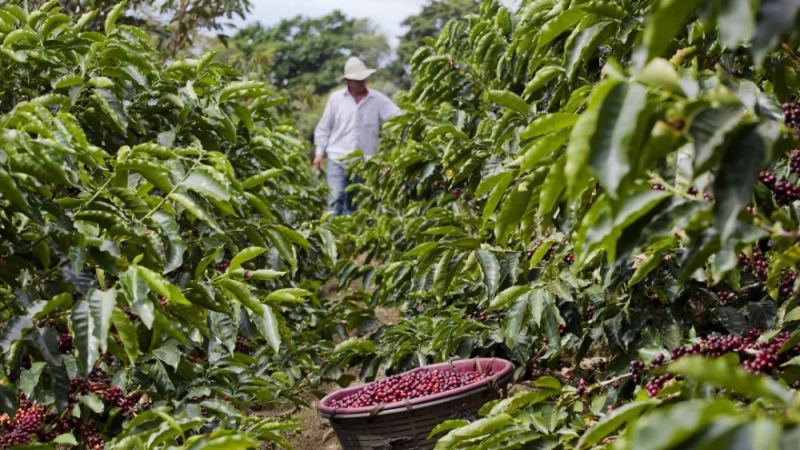
Costa Rica was among the first Central American countries to grow coffee, with the first tree introduced from Cuba in 1779. Commercial production began in 1808 with roughly 17,000 trees. Strict variety controls, including a ban on planting Robusta, helped the country build a reputation for distinctive specialty coffee, and the Tarrazú region is a leading example.
Coffee cultivation expanded fast after independence in 1821, when the government handed out free seedlings and granted land ownership to farmers who planted coffee for more than five days. Exports later slumped during World War II when the United Kingdom suspended purchases. Today most everyday Costa Rican beans are washed, with V60 pour-over parameters and three-stage pouring used to show regional character.
Costa Rica is one of the pioneers of coffee cultivation in Central America. Thanks to strict variety controls and its得天独厚 volcanic geography, it has produced distinctive specialty coffees. This article reviews the early development and setbacks of the country's coffee industry, outlines the distribution of its main producing regions, and focuses on the terroir of the Tarrazú region and the flavor performance of Front Street Costa Rica's everyday drinking beans. At the same time, the article explains the origin and evolution of honey processing, why Front Street insists on washed processing in its everyday drinking bean series, and includes V60 pour-over parameters and three-stage pouring suggestions to help coffee lovers gain a more complete understanding of the charm of Costa Rican coffee.
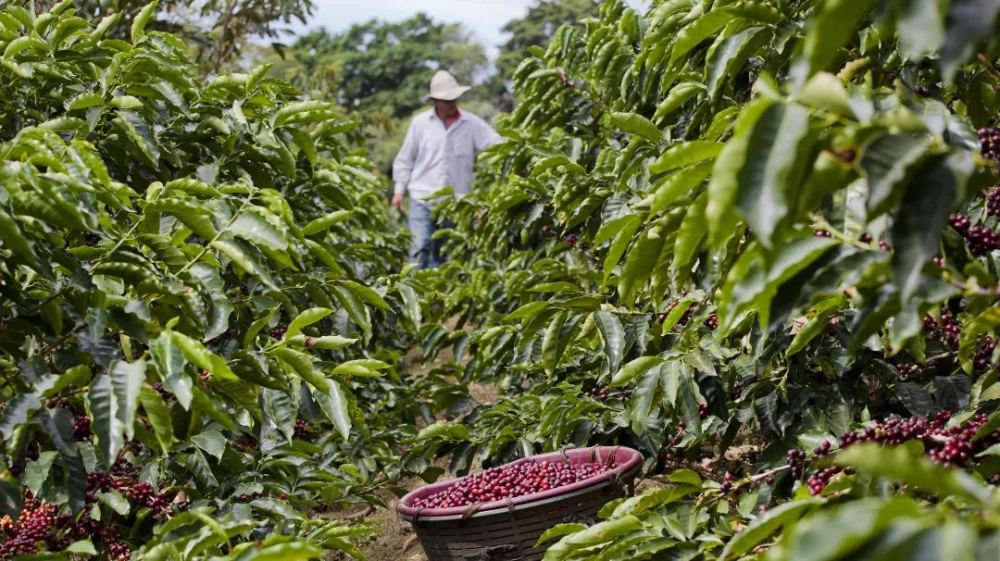
Among the countries of Central America, Costa Rica was one of the earlier nations to develop coffee cultivation. Not only did it start early, but it also used strict legal measures to safeguard the quality of its coffee, one important move being an explicit ban on planting Robusta varieties.
The History of Coffee Cultivation in Costa Rica
According to information reviewed by Front Street, the first coffee tree was introduced to Costa Rica from Cuba in 1779, marking the beginning of local coffee cultivation. In 1808, coffee entered the stage of commercial production in the country, and at that time there were approximately 17,000 coffee trees on the plantations. In 1821, Costa Rica formally gained independence from Spanish rule, and the coffee industry gradually grew into an important pillar of national income, a status that continues to this day.
In the early period, the Costa Rican government realized that coffee cultivation benefited both the country and the people, so it successively introduced a number of incentive policies, such as distributing coffee seedlings free of charge and allowing farmers to claim ownership of idle land if they planted coffee on it for more than 5 days. With strong government promotion, Costa Rica set off an unprecedented wave of "everyone growing coffee."
However, during World War II, Costa Rica's coffee industry declined from its peak. The instability and turmoil brought by the war caused the United Kingdom to suspend coffee purchases, and the golden period of Costa Rican coffee exports came to an end. In 1900, Brazil began to gain momentum in the coffee industry, which to some extent lowered the price of Costa Rican coffee. Subsequently, origins such as Honduras and Guatemala also rose one after another, becoming leaders in driving the development of the global coffee industry at that time. Compared with the flourishing coffee industries of other countries, Costa Rica's path of coffee cultivation clearly faced more obstacles.
In 1989, the Costa Rican government officially passed a law: prohibiting the planting of inferior beans and encouraging domestic farmers to pursue truly excellent-quality coffee beans. This is precisely why the country has long grown only Arabica. It is worth mentioning that this decree was jointly decided and implemented by government departments and two well-known Costa Rican research institutions, namely CATIE (Centro Agronómico Tropical de Investigación y Enseñanza, an agricultural research center composed of multiple countries) and ICAFE (Costa Rican Coffee Institute). CATIE was established in 1942, while ICAFE was founded as early as 1933. They have not only contributed to Costa Rican coffee cultivation, but have even made outstanding contributions to coffee throughout the Central and South American producing regions.
Introduction to Costa Rica's Coffee Producing Regions
Costa Rica is located in Central and South America, adjacent to Panama, the place where Geisha rose to fame. It is also affected by ocean currents and monsoons from both the Pacific and Atlantic Oceans, creating an excellent microclimate. Combined with various topographical features, this makes it a perfect producing region for coffee to thrive. Although Costa Rica does not rank high in terms of coffee production, the many volcanoes within its territory bring very fertile mineral-rich soil to crops, and in addition to excellent drainage, the crops planted here receive abundant rainfall and nutrients, so the fruit produced is naturally of higher quality.
From the map, it can be observed that Costa Rica's territory is long and narrow, and the coffee-growing areas are also distributed in a narrow strip through the central part. Thanks to its exceptional climate and volcanic geography, Costa Rica has a total of 8 high-quality coffee-producing regions: the five main regions of Central Valley, TRES RÍOS, WEST VALLEY, TARRAZÚ, and BRUNCA, as well as three smaller regions, Turrialba, Orosi, and Guanacaste.
Among them, the Tarrazú region is the largest and most well-known specialty region in the country, accounting for 35% of total production. In addition to rich volcanic soil and a cool climate, Tarrazú also has a high-altitude growing environment. The coffee produced there has bright acidity and a rich, full body, and usually also features fruit, vanilla, and chocolate flavors. With the development of specialty coffee, people have continuously innovated and improved processing techniques, allowing Front Street Costa Rica Tarrazú coffee to build up a strong reputation within the coffee community.
The Front Street Costa Rica everyday drinking beans on Front Street's bean list come from here. The varieties chosen are the locally common Caturra and Catuai, and the washed post-processing method gives this Front Street Tarrazú coffee a clean mouthfeel and flavor profile reminiscent of sweet orange, toffee, and nuts.
Front Street Coffee (FrontStreet Coffee): Costa Rica Tarrazú Coffee Beans
Region: Costa Rica Tarrazú
Altitude: 1,500 meters
Variety: Caturra, Catuai
Processing Method: Washed
Flavor: Sweet orange, honey sugar, toffee, nuts
The Coffee Characteristics of Costa Rica's Processing Methods
Around the mid-1990s, in order to increase the drying time when processing large batches of green coffee, Brazilian merchants invented the pulped natural method, locally called "Cereja Descascada." This is a method of sun-drying only after removing the fruit skin. It is very suitable for Brazil's dry climate. First, it can shorten the number of drying days; second, it also solves the undesirable fermented off-flavors caused by Brazilian natural beans drying on patios, greatly improving the flavor and quality of the coffee beans.
With the birth of this new coffee post-processing technology, some estate owners in Central and South American countries also began to imitate and experiment, adapting to local climatic conditions and improving Brazil's pulped natural process. By removing different amounts of pectin, they caused the dried green coffee beans to contain different levels of sugar, thereby subdividing the processing options into white honey, yellow honey, red honey, and black honey.
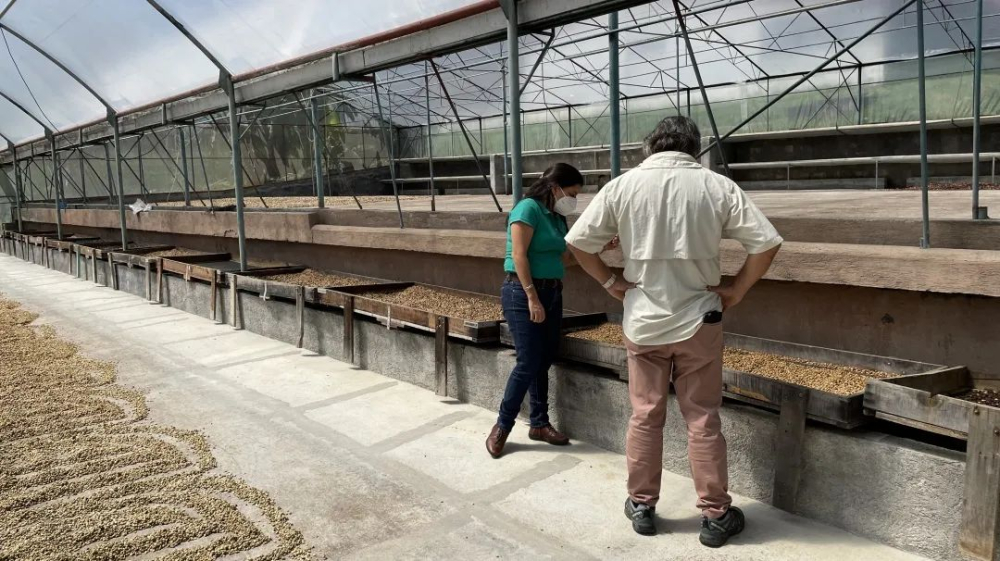
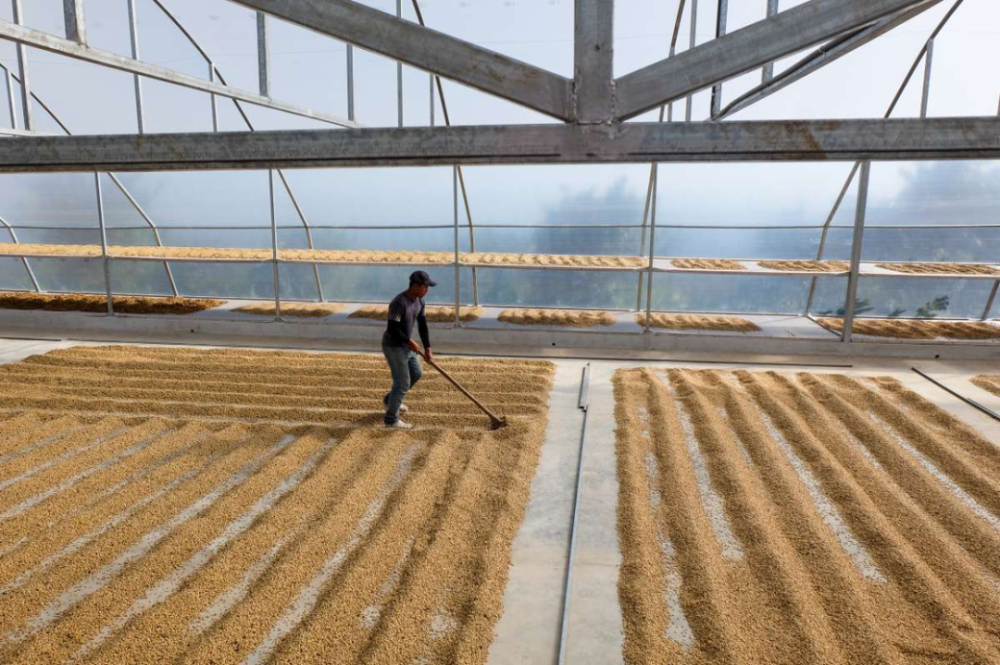
When producers use honey processing to process green beans, they first pour the fresh coffee cherries into a water tank for flotation, removing underripe fruits and impurities, and then use a depulper to remove the outermost layer of the fruit. At this point, they do not use large amounts of clean water to rinse away the pectin, but instead retain the pectin for drying. Because the pectin contains sugar and is sticky in texture, it is easily associated with honey, so it was named honey processing. Compared with the washed method, honey processing does not require large amounts of fresh water and related equipment, and it also reduces the negative defective flavors brought by long exposure to sunlight during sun-drying. Moreover, honey-processed coffee generally presents full tropical fruit flavors and fermented sweetness, and is very popular among consumers in the market.
The reason Front Street's Costa Rica everyday drinking beans do not use honey processing is that Front Street believes everyday drinking beans are a series designed to make it easy for everyone to get started. By tasting its own aroma, one can understand a coffee bean and the characteristics of its producing region. Although honey processing wins coffee beans a rich aroma, Front Street feels that the washed Front Street Tarrazú coffee better presents the characteristics of Costa Rican coffee beans themselves, allowing Costa Rican coffee to retain more of its classic coffee character.
Pour-over Suggestions and Flavor Characteristics for Costa Rican Coffee
Dripper: V60
Water Temperature: 91°C
Dose: 15 grams
Coffee-to-Water Ratio: 1:15
Grind Size: 80% passing through a No. 20 standard sieve
After roasting, coffee beans need 4-7 days of degassing and resting before entering their optimal tasting stage. As storage time lengthens, the coffee's aroma will volatilize more quickly, and the flavor and mouthfeel will also decline significantly. In order to ensure that everyone drinks the coffee at its best, Front Street ensures that only beans freshly roasted within 5 days are shipped. Fresh coffee beans are more conducive to extracting the high-quality flavors of Yirgacheffe.
In brewing, Front Street Coffee (FrontStreet Coffee) baristas habitually use a three-stage pouring method:
In the first stage, pour 30 grams of water for a 30-second bloom, then pour 95 grams (the electronic scale shows about 125 grams), finishing the pour in about 1 minute. When the water level drops to two-thirds of the coffee bed, pour the remaining 100 grams (the electronic scale shows about 225 grams), finishing the pour in about 1 minute 35 seconds. The drip finishes at 2'10", then remove the dripper and complete the extraction.
Front Street's washed Tarrazú everyday drinking beans reveal aromas of nuts and chocolate once ground. On the palate, there is a clear, clean sweet-and-tart taste of berries, sweet orange, and melon, with a slight sweetness in the finish.
For professional coffee knowledge exchange and more coffee bean information, please follow Coffee Workshop (WeChat public account: cafe_style)
For more specialty coffee beans, please add the private WeChat of Front Street Coffee (FrontStreet Coffee): qjcoffeex
The above content is compiled by CoffeeHunters, a coffee news website.


