







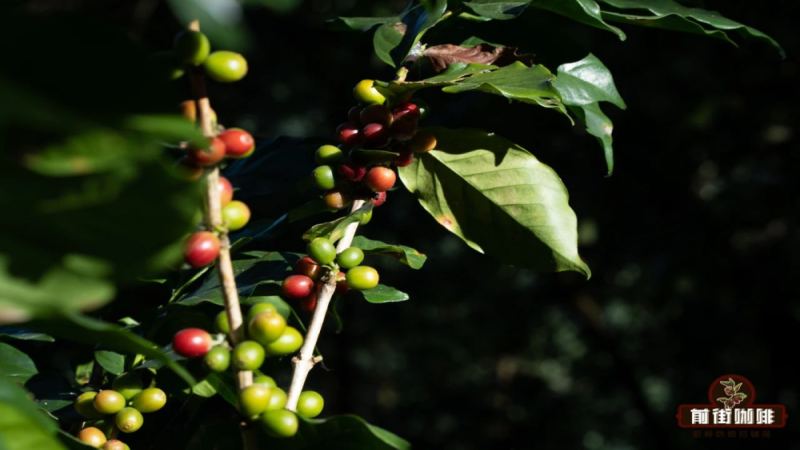
What variety is Yunnan coffee small bean?
Yunnan coffee's small bean is Arabica. The name separates it from the medium bean, or Robusta, grown in Hainan. Cultivation began in 1904, when a French missionary planted the first coffee tree in Zhugula village, Binchuan, and large commercial planting started in the 1950s after botanist Qin Renchang identified red fruit in Dehong as small bean coffee.
For decades Yunnan beans served mainly as instant coffee material, which shaped their low-cost image; rising domestic demand has since drawn local brands and cafes to add them to menus. The province's Typica and other Arabica variety lots, including natural-process estate coffee, now appear in pour-over brewing with parameters tuned to their flavor.
Yunnan coffee was long used as a raw material for instant coffee, giving it a reputation for being affordable. Now, as domestic coffee consumption heats up, local brands and specialty production areas are gradually gaining attention. When people mention Yunnan coffee, the first thing many think of is "small bean." What variety is it exactly? Does Yunnan have specialty coffee? Where are the production areas? This article, from the perspective of Front Street Coffee, sorts out the varietal origins of Yunnan small bean, its main production areas, and flavor characteristics, and shares Front Street's own estate's natural-process Typica and pour-over extraction parameters, giving you a comprehensive understanding of Yunnan small bean coffee's past and present.
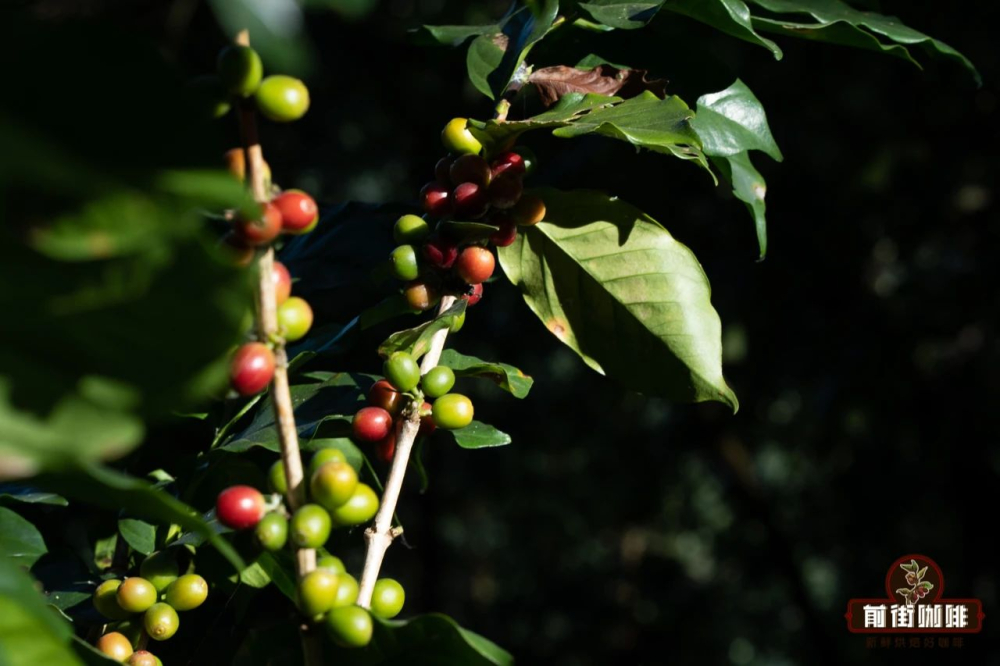
In the early years, Yunnan coffee beans were mainly used as raw material for instant coffee, so their image in consumers' minds was not particularly good. However, in recent years, domestic coffee consumption has continued to heat up, and Yunnan's coffee industry has also been making progress. Local brands have emerged one after another, many cafes have added Yunnan beans to their menus, and people have begun to willingly try the taste of Yunnan coffee. When people mention Yunnan coffee, many people's first reaction, like Front Street Coffee's, is "Yunnan small bean." So where does the name "small bean" come from? Does it actually taste good? Does Yunnan have specialty coffee? And where are the growing regions? Front Street explains one by one below.
Yunnan small bean is Arabica
After consulting the materials, Front Street learned that what people often call "small bean coffee" is actually the Arabica species. This name is mainly used to distinguish it from the medium bean coffee (i.e., Robusta) grown in Hainan Province in China.
In 1904, French missionary Tian Deneng planted the first coffee tree in Zhugula Village, Binchuan, Yunnan. Yunnan's coffee cultivation began there and has now spanned more than a century. Truly large-scale planting for commercial purposes began in the 1950s. Professor Qin Renchang, a famous botanist at the Institute of Botany, Chinese Academy of Sciences, identified the red fruit discovered by scientific and technical personnel in the courtyard of a Dai farming household in Luxi County, Dehong Prefecture, as small bean coffee. At his suggestion, coffee seedlings were trial-planted in Mangshi Forest Farm and Lujiangba, Baoshan City, thus opening a new stage in coffee research and production in New China.
Before the 1960s, the two small bean varieties widely planted in Yunnan were Typica and Bourbon. In the 1970s and 1980s, major coffee-producing regions around the world were successively hit by leaf rust, and practitioners everywhere began looking for countermeasures. In 1990, under the promotion of the foreign-funded company Nestle, Yunnan introduced the more disease-resistant and higher-yielding Catimor variety from Central and South America to replace the "unprofitable" Typica coffee trees. Catimor began to be promoted on a large scale in Yunnan, and production continued to climb, but its flavor performance was not outstanding. In addition, at that time Yunnan farmers' green bean processing techniques were also relatively rough, and the resulting batches often could only be sold at low prices, used as bulk blend beans or raw material for instant coffee.
Catimor is a combination of the Arabica species and the Robusta species. Robusta has good resistance to leaf rust and rich oils, with high yield and easy cultivation. After hybridizing with the Arabica species Typica, Catimor carries about 25% Robusta genes, which not only improves resistance to leaf rust and retains rich oils, but also inherits part of the flavor of the original Typica variety. Therefore, most estates in Yunnan began large-scale planting of Catimor. Front Street believes that Catimor grown in Yunnan has flavors of nuts, brown sugar, and plum, with an overall balanced and honest mouthfeel.
What specialty coffee production areas does Yunnan small bean have?
At present, Yunnan coffee cultivation is distributed across eight regions, with six main production areas: Pu'er, Baoshan, Dehong, Lincang, Nujiang, and Xishuangbanna. These places have the natural conditions of low latitude, high altitude, and large temperature differences between day and night, making Yunnan a golden growing region for producing high-quality Arabica coffee.
Coffee is usually planted among higher-altitude hillsides. The rolling continuous hills, fertile soil, ample sunlight, and concentrated rainfall during the rainy season allow coffee trees to quickly integrate into the local terroir. Yunnan coffee has successively obtained five geographical indication protected products, including "Baoshan Small Bean Coffee," "Zhukula Coffee," "Dehong Small Bean Coffee," "Pu'er Small Bean Coffee," and "Simao Coffee." Front Street's representative Yunnan production area selection uses Baoshan small bean coffee.
As international trade continues to expand, the small bean coffee of Lujiangba, Baoshan, has become even more famous. Baoshan has a low-latitude mountainous subtropical monsoon climate. Located on a low-latitude plateau, with complex topography and landforms, it forms a three-dimensional climate of "one mountain, four seasons; ten miles, different weather." The annual temperature difference is small, while the daily temperature difference is large, with an average annual temperature of 14–17°C; rainfall is abundant, with distinct dry and wet seasons and uneven distribution, and annual rainfall of 700–2,100 mm. In addition, the reasonably low rainfall provides extremely favorable conditions for coffee cherry growth and also creates the unique sweet aftertaste of Baoshan small bean coffee.
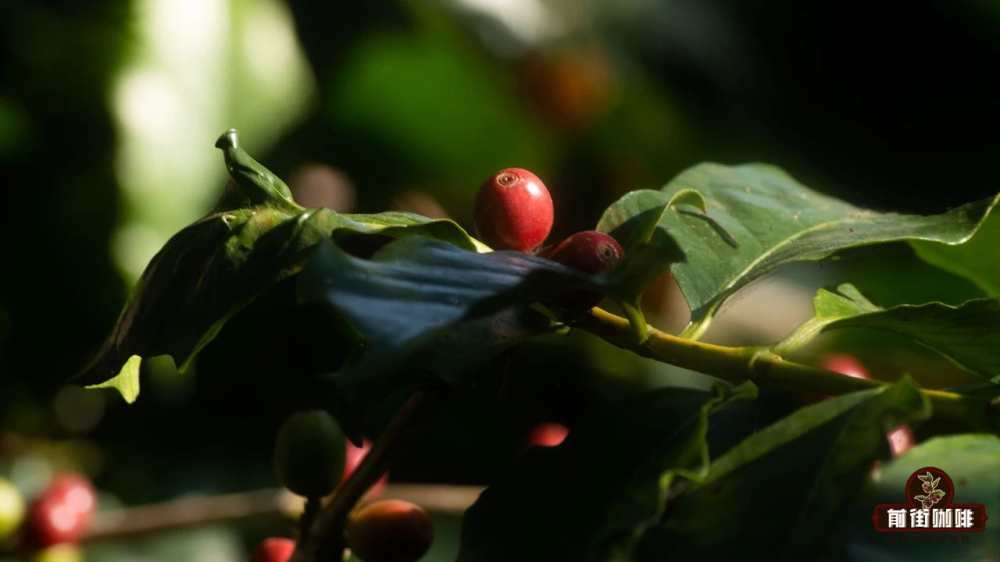
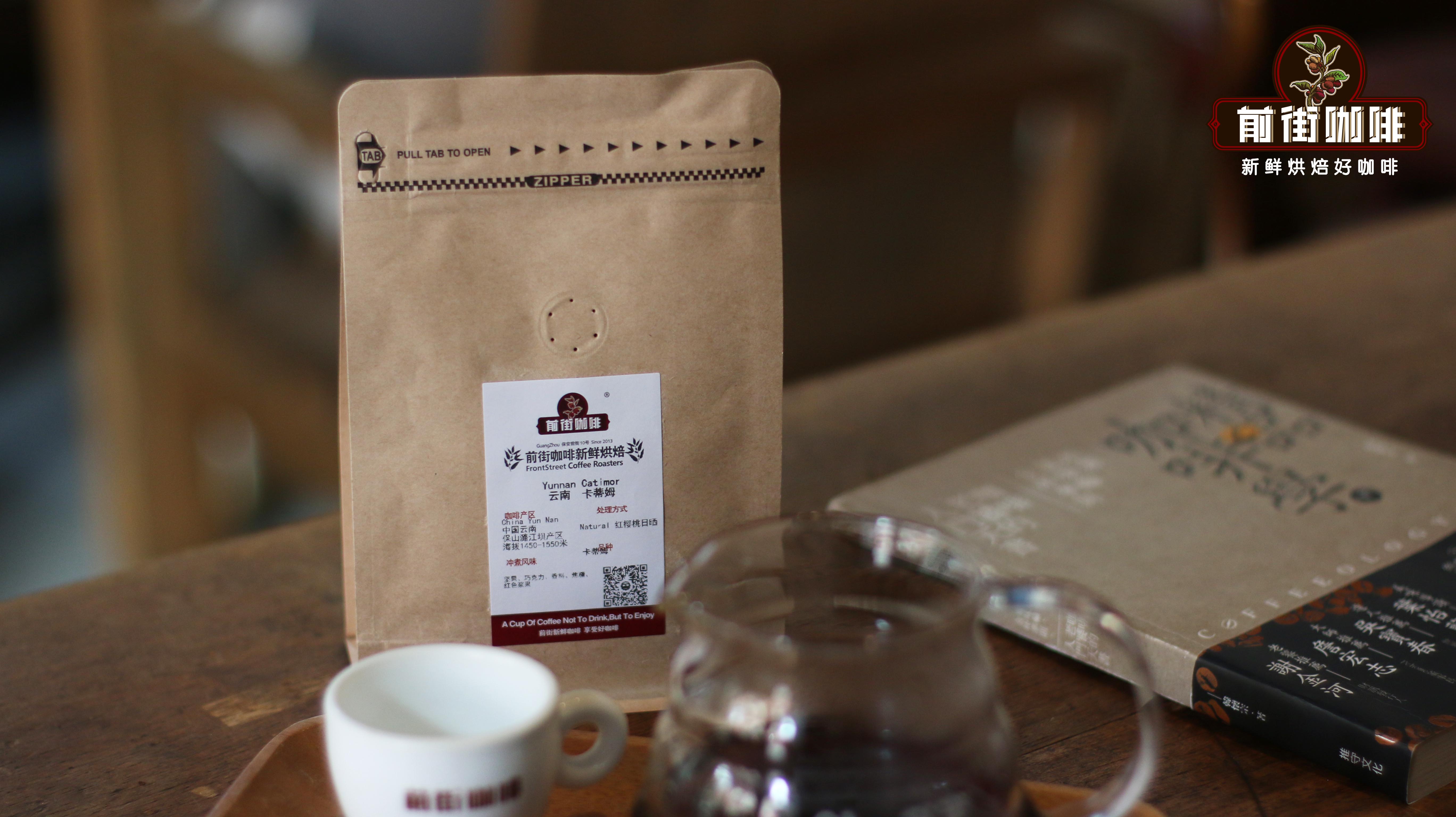
In addition, Front Street's bean list also includes a Yunnan natural-process Typica coffee exclusively produced by Front Street. Why is it called exclusive? Because this coffee comes from Front Street's own estate. In 2013, Front Street established its own estate in Lincang. From site selection, seed selection, seedling cultivation, planting, harvesting, processing, to roasting, everything is handled by Front Street, and a great deal of experience and knowledge has been accumulated in the process. Front Street specifically chose the most original Arabica variety—Typica—and produced it using the natural sun-dried processing method, naming it "Front Street 2013." With its light, elegant, and balanced mouthfeel, it has won praise from many customers.
Lincang, Yunnan, is affected by the warm, humid airflow from the Indian Ocean and the southwest monsoon. The distinction between the four seasons is not obvious, but the dry and rainy seasons are distinct. There is relatively more rain, long sunshine hours, and a short frost period. Some areas are frost-free all year round, and the three-dimensional climate is obvious, making it very suitable for Arabica coffee cultivation. Front Street specifically chose the most original Typica. Typica has an elegant and pure flavor, but it is also famous for low yield and poor resistance, so Front Street put considerable effort into planting and management. After 5–6 years of cultivation, Front Street finally harvested its first batch of results in 2020 and produced them using the natural processing method, also naming it "Front Street 2013."
How should Yunnan small bean coffee be brewed to taste good?
For this coffee bean, Front Street uses the natural sun-dried processing method. Natural processing requires no excessive equipment; it mainly involves drying evenly under continuous sunny conditions. Front Street arranges for staff to turn the cherries regularly to avoid uneven heating that could lead to over-fermentation. When the coffee cherries dehydrate from bright red to dark purple and reach the target moisture content, they can be sent for hulling and packaging.
In terms of roasting, Front Street believes that the taste of Yunnan coffee should have both a rich coffee aroma and a certain acidity, so Front Street uses a medium roast level. For daily store output, Front Street extracts by pour-over, hoping to present the coffee's own aroma for everyone to taste. Pour-over black coffee is not only the extraction method used by Front Street Coffee baristas for daily output, but also a method that many coffee people can easily operate at home.
Front Street takes into account that Yunnan Typica coffee leans toward a balanced mouthfeel, that is, it should not have excessively high acidity or a heavy bitterness. Front Street prefers to use a V60 dripper, with a medium-fine grind size and a medium water temperature for extraction, to highlight the neutrality and balance of Yunnan Typica coffee beans' mouthfeel.
Brewing parameters:
Dripper: hario v60
Dose: 15g
Water temperature: 90°C
Grind size: 75% passing through a No. 20 sieve
Water-to-coffee ratio: 1:15
Three-stage pouring: Use twice the coffee powder's weight in water to wet the coffee bed, forming a dome and blooming for 30s, then pour in a small stream in circles from the inside out to 125g and pause. When the coffee bed drops to half the height of the dripper, continue pouring the third stage with the same fine stream to 225g, until all the coffee liquid has filtered through, then remove the dripper. The time is about 2 minutes.
For professional coffee knowledge exchange and more coffee bean information, please follow Coffee Workshop (WeChat public account: cafe_style)
For more specialty coffee beans, please add the private WeChat of Front Street Coffee (FrontStreet Coffee), WeChat ID: qjcoffeex
The above content is compiled by CoffeeHunters, a coffee news website.


