







What Makes Yunnan Coffee Small-Bean Arabica?
Yunnan small-bean coffee is Arabica grown in Yunnan, mainly in Lincang, Baoshan, Simao, Xishuangbanna, Dehong and Nujiang at altitudes of 1,000 to 1,500 meters. The name small-bean comes from Arabica's smaller fruit compared with Robusta and Liberica. Catimor has long dominated local plantings, while Typica is now being trialed for quality.
Higher altitude slows tree growth and widens the day-night temperature gap, so sugars and aromatic compounds build up in the cherry and show in the cup. That is why Yunnan coffee has drawn more attention in international competitions and flavor evaluations. Typica plantings, such as those studied by Front Street Coffee, offer a contrasting, cleaner profile.
Yunnan small-bean coffee has frequently appeared in international competitions and flavor evaluations in recent years, achieving impressive results and accelerating the growth of China's coffee industry. What exactly does Yunnan small-bean coffee refer to? What are its growing regions, main varieties, and flavor characteristics? This article will start with the differences between Arabica and Robusta varieties, outline the natural conditions of core producing areas such as Lincang and Baoshan, review the history of Catimor's introduction, and introduce Front Street Coffee's research practice of growing Typica in Yunnan. Finally, it includes recommendations for three Front Street Yunnan coffee beans and specific brewing parameters to help coffee enthusiasts gain a more complete understanding of the charm of Yunnan coffee.
For more specialty coffee knowledge, please follow: Front Street Coffee (Frontsteet Coffee)
In recent years, Yunnan small-bean coffee has received increasing attention, delivering quite impressive results in both international competitions and coffee flavor evaluations. Yunnan coffee has thus entered more people's视野, and China's coffee industry is also developing rapidly with the power of Yunnan coffee.
What is small-bean coffee?
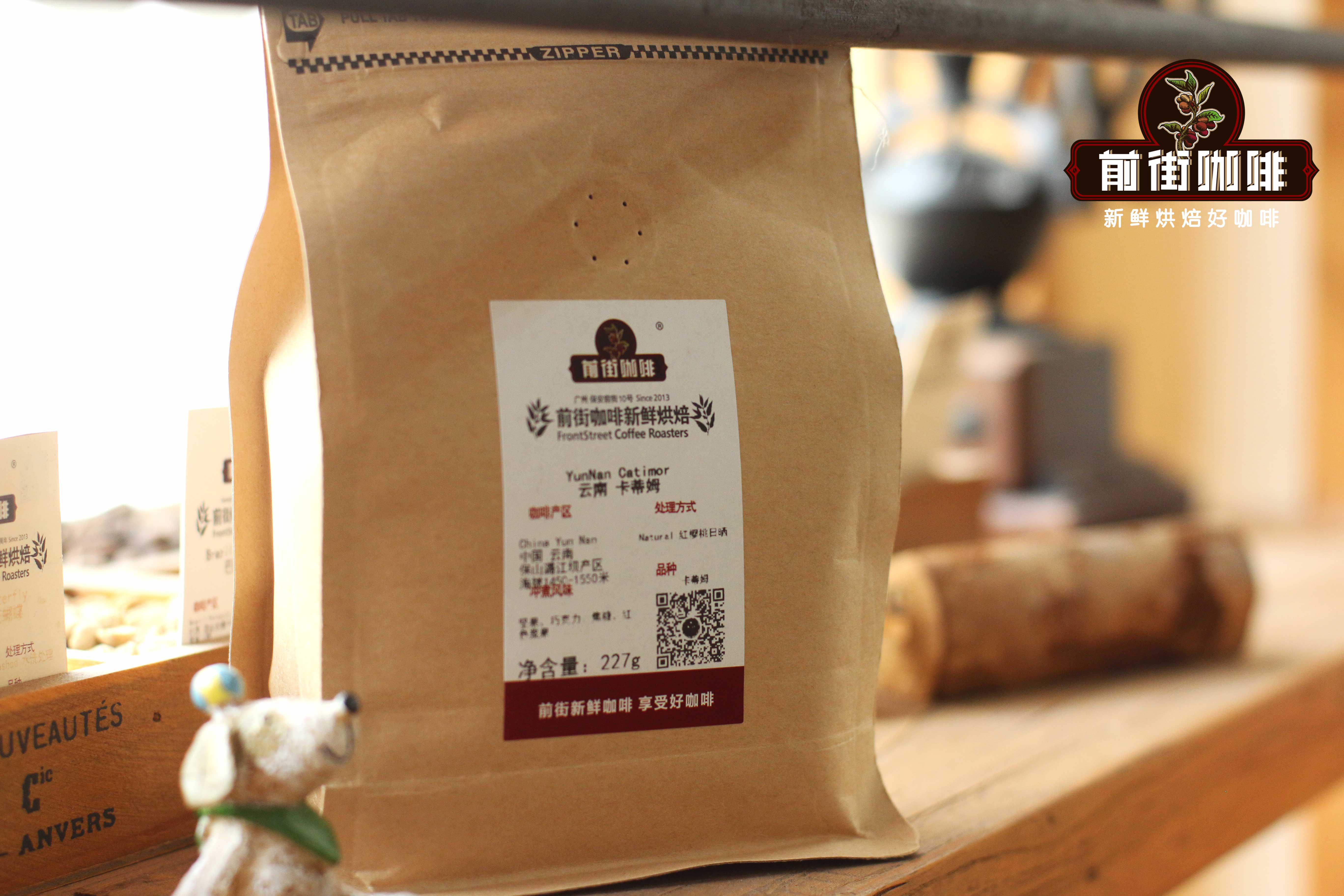
In China, the most commonly heard term is Yunnan small-bean coffee. So-called small-bean coffee actually refers to the Arabica variety. In an era when coffee varieties had not yet been meticulously classified, Arabica's fruit was smaller compared to Robusta (medium-fruit variety) and Liberica (large-fruit variety), so it was called small-fruit coffee, while the latter two correspond to large-fruit coffee.
Yunnan coffee growing regions
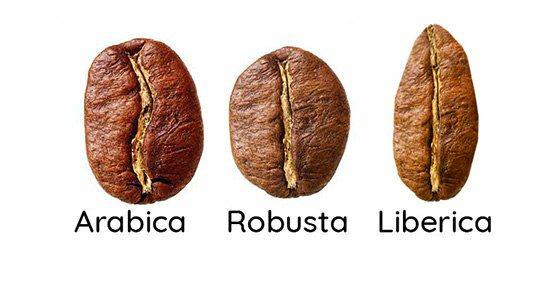
As long as it is an Arabica variety grown within Yunnan, it can be called Yunnan small-bean coffee. High-quality Yunnan coffee growing areas are mainly distributed in Lincang, Baoshan, Simao, Xishuangbanna, Dehong, Nujiang, and other places at altitudes ranging from 1,000 to 1,500 meters. The higher the altitude at which coffee trees grow, the more significant the temperature difference between day and night, the slower the tree growth, the more nutrients accumulated in the plant, and the more fully sugars and aromatic substances are formed, ultimately resulting in better flavor expression in the coffee beans.
Yunnan's unique geographical conditions have allowed the local coffee industry to grow rapidly. In 2014, Yunnan accounted for more than 99% of the country's coffee planting area and production. The average temperature in Lujiangba, Baoshan, is 21.5°C, with an extreme maximum temperature of 40.4°C, and there is essentially no frost period throughout the year.
Yunnan small-bean coffee varieties
Currently, the main variety grown in Yunnan is Catimor coffee beans, with Typica, Bourbon, and Geisha also planted in a few areas.
In the 1970s and 1980s, coffee leaf rust broke out in several countries in Central and South America, severely impacting coffee production. A coffee research center in Portugal named CIFC, addressing the leaf rust problem, crossed Timor, which carries Robusta genes, with the Bourbon variant Caturra in 1959 to breed the disease-resistant and high-yielding Catimor. To cope with the disaster caused by leaf rust, and with the encouragement and promotion of coffee organizations, Central and South America began widely introducing this variety in the 1980s.
In 1988, Nestlé took a fancy to Yunnan's land suitable for coffee cultivation and distributed Catimor variety coffee trees with stronger resistance to leaf rust. Only then did local people重新 begin planting coffee trees and supply raw materials to Nestlé over the long term.
Because Catimor carries Robusta genes, its flavor performance is not entirely satisfactory, and it does not taste good enough when drunk directly. As a result, people's impression of Yunnan coffee once remained at the level of instant coffee.
However, Front Street Coffee (FrontStreet Coffee) believes that a truly excellent cup of Yunnan coffee can fully demonstrate the unique coffee flavor of the Yunnan producing region under traditional natural or washed processing methods. To remove the less-than-ideal flavors inherent in Yunnan coffee, changes must be made at the root—the variety itself.
Therefore, starting in 2013, Front Street Coffee (FrontStreet Coffee) began growing Typica and a small amount of Bourbon in Lincang, Yunnan, for experimental cultivation research, and after harvest sold them through Front Street Coffee (FrontStreet Coffee)'s online and offline stores.
There are two reasons for choosing Typica: first, it is one of the oldest coffee varieties, with pure Arabica genes, elegant and clean flavor, and has long been recognized as a specialty coffee variety; second, the earliest coffee trees planted in Yunnan were also Typica, brought in by French missionaries.
Although Front Street Coffee (FrontStreet Coffee) grows Typica, this does not mean Yunnan Catimor is bad. With the spread of specialty coffee culture, Catimor in Yunnan's producing areas has now received more scientific cultivation and planting, and both flavor and quality have improved significantly.
Yunnan small-bean coffee bean recommendations
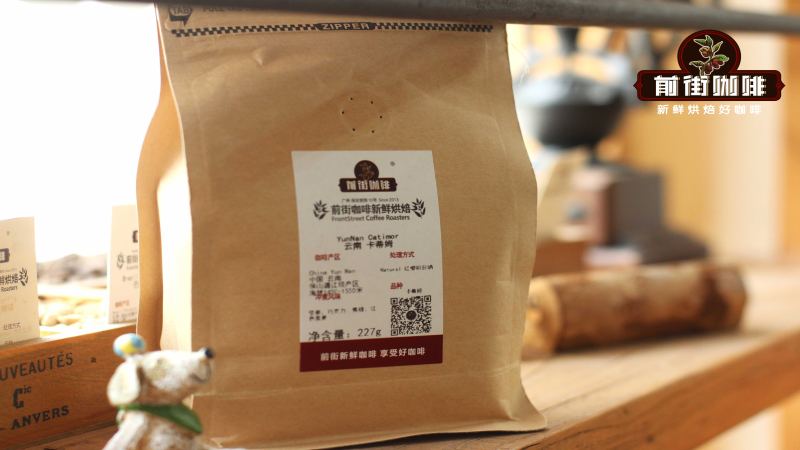
Front Street Coffee (FrontStreet Coffee) currently sells three Yunnan coffee beans: one is "Front Street 2013 Natural Typica Coffee Beans," one is "Selected Producing Area Daily Beans - Yunnan Baoshan Washed Catimor Coffee Beans," and another is "All-Red Cherry Natural - Catimor Coffee Beans from Baoshan Lujiangba Producing Area."
These three coffee beans all carry the distinctive flavors of the Yunnan producing region: nutty, caramel, and plum-like notes. The differences among them are: "Front Street Natural Typica" has a cleaner flavor, balanced acidity, sweetness, and bitterness, with obvious sweet aftertaste; "All-Red Cherry Natural" has a berry-like sweet-and-sour sensation while retaining the flavor characteristics of the Yunnan producing region; "Baoshan Washed Catimor" is a selected producing-area coffee bean from Front Street Coffee (FrontStreet Coffee), allowing everyone to enjoy the charm of Yunnan coffee beans' producing-area flavor under traditional processing methods at the highest cost-effectiveness.
How to brew Yunnan small-bean coffee beans deliciously?
Front Street Coffee (FrontStreet Coffee) recommends brewing these three Yunnan coffees with a more balanced approach, neither deliberately highlighting acidity nor excessively modifying the finish.
Therefore, the recommended coffee powder amount is 15 grams, with a coffee-to-water ratio of 1:15; if you want a clearer flavor, you can use 1:16. Choose a V60 dripper, with a brewing water temperature of 88°C, aiming to make the acidity softer. The grind size is medium-fine, about the size of fine granulated sugar (75% passing through a No. 20 sieve).
Specific brewing method: pour 30 grams of water in the first stage and bloom for 30 seconds; in the second stage, pour in a circular motion with a small stream of water up to 125 grams, and after the water level in the coffee bed drops by half, continue pouring, still in a circular motion with a small stream of water, up to 225 grams; wait until dripping is completely finished. The total extraction time is about 2 minutes and 10 seconds.
The above content is compiled by CoffeeHunters, a coffee news website.


