







How Do You Make Coffee by Coffee Maker at Home?
With a French press, the process is simple: add coarse grounds, pour in hot water, steep, then press the plunger. Use a coffee-to-water ratio between 1:14 and 1:18, a grind about the size of brown sugar granules, and water between 85 and 95°C. The full routine runs about ten steps from heating water to serving.
Immersion brewing extracts oils, aroma and sweetness fairly fully, so the cup has a thick, round mouthfeel. It is also unusually consistent: the same pot, beans, water temperature, water amount and steep time produce a nearly identical cup for different people, which pour-over and siphon rarely manage. Medium-to-dark roast beans work well here.
The French press, also called a French filter press or tea maker, and sometimes nicknamed the "lazy person's pot," is a household device with a very low barrier to operation that nonetheless preserves coffee flavor quite completely. The coffee it brews has a thick, round mouthfeel, and the oils, aroma, and sweetness are all released fairly fully, making it the easiest way for beginners to consistently reproduce a stable taste. This article centers on the origins and characteristics of the French press, focusing on the coffee-to-water ratio (about 1:14 to 1:18), grind size (a coarse grind about the size of brown sugar granules), water temperature control (85 to 95°C), and a complete ten-step operating procedure, while also recommending medium-to-dark roast beans such as Front Street Coffee Bird of Paradise, Front Street Coffee Queen's Estate, Front Street Coffee Golden Mandheling, Front Street Coffee Strawberry Candy, and Front Street Coffee Mozart, to help you easily make a delicious cup of French press coffee.
For more specialty coffee knowledge, please follow: Front Street Coffee ( Frontsteet Coffee )
More and more people love coffee, and brewing methods keep multiplying. But when you're busy, pouring over a hand brew may feel too time-consuming, and pulling an espresso shot also feels like more time than you have—so at times like these, brewing a cup with the so-called lazy person's pot is a convenient and pretty good choice. Compared with pour-over, coffee made in a French press has a thicker, rounder mouthfeel and is more tolerant of different kinds of coffee beans.
The French press counts as one of the most effortless household coffee devices, and it is also one of the brewing methods that most fully presents coffee flavor (its strengths are easily amplified, and its flaws can't hide either), so it demands higher quality and freshness from the beans. Among the several methods we're familiar with, the French press is also the easiest way to reproduce the same cup of coffee. With the same pot, the same beans, the same water temperature, the same amount of water, and the same steeping time, different people can make an almost identical-tasting cup—something pour-over and siphon can't do—so it's especially suitable to recommend to beginners for practice.
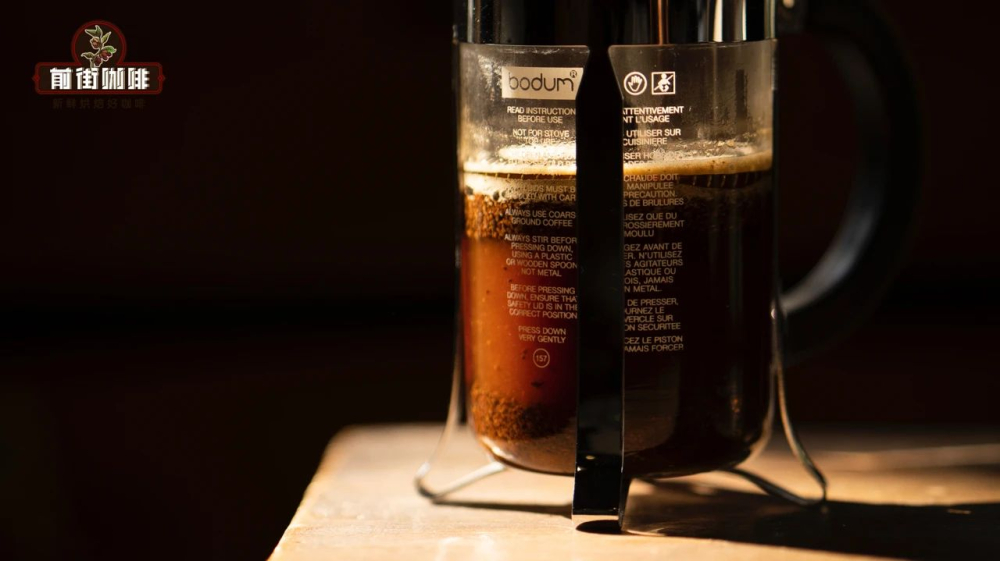
French Press: also called a French filter press, French press pot, or tea maker, commonly known as the lazy person's pot. It originated in France around 1850, and its structure is very simple, consisting of a heat-resistant glass body (or clear plastic) and a metal filter mesh with a plunger rod. In its earliest days it was mostly used to brew black tea, which is why some people call it a tea maker.
Among all coffee brewing equipment, the French press is the simplest to operate, and its extraction rate is closest to the results of a cupping, releasing the coffee's oils, aroma, and various flavor compounds fairly fully. Its mouthfeel is smooth, sweet, and rich, making it a coffee device well worth choosing, and it is loved by many for this reason.
The French press is indeed one of the most convenient household coffee pots, and it is also one of the brewing methods that most fully preserves coffee flavor (it easily showcases the good flavors of coffee and can also expose its flaws), so it demands higher quality and freshness from the coffee. The French press is also the easiest method among those we've mastered to reproduce the same cup of coffee. With the same French press, the same coffee beans, the same water temperature, the same amount of water, and the same brewing time, different people can reproduce almost the same cup—something brewing methods like pour-over and siphon cannot achieve—so it is also the method most recommended for beginners to learn.
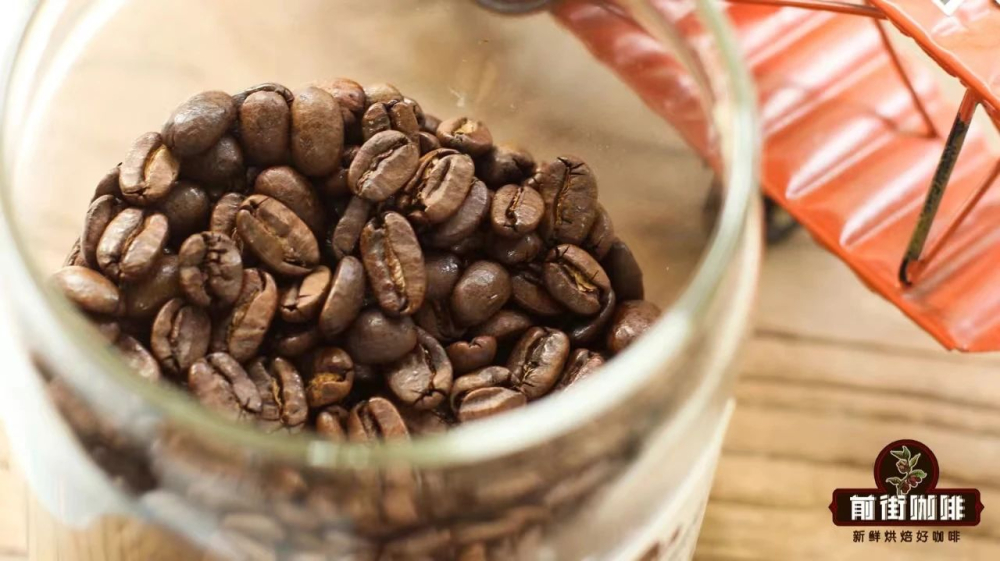
To make French press coffee, we recommend medium-roast or darker beans such as Front Street Coffee Bird of Paradise, Front Street Coffee Queen's Estate, Front Street Coffee Golden Mandheling, Front Street Coffee Strawberry Candy, and Front Street Coffee Mozart , because they come with rich coffee aroma and a full-bodied mouthfeel, letting us more easily make a delicious cup of French press coffee.
Now let's take a look at this simplest way of making French press coffee:
We use a two-person French press to make two servings of Front Street Coffee Strawberry Candy beans . The usual ratio of coffee grounds to water added is 1:14–18. Some French presses have water level markings and some don't; we can just measure with a gram scale. If your French press has markings, you need to pour in the water first and then add the coffee grounds, so that the coffee-to-water ratio is accurate.
☆The coarseness of French press coffee grounds is about the size of brown sugar (a coarse grind), and the grind should be relatively uniform. This is related to the way a French press extracts and filters: the metal mesh has a lower density and fine particles pass through easily, and since hot water contacts the coffee grounds directly, too fine a grind leads to over-extraction.
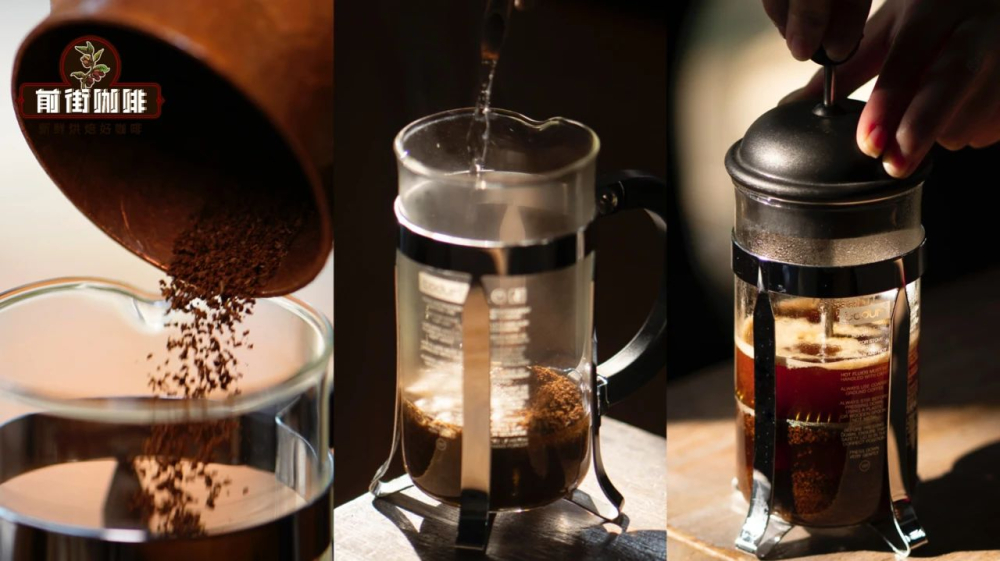
Equipment needed: French press, pouring kettle, grinder, thermometer, gram scale, timer, fresh coffee beans, coffee cup.
Front Street French press coffee operating steps:
1. Weigh out 20g of fresh coffee beans.
2. Generally, the water temperature for a French press can be controlled anywhere from 85–95°C, adjusted according to the roast level of the beans. For light-roasted beans, you can use a slightly higher water temperature to highlight the aroma; for dark-roasted beans, you can use a lower water temperature to suppress bitterness. This needs to be controlled based on experience and personal preference.
3. Pour the ground coffee into the French press.
4. Pour in water, using a circular pouring motion similar to pour-over for even saturation.
5. Pour in about 300g of hot water, for a coffee-to-water ratio of about 1:15. As mentioned earlier, the French press coffee-to-water ratio is roughly 1:14–18, adjustable to personal taste. This French press has no markings, so we use a gram scale to measure the water. After adding the coffee grounds, tare the scale to zero, then weigh the hot water. Although the weight and volume of hot water differ somewhat from cold water, under home conditions this discrepancy can be ignored.
6. Stir.
7. Put the lid on, but do not press the filter down. Let it sit for 4 minutes. A shorter time makes the flavor weaker, and a longer time makes it stronger, so the time is also set by personal taste.
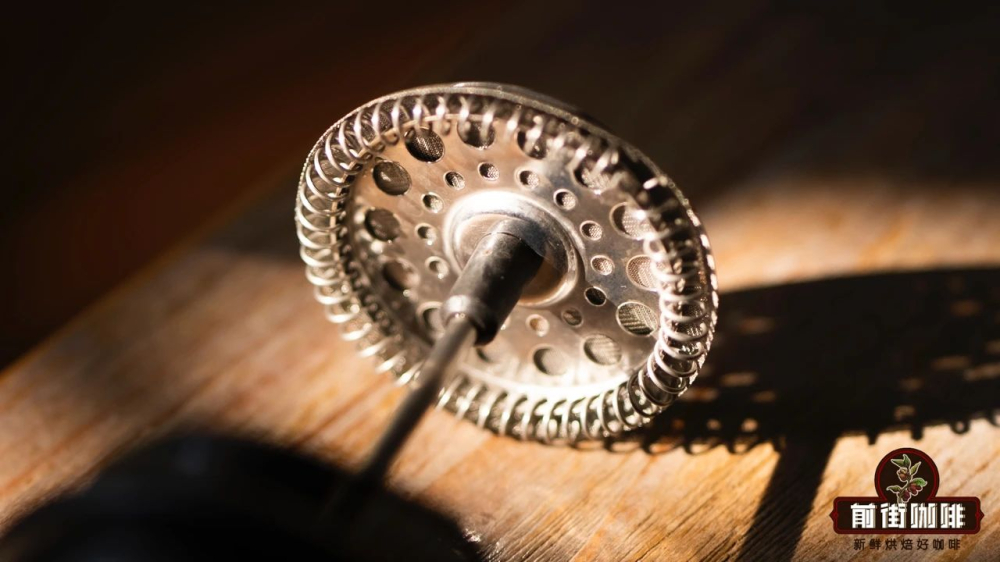
8. Filter: press down on the plunger rod, slowly lowering it to the bottom of the pot (this action should be slow to prevent fine particles from passing through the metal mesh; stop when you get close to the bottom—don't wait until you can't press any further).
9. Pour out the coffee, slowly tilting the French press to prevent the coffee grounds at the bottom from floating up due to vigorous shaking and affecting the taste.
10. Enjoy your French press coffee.
The above content is compiled by CoffeeHunters, a coffee news website.


