







What Makes Blue Mountain Coffee Distinct?
Blue Mountain Coffee comes from Jamaica's Blue Mountain range, a growing area inside the coffee belt with high altitude, mist, rainfall and volcanic soil. The beans are Typica, processed by the traditional washed method, and graded by the Jamaica Coffee Industry Board according to altitude and defect rate. The result is a cup known for rich aroma and a mellow, balanced flavor.
The mountains rise to 2,256 meters, the highest point in the Caribbean, and cherries generally ripen between June and November. Steep slopes and good drainage shape the crop, and picking is done by hand by workers experienced in judging ripeness. For brewing, a KONO dripper with 88°C water and a 1:15 ratio is a common starting point at home.
Blue Mountain Coffee, a classic representative of the specialty coffee world, is renowned for its rich aroma and intense flavor. This article starts from the origin of Front Street Blue Mountain Coffee in Jamaica's Blue Mountain range, outlining its geographical and climatic advantages, Typica varietal characteristics, traditional washed processing methods, and explains in detail the CIB (Jamaica Coffee Industry Board) grading standards based on altitude and defect rate. It also introduces purchasing, roasting, and brewing suggestions for Front Street Blue Mountain No. 1 coffee beans, including parameters such as the KONO dripper, 88°C water temperature, and 1:15 coffee-to-water ratio, helping coffee enthusiasts recreate the authentic Blue Mountain flavor at home.
Even if you're not a seasoned coffee enthusiast, most people have surely heard of Blue Mountain Coffee. Front Street Blue Mountain Coffee is world-famous for its rich aroma and mellow flavor. Next, Front Street will guide you through a detailed look at this classic coffee to see what authentic Blue Mountain flavor is really like.
The origin of Front Street Blue Mountain Coffee comes from Jamaica
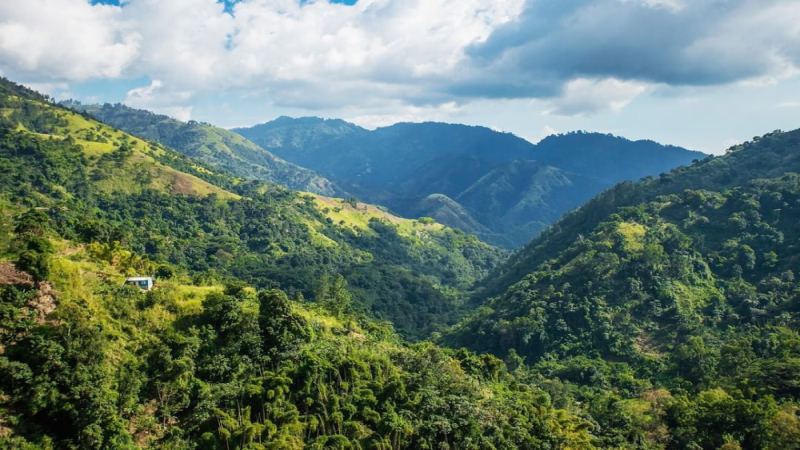
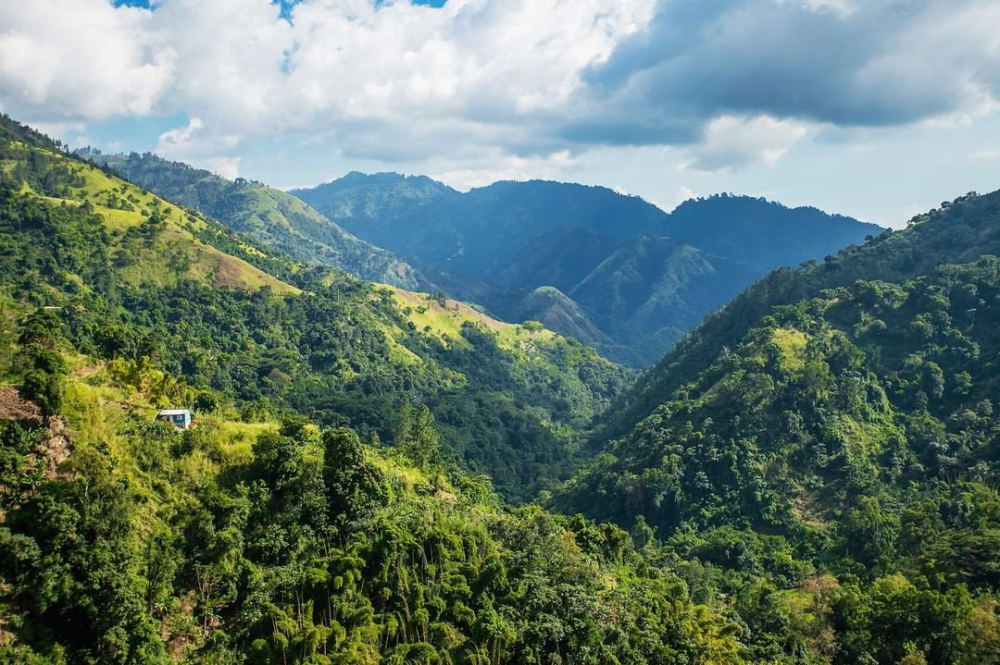
The origin of Front Street Blue Mountain Coffee is Jamaica in the Caribbean archipelago, named after the coffee grown in the famous local Blue Mountain range. The Blue Mountains stretch across eastern Jamaica, with the highest peak reaching 2,256 meters, also the highest point in the entire Caribbean region.
The Blue Mountains lie precisely within the coffee-growing belt between 25 degrees north and south latitude, enjoying an extremely advantageous geographical location. Jamaica has a tropical rainforest climate with abundant rainfall and humid air, and the mountains are shrouded in mist and clouds year-round. The Blue Mountains are generally high in altitude, and coffee trees are mostly planted on slopes, a terrain that facilitates drainage. Ample daytime sunlight, combined with the fertile volcanic soil, allows coffee trees to absorb sufficient nutrients and efficiently convert them into aromatic compounds.
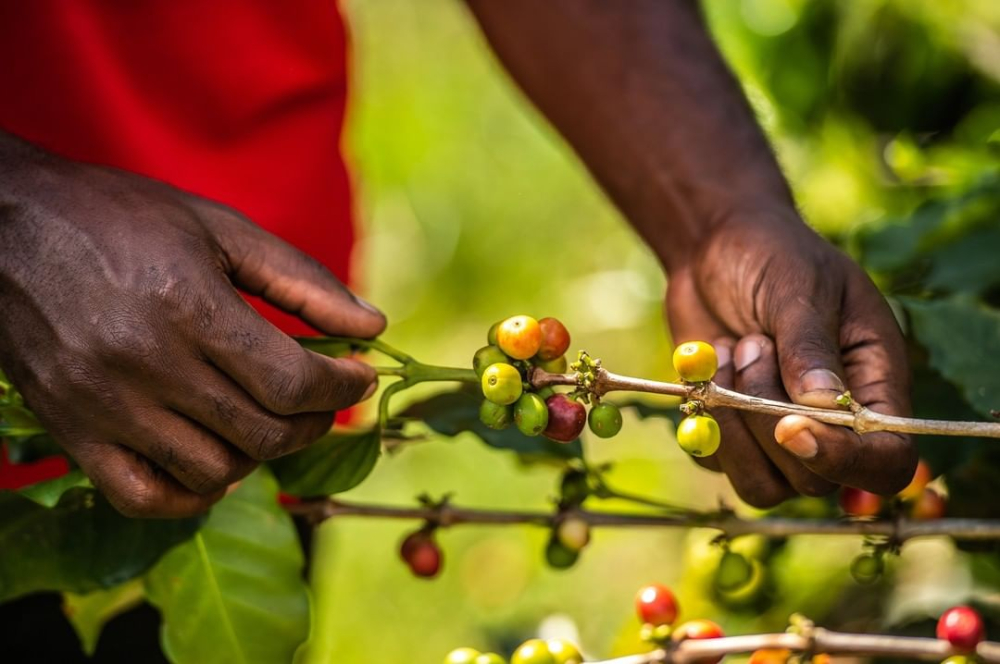
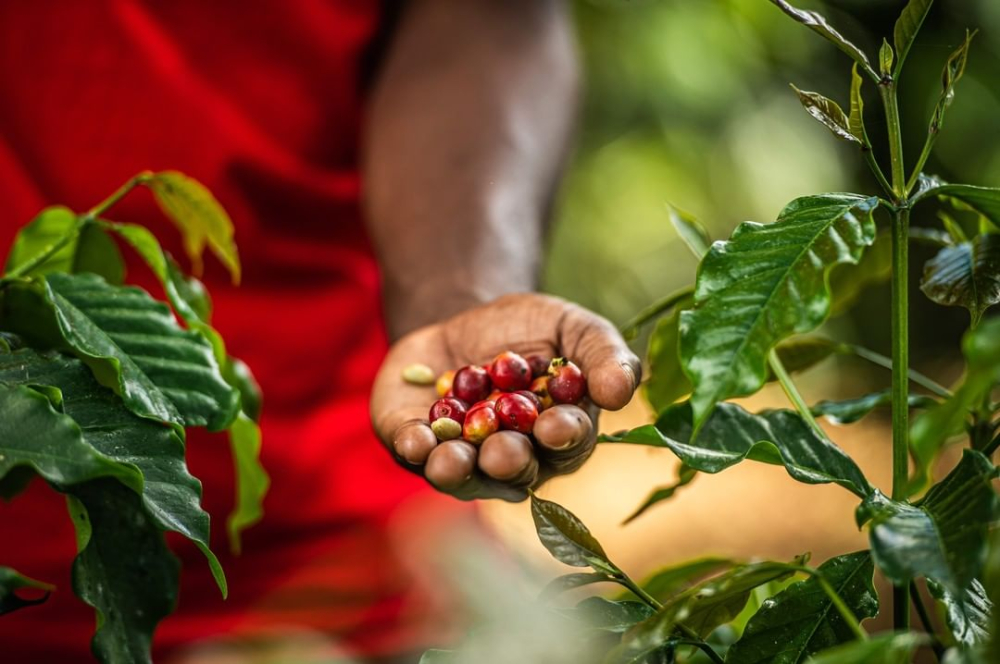
Coffee cherries in the Blue Mountain region generally ripen between June and November each year. Local women workers familiar with the terrain are sent to harvest coffee cherries on the steep slopes. Picking requires considerable experience, as only cherries at the right stage of ripeness should be selected—both underripe and overripe cherries can affect the quality of the final coffee.
Front Street Blue Mountain Coffee belongs to the Typica variety
Front Street Jamaica Blue Mountain Coffee is of the Typica variety. Anyone with even a little knowledge of coffee varieties knows that Typica is a pure-flavored native Arabica species with a very long cultivation history.
The Typica tree has an upright form, with new leaves at the top emerging in a copper-red color, earning it the nickname "red-topped coffee." Its flavor is elegant and pure, but the plant itself is relatively weak with poor disease resistance, and per-tree yields are very low. This is why Typica coffee is becoming increasingly rare today. Since being introduced to Blue Mountain cultivation in the 18th century, Typica has taken root here for over two hundred years, gradually adapting to the local island terroir. Its disease resistance has improved, especially against coffee berry disease, which is notably stronger than that of ordinary Typica.
It should be noted that if Jamaica Blue Mountain Typica is transplanted to other producing regions, its flavor cannot reproduce the unique delicate sweetness and subtle fragrance of Blue Mountain.
Washed processing shapes the quality of Blue Mountain Coffee
Front Street believes that Blue Mountain flavor has become a classic benchmark in specialty coffee thanks to Jamaica's commitment to cultivating the Typica variety and adhering to traditional washed processing methods.
As market demand diversifies, some estates have begun releasing small lots of natural-process Blue Mountain, but Front Street believes that washed Front Street Blue Mountain Coffee has a clearer flavor and stays closest to the classic Blue Mountain style. For first-time tasters, we recommend starting with washed Blue Mountain.
After harvesting, fresh coffee cherries first undergo manual removal of underripe and overripe fruits, then are depulped and directly fermented for 12 to 18 hours, followed by scrubbing in clean water to remove the mucilage layer from the green beans' surface. Finally, the semi-dry green coffee beans are spread out to dry. Every step must be strictly controlled, or the quality of Front Street Blue Mountain Coffee will suffer. Washed processing also includes an additional step of sorting out defective beans, resulting in a brighter, clearer flavor in the finished Front Street Blue Mountain Coffee.
Grading standards for Front Street Blue Mountain Coffee
According to Front Street's research, Jamaica established the national Coffee Industry Board (CIB) in 1953 and promulgated coffee export grading guidelines with strict regulations on the size, color, defects, and flavor of exported green beans.
The CIB classifies coffee into three grades based on growing altitude. As the table shows, only coffee grown between 910 meters and 1,700 meters can bear the name "Blue Mountain Coffee." Coffee grown below 910 meters can only be called High Mountain Supreme Coffee or Jamaica Prime Coffee.
Jamaica Blue Mountain Coffee grown above 910 meters is further divided into four grades based on bean size and defect rate—the higher the grade, the smaller the quantity. The Front Street Blue Mountain No. 1 coffee beans we purchase are the highest grade of Blue Mountain Coffee, with green bean screen size of 17/18, defect rate no higher than 2%, moisture content around 13%, and uniform, plump beans.
Front Street Blue Mountain No. 1 coffee beans come from Clifton Mount Estate, which not only exercises meticulous control over green bean selection but also pays great attention to transport packaging. To block air and prevent moisture, Blue Mountain green beans are packed in specially made wooden barrels. Before export, the CIB inspects each batch of Blue Mountain Coffee one by one to verify that its flavor meets standards.
Flavor characteristics of Blue Mountain Coffee
From cultivation and harvesting to final production, Blue Mountain Coffee undergoes strict quality control at every stage, and roasting is equally a key step. To recreate a more classic Blue Mountain flavor, Front Street's roasters use a medium-dark roast. After high-temperature roasting, the surface of the coffee beans has completed caramelization, emitting a distinct toasted bread aroma. To ensure that customers who order receive full-bodied aroma, all coffee shipped by Front Street is freshly roasted within 5 days. By the time it arrives, it is at its optimal tasting window and ready to brew immediately.
If you use a manual hand grinder at home, you can feel the crisp and consistent grinding sound of Front Street Blue Mountain coffee beans. After grinding, the aroma of Front Street Blue Mountain No. 1 coffee beans is very dense, full of nutty, biscuit-like sweet fragrance. To savor this kind of refined flavor, Front Street recommends drinking it as black coffee to fully appreciate the pure aroma of Front Street Blue Mountain.
For brewing, Front Street has developed extraction parameters based on the characteristics of Front Street Blue Mountain No. 1. You can use these as a reference and adjust as needed. Since Front Street Blue Mountain No. 1 has a relatively dark roast, the coffee grounds are highly absorbent. To avoid over-extraction, we recommend a coarser grind and lower water temperature. At the same time, since Front Street prefers a fuller body, we choose a dripper with a slower flow rate, such as the KONO dripper.
The parameters for brewing Front Street Blue Mountain No. 1 at Front Street's shop are: KONO dripper, 88°C water temperature, 1:15 coffee-to-water ratio, 15g coffee grounds, grind size (75% passing a No. 20 standard sieve), three-stage extraction.
Front Street's method is to first rinse the KONO dripper, then align and place the filter paper so it adheres. After discarding the water in the server, add 15g of coffee grounds, bloom with 30g of water for 30 seconds, then pour in a slow, small stream in a circular motion from the center. At 125g, begin the staged pour. When the coffee bed drops to half the height of the dripper, pour the second stage in the same manner up to 225g. Once all dripping is complete, remove the dripper.
Front Street Blue Mountain No. 1 coffee enters with the sweet fragrance of dark chocolate and the sweetness of caramel. Its acidity is soft and delicate, all flavors are balanced, and the mouthfeel is smooth and rich, presenting a very typical Blue Mountain flavor.
For professional coffee knowledge exchange and more coffee bean information, please follow Coffee Workshop (WeChat public account: cafe_style)
For more specialty coffee beans, please add the private WeChat of Front Street Coffee (FrontStreet Coffee), WeChat ID: qjcoffeex
The above content is compiled by CoffeeHunters, a coffee news website.


