







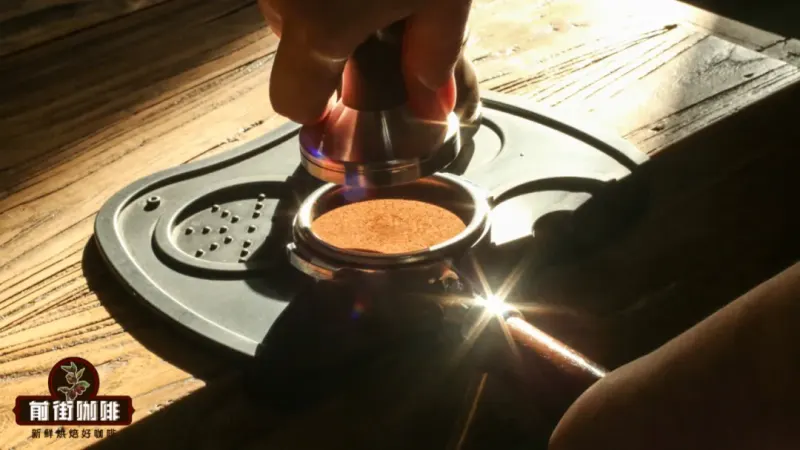
Coffee Machine Tamping Pressure and Espresso Extraction
Tamping force has little effect on the final espresso. A comparison of light tamping at 2 kg, heavy tamping at 18 kg and no tamping at all, using a 20 g dose and a 40 ml target yield, showed nearly the same extraction time and flavor across six shots averaged per condition. The force applied by hand is small next to the machine's pressure.
A coffee machine pushes water at roughly 9 bar, so the puck itself does the real work of resisting flow. Because the grind is fine, water takes the easiest path and can form channels, which causes uneven extraction. The purpose of tamping is therefore to level the bed and remove those channels, not to press as hard as possible.
In preparing espresso extraction, distribution and tamping are key steps that determine the quality of the final product. Many coffee enthusiasts have asked Front Street via our backend: how much force should be used when tamping? This article uses comparative experiments to test the extraction time and flavor performance of espresso under three conditions: light tamping at 2kg, heavy tamping at 18kg, and no tamping at all, and combines this with the conversion of a coffee machine's 9bar pressure to explain why tamping force has very little effect on the extraction result, while also explaining that the real purpose of tamping is to eliminate channeling. The article also retains Front Street Coffee's practical suggestions to help readers master the correct tamping technique and improve the uniformity and mouthfeel of espresso.
For more specialty coffee knowledge, please follow: Front Street Coffee ( Frontsteet Coffee )
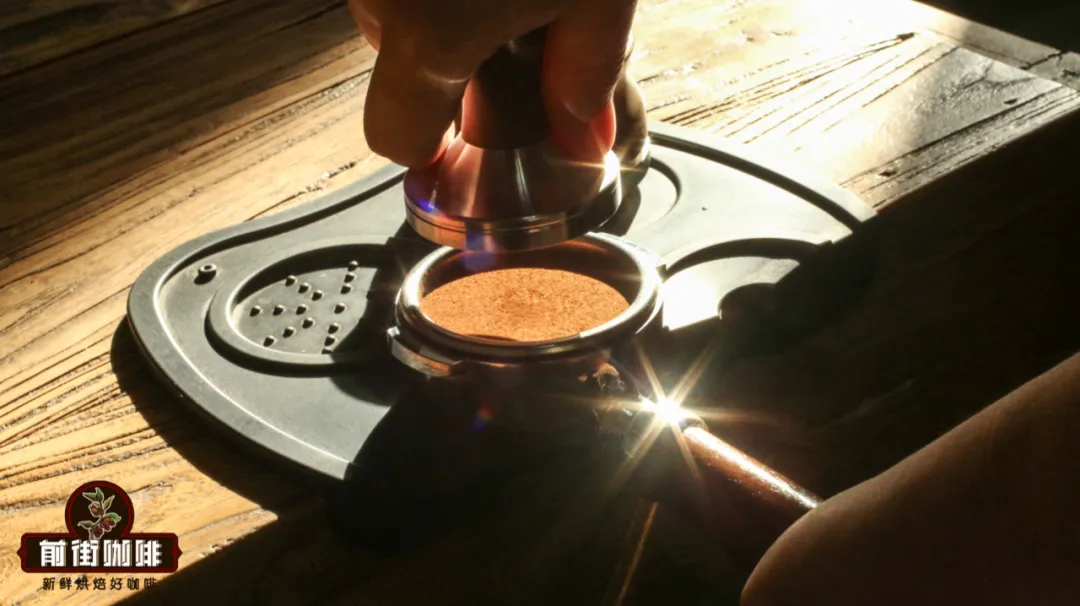
Front Street once mentioned in the article "The Importance of Distribution and Tamping" that in the early preparation for espresso extraction, whether the coffee grounds are evenly distributed in the portafilter basket and whether the force applied during tamping is consistent will both affect the extraction process and the final flavor. However, that article did not specify exactly how much force is needed for tamping, so many readers left messages in our backend asking Front Street: how much force should actually be used when tamping?
In fact, Front Street has previously published several pieces of content testing tamping force, but because they only presented experimental comparisons, many friends may not have fully understood them. So today Front Street will focus on discussing: what impact does tamping force actually have on extraction, and what exactly is the concept of a coffee machine's 9bar pressure? Why mention coffee machine pressure? Keep reading and you will understand.
Extraction experiment
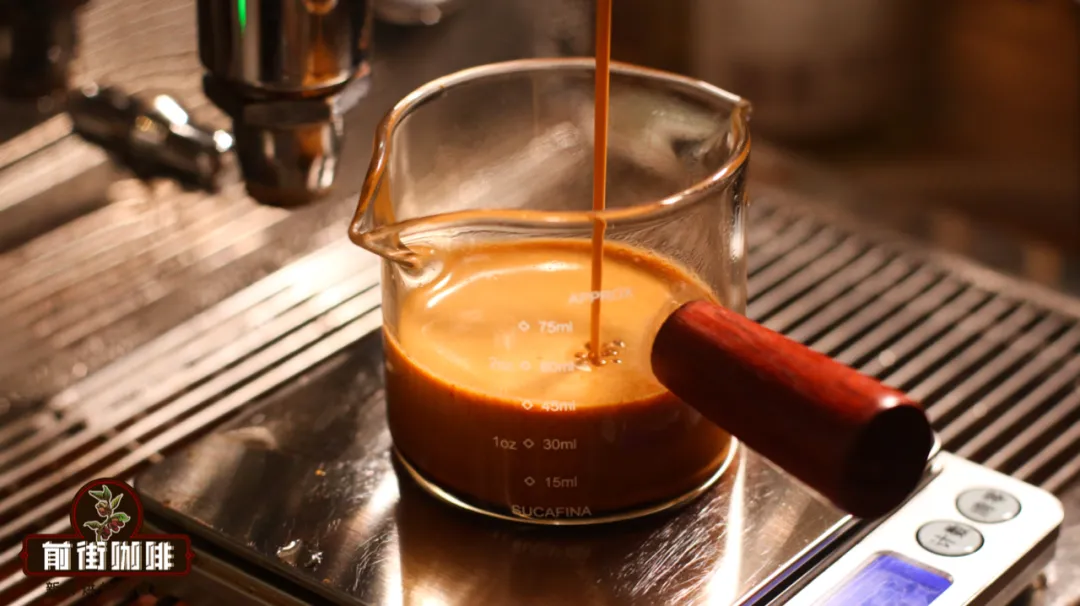
Let us get to the point first and see how, with the same dose, different tamping forces affect espresso extraction time and taste. The experiment used a 20g dose, with a target liquid weight of 40ml, and the tamping forces were light tamping at 2kg (a gentle press) and heavy tamping at 18kg (pressing firmly). To ensure stable results, Front Street extracted a total of 6 espressos and took the average extraction time. The results are as follows:
Three pucks using 2kg light tamping took an average of 33 seconds.
Three pucks using 18kg heavy tamping took an average of 34 seconds.
In terms of flavor performance, there was almost no obvious difference between the two: balanced acidity, sweetness, and bitterness, with prominent flavor. But the experiment did not end there. Front Street also extracted two additional special espressos. What was special about them?
What was special was that these two espressos were extracted directly after distribution with no tamping at all. As a result, their extraction time was also 33 seconds (we will discuss the taste later). From the extraction time, it can be seen that whether lightly tamped, heavily tamped, or not tamped at all, the extraction time did not change significantly.
This may be different from what many people understand. Front Street once thought that the greater the tamping force, the tighter the puck would be pressed, and the increased resistance of the puck would prolong the extraction time, thereby improving extraction efficiency. But in reality this is not the case. The reason is simple - many people overlook how the coffee machine extracts.
How strong is the extraction pressure of a coffee machine?
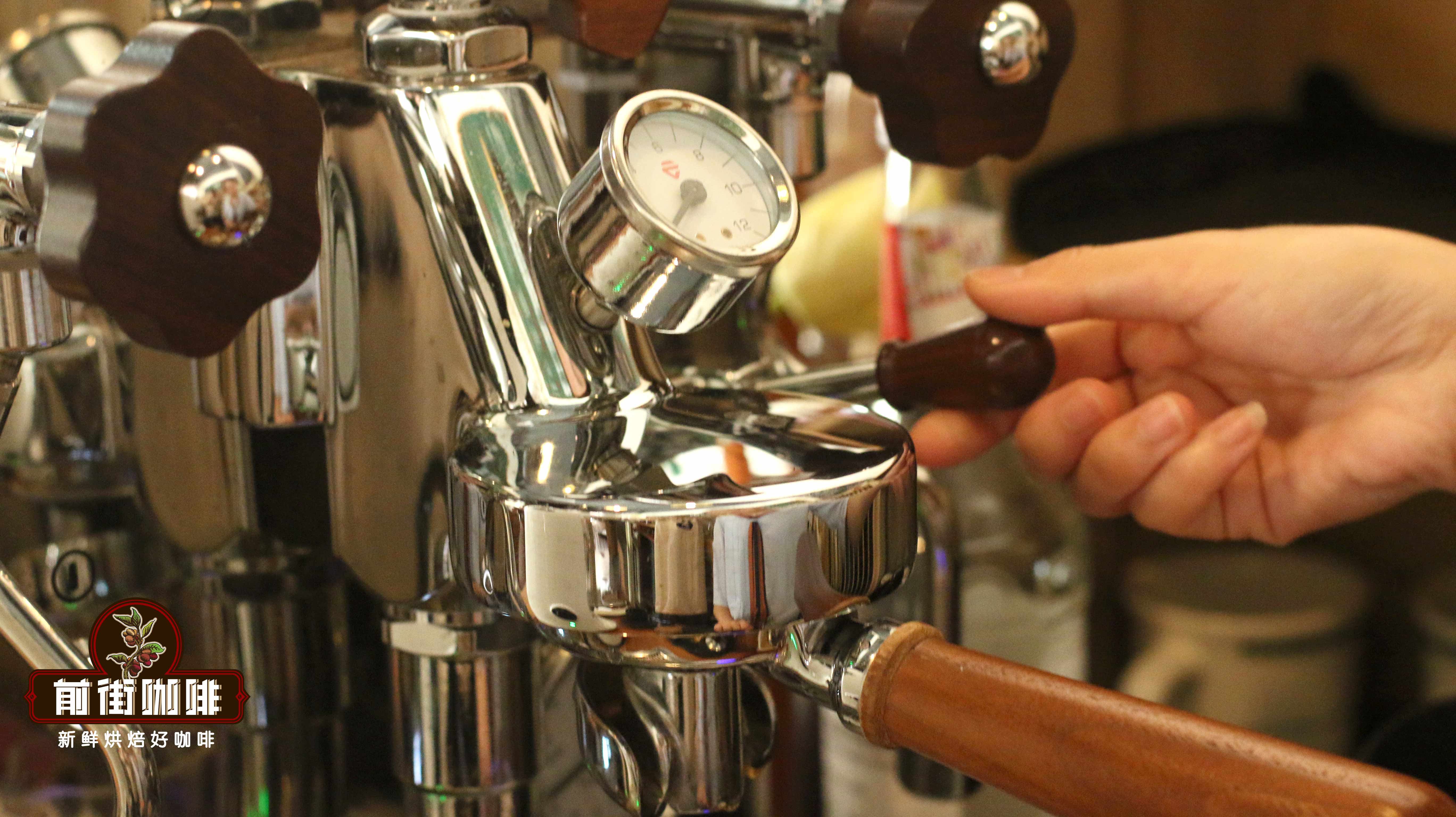
As is well known, espresso machines make coffee quickly in a short time by applying pressure. Usually, during espresso extraction, the coffee machine uses 9 standard atmospheres, which is what is commonly called 9bar (in practice it fluctuates between 7 and 12).
Since the number is only a single digit, many friends may not be able to intuitively feel how strong this force is. That is fine, let us do a simple conversion: 1bar of a coffee machine acting on the puck in a 58mm portafilter basket is roughly equivalent to 27kg of force, so 9bar is about 27×9=243kg, equivalent to the body weight of 4 adults. One can imagine why a coffee machine can extract substances from coffee so quickly.
So we can understand that no matter how much force is used when tamping, it is insignificant in the face of pressure as high as 9bar. But this also raises another question: since tamping seems ineffective, why still tamp? Wouldn't it be fine to distribute and then extract directly?
Why tamp?
This question is actually very simple, because we need to reduce channeling. As the saying goes: water flows to the low places. Water is lazy and will flow to places where it can move easily. The same is true during extraction. If there is no tamping, there will be a large number of gaps between grounds, and hot water will concentrate through these gaps during extraction, causing uneven extraction.
The reason Front Street did not describe the taste at the no-tamping extraction above is precisely because uneven extraction brought negative flavors. Therefore, we need to use appropriate tamping to eliminate gaps as much as possible and make hot water extraction more uniform. The force does not need to be too great; moderate is enough (press the tamper all the way down).
The above content is compiled by CoffeeHunters, a coffee news website.


