







How Do Distribution and Tamping Affect Coffee Quality?
A complete puck does not guarantee a good cup, but it does show that preparation was consistent, which raises the odds. Three steps matter most: choosing a suitable dose, distributing the grounds evenly in the basket, and tamping correctly. Together they reduce channeling, where water cuts through weak spots and leaves part of the bed untouched.
Espresso machines extract with pressure-assisted hot water. At around 9 bar, a 58 mm puck endures roughly 240 kg of force during the shot. Because the grind is very fine, the puck resists strongly, and water tends to flow through the paths of least resistance. Even distribution keeps those paths from forming.
When extracting espresso, many coffee enthusiasts strive to knock out a complete puck. Although whether the puck is intact does not directly determine the flavor of the coffee, it can indirectly reflect whether the extraction process was standardized. The formation of the puck is closely related to operations such as distributing and tamping the grounds, and these steps are precisely the key factors affecting coffee quality. Based on the practical experience of Front Street Coffee, this article explains in detail how to reduce channeling by choosing the appropriate dose, distributing the grounds evenly, and tamping correctly, ultimately obtaining a complete puck and thereby increasing the probability of a delicious cup of coffee.
For more specialty coffee knowledge, please follow the WeChat public account: Front Street Coffee (FrontStreet Coffee)
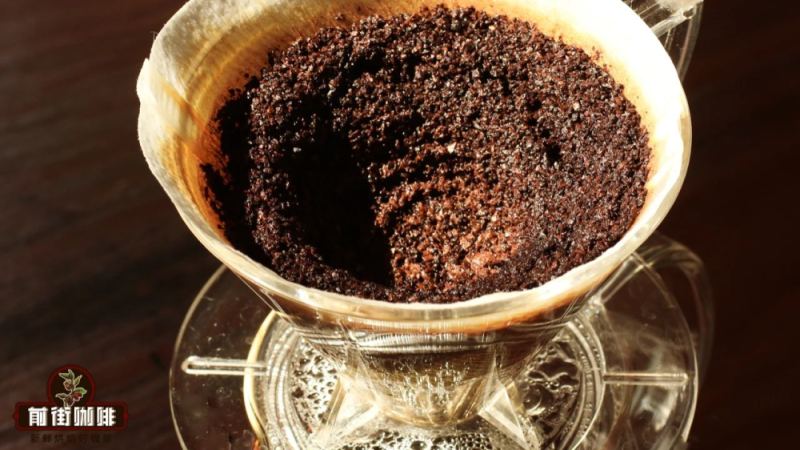
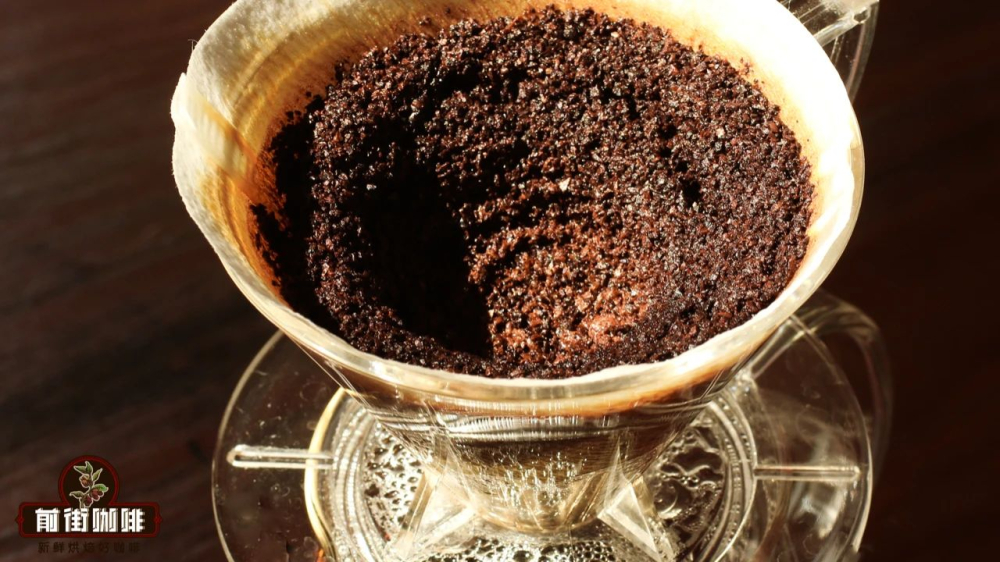
Just as people pursue a deep and even bed of grounds when brewing pour-over coffee, many coffee enthusiasts with "perfectionist" tendencies also hope to knock out a complete puck when extracting espresso.
Similar to the bed of grounds, the appearance of a complete puck does not directly indicate whether the coffee is delicious, but whether the knocked-out puck is intact can indirectly reflect whether the coffee has a chance of tasting good. This is because every step when tamping the coffee grounds directly affects whether the puck can ultimately be knocked out intact, and these steps are precisely the key factors determining coffee quality.
As is well known, the reason an espresso machine can use a very small amount of water to extract a large amount of substances from coffee grounds in a short time is that it uses pressure-assisted hot water extraction. Under an extraction pressure of up to 9 bar, a 58mm puck endures about 240 kilograms of pressure during extraction. However, because coffee grounds are ground very fine, the puck's resistance is very high. Caught between such enormous pressure and resistance, the inertia of the hot water causes it to preferentially flow away through channels that are easy to flow through.
If a puck contains a large number of such channels, the extraction will be very uneven: the coffee grounds inside the channels are over-extracted, while the areas outside the channels barely come into contact with water, ultimately causing the coffee to have flavors of uneven extraction such as bitterness and sourness. This is the common channeling effect in espresso extraction.
If you want to reduce the occurrence of channeling and allow hot water to extract all the coffee grounds as evenly as possible, you need to reduce the channels in the puck. To achieve this, before extraction the coffee grounds must be evenly distributed in the portafilter basket. This not only reduces channeling but also allows you to obtain a complete puck after extraction ends.
In other words, the reason a complete puck can appear is precisely that the operation was standardized and reasonable. So today, Front Street is here to share how to make a perfect puck!
1. Choosing the Dose
Regarding extraction, Front Street has already shared a lot of content, so this time we will mainly focus on the operational steps. To make a perfect puck, the first thing to pay attention to is using the appropriate dose.
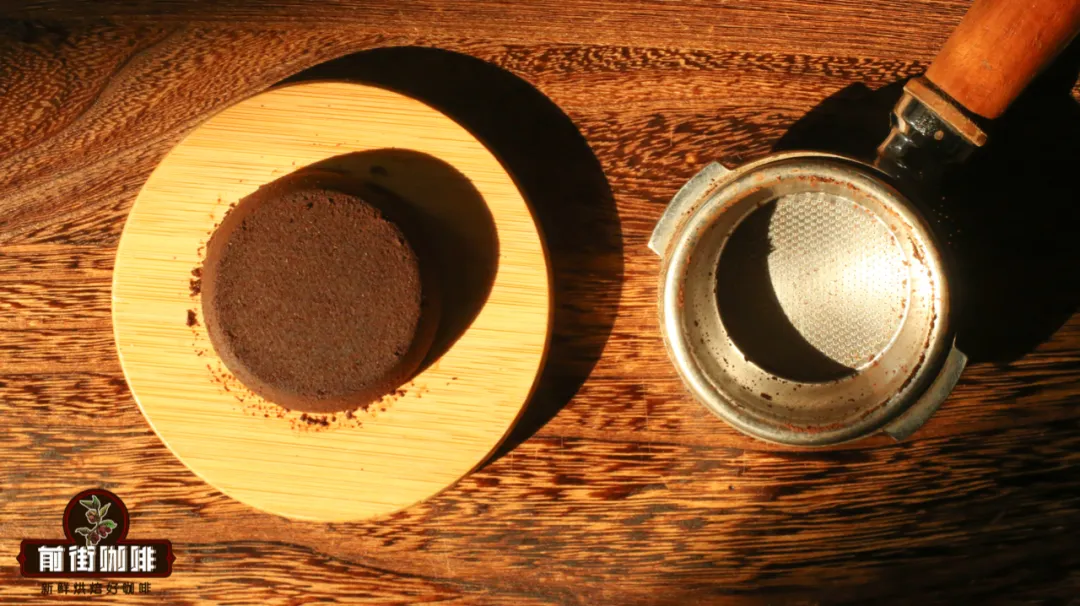
In previous posts, Front Street introduced a lot of knowledge about portafilter baskets, because whether the coffee dose matches the basket is very important. A basket has a limited range of doses it can hold; for example, the basket Front Street uses has a capacity between 18~21g. If the dose filled exceeds or falls below this range, the coffee is prone to uneven extraction.
This is because the puck filled in the basket needs to maintain a certain distance from the group head, and this distance can be neither too far nor too close. If the distance is too far, hot water easily breaks the surface structure of the puck, forming more channels; if the distance is too close, it easily prevents the portafilter from locking onto the group head, or causes under-extraction because the puck is too thick.
These problems all make the coffee prone to uneven extraction and also make the knocked-out puck difficult to form. Therefore, when making espresso, the first thing to pay attention to is the choice of dose, and try not to use a dose outside the recommended range (unless assisted by other equipment, such as a secondary dispersion screen).
2. Distributing the Grounds
After grinding the coffee grounds, the next thing to do is to evenly load the coffee grounds into the basket. But whether you catch the grounds with the portafilter or with a dosing cup, the distribution of the coffee grounds that ultimately lands in the basket will have certain deviations, with more in some places and less in others. If you tamp directly, it will cause uneven distribution of the coffee grounds and create channels.
So before tamping, you can first use your fingers to simply redistribute the coffee grounds, that is, move the coffee grounds concentrated in one place to the positions with less coffee. Then, reduce the gaps in the puck by shaking, tapping the portafilter, and other methods.

It is best to have a distribution needle; simply stirring the coffee grounds a few times with the needle before tamping can both distribute them evenly and break up clumps caused by static electricity—killing two birds with one stone. After the coffee grounds are simply distributed, you can use a distribution tool to perform the initial "leveling" of the puck.
3. Tamping
The final action is tamping! Use a tamper to press the coffee grounds flat, giving the puck a flat and smooth surface, so that during extraction, because the force is evenly applied, channels will be harder to create in the puck.
There is only one thing to pay attention to here, and that is whether the force is applied evenly. Similar to distributing the grounds, if the force is uneven when pressing, heavier on the left and lighter on the right, you will tamp out a puck that is low on one side and high on the other. This will cause the hot water to concentrate and penetrate on one side during extraction, resulting in channels.
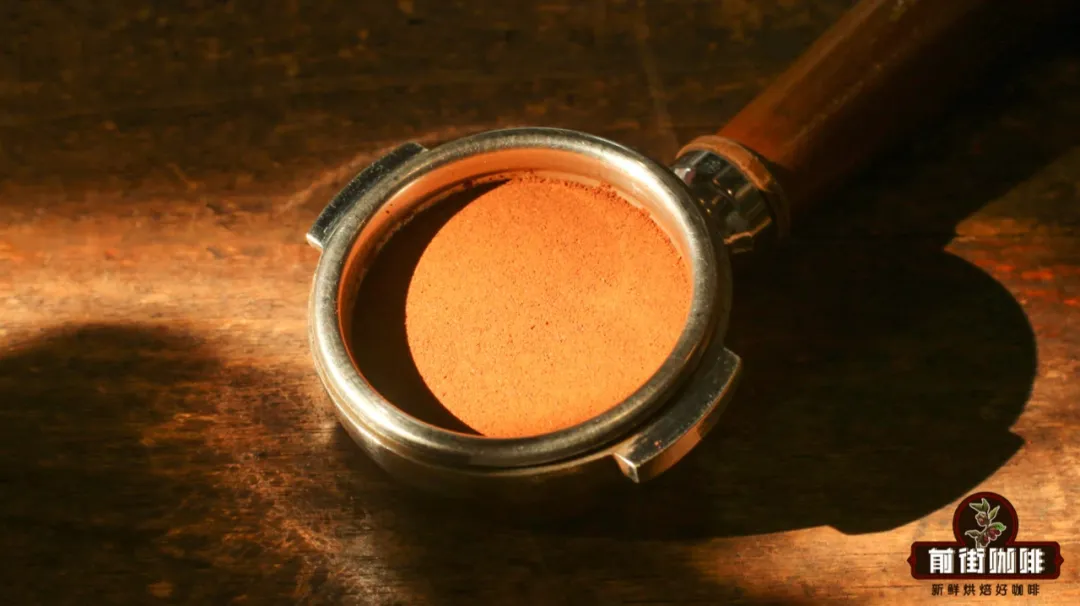
If you do not want to tamp out an uneven puck, when tamping you must pay attention to where you grip and the center of gravity of the pressure applied. You can refer to Front Street's most commonly used tamping technique: press one side of the tamper with your thumb and index finger, wrap the remaining three fingers together with your palm around the tamper handle, keep your arm vertical, and then apply pressure downward.
This method allows us to more easily tamp out a flat puck and make extraction more even. Of course, you can also use your "money power" to buy a calibrated tamper, so you no longer have to worry about uneven force.
After we complete the above series of steps, we only need to be careful not to knock the portafilter in the following process and to lock it perfectly onto the group head, and the appearance of channels can be minimized. Ultimately, you can knock out a complete puck, and the probability of a delicious cup of coffee is greatly increased.
The above content is compiled by CoffeeHunters, a coffee news website.


