







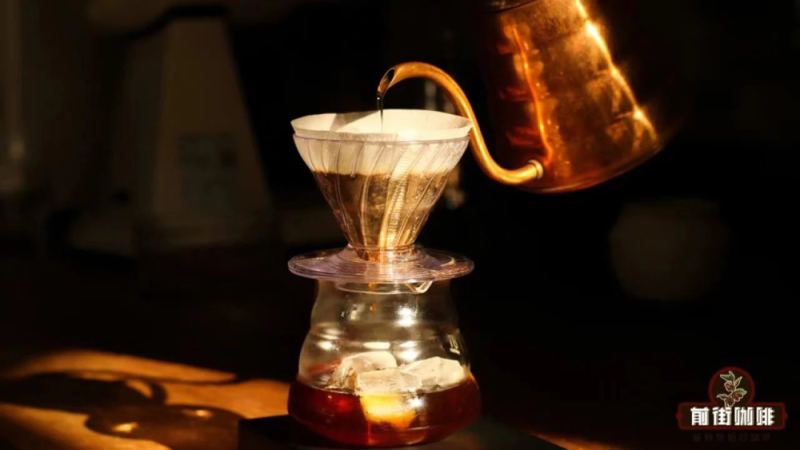
How fine should coffee grinding be for different brewing methods?
Grind size sets the contact area between water and coffee particles, and it decides how long extraction can run. Grind too fine and the cup turns bitter and astringent; too coarse and it reads weak and sour. Start by checking the roast date, because freshly roasted beans need three to seven days of resting before brewing becomes stable.
A No. 20 sieve can calibrate grind size, but a five-level classification works as a reference without buying one. Match the setting to roast level and device: finer for espresso, coarser for French press and cold brew. Front Street packages beans with a one-way exhaust valve and a clear roast date so resting and grind choice stay predictable.
The coarseness of coffee grinding directly determines the contact area between water and coffee grounds, thereby affecting the final flavor performance. This article starts with the freshness management of coffee beans, explaining the resting period and the optimal drinking window, then analyzes one by one the taste differences caused by grinding too fine or too coarse. It also provides a specific method for calibrating grind size using a No. 20 sieve, and includes a five-level grind classification that can be used as a reference even without buying a sieve. Combining the brewing practices of FrontStreet Coffee, it recommends corresponding grind sizes for different roast levels and brewing devices, helping enthusiasts find the coarseness standard that suits their own taste.
For more specialty coffee knowledge, please follow: FrontStreet Coffee ( Frontsteet Coffee )
The coarseness of coffee grounds affects the contact area between water and coffee particles, and also determines how long the extraction process can last, all of which is ultimately reflected in the taste in the cup. Yet selecting the grind size has become the most uncertain step for many enthusiasts. This time Front Street will talk about how to judge the grind size for different coffee beans. The first step is to confirm whether the single-origin beans or espresso blend beans in your hands are freshly roasted.
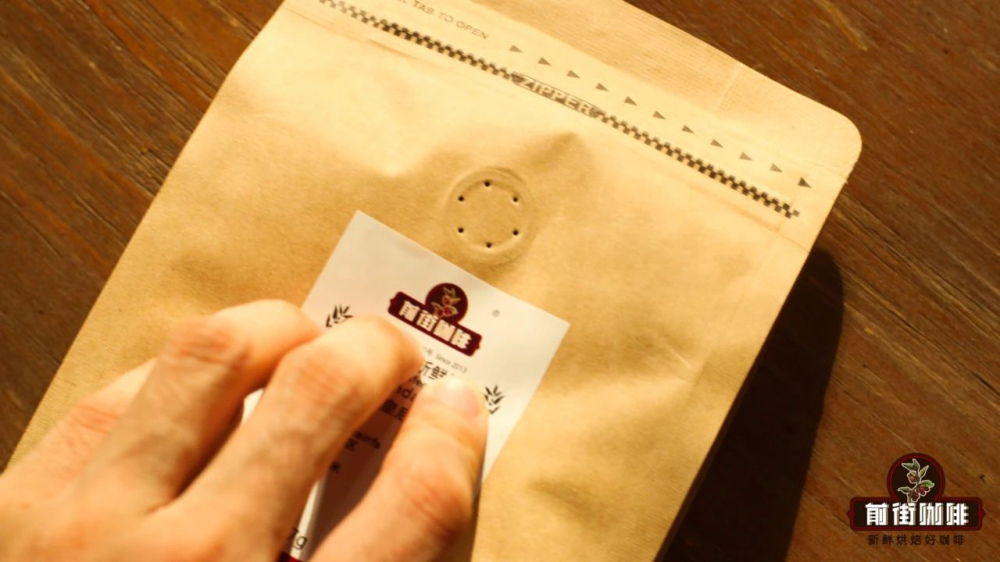
When purchasing single-origin coffee beans or espresso coffee beans, be sure to check whether the packaging has a one-way exhaust valve and whether the roast date is clearly labeled. The "one-way exhaust valve" is usually a button-shaped hole at the top of the coffee bag. It allows the natural carbon dioxide released by the beans to escape while keeping outside gases out of the packaging. Every bag of coffee beans produced by FrontStreet Coffee insists on fresh roasting and uses packaging with a one-way exhaust valve.
After receiving the coffee beans, first look at the roast date. During roasting, the beans accumulate a large amount of carbon dioxide, so it is necessary to leave 3 to 7 days for the beans to release gas on their own, which is commonly called resting. If this step is skipped and freshly roasted beans are brewed directly, a large amount of carbon dioxide will be continuously released during brewing, making the entire extraction process very unstable. So how long should they rest? Front Street's recommendation is: rest light-medium roasted beans for 3 to 4 days, and rest medium-dark roasted beans for 4 to 5 days.
As mentioned earlier, the most intuitive manifestation of coffee bean freshness is the release of carbon dioxide. In addition, freshness also determines the source of coffee's flavor and aroma, namely those aromatic substances. Compared with the large-molecule substances that bring bitterness, these small-molecule aromatic substances volatilize faster, so the longer the beans are stored, the less carbon dioxide and aromatic substances remain, and naturally the extractable content also decreases. Front Street recommends that roasted coffee beans are best used up within 2 months, and if already ground into powder, they are best consumed within 20 days. Once the beans are no longer fresh, no amount of grind adjustment will help. How does coffee grind size affect the flavor of coffee?
1. At the same gram weight, a finer grind requires more cuts, increases the surface area, and increases the area where water can contact the coffee grounds.
2. The finer the grind, the finer the particles the coffee grounds are cut into. The shorter the distance from the surface of the coffee particle to its center, the shorter the time for water to reach the inner part of the coffee particle for extraction / the easier it is to extract coffee flavor substances.
To put it more plainly, when other conditions are the same, the finer the particles, the higher the extraction yield. The finer the coffee is ground, the larger the contact area with water, and naturally the higher the dissolved concentration; conversely, the coarser the grind, the smaller the contact surface area, and the lower the extracted concentration.
What are the signs of grinding coffee too fine?
Observing the particle appearance, the particle size is obviously too small. Because the particles are small, the gaps between them are also narrower, making it difficult for water to pass through, so drip filtration takes longer during brewing. A finer grind makes coffee particles smaller and surface area larger, increasing the places where water can extract substances, and concentration and extraction yield rise accordingly. It tastes strong, with prominent bitterness and astringency, and other flavors are easily masked.
What are the signs of grinding coffee too coarse?
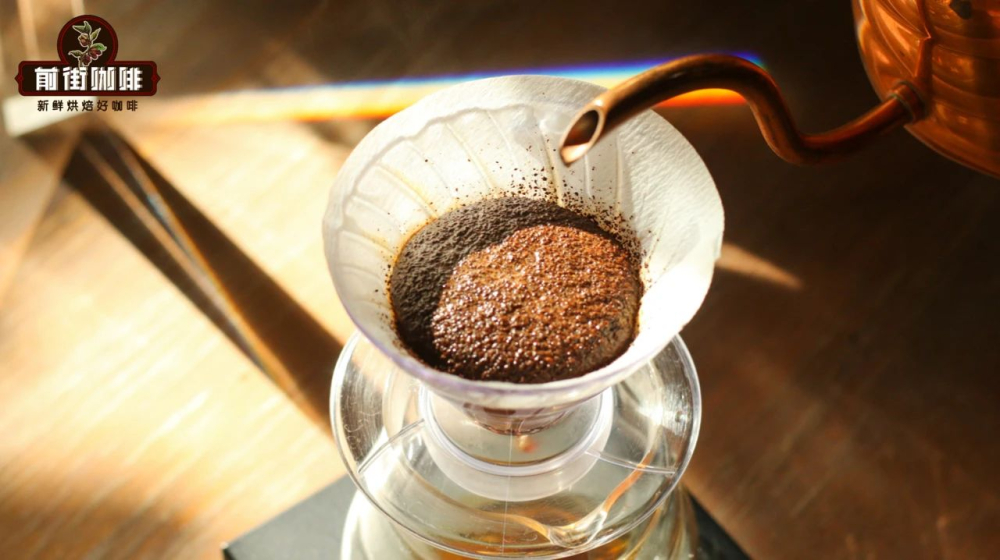
From the appearance, the particle size is too large. Because the particles are large, the gaps between them are also wider, making it easier for water to pass through the coffee bed, so filtration time during brewing is shortened. A coarser grind makes coffee particles larger and surface area smaller, reducing the places where water can extract substances, and concentration and extraction yield decrease accordingly. It tastes thin and bland, with a light mouthfeel, and almost no flavor can be perceived.
How do we determine coffee grind size?
Front Street here recommends using a No. 20 sieve (mesh size 0.85 mm) to calibrate grind size. Then use 10 g of coffee beans for a rough grind and pour them into the sieve to sift. After sifting completely, see how much coffee powder finally falls into the tray under the sieve, and calibrate the grind size by the passing rate. FrontStreet Coffee grind size standard sieve passing rate: cold drip > pour-over siphon 80% > moka American drip 75-80% > cupping 70-75% > French press 65-70%.
Of course, coffee beans of different roast levels also correspond to different grind sizes. For example, Front Street uses a grind with a passing rate of 80-85% through a 0.85 mm sieve for brewing light-roast coffee. For medium-roast coffee, it uses a grind with a passing rate of 70%-75% through a 0.85 mm sieve. For dark-roast coffee, it uses a grind with a passing rate of 65%-70% through a 0.85 mm sieve. However, everyone's requirement for coffee intensity is different. These data are for reference only, and you can still adjust to different degrees according to your own taste preference for strength. What if you don't want to buy a coffee grind calibration sieve?!
Front Street knows this whole process is quite troublesome, so here Front Street has made a small summary of coffee grind sizes, so you can see roughly what grind sizes your coffee brewing tools use. Front Street divides coffee grounds coarseness into 5 types: extra fine, fine, medium-fine, medium, and coarse.
(From left to right: coarse, fine, extra fine)
Extra fine: suitable for making espresso (moka pot, espresso machine)
When making espresso, you must tamp the coffee grounds firmly so that they create resistance to the high-pressure hot water, and only then can the essence of the coffee truly be extracted. The more uniform and delicate the grind, the tighter the tamped coffee puck, and the more balanced the resistance to water. The espresso "squeezed" out this way will have rich crema.
Fine: suitable for making drip bag coffee
This grind size is Front Street's "soul mate" for making drip bag coffee. The main reason is that the drip bag is entirely filter paper, so the flow rate is very high. Unlike pour-over, which has a narrowed outlet, such as the commonly used three-hole dripper, which actually slows the speed of water flowing out, drip bags more need fine grounds to increase the extraction area and extract more substances.
Medium-fine: suitable for brewing light-medium roasted coffee (various pour-over drippers), recommended Front Street Fruit Ding Ding, Front Street Huakui, Front Street Geisha, Front Street Strawberry Candy
Front Street uses medium-fine grind when brewing light-medium roasted coffee beans, about the size of fine granulated sugar, with a grind passing rate between 75%-80%. Because light-medium roasted coffee beans generally have rich acidity, a medium-fine grind can improve the overall sweetness and acidity performance of the coffee~
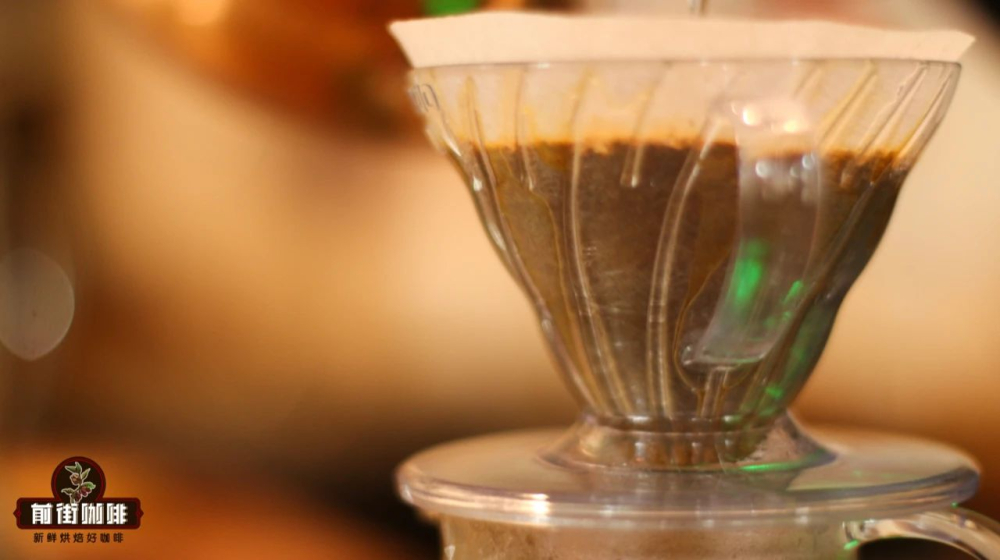
Medium: suitable for brewing medium-dark roasted coffee (various pour-over drippers), recommended Front Street Jamaica Blue Mountain, Front Street Golden Mandheling, Front Street Huilan
Front Street uses medium grind when brewing medium-dark roasted coffee beans, about the size of coarse granulated sugar, with a grind passing rate between 70%-75%. Medium grind is less likely to produce extra fine powder, and is also less likely to cause over-extraction because unstable water flow control at the beginning leads to a large amount of water pooling in the dripper and soaking the coffee grounds.
Coarse: suitable for making coffee with a French press
The French press extracts the most original taste of coffee by steeping for 4 minutes. Compared with pour-over coffee, its coffee liquid is relatively cloudy because the metal filter has larger pores. Therefore, in terms of grind size, we need to use coarse grounds. First, the coffee flavor is slowly extracted, and second, when the French press plunger is pressed down, the coffee grounds will not "escape" through the gaps of the filter and mix into the coffee, affecting the mouthfeel when tasting.
The above content is compiled by CoffeeHunters, a coffee news website.


