







How Does Blend Coffee Shape Espresso Flavor?
Espresso is meant to be made and drunk quickly, and its crema is largely carbon dioxide foam that fades within moments of extraction. Freshly roasted, freshly ground medium-dark beans are what make that golden layer possible, which is why the cup is usually finished in two or three sips rather than lingered over.
Blend coffee matters here because combining origins balances the winey, nutty and intense notes a single lot rarely delivers at once. Under sealed pressure, oils and carbon dioxide inside the grounds are forced out by the water, so grind, dose and roast level all decide how much crema reaches the cup.
Espresso in Italian means "made quickly for you," and everything from extraction to drinking emphasizes speed. Its most captivating aspects are the golden, delicate layer of Crema foam and its intense, rich flavor. But the crema is essentially carbon dioxide foam that dissipates quickly over time, so it's best to drink it as soon as possible. To extract an espresso with abundant crema, freshly roasted medium-dark blend beans are key. Front Street Coffee offers four espresso blend beans, covering different needs such as winey notes, nutty flavors, rich intensity, and high value for money. This article will systematically introduce Espresso's brewing methods, flavor characteristics, proper drinking approach, and extraction parameter standards, helping coffee enthusiasts fully understand this small yet profound cup of coffee.
For professional coffee knowledge exchange and more coffee bean information, please follow Coffee工房 (WeChat public account: cafe_style)
For more specialty coffee beans, please add the private WeChat of Front Street Coffee (FrontStreet Coffee), WeChat ID: qjcoffeex
In Italian, espresso is understood to mean "made quickly for you." A barista takes about a minute to make a cup, and after receiving the cup, customers usually finish it within three sips. Because both the making and drinking rhythms are extremely compact, locals have developed the habit of drinking coffee standing up and leaving right after finishing. If you want to sit down comfortably and enjoy it slowly, you often have to pay an extra service fee.
Of course, ordering an espresso at a café in China and sitting down to drink it is no problem, but it's still recommended to finish it in two or three sips as much as possible.
Why should espresso be finished as soon as possible?
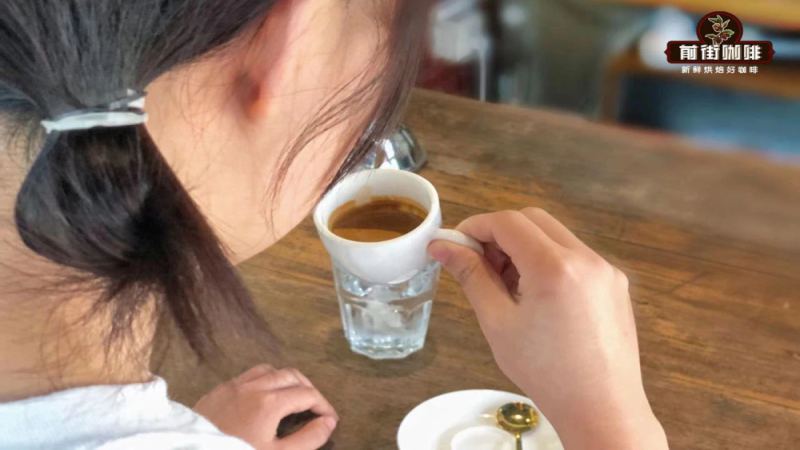
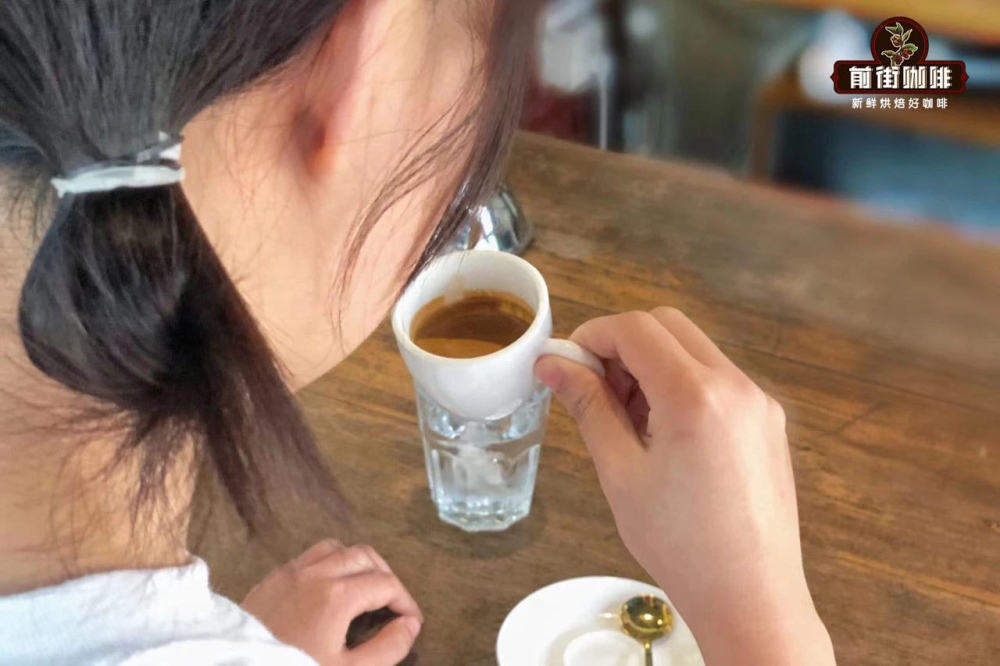
What makes espresso "addictive" is not only the intense flavor that instantly refreshes you, but also the smooth, delicate layer of crema on the surface.
However, this so-called crema is not actually oil in the true sense—its main component is foam formed by carbon dioxide. After espresso is extracted into the cup, the carbon dioxide gradually escapes into the air, and the foam rapidly dissipates along with it. This is precisely why espresso needs to be drunk quickly.
How to extract an espresso with abundant crema?
Only by using freshly roasted, freshly ground medium-dark roasted coffee beans is it possible to extract that alluring golden crema. The reason is that under sealed pressurized conditions, the oils and carbon dioxide inside the coffee beans blend together and are forced out by the water flow, forming a smooth, delicate crema foam.
The longer the time since the coffee beans were roasted, the more carbon dioxide is generated and retained inside the beans, and the coffee also gains richer body-enhancing substances. For espresso extracted under pressure, if light-roasted beans are used, their inherent acidity will appear sharp due to the increased concentration, and because of insufficient body-enhancing substances, the mouthfeel will also tend to be thin.
At the same time, the most critical aspect of espresso is that its quality and flavor can remain stable over the long term. Therefore, Front Street Coffee (FrontStreet Coffee) recommends using blended coffee beans specifically formulated for espresso when making espresso.
Single-origin (single-region) coffee beans used for espresso are affected by climate and terroir conditions every year, and as time passes after roasting, their flavor expression is not stable. Blended beans, on the other hand, are created by the shop after understanding the characteristics of coffee beans from different regions, mixing them in different proportions based on the strengths and weaknesses of each region's flavors, thereby achieving the goal of balanced flavor.
Based on the general consumer's coffee taste preferences, Front Street Coffee (FrontStreet Coffee) has launched 4 Front Street espresso blend coffee beans. Everyone can choose the Front Street espresso blend coffee beans for making espresso according to their own taste needs.
For those who prefer unique coffee flavors, you can choose "Front Street Warm Sun Blend Coffee Beans." It consists of Front Street Ethiopian sun-dried Red Cherry coffee beans (30%) + Front Street Honduras Sherry Barrel coffee beans (70%), presenting rich winey notes, vanilla cream, berry sweetness and acidity, and roasted nut flavors.
For those who enjoy nutty coffee flavors, you can choose "Front Street Specialty Blend Coffee Beans." It consists of Colombian washed coffee beans (30%) + Brazilian semi-washed coffee beans (70%), featuring nutty, dark chocolate, and caramel flavor expressions. This Front Street Specialty Espresso Blend is also very suitable for cafés' daily production.
For those who prefer a richer, more intense mouthfeel, you can choose "Front Street Commercial Blend Coffee Beans." It consists of Robusta washed coffee beans (10%) + Colombian washed coffee beans (30%) + Brazilian semi-washed coffee (60%), presenting nutty, cocoa, and caramel flavors, able to meet daily café needs.
For those who like nutty notes with a slight fruity acidity, you can choose "The Espresso Moka Pot Coffee Beans Recommended by Many Baristas - Front Street Black Cocoa Blend Coffee Beans" 50/454g: Yunnan washed small-bean coffee (30%) + Brazilian semi-washed coffee beans (70%), featuring soft fruity acidity, caramel, and nutty flavor expressions. This cost-effective Front Street basic espresso blend is suitable for cafés and home users who prioritize cost and have average flavor requirements.
How is espresso extracted?
When ordering espresso, you'll see the terms one shot or double shot. So what is a shot, and what's the difference between one shot and double shot?
The difference between one shot and double shot: One shot refers to a single serving of espresso, while double shot is a double serving of espresso. For different amounts of espresso, the dose and extraction time also differ.
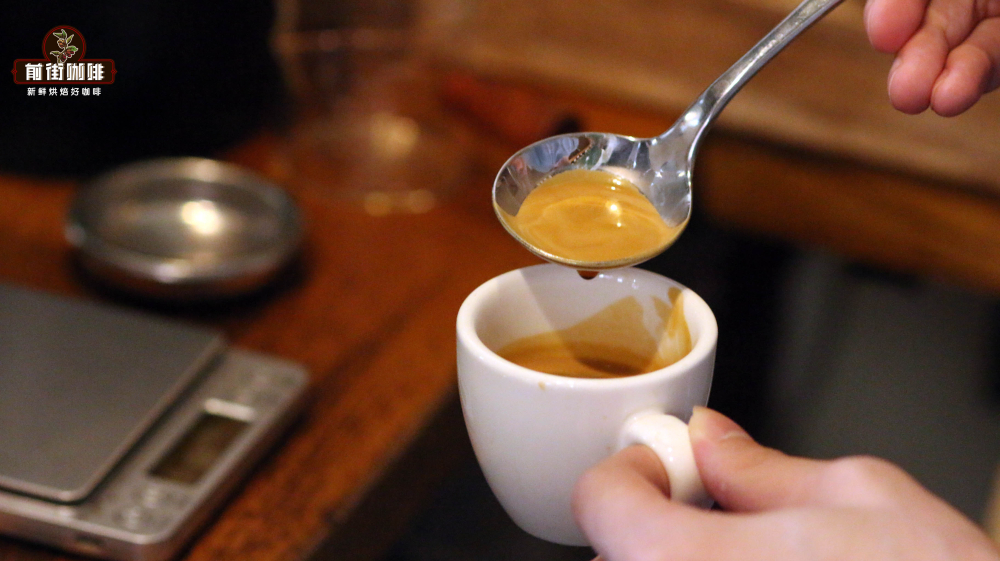
According to the Specialty Coffee Association SCA standards, a single espresso uses 7-9 grams, and a double espresso uses 14-18 grams of coffee grounds, extracting 25-35g of coffee liquid within 20-30 seconds, with extraction pressure of 9-10 bar and water temperature maintained at 90-96°C. Each café will adjust up or down based on the coffee beans and equipment used.
Front Street Coffee (FrontStreet Coffee) uses its own Sunflower Warm Sun Blend, which has soft fruity acidity and an alluring fermented wine aroma, so the extraction water temperature is set at 94°C and extraction pressure controlled at 10 Bar.
A single espresso produced by Front Street Coffee (FrontStreet Coffee) stores uses about 10 grams of coffee grounds to extract about 20g of coffee liquid; a double uses about 20 grams of coffee grounds to extract about 40g of coffee liquid. A single espresso uses a single-dose portafilter basket and single-spout portafilter, extracting one single espresso at a time; a double espresso uses a bottomless basket, bottomless portafilter or handle, extracting a double espresso at a time.
The above content is compiled by CoffeeHunters, a coffee news website.


