







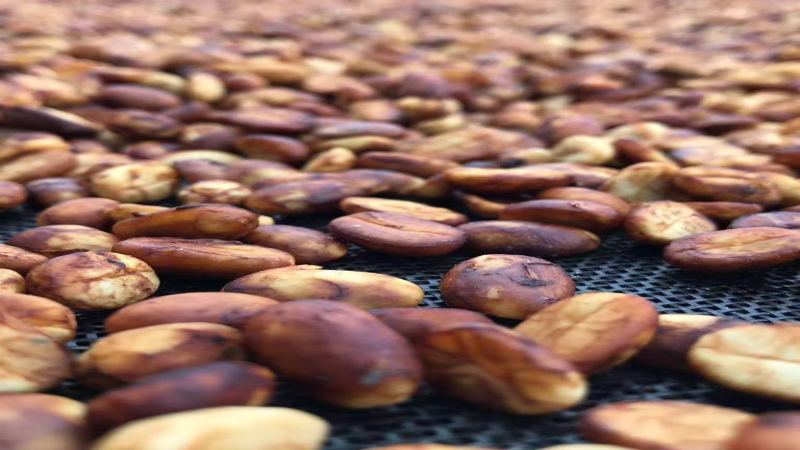
What does honey processing do to a green coffee bean?
Honey processing does not use honey. It keeps part of the mucilage on the green coffee bean during fermentation and drying, which builds sweetness and fruity layers in the cup. Retention ranges from a thin coating in white honey to a heavy layer in black honey, and each level changes drying time, turning frequency, and final flavor.
The method grew out of Brazil's pulped natural approach in the mid-1990s, called Cereja Descascada, which cut drying days and avoided off-flavors from improper fermentation on natural beds. It later spread through Central and South America, most notably Costa Rica. A honey-processed Guatemala New Orient Geisha shows sweet orange, toffee, and bergamot notes in the cup.
Honey processing is not about using honey to process coffee beans, but rather about retaining different proportions of mucilage for fermentation and drying, thereby creating a rich layering of sweetness and fruity notes. This article traces the evolution of honey processing from Brazil's pulped natural method to its refinement in Central and South America, explains in detail the key role of mucilage in fermentation, and compares white honey, yellow honey, red honey, and black honey one by one in terms of mucilage retention, drying duration, turning frequency, and the appearance and aroma characteristics of green beans. It also introduces the honey-processed Guatemala New Orient Geisha on Front Street Coffee's bean list, whose sweet orange, toffee, and bergamot flavors are deeply impressive.
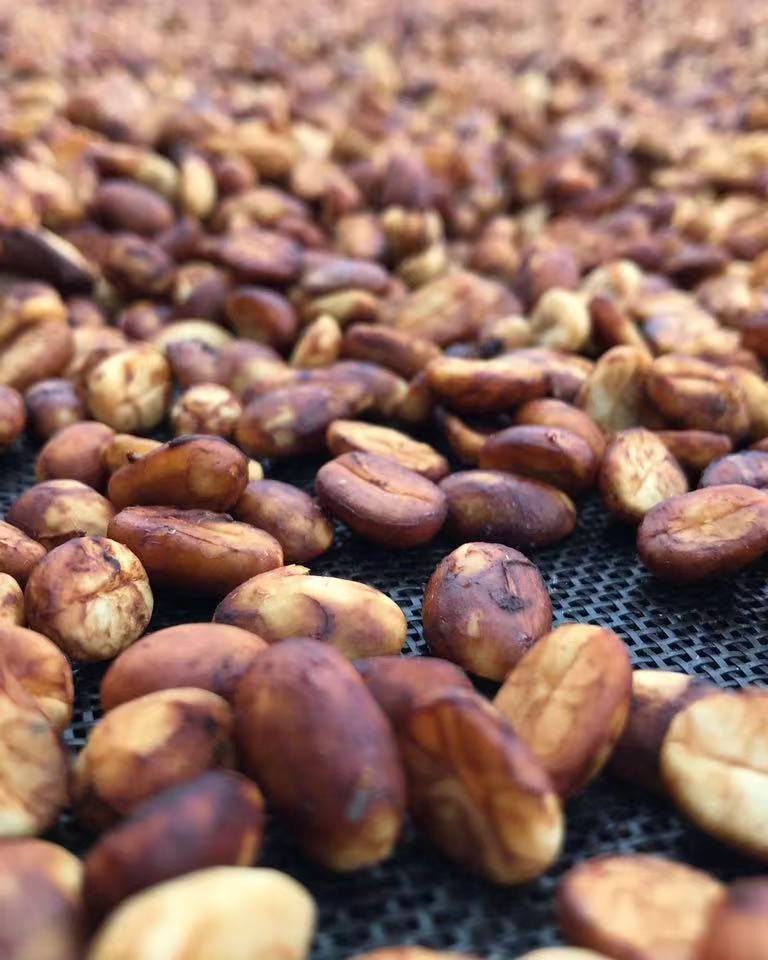
When first encountering the term "honey processing," many coffee enthusiasts mistakenly think it means using honey to process green beans, with the goal of making the coffee taste as sweet as honey. But that is not actually the case.
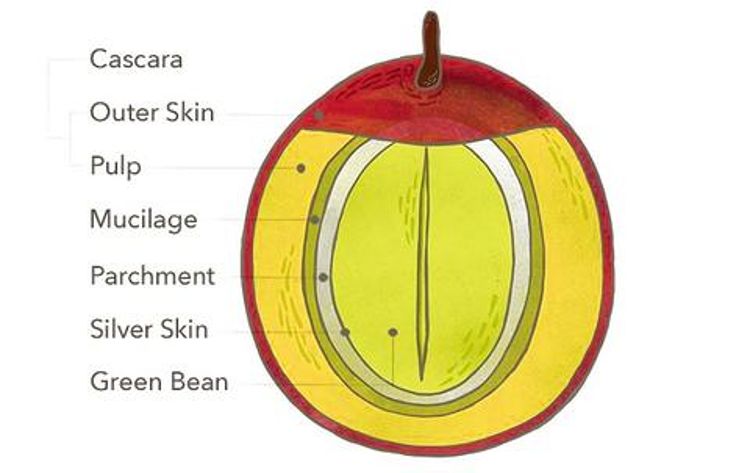
A coffee cherry consists, from outside to inside, of the skin, pulp, mucilage, parchment, silver skin, and seed, and the coffee we drink daily is precisely the innermost seed. To obtain this seed, there have traditionally been two main paths: the washed method and the natural method.
In washed processing, fresh coffee cherries are first sent into a depulper to remove the skin and pulp, then rinsed with large amounts of water, and afterward dried until the moisture density stabilizes, finally yielding green beans; in natural processing, the whole cherry is spread out to dry directly to the appropriate moisture density, and finally hulled to obtain the beans. Honey processing falls exactly between the two, is widely used in Central and South America, and is most famous in Costa Rica.
Around the mid-1990s, in order to shorten the drying cycle for large batches of green coffee, Brazilian merchants developed the pulped natural method, called locally "Cereja Descascada." This approach of removing the skin first and then sun-drying was highly compatible with Brazil's dry climate conditions, both compressing the number of drying days and avoiding the off-flavors produced by improper fermentation on the drying beds in Brazilian natural coffees, significantly improving the flavor performance and quality of the coffee beans.
As this new post-processing technique emerged, some estate owners in Central and South America followed suit and adjusted Brazil's pulped natural process in light of local climates. They controlled the degree to which mucilage was removed, causing differences in the sugar content of the dried green beans, and thereby classifying different approaches such as white honey, yellow honey, red honey, and black honey.
When carrying out honey processing, coffee farmers first pour the fresh cherries into a water tank for flotation, removing defective cherries that are not sufficiently ripe as well as impurities such as stones, and then use specialized equipment to strip off the outermost skin. At this point the beans still carry some pulp, and after a period of "dry fermentation," they enter the drying stage. The so-called "honey" refers to the viscous state formed after the sugary substances in the mucilage ferment, which reminds people of honey, hence the name "honey processing."
Compared with the washed method, honey processing can reduce freshwater consumption by about 40%, while also avoiding the defective negative flavors brought about by prolonged exposure to strong sunlight. Coffee using honey processing usually displays in cupping a full and delicate fruity sweet-tartness and a refined, complex floral aroma, with an overall fresh and clean mouthfeel. Water-saving, environmentally friendly, and outstanding in flavor—these advantages have gradually made the honey processing technique popular in Central and South America, and its coffee flavors are also widely sought after in the specialty market. The Guatemala New Orient Geisha coffee on Front Street's bean list is precisely produced by honey processing, and after brewing it presents flavors of sweet orange, white magnolia, bergamot, and toffee, with a rounded sweetness that is unforgettable.
Front Street Coffee: Guatemala New Orient Geisha Coffee Beans
Region: Guatemala, New Orient region
Altitude: 1,500-2,050 meters
Processing method: Honey processing
Variety: Geisha
Flavor: Sweet orange, toffee, bergamot
Coffee mucilage is mainly located beneath the skin and pulp and above the parchment, and is composed of water, protein, reducing sugars, pectin, and other components. In fact, mucilage is also part of the pulp. When the coffee fruit ripens, pectinase is produced inside, and the enzyme breaks down the pectin bonds, softening the originally firm pulp fibers into a sugar-rich and pectin-rich hydrogel mucus. After the machine removes the skin and most of the hard pulp, the layer of mucus wrapped around the outside of the parchment is what we call "mucilage."
In the field of coffee processing, mucilage is a very sweet substance, with high water content and high sugar content, and it is not easily separated from the coffee seed. Therefore, whether honey processing can create refined fruity flavors depends on the amount of mucilage retained and the degree of sugar fermentation. Farmers can use specialized quantitative demucilaging machines, or adjust the number of manual turnings per day, to obtain green coffee beans of different honey colors.
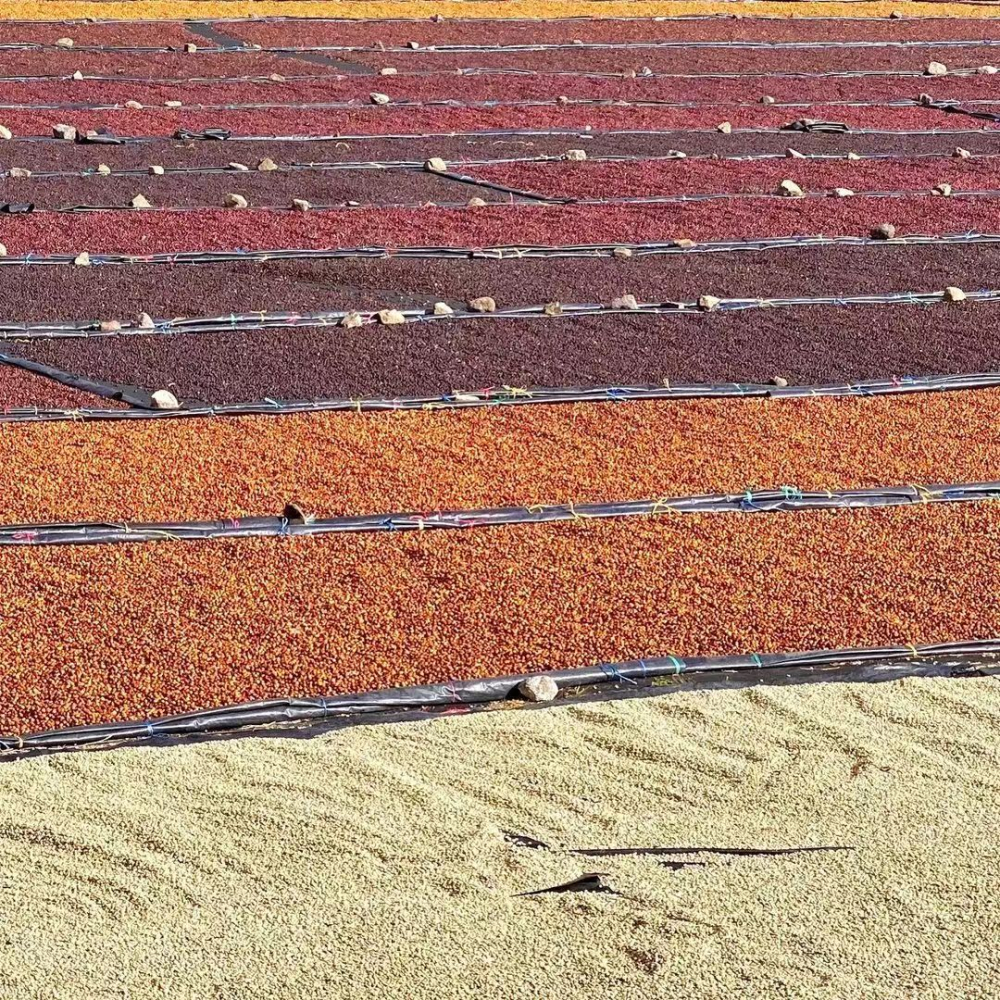
Black Honey retains the highest amount of mucilage, removing almost no pectin, and takes the longest to dry, usually requiring more than 14 consecutive days. During the process, to prevent drying too quickly, coverings are used to block overly strong sunlight so that the sugars convert more fully. In some regions, black honey-processed coffee beans are also shade-dried to ensure that the sugars convert into the interior of the coffee beans in time, but the drying time is correspondingly extended. Front Street's observation of black honey-processed green beans found that because more mucilage is retained, the color is noticeably uneven, and it smells of rich fermentation aroma.
Red Honey retains about 50-80% of the mucilage, falling exactly between washed and natural processing, and is also the most common honey color type on the market. The darker the beans, the fewer manual turnings are needed, so black honey is usually turned only once a day, red honey needs to be turned several times a day, and yellow honey must be turned every hour, and it takes about 12 days for the coffee fruit to dry completely . Front Street observed from red honey-processed green beans that the color is a little lighter than black honey, and it smells of a faint fermented fruity note.
Yellow Honey generally retains 15-50% of the mucilage, requires the most direct sunlight to absorb heat, and takes about 8 consecutive days to reach a stable moisture content. Because yellow honey-processed beans retain very little mucilage, they look fairly uniform yellow-green to the naked eye, and smell of a grassy note tinged with genmai aroma.
White Honey retains only about 10%-15% of the mucilage, is usually dried in the open air, and needs frequent turning to maintain the upper limit of enzyme and bacterial activity; spread on the drying bed it forms a thinner layer, so drying takes less time. Compared with other degrees of honey processing, white honey green beans have the lightest color and smell of an elegant herbal aroma.
For professional coffee knowledge exchange and more coffee bean information, please follow Coffee Workshop (WeChat public account cafe_style)
For more specialty coffee beans, please add the private WeChat of Front Street Coffee, WeChat ID: qjcoffeex
The above content is compiled by CoffeeHunters, a coffee news website.


